
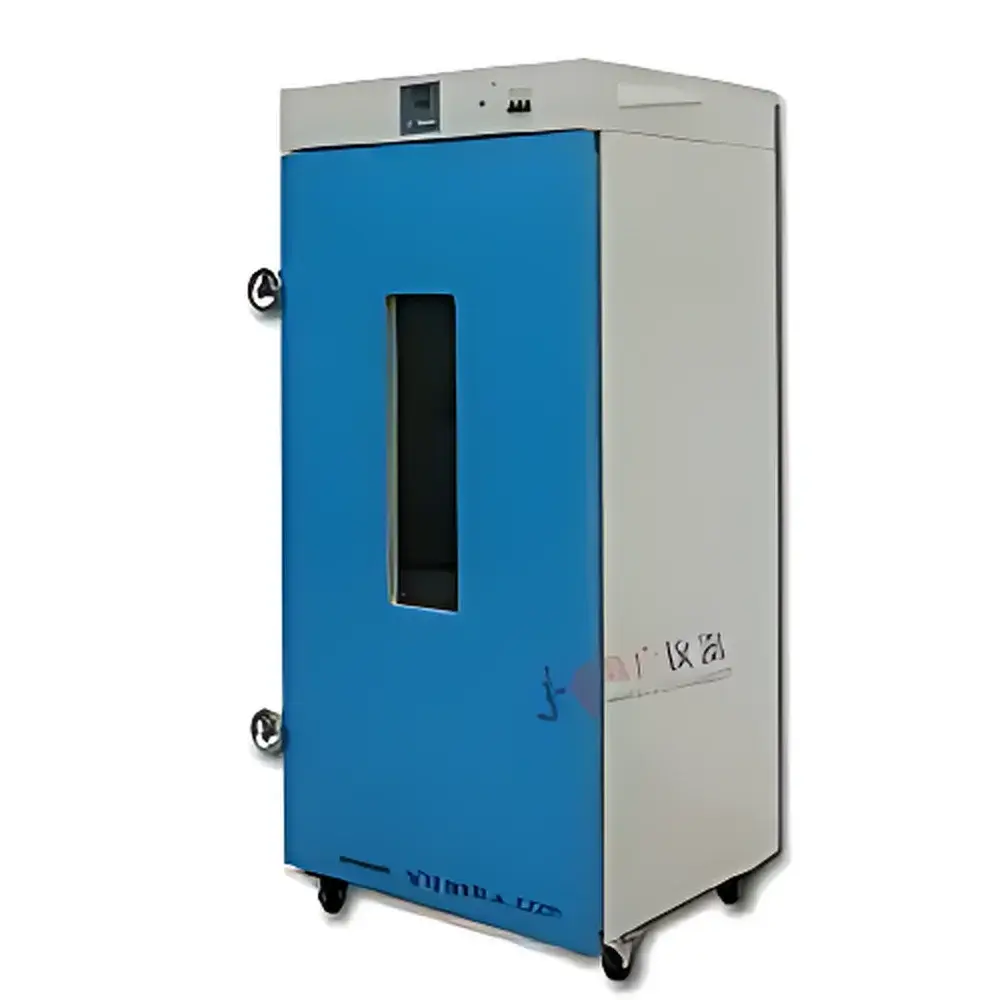
JH Series Biochemical Incubator
| Brand | Jianhu |
|---|---|
| Origin | Shanghai, China |
| Manufacturer Type | Authorized Distributor |
| Country of Origin | China |
| Model | JH |
| Capacity Options | 70 L, 150 L, 250 L, 500 L |
| Temperature Control Range | Ambient +5°C to 65°C (typical for biochemical incubators) |
| Temperature Uniformity | ±0.5°C (at 37°C, typical specification) |
| Temperature Resolution | 0.1°C |
| Control System | Microprocessor-based PID controller with timer function |
| Interior Material | Mirror-finish stainless steel with rounded corners |
| Shelf Adjustability | Yes, multi-position adjustable shelves |
| Safety Features | Independent over-temperature alarm cutoff (optional) |
| Data Interface | 4–20 mA analog output and RS485 digital interface (optional) |
| Compliance | Designed to meet general laboratory requirements per ISO 13485-informed quality practices and supports GLP-compliant documentation workflows |
Overview
The JH Series Biochemical Incubator is a precision-engineered, microprocessor-controlled environmental chamber designed for stable, uniform temperature maintenance in life science laboratories. Based on forced-air convection thermoregulation, it delivers consistent thermal conditions essential for microbial cultivation, biochemical oxygen demand (BOD) assays, cell propagation, fungal preservation, and plant physiology studies. Its operational range—typically from ambient +5°C to 65°C—supports both mesophilic and thermotolerant culture protocols, while the PID-driven control algorithm ensures minimal temperature deviation (<±0.5°C at setpoint) and high repeatability across daily and long-term experiments. The unit complies with foundational design principles aligned with ISO/IEC 17025 laboratory infrastructure expectations and facilitates traceable operation when integrated with external data loggers or LIMS platforms.
Key Features
- Mirror-finish 304 stainless-steel interior with seamless, radius-corner construction—resists corrosion, inhibits microbial adhesion, and enables rapid, residue-free cleaning between runs.
- Intelligent microcomputer temperature controller with real-time display, programmable timer (up to 999 hours), and automatic power-on recovery function.
- Multi-level shelf system with tool-free vertical adjustment—accommodates varied vessel configurations (e.g., Petri dishes, flasks, multi-well plates, culture tubes) without internal obstruction.
- Dual-sensor monitoring architecture: primary control sensor plus independent safety sensor—enables fail-safe thermal cutoff if user-defined limit is exceeded (optional configuration).
- Standard analog (4–20 mA) and digital (RS485 Modbus RTU) outputs—enables integration with centralized building management systems (BMS), SCADA networks, or validated electronic lab notebooks (ELN).
- Energy-efficient insulation using high-density polyurethane foam (≥80 mm thickness) and double-glazed observation window—minimizes thermal drift and reduces ambient heat load.
Sample Compatibility & Compliance
The JH incubator accommodates standard microbiological and botanical sample formats including agar plates, liquid broth cultures, suspension vials, seed trays, and tissue culture flasks. Its airflow distribution system is optimized to prevent desiccation of non-capped samples while maintaining laminar, low-turbulence circulation. Though not certified as Class II biosafety equipment, its sealed chamber design and smooth interior surfaces support decontamination via vaporized hydrogen peroxide (VHP) or 70% ethanol wipe-downs. For regulated environments, the optional data interface supports 21 CFR Part 11–compliant audit trails when paired with validated third-party software. Units are manufactured under quality management systems consistent with ISO 13485 principles and are routinely deployed in GLP-compliant water quality testing labs (per ASTM D5210), pharmaceutical stability studies (ICH Q1A), and agricultural research facilities adhering to OECD Test Guidelines.
Software & Data Management
While the JH incubator operates autonomously via its onboard controller, its RS485 port enables bidirectional communication with host PCs running custom or vendor-agnostic SCADA applications. Users may configure periodic temperature logging intervals (1 min to 24 h), set alarm thresholds, and export CSV-formatted time-series datasets for statistical process control (SPC) analysis. When connected to networked data historians, the device contributes to enterprise-wide environmental monitoring dashboards—supporting CAPA documentation, trend analysis, and regulatory reporting. Firmware updates are performed locally via USB interface (optional accessory), ensuring version control and cybersecurity alignment with IEC 62443-3-3 guidelines.
Applications
- Biochemical Oxygen Demand (BOD5) determination per APHA Standard Methods 5210B and ISO 5815-1.
- Cultivation and maintenance of bacterial isolates (e.g., E. coli, Pseudomonas spp.), yeasts, molds, and lactic acid bacteria under aerobic or microaerophilic conditions.
- Seed germination trials, hydroponic root development studies, and photoperiod-independent plant tissue culture.
- Enzyme activity assays requiring precise thermal stabilization during kinetic measurements.
- Quality control of probiotic formulations, fermentation starter cultures, and veterinary vaccine intermediates.
- Environmental simulation for ecotoxicology assessments involving aquatic invertebrates or algal growth inhibition tests (OECD 201).
FAQ
What is the standard temperature uniformity specification across the working chamber?
Typical uniformity is ±0.5°C at 37°C under steady-state conditions, verified per internal calibration protocol using NIST-traceable thermistors.
Can the incubator be validated for GMP use?
Yes—the unit supports IQ/OQ protocols; optional factory-installed temperature mapping reports and sensor calibration certificates are available upon request.
Is humidity control available as an integrated feature?
No—this is a dry-air biochemical incubator. Humidity management requires external humidification systems or separate CO2/humidity incubators.
What power supply requirements apply?
Standard models operate on 220 V AC ±10%, 50 Hz single-phase; 150 L and larger capacities recommend dedicated circuitry with 16 A breaker protection.
How often does the temperature sensor require recalibration?
Annual verification against a reference standard is recommended; full recalibration is advised after physical impact, extended power loss, or observed control instability.



