
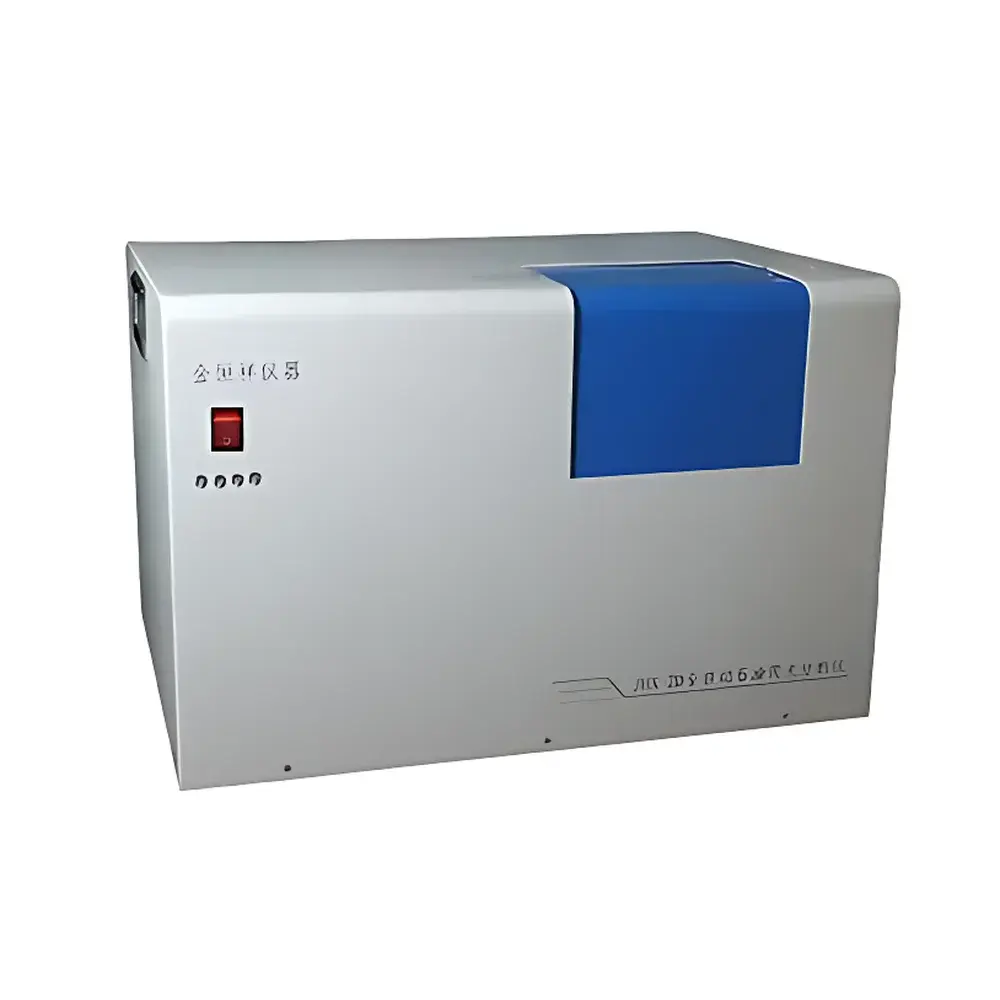
JHX-3D Fully Automated Petroleum Fluorescence Analyzer
| Brand | JHX |
|---|---|
| Origin | Beijing, China |
| Model | JHX-3D |
| Manufacturer Type | Authorized Distributor |
| Regional Classification | Domestic (China) |
| Pricing | Available Upon Request |
Overview
The JHX-3D Fully Automated Petroleum Fluorescence Analyzer is an engineered solution for quantitative and qualitative hydrocarbon characterization in crude oil, condensates, drilling muds, cuttings, and refined petroleum products. It operates on the principle of three-dimensional fluorescence spectroscopy (3D-EEM), which acquires excitation-emission matrix (EEM) spectra across a defined range of excitation wavelengths (typically 200–400 nm) and emission wavelengths (250–600 nm). This technique enables fingerprinting of aromatic hydrocarbons, polycyclic aromatic hydrocarbons (PAHs), asphaltenes, and other fluorophores with high spectral resolution and chemical specificity. Unlike conventional single-wavelength fluorescence instruments, the JHX-3D captures full spectral landscapes—allowing differentiation between biodegraded oils, source rock extracts, and migrated fluids based on peak position, intensity, and contour shape. Designed for unattended operation in QC laboratories, geochemical service centers, and upstream exploration labs, it integrates fluid handling, optical measurement, and data processing into a single platform compliant with routine analytical workflows.
Key Features
- Fully automated sample handling: robotic autosampler with programmable vial positioning and barcode recognition for traceable sample tracking
- Integrated liquid handling module: precise pipetting for automatic dilution (1:2 to 1:1000), reagent addition, and background subtraction via solvent blank referencing
- Self-cleaning fluidic pathway: sequential wash cycles using inert solvents (e.g., hexane-free alternatives) followed by nitrogen purge to prevent cross-contamination
- Dynamic calibration management: automatic switching between pre-loaded calibration curves (e.g., for saturates, aromatics, resins, asphaltenes) based on sample type or user-defined protocol
- Onboard waste management: segregated废液 collection with level sensors and sealed containment for hazardous organic solvents
- Remote data transmission: secure FTP/SFTP or HTTPS-based upload to LIMS or cloud repositories with configurable frequency and encryption (AES-256)
- Unattended operation: complete analysis sequence—including loading, dilution, measurement, cleaning, and reporting—initiated with minimal operator input (sample vial placement only)
Sample Compatibility & Compliance
The JHX-3D accommodates liquid petroleum samples (crude oils, drill cuttings extracts, core leachates, refinery streams) prepared in standard 4-mL or 10-mL quartz cuvettes or screw-cap vials. Solid samples (e.g., dried cuttings) are processed off-instrument using standardized Soxhlet or ultrasonic extraction per ASTM D5291 or ISO 10377 protocols prior to loading. The system supports solvent compatibility with n-hexane, cyclohexane, toluene, and chloroform—but its automated dilution and cleaning architecture minimizes operator exposure to volatile organic compounds (VOCs), aligning with OSHA 29 CFR 1910.1200 (Hazard Communication Standard) and EU REACH Annex XVII requirements. Instrument validation documentation includes IQ/OQ/PQ templates suitable for GLP environments; audit trails, electronic signatures, and data integrity controls meet FDA 21 CFR Part 11 expectations when deployed with validated software configuration.
Software & Data Management
The JHX-3D runs on proprietary Windows-based acquisition and analysis software featuring a modular GUI with role-based access control (administrator, analyst, reviewer). Raw EEM datasets are stored in HDF5 format with embedded metadata (timestamp, operator ID, instrument parameters, calibration ID). Spectral processing includes Rayleigh scatter removal, inner-filter effect correction, PARAFAC decomposition for component resolution, and PCA-based clustering for sample grouping. Quantitative modules support calibration against NIST-traceable hydrocarbon standards (e.g., PAH mixtures SRM 1647f) and generate reports compliant with API RP 45 and ASTM D7260. All data modifications are logged with immutable timestamps and user attribution; backup policies enforce daily incremental backups to network-attached storage with version retention for ≥30 days.
Applications
- Geochemical screening of exploration wells: rapid identification of oil families, charge timing, and migration pathways via fluorescence index (FI), production index (PI), and spectral similarity metrics
- Drilling fluid contamination monitoring: real-time detection of hydrocarbon influx in mud logging units using cuttings fluorescence intensity thresholds
- Refinery process stream analysis: quantification of aromatic content in naphtha, kerosene, and diesel fractions for blending optimization
- Environmental forensics: differentiation of petroleum hydrocarbons from pyrogenic sources using synchronous fluorescence and EEM parallel factor analysis
- Enhanced oil recovery (EOR) evaluation: tracking polymer or surfactant breakthrough via changes in fluorescence quenching behavior
FAQ
What sample preparation is required prior to analysis?
Solid samples (e.g., drill cuttings) must be extracted using standardized solvent-based methods (e.g., ASTM D5291); liquid samples require filtration (0.45 µm PTFE) and optional dilution if native fluorescence exceeds detector linearity limits.
Does the system support method validation for regulatory submissions?
Yes—the instrument supports full validation documentation (IQ/OQ/PQ), electronic audit trails, and 21 CFR Part 11-compliant user authentication when configured with approved IT infrastructure and signed SOPs.
Can the JHX-3D operate without on-site technical staff?
It is designed for unattended 24/7 operation; however, periodic maintenance (e.g., lamp replacement every 1,500 hours, quartz cell inspection) requires trained personnel per manufacturer-recommended intervals.
Is hexane exposure eliminated entirely during operation?
Operator contact with n-hexane is eliminated during routine analysis due to fully enclosed fluidics and automated solvent handling; alternative solvents (e.g., cyclohexane) may be substituted per method requirements.
How is data integrity ensured during remote transmission?
All uploads use TLS 1.2+ encrypted channels with server certificate verification; file checksums (SHA-256) are generated pre-transfer and validated post-reception to detect corruption or tampering.





