
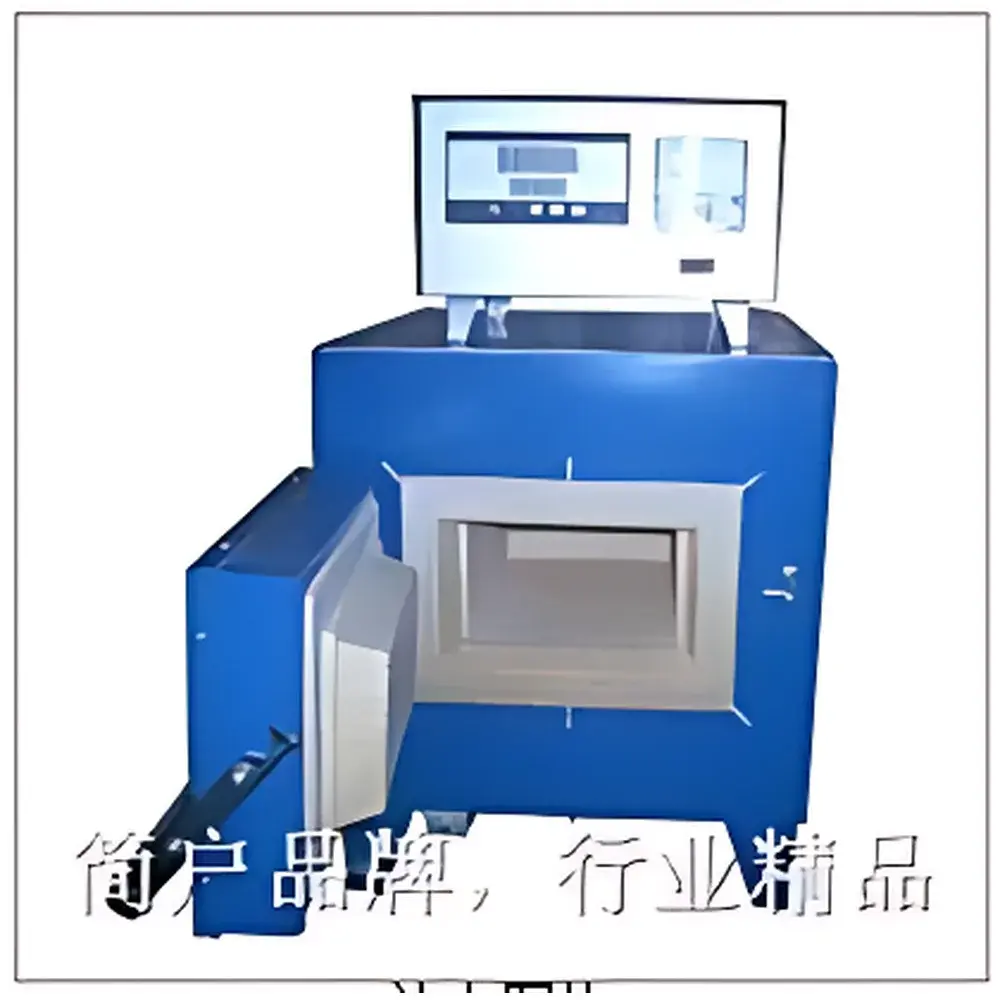
Jianhu JH2 Series Box-Type Resistance Furnace (Muffle Furnace)
| Brand | Jianhu |
|---|---|
| Origin | Shanghai, China |
| Manufacturer Type | Authorized Distributor |
| Country of Origin | China |
| Model | JH2 |
| Instrument Type | Box Furnace |
| Maximum Temperature | 1000 °C |
| Temperature Control Accuracy | ±0.1 °C |
| Rated Power | 2.5 kW |
| Heating Rate to Max Temp | ≤100 min (typical) |
| Heating Element | Silicon Carbide Rods or High-Alumina Lightweight Refractory Assembly |
| Internal Chamber Dimensions | 200 × 120 × 80 mm (D × W × H) |
| Insulation | Ceramic Fiber + Expanded Perlite Composite Layer |
| Safety Interlock | Mechanical Door-Activated Cut-off Switch |
| Thermocouple Input | Type K, rear-mounted with fixed bracket |
Overview
The Jianhu JH2 Series Box-Type Resistance Furnace is a precision-engineered laboratory muffle furnace designed for controlled high-temperature thermal processing in research, quality control, and industrial testing environments. Operating on resistive heating principles, the furnace utilizes silicon carbide (SiC) rods or high-alumina lightweight refractory elements embedded symmetrically within the furnace walls—top, bottom, left, and right—to ensure uniform radial and axial heat distribution across the chamber. Its sealed refractory chamber minimizes atmospheric interference, enabling consistent oxidation-resistant calcination, ashing, sintering, and heat treatment up to 1000 °C. The unit complies with fundamental safety and performance expectations for Class I laboratory heating equipment under IEC 61010-1 and meets structural requirements for GLP-compliant thermal workflows where temperature stability and repeatability are critical.
Key Features
- Robust welded steel outer casing with electrostatic powder-coated finish for corrosion resistance and mechanical durability.
- Monolithic refractory chamber lined with high-purity silicon carbide or high-alumina lightweight insulating bricks, engineered for thermal shock resistance and long-term dimensional stability at elevated temperatures.
- Dual-layer insulation system comprising ceramic fiber blanket and expanded perlite blocks between the inner lining and outer shell, reducing surface temperature rise and improving energy efficiency.
- Integrated mechanical interlock switch linked directly to the furnace door: power is automatically de-energized upon door opening, eliminating risk of accidental exposure to high-temperature surfaces or radiant heat.
- Precision digital PID temperature controller with ±0.1 °C steady-state accuracy and programmable ramp-soak profiles (via optional upgrade), supporting reproducible thermal cycles across multiple batches.
- Rear-mounted Type K thermocouple port with fixed brass bracket ensures stable sensor positioning and minimizes thermal drift during extended operation.
Sample Compatibility & Compliance
The JH2 accommodates standard crucibles (alumina, quartz, platinum, and stainless steel) and solid samples up to 200 × 120 × 80 mm in volume. Its inert, sealed chamber design supports ASTM E1529 (fire-test-response standards), ISO 5660 (cone calorimetry sample conditioning), and USP heavy metal residue ashing protocols. While not certified for hazardous atmosphere use, the furnace meets general-purpose safety benchmarks for non-explosive, non-volatile sample processing under ambient air or inert gas purge (with optional gas inlet kit). All electrical components conform to CE-marked low-voltage directive (LVD) and electromagnetic compatibility (EMC) requirements per EN 61326-1.
Software & Data Management
The base configuration includes a standalone microprocessor-based controller with LED display and manual setpoint adjustment. For traceable thermal processes, an optional RS485 interface enables integration with SCADA systems or third-party data loggers compliant with FDA 21 CFR Part 11 Annex 11 guidelines—supporting electronic audit trails, user access levels, and timestamped temperature recording. Firmware supports configurable alarm thresholds (e.g., over-temperature cutoff at 1010 °C), automatic shutdown after program completion, and error-code diagnostics accessible via front-panel display.
Applications
- Quantitative ash content determination in food, pharmaceutical, and environmental samples per AOAC 942.05 and ISO 2171.
- Pre-treatment of catalyst supports and ceramic precursors prior to XRD or BET surface area analysis.
- Thermal gravimetric analysis (TGA) sample conditioning and residue stabilization in materials science laboratories.
- Heat treatment of metallurgical specimens for microstructural homogenization before metallographic preparation.
- Calibration of thermocouples and RTDs using fixed-point reference materials (e.g., Zn, Al, Cu melting points) in metrology labs.
- Controlled drying and pre-firing of ceramic green bodies in R&D settings requiring repeatable soak profiles.
FAQ
What is the maximum continuous operating temperature of the JH2-2.5-10 model?
The JH2-2.5-10 is rated for continuous operation at 1000 °C; short-term excursions up to 1020 °C are permissible but not recommended for routine use.
Can this furnace be operated under nitrogen or argon atmosphere?
Yes—when equipped with an optional gas inlet/outlet port kit and flow regulator, the furnace supports inert or reducing atmospheres; users must verify seal integrity and venting compatibility with their specific process gas.
Is the temperature controller compliant with GLP documentation requirements?
The standard unit provides analog control without electronic records; however, the RS485-enabled version supports 21 CFR Part 11–compliant data capture when integrated with validated software platforms.
How often should the thermocouple be calibrated?
We recommend quarterly verification against a NIST-traceable reference thermometer for critical applications; annual full recalibration is advised for ISO/IEC 17025-accredited laboratories.
What maintenance is required for the heating elements?
Silicon carbide rods require no scheduled replacement under normal use but should be visually inspected for cracking or warping before each high-temperature cycle; avoid thermal shock by limiting ramp rates to ≤10 °C/min below 800 °C.



