
Jianhu Salt Spray Test Chamber – DV-1000 Series
| Brand | Jianhu |
|---|---|
| Origin | Shanghai, China |
| Model | DV-1000 Series |
| Spray Method | Continuous Pneumatic Atomization |
| Fog Output | 1–2 mL / 80 cm²·hr |
| Nozzle Pressure | 0.7–1.0 kgf/cm² |
| Fog Dispersal | Air-Driven Exhaust System |
| Salt Fog Deposition Rate | 1.0 ± 0.2 mL/80 cm²·hr (per ASTM B117) |
| Temperature Range | +10°C to +55°C |
| Humidity Control Accuracy | ±0.5°C (setpoint), ±2% RH (steady-state) |
| Chamber Volume | Standard configurations from 90 L to 1000 L |
| Compliance | ASTM B117, ISO 9227, JIS Z2243, GB/T 2423.17 |
| Control System | PID-based digital microprocessor with touchscreen HMI, programmable test cycles, real-time logging |
Overview
The Jianhu Salt Spray Test Chamber – DV-1000 Series is an engineered environmental test system designed for accelerated corrosion evaluation of metallic substrates, protective coatings, and electroplated finishes under controlled saline aerosol exposure. It operates on the principle of continuous pneumatic atomization—where compressed air shears a saturated NaCl solution into a stable, reproducible fog mist—enabling strict adherence to internationally recognized salt spray test protocols including ASTM B117, ISO 9227, and GB/T 2423.17. Unlike intermittent or ultrasonic fogging methods, this chamber employs a calibrated, pressure-regulated nozzle assembly delivering uniform fog distribution across the test volume, minimizing spatial variability in deposition rate—a critical factor influencing corrosion morphology and failure kinetics. The system integrates high-stability temperature and humidity control (±0.5°C thermal accuracy, ±2% RH repeatability), ensuring thermodynamic consistency throughout extended test durations ranging from 24 hours to 1000+ hours.
Key Features
- Continuous pneumatic atomization system with adjustable nozzle pressure (0.7–1.0 kgf/cm²) and validated deposition rate of 1.0 ± 0.2 mL/80 cm²·hr per ASTM B117 Annex A1.
- Digital PID-controlled chamber environment: precise regulation of saturation temperature (35°C standard), chamber air temperature (+10°C to +55°C), and relative humidity stability during fog generation.
- Air-driven fog exhaust mechanism eliminates condensate pooling and prevents secondary re-deposition, maintaining clean test conditions and reducing operator intervention.
- Touchscreen HMI with embedded test program editor supports multi-step cycles—including pre-conditioning, salt fog exposure, drying, and humidity soak phases—as required by cyclic corrosion testing (CCT) standards such as ISO 16701 and GMW 14872.
- Stainless steel 316L interior construction with acid-resistant insulation and leak-tested chamber sealing ensures long-term resistance to chloride-induced stress corrosion cracking.
- Integrated data logging compliant with GLP/GMP traceability requirements: timestamped temperature, humidity, fog pressure, and cycle stage records stored internally and exportable via USB or Ethernet.
Sample Compatibility & Compliance
The DV-1000 Series accommodates flat panels (up to 600 × 400 mm), fasteners, automotive trim components, printed circuit boards with conformal coating, and small assembled subassemblies. Fixtures are supplied with non-metallic, corrosion-inert support racks and angle-adjustable sample holders (15°–30° tilt). All operational parameters meet the mandatory calibration and verification criteria outlined in ASTM B117 Section 7 (Fog Collection), ISO 9227 Clause 6.2 (Deposition Rate Uniformity), and CNAS-CL01:2018 requirements for accredited laboratories. Optional accessories include calibrated fog collectors (ASTM-certified glass funnels), conductivity meters for solution monitoring, and UV-resistant viewing windows with internal LED illumination.
Software & Data Management
The embedded firmware supports audit-ready data integrity per FDA 21 CFR Part 11 guidelines, including user-level access control (admin/operator/guest), electronic signatures for test initiation and report approval, and immutable event logs recording all parameter changes, alarm triggers, and manual overrides. Export formats include CSV and PDF reports with embedded metadata (test ID, operator, start/end timestamps, chamber serial number, calibration certificate IDs). Optional PC-based software (Jianhu TestSuite™ v4.2) enables remote monitoring, historical trend analysis, statistical process control (SPC) charting of deposition rates, and automated compliance reporting for ISO/IEC 17025 accreditation submissions.
Applications
This chamber serves quality assurance and R&D labs in automotive OEMs and Tier-1 suppliers for evaluating primer-surfacer-topcoat systems, galvanized steel substrates, and aluminum alloy anodized finishes. It is routinely deployed in electronics manufacturing for assessing conformal coating integrity on PCBAs exposed to coastal or industrial atmospheres. Aerospace component manufacturers use it for qualification of cadmium-plated fasteners and titanium alloy surface treatments per AMS 2700 and MIL-STD-810H Method 509. Additional applications include validation of corrosion inhibitors in lubricants (ASTM D665), evaluation of stainless steel passivation efficacy (ASTM A967), and comparative benchmarking of organic coating formulations under identical fog exposure conditions.
FAQ
What standards does the DV-1000 Series comply with?
It meets ASTM B117, ISO 9227, JIS Z2243, GB/T 2423.17, and supports method development for ISO 16701 and GMW 14872.
Can the chamber perform cyclic corrosion tests (CCT)?
Yes—the HMI and optional TestSuite™ software support programmable multi-phase sequences including salt fog, dry-off, and high-humidity soak stages.
How is fog deposition rate verified and maintained?
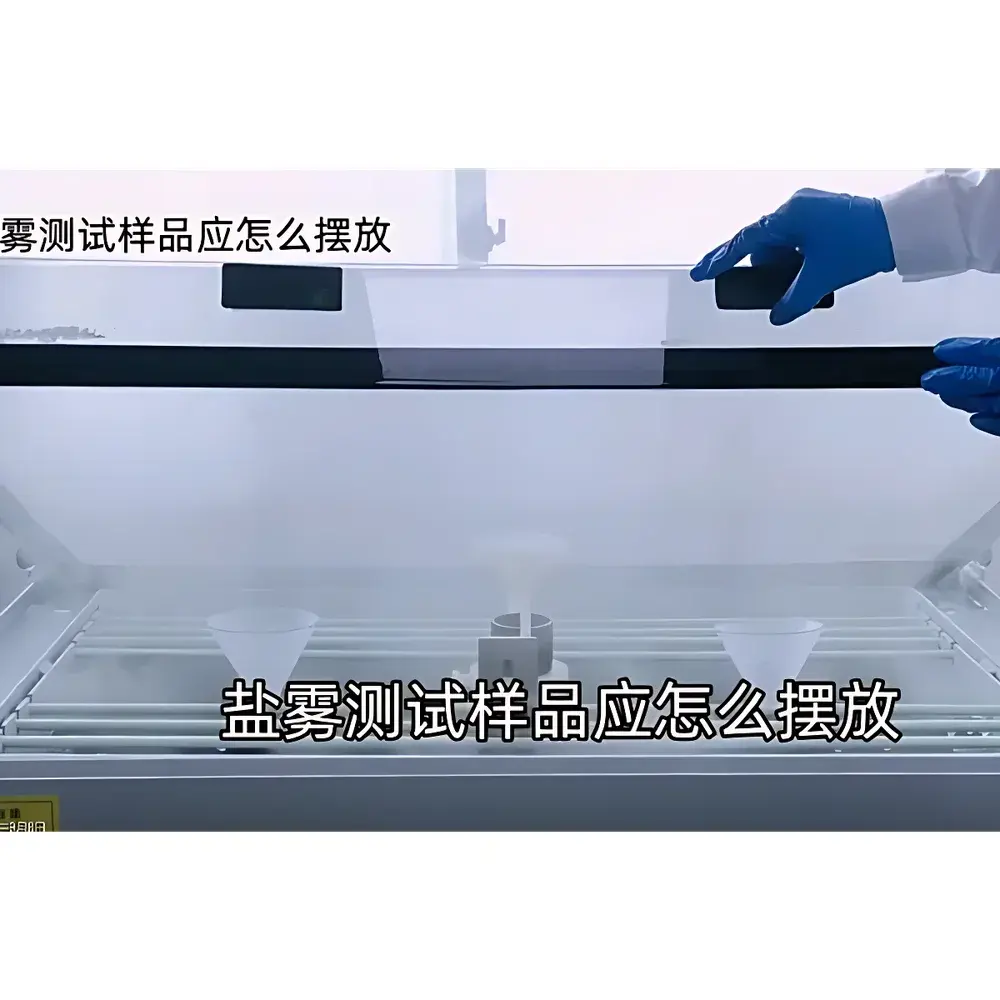
Calibrated glass funnels (ASTM B117 Annex A1) are placed at standardized locations; collection volume is measured every 24 hr, with automatic pressure compensation applied via the PID controller.
Is third-party calibration documentation provided?
Each unit ships with NIST-traceable calibration certificates for temperature, humidity, and fog deposition sensors, valid for 12 months from shipment.
What maintenance intervals are recommended?
Daily visual inspection of nozzles and collectors; monthly cleaning of air filters and saturation tower; annual recalibration of all sensors and verification of chamber seal integrity per ISO 9227 Clause 8.3.



