
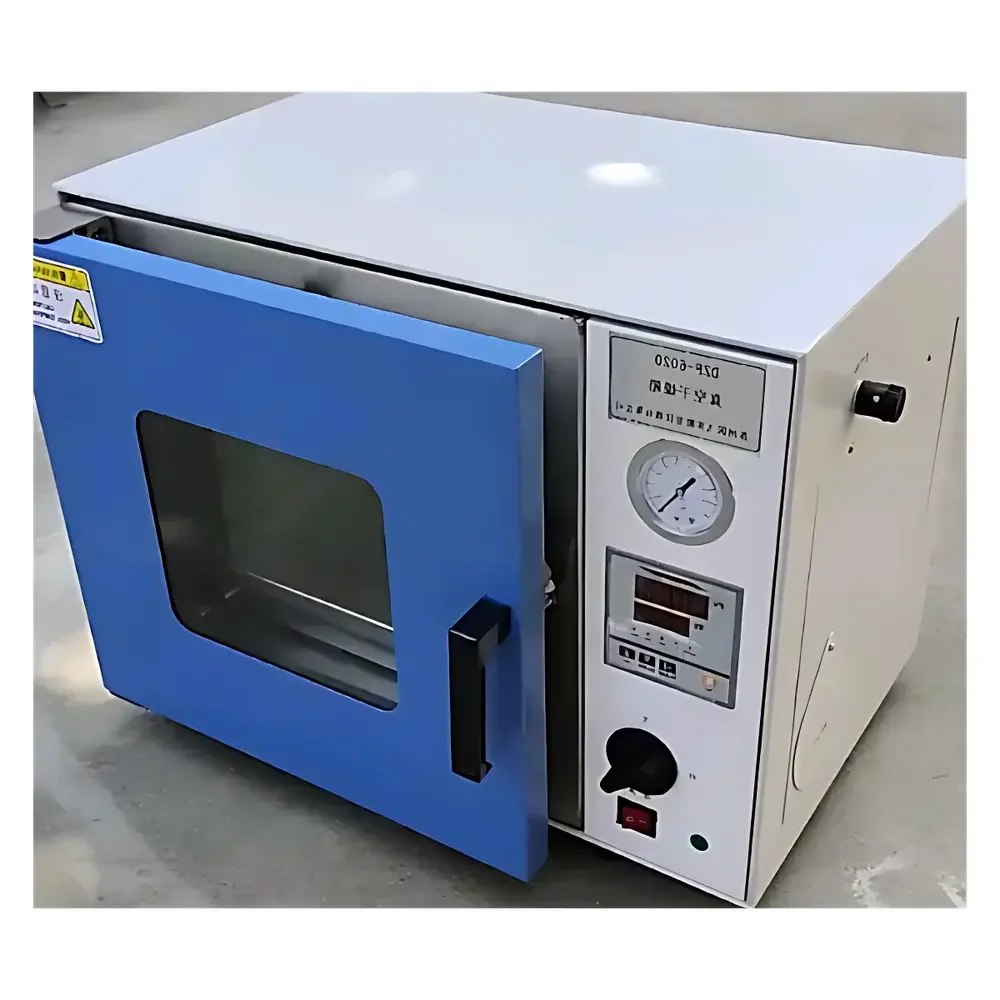
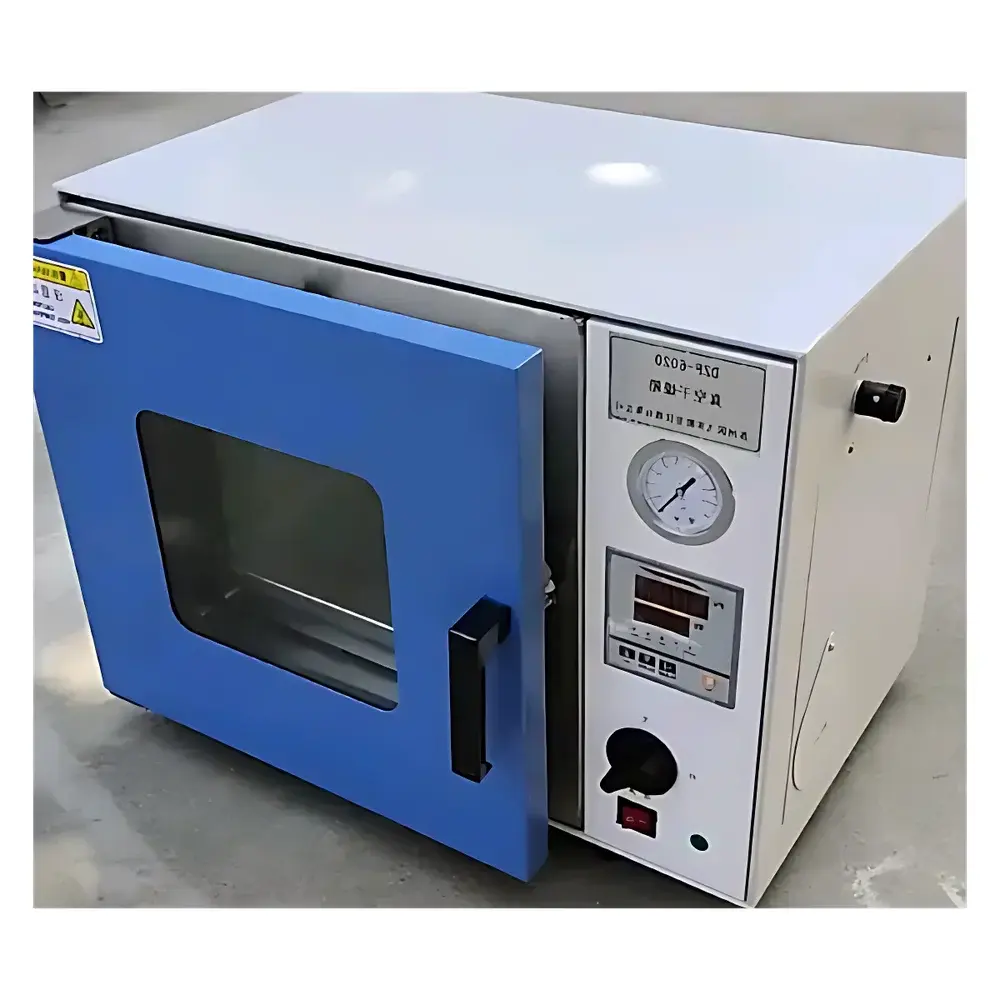
Jianhu VD-Series Laboratory Vacuum Oven – Precision Temperature-Controlled, Low-Pressure Drying System for Heat-Sensitive and Oxidation-Prone Samples
| Brand | Jianhu |
|---|---|
| Origin | Shanghai, China |
| Manufacturer Type | Authorized Distributor |
| Product Category | Domestic |
| Model | VD-Series Laboratory Vacuum Oven |
| Price Range | USD 780 – 7,800 |
Overview
The Jianhu VD-Series Laboratory Vacuum Oven is an engineered solution for low-temperature, oxygen-free drying of thermally labile, oxidation-sensitive, and high-moisture-content samples. Operating on the fundamental physical principle that vapor pressure—and thus boiling point—decreases with reduced ambient pressure, this system achieves rapid moisture removal under controlled vacuum conditions (down to ≤0.1 Pa), eliminating reliance on high thermal energy input. Unlike conventional convection or forced-air ovens, the VD-Series maintains sample integrity by suppressing thermal degradation, oxidative decomposition, and surface hardening. It is designed for laboratories and pilot-scale production environments where reproducibility, material fidelity, and process efficiency are governed by ISO/IEC 17025, USP , and GLP-compliant workflows. The chamber operates within a temperature range of ambient +10 °C to 150 °C, with PID-driven thermal regulation ensuring ±0.5 °C stability—critical for RNA extraction, pharmaceutical lyophilization intermediates, nanomaterial synthesis, and botanical extract stabilization.
Key Features
- High-efficiency dual-stage rotary vane vacuum pump integrated as standard, enabling stable vacuum maintenance below 0.1 Pa without manual intervention
- 304 stainless steel interior chamber with electropolished finish—resistant to corrosion from acidic, alkaline, or saline residues encountered in pharmaceutical, chemical, and environmental testing
- Silicone rubber door gasket rated for continuous operation up to 150 °C, certified for >36 months service life under cyclic vacuum/pressure conditions
- Digital PID temperature controller with real-time logging, programmable ramp-hold profiles, and over-temperature safety cutoff (independent mechanical thermostat)
- Modular tray configuration: adjustable stainless steel shelves with ≥5 kg uniform load capacity per level; optional custom spacing for volumetric glassware or stacked Petri dishes
Sample Compatibility & Compliance
The VD-Series accommodates diverse sample formats—including open Petri dishes, sealed desiccators, volumetric flasks, crucibles, and coated substrates—without compromising vacuum integrity or thermal homogeneity. It supports drying protocols required for ASTM D2243 (polymer moisture content), ISO 11843 (detection limit validation), and USP (loss on drying). Its inert, low-oxygen environment prevents oxidation of lithium cathode materials (e.g., LiCoO₂), preserves enzymatic activity in probiotic powders, and retains volatile terpenoids in herbal extracts. All electrical components comply with IEC 61010-1 for laboratory equipment safety; vacuum system design conforms to ISO 2859-1 sampling plans for incoming pump verification. Documentation packages include factory calibration certificates traceable to NIST standards and optional IQ/OQ protocol templates aligned with FDA 21 CFR Part 11 data integrity requirements.
Software & Data Management
The embedded control interface records time-stamped temperature, vacuum pressure, and cycle stage data at user-defined intervals (1–60 sec resolution). Exportable CSV logs support audit-ready review in LIMS or ELN platforms. Optional RS-485/Modbus RTU connectivity enables integration into centralized lab automation systems. For regulated environments, the system supports electronic signature-enabled user access levels (admin/operator), password-protected parameter locking, and immutable audit trails—including operator ID, timestamp, setpoint changes, and alarm events—meeting ALCOA+ principles for data reliability. Firmware updates are delivered via encrypted USB key with SHA-256 checksum validation.
Applications
- Biomedical research: Stabilization of plasmid DNA, antibody conjugates, and freeze-dried vaccine intermediates without aggregation or deamidation
- Pharmaceutical QC: Loss-on-drying (LOD) determination for active pharmaceutical ingredients (APIs) per USP , especially hygroscopic compounds like amorphous lactose or sodium clavulanate
- Materials science: Solvent removal from sol-gel precursors, electrode slurries, and MOF frameworks while preserving porosity and crystallinity
- Food & nutraceutical analysis: Moisture reduction in botanical extracts, enzyme-rich fermented products, and probiotic cultures—retaining ≥85% bioactivity versus conventional oven drying
- Environmental testing: Conditioning soil, sediment, and filter media prior to gravimetric water content analysis (EPA Method 5035A)
FAQ
What vacuum level is required for drying heat-sensitive biological samples?
For RNA, proteins, or live-cell lysates, a base pressure ≤10 Pa is recommended to enable effective drying at ≤40 °C. The VD-Series achieves ≤0.1 Pa, providing operational margin for consistent low-temperature performance.
Can the oven accommodate standard laboratory glassware such as volumetric flasks or burettes?
Yes—the interior dimensions and shelf clearance are optimized for ANSI/ASTM E288 Class A glassware. Optional perforated trays prevent condensation pooling during cooldown.
Is the system compliant with GLP or GMP documentation requirements?
With optional firmware upgrade, it provides full 21 CFR Part 11 compliance: electronic signatures, role-based access, and tamper-evident audit logs—validated using vendor-provided IQ/OQ documentation kits.
How does vacuum drying compare to freeze-drying for small-batch sample preparation?
Vacuum drying offers higher throughput and lower operational cost than lyophilization for non-collapsible matrices (e.g., powders, films, resins), though it does not preserve structural morphology as effectively as sublimation-based methods.
What maintenance is required for long-term vacuum integrity?
Annual inspection of the silicone gasket compression force and vacuum pump oil replacement (every 2,000 operating hours) are the only scheduled interventions. No recalibration is needed between factory-certified service intervals.



