
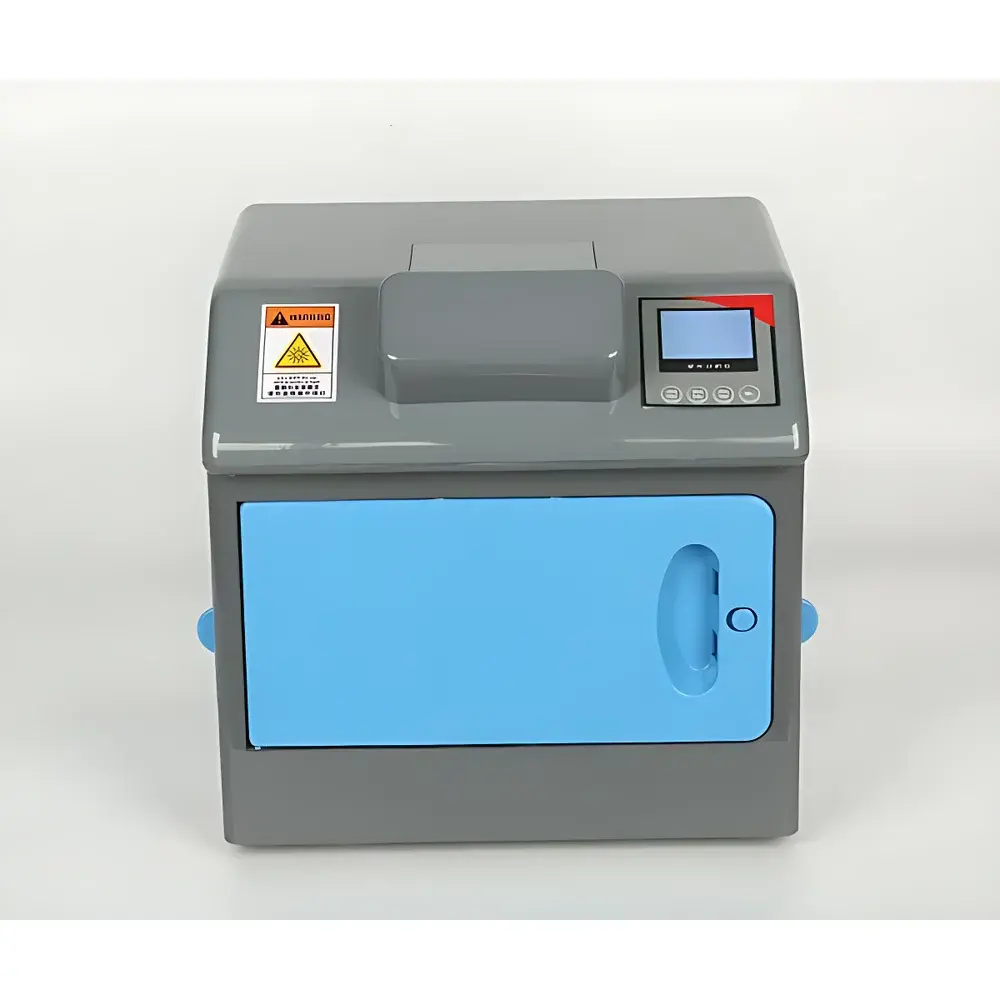
Jiapeng ZF-8N Darkroom-Style Quad-Wavelength UV Transilluminator and Gel Cutter
| Brand | Jiapeng |
|---|---|
| Origin | Shanghai, China |
| Manufacturer Type | Authorized Distributor |
| Region of Manufacture | Domestic (China) |
| Model | ZF-8N |
| Price Range | USD 280–700 |
| Instrument Type | Darkroom-style |
| Wavelength Modes | Multi-wavelength |
| UV Emission Wavelengths | 302 nm (transillumination), 254 nm (epi-illumination), 365 nm (epi-illumination) |
| UV Lamp Count | 4 |
| UV Filter Dimensions | 200 × 80 mm |
| Transillumination Area | 200 × 80 mm |
| UV Lamp Power Rating | 8 W per lamp |
| Total Power Consumption | 38 W |
Overview
The Jiapeng ZF-8N is a darkroom-style quad-wavelength UV transilluminator engineered for precise fluorescence visualization and safe gel excision in molecular biology laboratories. It operates on the principle of ultraviolet-induced fluorescence—where nucleic acids or proteins pre-stained with ethidium bromide, SYBR Safe, or other UV-excitable dyes emit visible light upon irradiation at specific wavelengths. The instrument integrates three discrete UV bands (254 nm, 302 nm, and 365 nm) alongside a 6 W white-light source, enabling flexible excitation across common fluorophores used in agarose and polyacrylamide gel electrophoresis. Its enclosed darkroom architecture eliminates ambient light interference, ensuring high-contrast imaging and minimizing operator UV exposure. Designed for routine QC, academic research, and diagnostic support workflows, the ZF-8N complies with JJF 1936–2021—the National Verification Regulation for UV Analyzers—and supports traceable intensity calibration (20 µW/cm² at 20 cm distance per lamp, measured per ISO/IEC 17025-aligned protocols).
Key Features
- Triple UV wavelength capability: 254 nm (optimized for DNA damage assessment and crosslinking), 302 nm (standard for ethidium bromide-stained DNA visualization), and 365 nm (low-energy excitation for SYBR-based dyes and protein gels, reducing photobleaching)
- Four independently mounted 8 W UV lamps with adjustable tilt angles—enabling uniform illumination across the full 200 × 80 mm transillumination area and targeted epi-illumination from multiple incident angles
- Integrated 6 W visible-light module for post-UV documentation, alignment verification, and non-UV-compatible stain visualization (e.g., Coomassie, silver nitrate)
- High-transmission 200 × 80 mm UV-blocking filter window (≥99% attenuation of UV-B/C radiation), certified to EN 170:2002 for occupational eye protection
- Microcontroller-driven LCD interface with backlit Chinese-language display—supporting real-time mode selection, timer activation, and audible end-of-cycle alert
- Structural housing fabricated from UV-resistant, flame-retardant ABS polymer via precision injection molding—ensuring mechanical stability, chemical resistance to common lab solvents, and compliance with IEC 61010-1 safety standards
Sample Compatibility & Compliance
The ZF-8N accommodates standard horizontal electrophoresis gels up to 200 × 80 mm (e.g., mini-gels, 1.5 mm thick), including agarose (0.7–2.0%), SDS-PAGE, native PAGE, and gradient gels. Its open-side access ports allow gloved manipulation during UV exposure, facilitating real-time band excision using sterile scalpels or gel cutters without lamp deactivation. All UV output parameters conform to JJF 1936–2021 and are validated against NIST-traceable radiometric standards. The system meets GLP documentation requirements for instrument qualification (IQ/OQ) and supports audit-ready operation logs when paired with optional time-lapse imaging modules. While not FDA 21 CFR Part 11–compliant out-of-the-box, its hardware architecture permits integration into validated environments via external PC-based control systems.
Software & Data Management
The ZF-8N operates as a standalone optical platform with no embedded software stack; however, it is fully compatible with third-party gel documentation systems—including USB-connected cameras (e.g., Canon EOS M50, Sony ZV-1) mounted via optional camera frame kits (ZF-8N-D variant). Its consistent illumination profile ensures reproducible grayscale capture under fixed exposure settings. For laboratories requiring digital archiving, the device supports synchronization with ImageLab (Bio-Rad), AlphaView SA (ProteinSimple), or open-source tools like Fiji/ImageJ via manual timestamped acquisition. All UV intensity values are calibrated per manufacturer’s certificate of conformance (CoC), which includes serial-number-matched radiometric test reports aligned with ISO/IEC 17025-accredited calibration labs.
Applications
- DNA/RNA fragment identification and sizing in agarose and polyacrylamide gels
- Verification of PCR product integrity and restriction digest efficiency
- Monitoring of plasmid purification yields and ligation success
- Qualitative assessment of protein expression and post-translational modifications
- Forensic STR profiling and mitochondrial DNA analysis
- Cultural heritage analysis—including ink differentiation and pigment fluorescence mapping in historical documents and textiles
- Industrial QC of fluorescent tracers in petrochemical and dye manufacturing processes
FAQ
What safety certifications does the ZF-8N hold?
It conforms to IEC 61010-1 (electrical safety), EN 170:2002 (protective filter classification), and JJF 1936–2021 (national metrological verification for UV analyzers).
Can the ZF-8N be used for UV crosslinking?
Yes—the 254 nm epi-illumination mode delivers sufficient photon flux for membrane UV crosslinking (e.g., nylon or nitrocellulose blots) when operated within defined exposure durations per protocol.
Is the UV intensity stable over time?
Lamp output is rated for ≥5,000 hours of operation; intensity drift remains within ±5% over the first 1,000 hours under continuous use, verified by annual recalibration against reference radiometers.
Does the unit include a camera?
No—the base ZF-8N model is camera-free; integrated imaging requires optional camera-frame accessories (ZF-8N-D) and user-supplied DSLR/mirrorless devices.
How is wavelength selection controlled?
Via tactile membrane buttons and microcontroller-managed LCD menu—each UV band and visible light can be activated individually or in combination, with independent on/off toggling and runtime timers.




