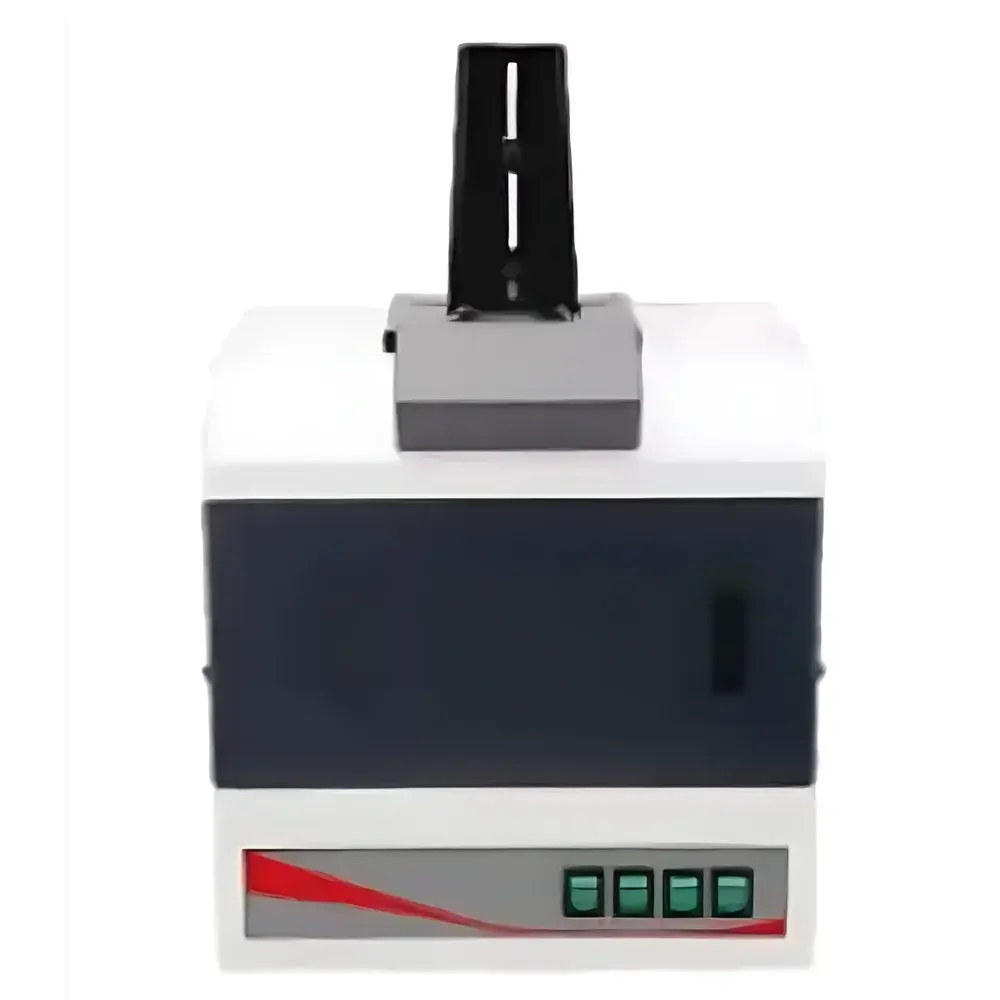
Jiapeng ZF1-I UV Transilluminator and Gel Cutter
| Brand | Jiapeng |
|---|---|
| Origin | Shanghai, China |
| Model | ZF1-I |
| Instrument Type | Darkroom-style |
| Wavelength Modes | Multi-wavelength (Transmitted: 302 nm |
| Reflected | 254 nm & 365 nm) |
| UV Lamp Count | 12 × 8 W |
| UV Transillumination Area | 200 × 200 mm |
| UV Reflective Area | 200 × 80 mm |
| UV Filter Dimensions | 200 × 200 mm (transmission), 200 × 80 mm (reflection) |
| White Light Panel | 210 × 260 mm |
| Input Power | AC 220 V, 50/60 Hz |
| UV Intensity at 20 cm | ≥20 µW/cm² |
| Compliance | JJF 1936–2021 (National Verification Regulation for UV Analyzers) |
Overview
The Jiapeng ZF1-I UV Transilluminator and Gel Cutter is a dedicated darkroom-style instrument engineered for nucleic acid visualization, post-electrophoretic analysis, and precise excision of DNA/RNA bands from agarose or polyacrylamide gels. It operates on the principle of ultraviolet-induced fluorescence: ethidium bromide (EtBr), SYBR® Safe, GelRed®, and other nucleic acid intercalating dyes absorb UV photons at specific wavelengths and re-emit visible light, enabling high-contrast detection of DNA fragments down to ~1–5 ng per band under optimal staining conditions. The ZF1-I integrates three discrete UV emission modes—302 nm transillumination for standard gel viewing and documentation, and 254 nm / 365 nm epi-illumination for reflective applications including TLC plate visualization, protein detection with UV-absorbing tags, and UV-sensitive compound screening. Its optical architecture includes precision-ground quartz filters that suppress stray visible light and ensure spectral purity, minimizing photodamage to samples while maximizing signal-to-noise ratio.
Key Features
- Triple-wavelength UV illumination system: 302 nm (transmitted, optimized for EtBr-stained nucleic acids), 254 nm (reflected, suitable for UV-absorbing biomolecules and thin-layer chromatography), and 365 nm (reflected, ideal for long-wave fluorophores and reduced sample degradation).
- Large-format 200 × 200 mm transmission area with uniform irradiance distribution, validated per JJF 1936–2021 requirements for spatial intensity homogeneity (>85% across active zone).
- Dedicated white-light panel (210 × 260 mm) for Coomassie- or silver-stained protein gel documentation without UV exposure.
- Integrated anti-UV observation window with >99% UV blocking efficiency (200–400 nm range), enabling real-time visual monitoring during gel excision without removing the lid.
- Modular gel-cutting station with stainless-steel frame, ergonomic hand-held cutter, and four interchangeable blade tips—designed for reproducible, contamination-free band isolation under sterile or laminar flow conditions.
- Standardized DSLR mounting interface compatible with Canon, Nikon, Sony, and Olympus camera bodies; supports time-lapse imaging and manual exposure control for publication-grade documentation.
- Compliance-ready design: meets national metrological verification standards (JJF 1936–2021), incorporates patented lamp housing geometry (ZL201920792756.2), and features traceable UV output calibration protocols.
Sample Compatibility & Compliance
The ZF1-I accommodates standard electrophoresis formats including mini-gels (up to 10 × 10 cm), midi-gels (up to 15 × 15 cm), and preparative gels (up to 20 × 20 cm). It supports common fluorescent dyes (EtBr, SYBR® Gold, GelGreen®, GelRed®), UV-active stains (Coomassie Brilliant Blue R-250 under 254 nm), and chemiluminescent substrates when used in conjunction with appropriate imaging accessories. The instrument conforms to GLP-relevant operational controls: all UV lamps are rated for ≥5,000 hours mean time to failure; intensity stability is maintained within ±5% over continuous 30-minute operation. While not FDA 21 CFR Part 11–certified out-of-the-box, its hardware architecture permits integration into validated laboratory workflows supporting ISO/IEC 17025, CLIA, and CAP accreditation requirements when paired with audit-trail-capable imaging software.
Software & Data Management
The ZF1-I is hardware-compatible with third-party gel documentation platforms including ImageLab™ (Bio-Rad), AlphaView SA (ProteinSimple), and open-source tools such as ImageJ/Fiji. Its fixed-mount camera interface enables tethered acquisition via USB or HDMI, supporting RAW and TIFF export for quantitative densitometry. For regulatory environments, users may deploy compliant image management systems that enforce metadata capture (wavelength, exposure time, lens aperture, sample ID), electronic signatures, and version-controlled archiving aligned with 21 CFR Part 11 Annex 11 principles. No proprietary firmware or closed software is embedded—ensuring full interoperability and long-term data accessibility.
Applications
- Nucleic acid gel documentation and band quantification in molecular biology labs.
- PCR product verification and restriction digest analysis.
- DNA fingerprinting and RFLP profiling.
- TLC and HPTLC plate development monitoring using UV-active solvents or derivatization agents.
- Protein blot visualization with UV-transparent membranes (e.g., PVDF) and tryptophan/tyrosine auto-fluorescence.
- Preparative gel extraction for cloning, sequencing library preparation, and mass spectrometry sample enrichment.
- Educational use in undergraduate biochemistry and genetics laboratories requiring robust, low-maintenance UV visualization.
FAQ
Is the ZF1-I suitable for ethidium bromide-free staining protocols?
Yes. The 302 nm transillumination mode provides optimal excitation for SYBR® Safe, GelRed®, and other commercial alternatives with absorption maxima near 300 nm. Intensity is calibrated to ensure detectability at recommended dye concentrations.
Can I use this unit for UV crosslinking of nucleic acids to membranes?
No. The ZF1-I is designed exclusively for visualization—not irradiation-based immobilization. Crosslinking requires higher-intensity UV-C sources (254 nm, ≥1,000 µJ/cm²) and dedicated crosslinkers with dosimetry control.
What safety certifications does the instrument carry?
It complies with GB 4706.1–2005 (Chinese household and similar electrical appliance safety standard) and meets electromagnetic compatibility (EMC) Class B limits per GB 4824–2019. CE marking is not applicable as it is manufactured for domestic market compliance only.
How often should UV lamp output be verified?
Per JJF 1936–2021, routine verification is recommended every 6 months or after 500 operating hours—whichever occurs first—using a NIST-traceable UV radiometer calibrated at 254 nm, 302 nm, and 365 nm.
Related Products