
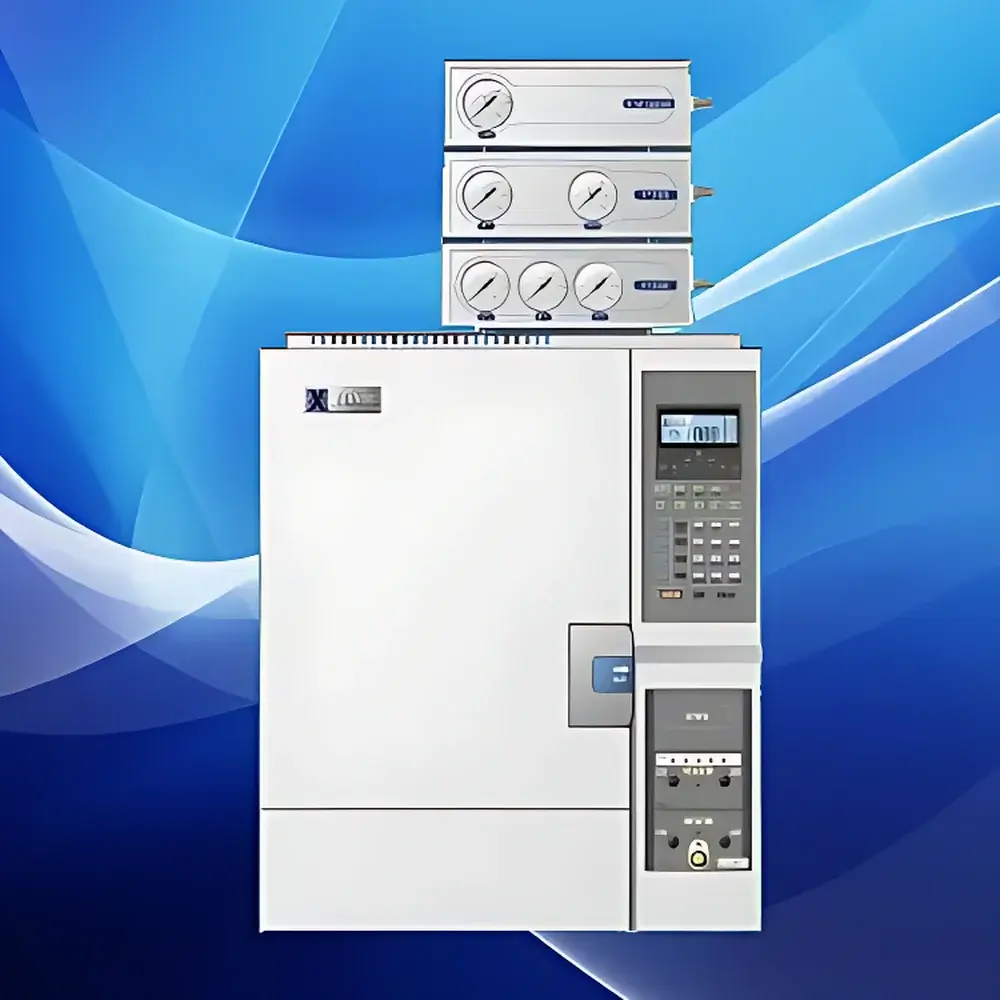
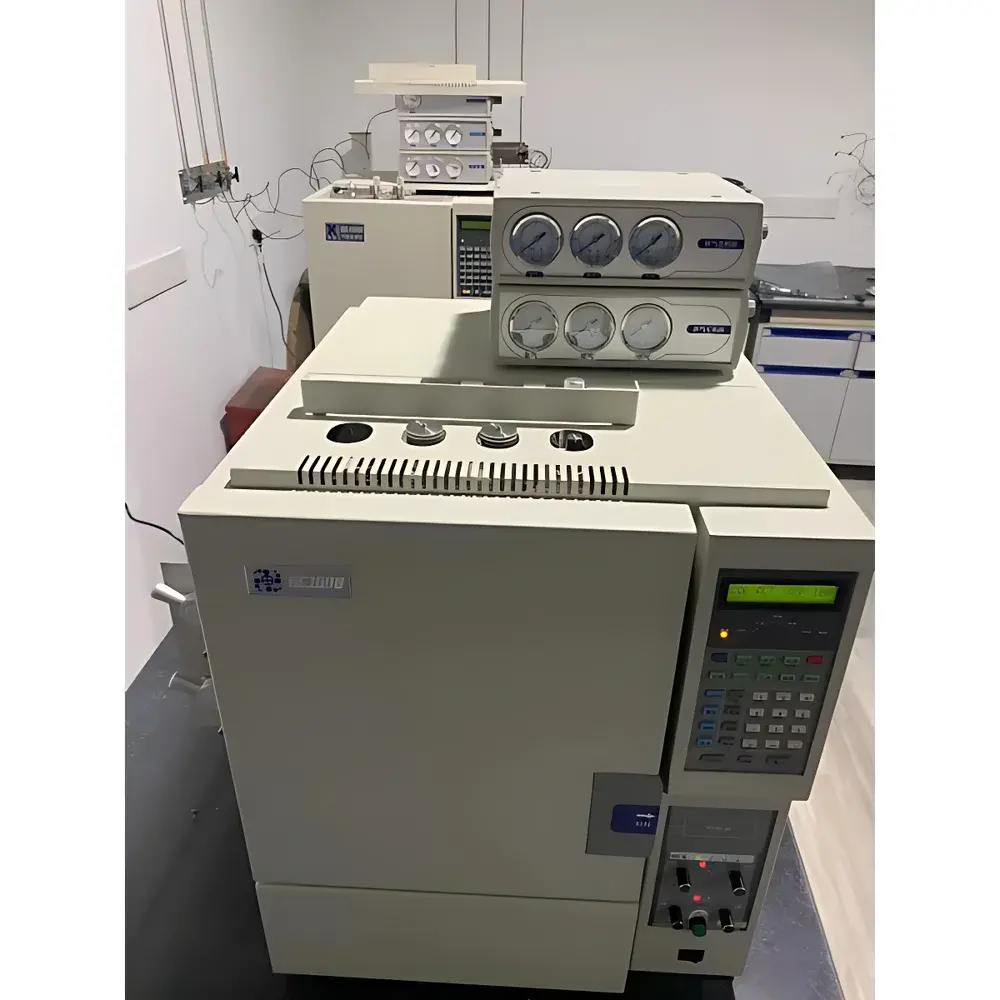
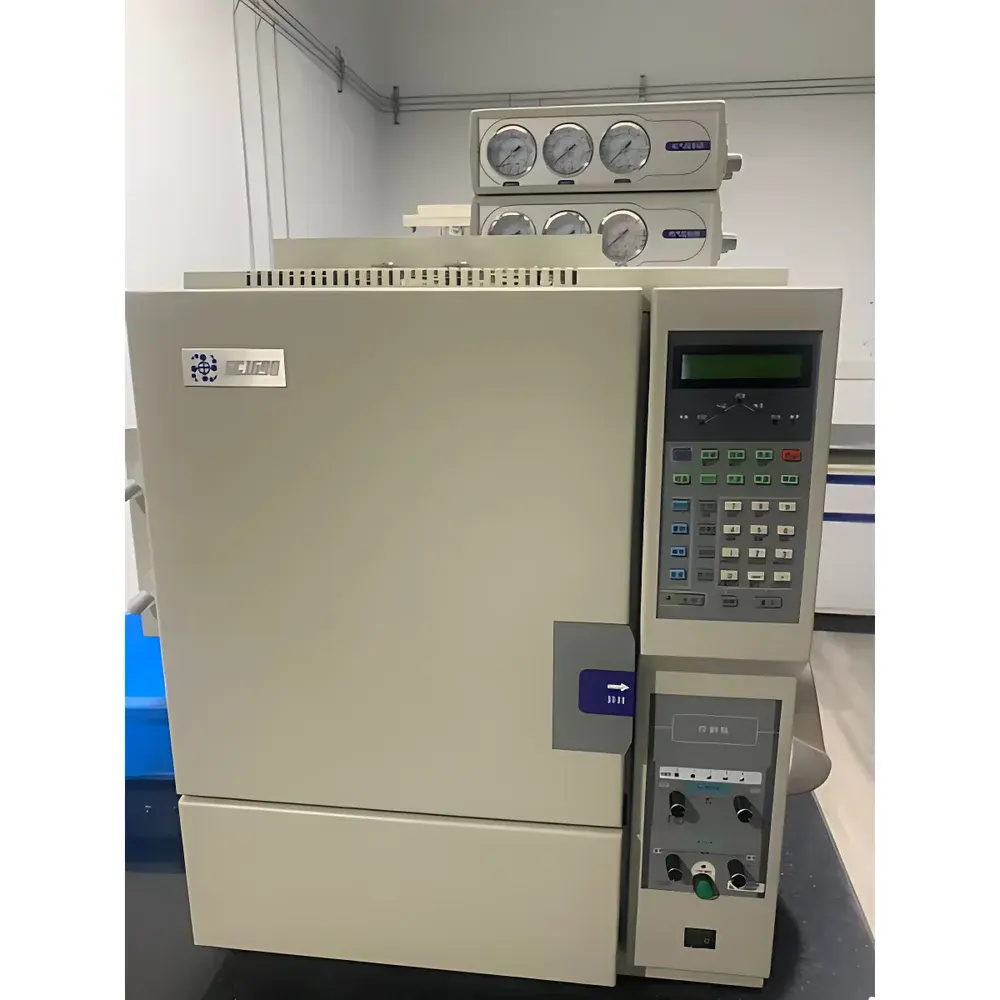
Jiedao GC1690 Dedicated Gas Chromatograph for Dimethyl Ether (DME) Analysis in Petroleum Products
| Brand | Jiedao |
|---|---|
| Origin | Zhejiang, China |
| Manufacturer Type | Authorized Distributor |
| Product Origin | Domestic (China) |
| Model | GC1690 for DME in Fuels |
| Instrument Type | Laboratory Gas Chromatograph |
| Application Scope | General-Purpose with DME-Specific Configuration |
| Temperature Control Range | +7 °C to 420 °C |
| Programmable Ramp Stages | 5-step oven temperature programming |
| Carrier Gas Flow Control | External modular flow controller (capillary/twin-channel configuration) |
| Carrier Gas Pressure Control | Adjustable via external pressure regulator |
| Injector Maximum Operating Temperature | ≤420 °C |
| Injector Pressure Setting Range | 0–100 psi (adjustable) |
| Total Injector Flow Range | 0–100 mL/min (carrier + makeup gases) |
Overview
The Jiedao GC1690 Dedicated Gas Chromatograph for Dimethyl Ether (DME) Analysis in Petroleum Products is a purpose-engineered laboratory gas chromatograph optimized for the precise quantification of dimethyl ether in gasoline, diesel, and blended fuel matrices. Built upon a robust dual-column thermal management architecture and compliant with ASTM D7084 and ISO 23202 methodologies for oxygenate analysis in hydrocarbon fuels, the system employs capillary gas chromatography with flame ionization detection (FID) as the primary analytical mode. Its design integrates advanced thermal stability, multi-zone independent temperature control, and fail-safe hardware protection mechanisms—ensuring consistent retention time reproducibility (<0.02 min RSD), baseline stability (<0.05 mV over 60 min), and long-term operational integrity under routine QC/QA laboratory conditions. The instrument is not a generic GC platform but a configured system validated for DME elution resolution from methanol, ethanol, MTBE, ETBE, and C1–C4 hydrocarbons within complex refinery streams.
Key Features
- Six independently controlled temperature zones—including column oven, dual injectors, and three detector compartments—with 5-stage programmable ramp capability and automatic rear-door cooling for rapid cycle times.
- Dual modular external gas control system: segregated capillary flow module, carrier gas module, and fuel/air (H₂/air) module—enabling intuitive visual flow ratio adjustment and hot-swap maintenance without interrupting analysis.
- Triple hardware safety architecture: Over-temperature cutoff (450 °C hard limit + 420 °C user-set threshold), TCD over-current protection (with tungsten filament safeguard during no-gas startup), and microprocessor watchdog circuitry for instantaneous power cutoff upon sensor fault or OS freeze.
- Vertical column oven design with high-efficiency insulation and symmetrical fan blades—reducing acoustic noise to <52 dB(A) and minimizing thermal gradients across 30 cm column lengths.
- Configurable inlet options: Split/splitless, on-column, packed-column vaporizing, and six-port gas sampling valve—supporting both liquid injection and headspace/gas-phase introduction per ASTM D5508 and EN 15376 protocols.
- Simultaneous support for up to three detectors (FID, TCD, ECD, FPD, or NPD) and three inlets—allowing method flexibility for co-analysis of DME alongside sulfur compounds, aromatics, or halogenated contaminants.
Sample Compatibility & Compliance
The GC1690-DME system is validated for direct injection of neat fuel samples, diluted blends (e.g., 1:10 in n-hexane), and vapor-phase headspace extracts. It achieves baseline separation of DME (retention time ~2.1 min on DB-1 or equivalent 100% dimethylpolysiloxane phase, 30 m × 0.32 mm × 1.0 µm) from interfering species including formaldehyde, acetaldehyde, and methyl formate under isothermal or gradient conditions. The instrument meets mechanical and electrical safety requirements per IEC 61010-1:2010 and supports GLP-compliant operation through configurable audit trail logging (when paired with optional PC-based acquisition software). While not FDA 21 CFR Part 11-certified out-of-the-box, its firmware architecture permits integration with validated third-party chromatography data systems (CDS) meeting regulatory traceability standards.
Software & Data Management
The GC1690 operates via embedded firmware with backlit LCD interface and color-coded membrane keyboard (green = temperature, blue = detector settings, white = numeric input, black = event timing). Raw chromatograms are exported in standard ASCII (.csv) or NetCDF format via USB 2.0 port. Optional Windows-compatible acquisition software provides peak integration using tangent skim and exponential curve fitting algorithms, calibration curve generation (linear, quadratic, or weighted least-squares), and report templates aligned with ISO/IEC 17025 documentation requirements. All method parameters—including oven program, detector voltages, and valve timing—are stored in non-volatile memory with timestamped version history.
Applications
- Quantitative determination of DME in commercial gasoline per China GB 17930–2016 and ASTM D4814 specifications.
- Stability monitoring of DME-blended diesel during storage and oxidation testing (EN 14214).
- Verification of DME adulteration in LPG and autogas mixtures.
- Method development for simultaneous analysis of DME, methanol, and light hydrocarbons in refinery off-gas streams.
- Support for research into DME as a clean-burning alternative fuel component—requiring sub-ppm detection limits and inter-laboratory reproducibility.
FAQ
Is the GC1690 pre-configured for DME analysis, or does it require method development?
The instrument ships with a factory-validated DME analysis method package—including column recommendation, temperature program, detector settings, and calibration standards protocol—but final method optimization must be performed per individual lab’s matrix and regulatory reporting requirements.
Can the system comply with ISO/IEC 17025 accreditation requirements?
Yes—when operated with documented procedures, calibrated reference standards (e.g., NIST SRM 2720a), and traceable temperature/flow verification logs, the GC1690 satisfies technical competence criteria for testing laboratories under ISO/IEC 17025:2017 Clause 6.4.
What maintenance intervals are recommended for routine DME analysis?
Injector liner replacement every 200 injections; column trimming every 500 runs; FID jet cleaning monthly; and full gas path leak check quarterly—assuming average usage of 10 samples/day.
Does the system support electronic data interchange (EDI) with LIMS?
Native EDI is not embedded, but ASCII output files and optional OPC UA-enabled software modules allow seamless integration with major LIMS platforms including LabWare, STARLIMS, and Thermo Fisher SampleManager.
Is remote diagnostics or firmware update capability available?
Firmware updates are performed via USB drive using Jiedao’s official release packages; remote diagnostic access requires optional Ethernet module and prior authorization under service agreement.
Related Products




