
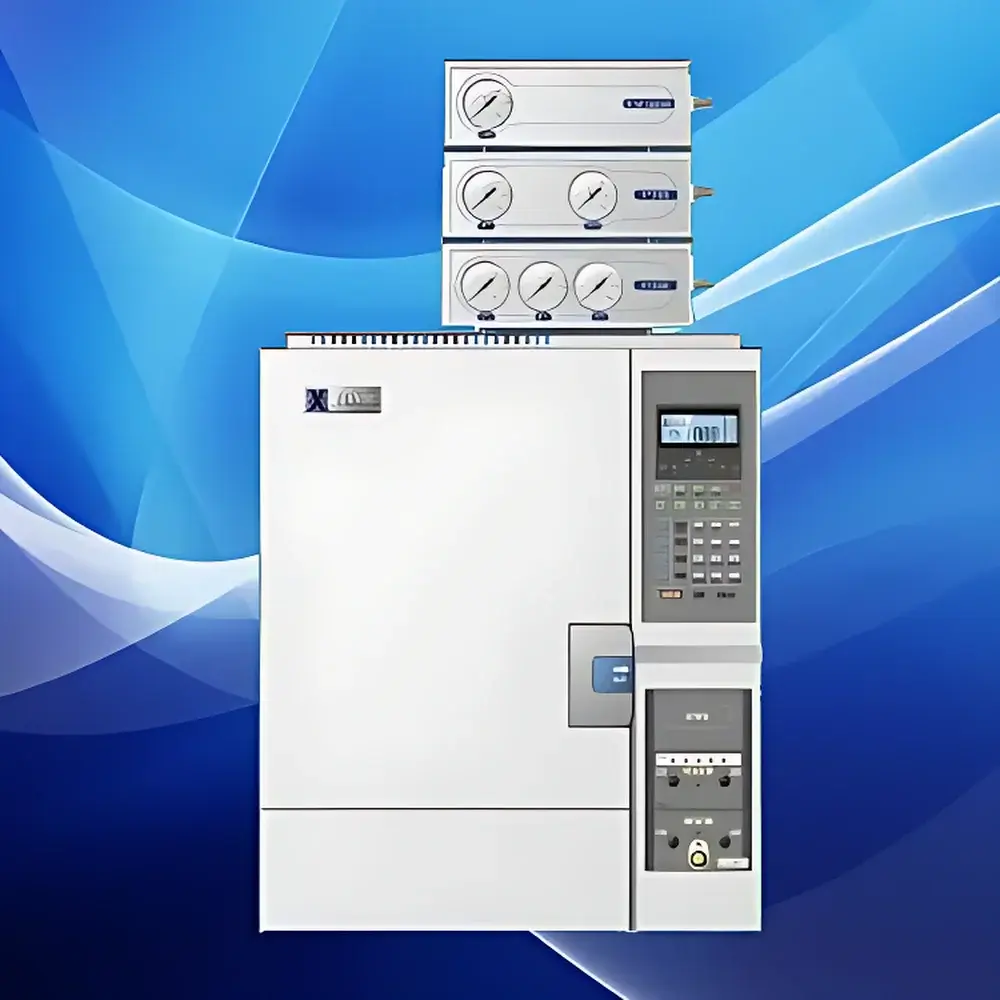
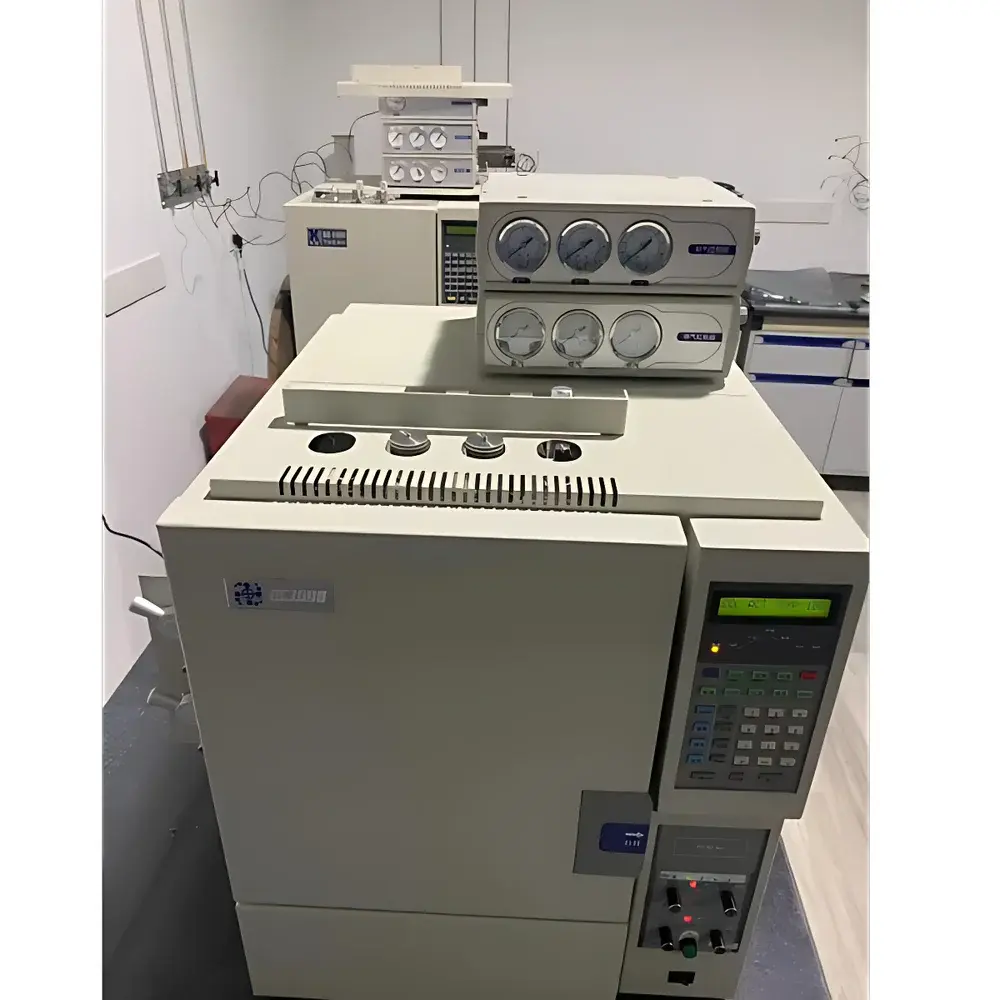
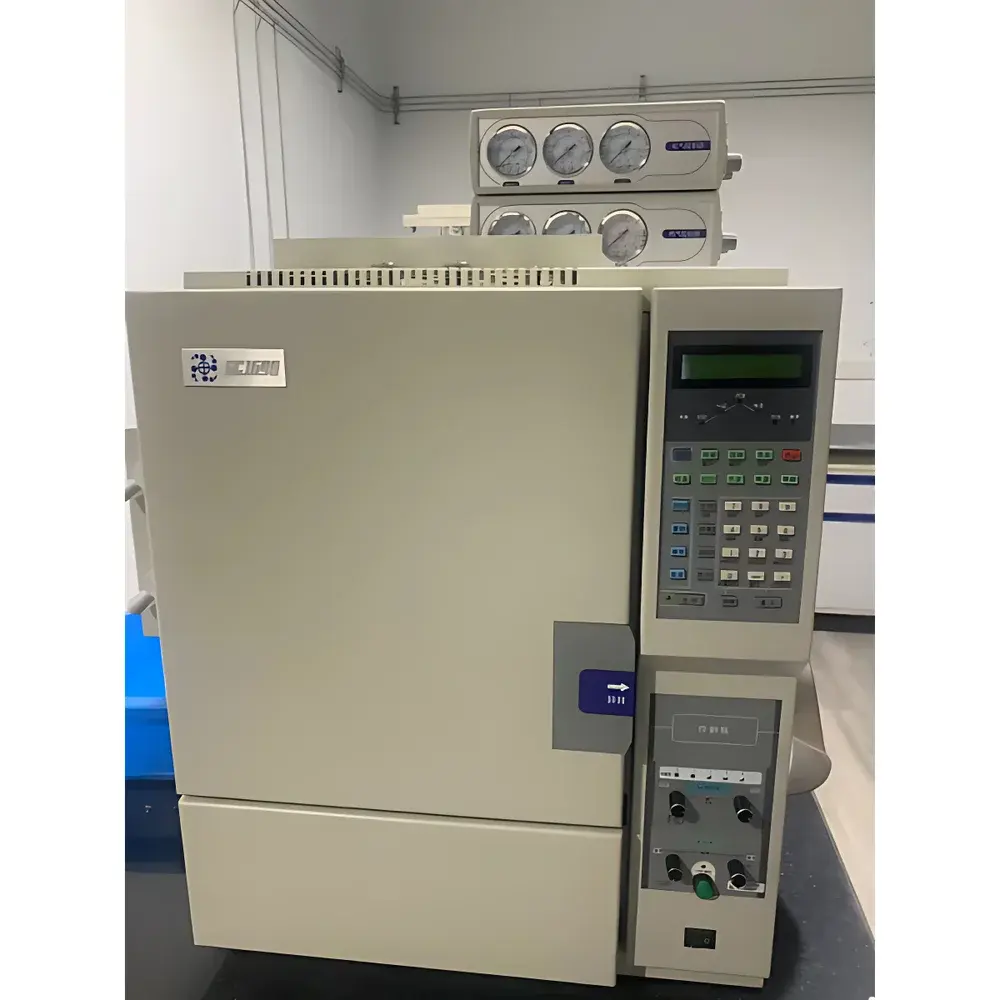
Jiedao GC1690 Dedicated Gas Chromatograph for Mixed Inorganic and Organic Gases
| Brand | Jiedao |
|---|---|
| Origin | Zhejiang, China |
| Manufacturer Type | Authorized Distributor |
| Product Category | Domestic |
| Model | GC1690 for Mixed Inorganic & Organic Gases |
| Instrument Type | Laboratory Gas Chromatograph |
| Application Scope | General-Purpose |
| Temperature Control Range | +7 °C to 420 °C (Column Oven) |
| Programmable Ramp Rate | 5-Stage Programmed Temperature Ramping |
| Carrier Gas Flow Control | External Modular Flow Controller (Capillary, Carrier, Fuel/Auxiliary Gas Boxes) |
| Carrier Gas Pressure Control | Electronic Pressure Control (EPC)-Compatible Design |
| Injector Maximum Operating Temperature | ≤420 °C |
| Injector Pressure Setting Range | 0–100 psi (adjustable) |
| Total Injector Flow Setting Range | 0–500 mL/min (dependent on configuration) |
Overview
The Jiedao GC1690 Dedicated Gas Chromatograph for Mixed Inorganic and Organic Gases is a modular, laboratory-grade analytical system engineered for high-reproducibility separation and quantification of volatile and semi-volatile compounds across diverse chemical matrices. Based on classical gas chromatographic principles—where analytes are partitioned between a mobile phase (inert carrier gas) and a stationary phase (capillary or packed column)—the GC1690 delivers robust performance in both qualitative identification and quantitative analysis of gases, light hydrocarbons, permanent gases (e.g., H₂, O₂, N₂, CO, CO₂, CH₄), sulfur compounds, halogenated organics, and nitrogen-containing species. Its design integrates proven thermal management architecture, fail-safe hardware protection logic, and flexible detector/injector compatibility—making it suitable for routine QC, environmental monitoring, petrochemical process control, and research applications requiring simultaneous detection of inorganic and organic analytes within a single run.
Key Features
- Six-Independent-Zone Temperature Control: Precise regulation of column oven, up to three detector zones, two injector ports, and one auxiliary heater (AUX1), all supporting 5-stage programmable ramping with ±0.1 °C stability.
- Triple Hardware Protection System: Integrated over-temperature cutoff (active at 450 °C independent circuit), TCD over-current protection (prevents tungsten filament burnout during no-gas startup), and microprocessor-level watchdog logic that triggers emergency power-down upon sensor fault, open/short circuit, or OS freeze.
- Modular External Gas Control Architecture: Separately housed capillary, carrier, and fuel/oxidant gas modules enable intuitive flow ratio adjustment, rapid fault isolation, and zero-downtime maintenance without disrupting chromatographic runs.
- Flexible Injection Configurations: Supports packed-column on-column injection, split/splitless capillary injection, wide-bore capillary (WBC), vaporizing packed-column injection, and 6-port gas sampling valves—enabling method transfer across legacy and modern sample introduction protocols.
- Multi-Detector Expandability: Accommodates up to three simultaneously installed detectors—including FID (C₁–C₁₂ hydrocarbons), TCD (permanent gases, CO₂), FPD (S/P compounds), NPD (nitrogen/phosphorus-selective organics), and ECD (halogenated and nitroaromatics)—with dedicated parameter keypads and independent signal conditioning.
- Ergonomic Human-Machine Interface: Backlit LCD display with color-coded membrane keypad (green = temperature, blue = detector, white = numeric, black = event control) minimizes operator error and accelerates method setup.
Sample Compatibility & Compliance
The GC1690 is validated for analysis of gaseous and low-boiling liquid samples within the boiling point range up to 399 °C. It complies with fundamental requirements of ISO/IEC 17025 for testing laboratories, supports audit-ready operation under GLP environments, and enables traceable calibration via external standard injection sequences. While not pre-certified to FDA 21 CFR Part 11, its hardware architecture—combined with optional third-party compliant data acquisition software—permits implementation of electronic signature, audit trail, and user access control frameworks required for regulated pharmaceutical and food safety applications (e.g., USP , ASTM D1945, EPA Method 18, ISO 6142).
Software & Data Management
The GC1690 operates natively via front-panel controls but is fully compatible with industry-standard chromatography data systems (CDS) through RS-232/USB interfaces. Raw analog detector outputs (±1 V full scale) and digital status signals (oven temp, valve events, detector status) are accessible for integration into LIMS or SCADA platforms. When paired with compliant CDS software, the system supports peak integration per ICH Q2(R2) guidelines, retention time locking, multi-point calibration curves, and automated report generation—including PDF export with embedded metadata (instrument ID, method version, analyst ID, timestamp). Audit trail functionality requires external software validation per ALCOA+ principles.
Applications
- Petrochemical: Hydrocarbon speciation (C₁–C₅), refinery gas analysis, sulfur compound profiling (H₂S, COS, mercaptans)
- Environmental: Ambient air VOC monitoring (BTEX, aldehydes), landfill gas composition (CH₄, CO₂, N₂O), stack emission testing
- Pharmaceutical: Residual solvent analysis (ICH Q3C), excipient purity verification, synthesis intermediate tracking
- Fertilizer & Chemical Manufacturing: Ammonia synthesis gas purity, chlorine/hydrogen chloride impurity screening, syngas (H₂/CO/CO₂/N₂) balance
- Food & Beverage: Headspace analysis of fermentation volatiles (ethanol, esters, diacetyl), packaging headspace O₂/N₂/CO₂ quantification
- Power Generation: Transformer oil dissolved gas analysis (DGA) precursors (H₂, CH₄, C₂H₂, C₂H₄, C₂H₆)
FAQ
What detector combinations are supported for simultaneous inorganic and organic analysis?
The GC1690 supports concurrent installation of TCD (for permanent gases and CO₂) plus FID (for hydrocarbons) and either FPD (for sulfur/nitrogen species) or ECD (for halogenated contaminants), enabling multi-class detection in a single chromatographic run.
Is electronic pressure control (EPC) built-in or optional?
The base configuration uses precision mechanical flow controllers; however, the external gas module design allows seamless retrofitting of third-party EPC units compatible with standard 0–10 V analog input/output protocols.
Can the instrument be operated under GLP-compliant conditions?
Yes—when used with validated CDS software featuring audit trail, electronic signatures, and role-based access control, the GC1690 meets core GLP infrastructure requirements for instrument qualification (IQ/OQ/PQ) and data integrity.
What is the maximum allowable operating temperature for the column oven?
The column oven is rated for continuous operation from +7 °C to 420 °C, with a fixed 450 °C independent over-temperature cutoff circuit providing redundant thermal protection.
Does the GC1690 support ASTM D1945 or ISO 6142 methods out-of-the-box?
Method compliance depends on column selection, detector configuration, and calibration protocol—not firmware. The hardware platform satisfies all physical and thermal specifications required by these standards when properly configured and qualified.
Related Products




