
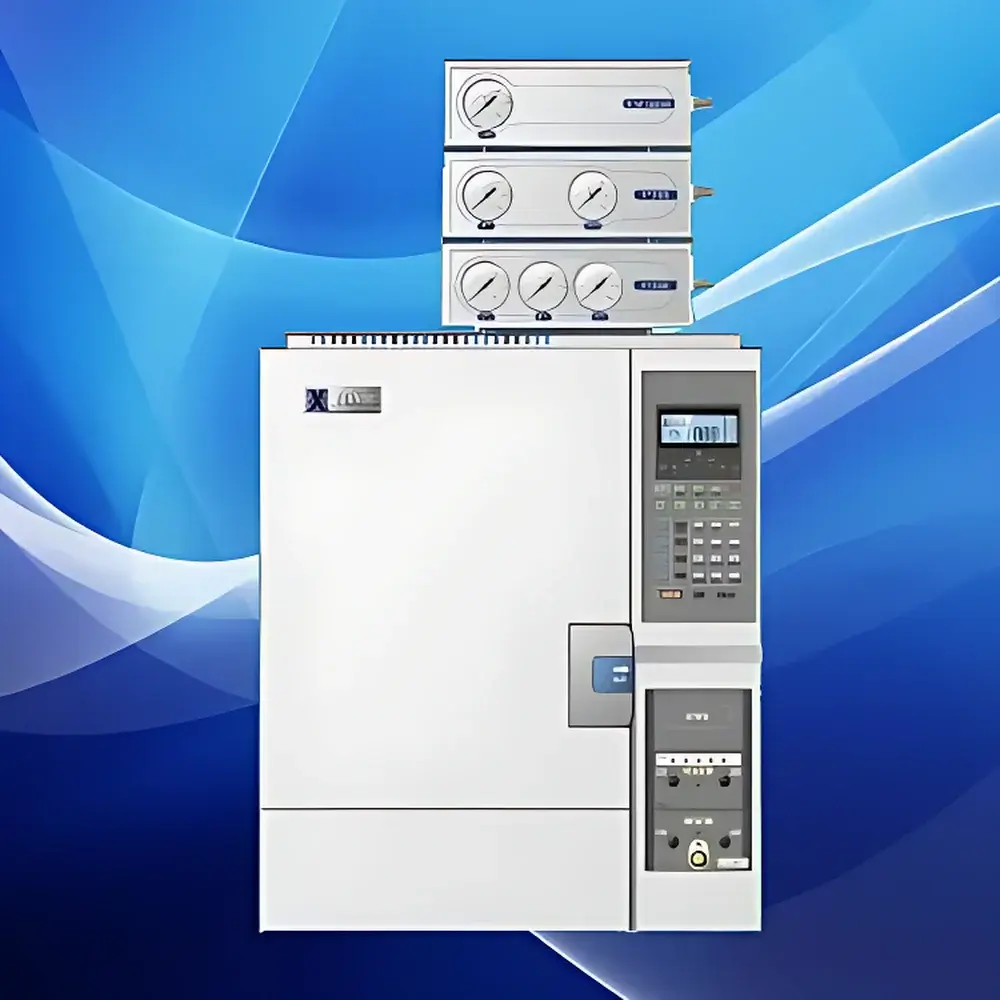
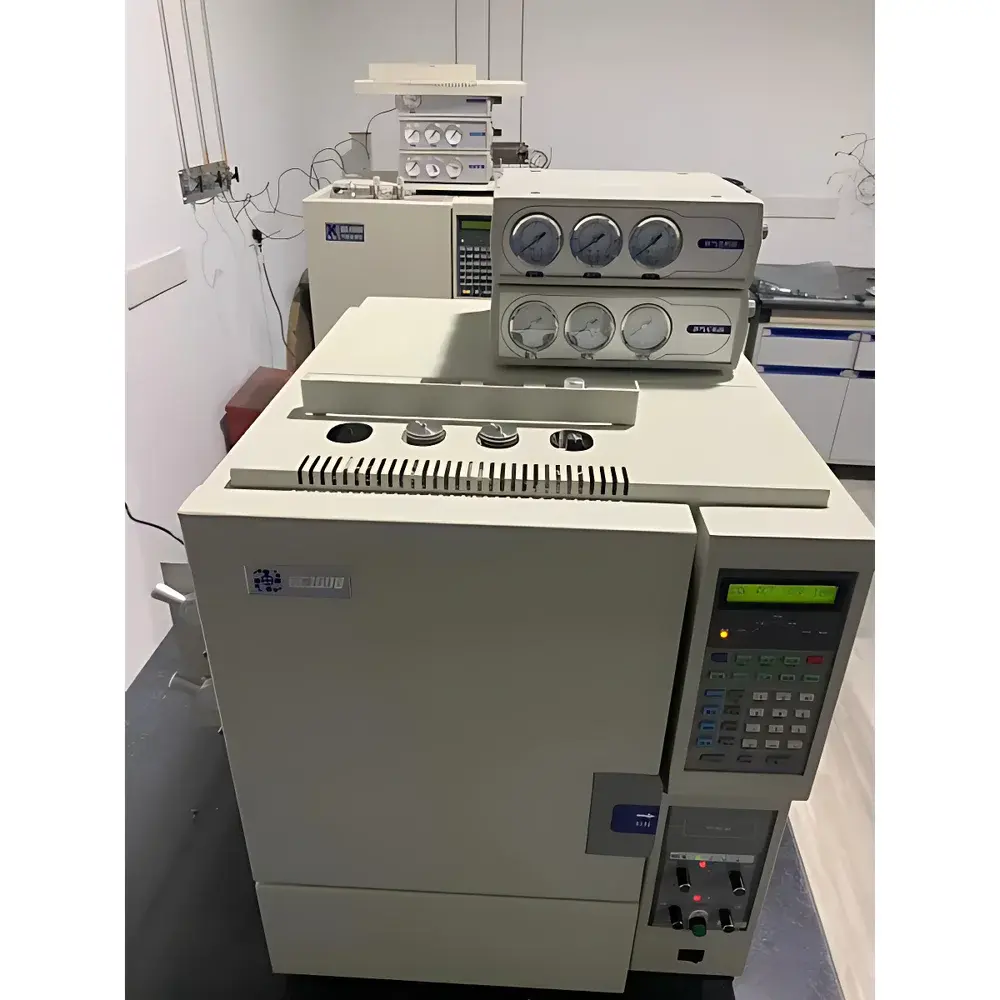
Jiedao GC1690 General-Purpose Gas Chromatograph
| Brand | Jiedao |
|---|---|
| Origin | Zhejiang, China |
| Model | GC1690 |
| Instrument Type | Laboratory Gas Chromatograph |
| Application Scope | General-purpose analysis of organic/inorganic compounds and gases (boiling point ≤ 399 °C) |
| Temperature Control Zones | 6 independent zones (including column oven, injector, detector, AUX1) |
| Column Oven Temp Range | +7 °C to 420 °C |
| Programmed Ramp | 5-step programmable heating |
| Injector Max Temp | 420 °C |
| Carrier Gas Pressure Control | External modular pressure controllers (single/dual channel) |
| Carrier Gas Flow Control | External modular flow controllers (single/dual channel) |
| Detector Options | FID, TCD, FPD, NPD, ECD (up to three simultaneously installed) |
| Injection Modes | Packed-column on-column, split/splitless, wide-bore capillary (WBC), packed-column vaporizing, 6-port gas sampling valve |
| Safety Protections | Over-temperature, over-current (TCD), and system crash protection with automatic power cutoff and audible/visual alarm |
| Data Interface | RS-232 or USB (optional) |
| Compliance | Designed for GLP-compliant laboratory environments |
Overview
The Jiedao GC1690 General-Purpose Gas Chromatograph is a robust, modular benchtop analytical instrument engineered for high-reproducibility separation and quantification of volatile and semi-volatile compounds across diverse sample matrices. Based on proven packed- and capillary-column gas chromatography principles, the GC1690 employs precise thermal regulation, flexible detection architecture, and fail-safe operational logic to support routine quality control, environmental monitoring, petrochemical profiling, pharmaceutical impurity testing, and food safety applications. Its design adheres to fundamental chromatographic performance criteria—including baseline stability, retention time repeatability (< 0.05% RSD), and peak symmetry—while maintaining compatibility with internationally recognized method standards such as ASTM D3606 (gasoline aromatics), ISO 11843 (detection limit estimation), and USP (chromatographic system suitability).
Key Features
- Six Independent Temperature-Controlled Zones: Includes column oven, dual injectors, up to three detectors, and AUX1 auxiliary heater—all individually adjustable with ±0.1 °C stability. Column oven supports 5-stage programmed ramping from +7 °C to 420 °C with automatic rear-door ventilation for rapid cooling.
- Comprehensive Hardware Protection System: Triple-layer electronic safeguards: (1) Over-temperature cutoff at 450 °C independent hardware limit; (2) TCD over-current protection with real-time bridge current monitoring and automatic shutoff upon carrier gas failure or resistance anomaly; (3) System-level watchdog circuitry that halts all heating and detection functions upon microcontroller freeze, sensor open/short, or ground fault detection.
- Modular External Gas Control Architecture: Discrete, externally mounted gas modules for carrier, fuel, and oxidant gases—enabling intuitive flow/pressure ratio adjustment, rapid fault isolation, and zero-downtime maintenance without interrupting column oven or detector operation.
- Multi-Configuration Injection Flexibility: Supports five distinct inlet configurations—packed-column on-column, split/splitless (with back-pressure regulated mode), wide-bore capillary (WBC), packed-column vaporizing, and 6-port gas sampling valve—allowing seamless adaptation to method-specific volatility, polarity, and matrix complexity requirements.
- Dual-Detector Expansion Capability: Accommodates up to three detectors simultaneously (FID, TCD, FPD, NPD, ECD) via standardized electrical and pneumatic interfaces. Optional signal amplification circuits enhance TCD sensitivity for low-concentration inorganic species.
- Ergonomic Human-Machine Interface: Backlit LCD display with multicolor-coded keypad (green = temperature, blue = detector parameters, white = numeric input, black = event timing)—designed for tactile accuracy and reduced operator error during method setup and run supervision.
Sample Compatibility & Compliance
The GC1690 is validated for analysis of organic compounds (e.g., BTEX, PAHs, pesticides), permanent gases (O2, N2, CO, CO2, CH4), light hydrocarbons (C1–C5), and heteroatom-containing species (e.g., sulfur compounds, phosphorus esters, halogenated organics) within boiling point ranges up to 399 °C. It meets mechanical and electrical safety requirements per GB/T 13966–2013 (Chinese national standard for chromatographs) and incorporates design elements aligned with ISO/IEC 17025:2017 Clause 6.4.6 (equipment verification) and Clause 7.7 (result reporting integrity). While not pre-certified for FDA 21 CFR Part 11, its event-logged operation, parameter locking capability, and manual audit trail generation support laboratory-developed validation protocols for regulated environments.
Software & Data Management
The GC1690 operates via embedded firmware with local method storage (≥ 100 methods), real-time chromatogram display, and integrated integration algorithms (tangent skim, vertical drop, Gaussian deconvolution). Raw data export is supported in ASCII (.txt) and CSV formats for post-processing in third-party software (e.g., OpenChrom, Chromeleon, or MATLAB). Optional PC-based acquisition software provides enhanced reporting templates, calibration curve management (linear, quadratic, weighted), and multi-instrument scheduling. All parameter changes, run starts/stops, and alarm events are timestamped and stored internally—enabling traceability consistent with GLP documentation practices.
Applications
- Petrochemical QA/QC: Hydrocarbon group-type analysis (PIONA), gasoline oxygenate determination (MTBE, ETBE), and refinery gas composition profiling.
- Environmental Testing: EPA Method 8021B (halogenated solvents), 8260D (VOCs in water/soil), and ISO 16000-6 (indoor air VOC screening).
- Pharmaceutical Development: Residual solvent testing per ICH Q3C guidelines; excipient purity assessment.
- Food & Beverage Safety: Pesticide residue screening (organophosphates, carbamates), flavor compound profiling, and ethanol quantification.
- Industrial Hygiene: Workplace air monitoring for aldehydes, ketones, and aromatic solvents per OSHA/NIOSH methodologies.
FAQ
What detector combinations are supported simultaneously?
The GC1690 accommodates any combination of up to three detectors from the following: FID, TCD, FPD, NPD, and ECD—each with dedicated power supply, gas routing, and signal conditioning modules.
Is the column oven capable of sub-ambient operation?
No—the minimum operating temperature is +7 °C. For sub-ambient separations, external cryogenic cooling accessories must be integrated separately.
Does the instrument support electronic pressure control (EPC)?
The GC1690 uses precision mechanical pressure regulators and flow controllers in its external gas modules; it does not include integrated EPC but maintains equivalent reproducibility through calibrated needle valves and digital setpoint displays.
Can method parameters be password-protected?
Yes—user-defined access levels allow locking of temperature programs, detector settings, and injection parameters to prevent unauthorized modification during routine operation.
What is the maximum allowable inlet pressure for split/splitless operation?
The standard inlet pressure range is 0–100 psi (0–690 kPa); higher-pressure configurations (up to 150 psi) are available upon request with reinforced septum purge and sealing components.




