
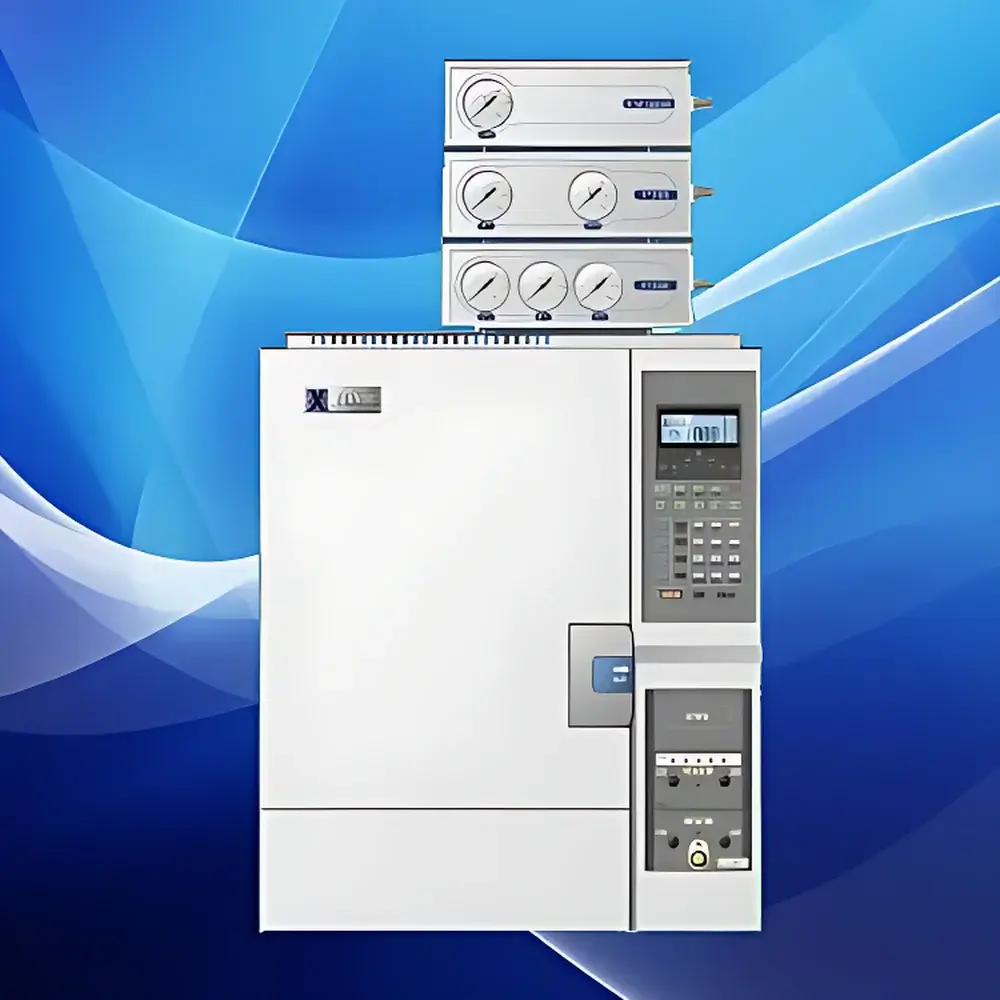
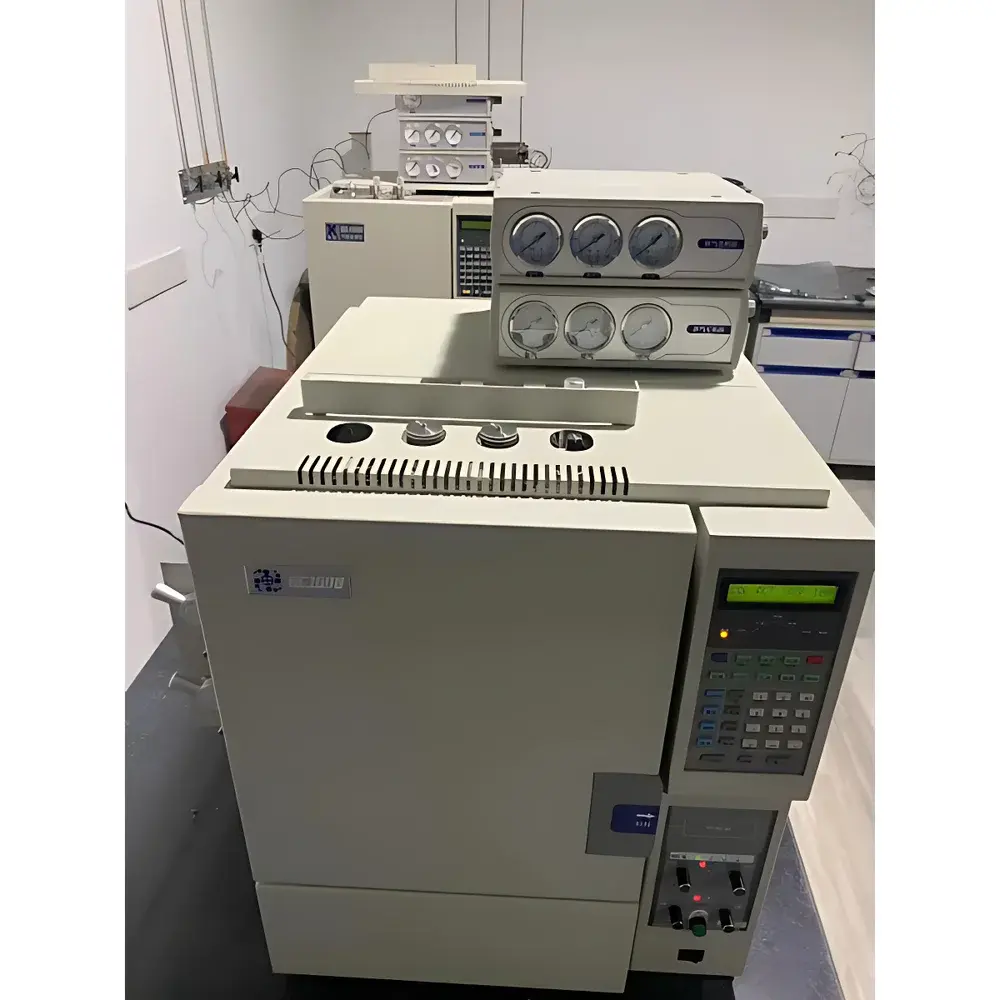
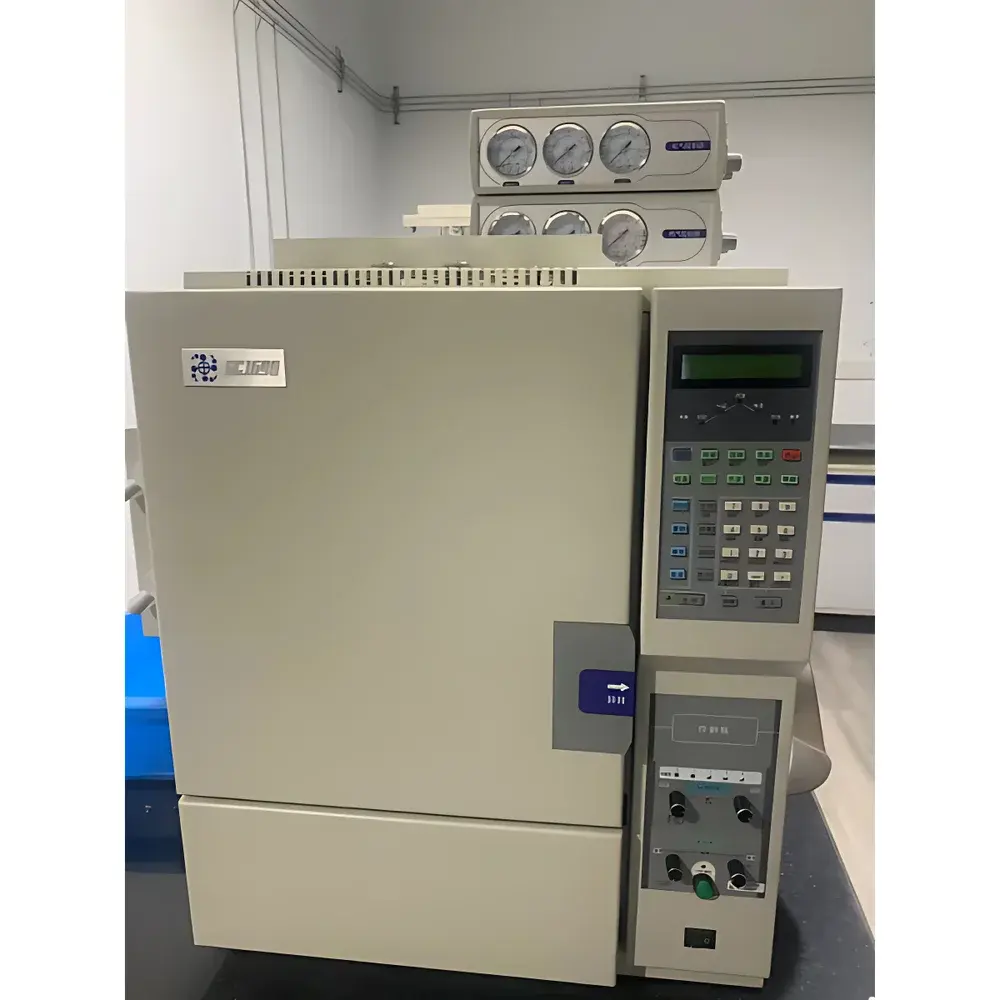
Jiedao GC1690 Methanol-to-Hydrogen & Natural Gas-to-Hydrogen Dedicated Gas Chromatograph
| Brand | Jiedao |
|---|---|
| Origin | Zhejiang, China |
| Instrument Type | Laboratory Gas Chromatograph |
| Application Scope | General-purpose with H₂ production process gas analysis focus |
| Temperature Control Zones | 6 independent zones (including column oven, injector, detector, AUX1) |
| Column Oven Temp Range | +7 °C to 420 °C |
| Programmed Ramp | 5-step temperature programming |
| Injector Max Temp | ≤420 °C |
| Carrier Gas Pressure Control | External modular pressure controllers (dual-channel optional) |
| Carrier Gas Flow Control | External modular mass flow controllers (dual-channel optional) |
| Detector Compatibility | FID, TCD, FPD, NPD, ECD (up to three simultaneously) |
| Injection Modes | Packed-column on-column, split/splitless, wide-bore capillary (WBC), packed-column vaporizing, 6-port gas sampling valve |
| Safety Protections | Over-temperature, over-current (TCD-specific), and system crash auto-shutdown with audible/visual alarm |
| Column Oven Architecture | Vertical design with active rear-door cooling |
| Display | Backlit LCD with color-coded membrane keyboard (green = temp, blue = detector, white = numeric, black = event control) |
| Compliance | Designed for GLP-compliant lab environments |
Overview
The Jiedao GC1690 Methanol-to-Hydrogen & Natural Gas-to-Hydrogen Dedicated Gas Chromatograph is a laboratory-grade analytical platform engineered for precise, reproducible separation and quantification of permanent gases (H₂, O₂, N₂, CH₄, CO, CO₂), light hydrocarbons, and trace impurities in syngas, reformate, and hydrogen purification streams. Built upon a robust dual-microprocessor architecture, the instrument employs conventional packed and capillary column chromatography with carrier gas–driven elution and thermal conductivity or flame ionization detection—principles aligned with ASTM D1945, ISO 6974-1, and ISO 14111 for fuel gas analysis. Its vertical column oven design minimizes thermal interference between zones, while the 420 °C maximum operating temperature enables high-boiling point compound elution and rapid method development for complex feedstock matrices such as methanol reformate and natural gas-derived synthesis gas.
Key Features
- Six independently controlled temperature zones—including column oven, dual injectors, three detector compartments, and AUX1 for external reactors or traps—support multi-step method sequencing and parallel analysis workflows.
- Five-stage programmable temperature ramping with <±0.1 °C stability ensures retention time repeatability across long-duration runs typical in hydrogen purity monitoring (e.g., ISO 8573-5 compliance testing).
- Modular external gas control system: separate, labeled modules for carrier gas (He, H₂, N₂), fuel/oxidant (H₂/air for FID), and auxiliary gases—enabling rapid fault isolation and field-replaceable component maintenance without instrument downtime.
- Triple safety architecture: hardware-level over-temperature cutoff (450 °C hard limit), TCD bridge current protection (prevents tungsten filament burnout during no-flow or high-resistance events), and microcontroller watchdog circuitry that triggers immediate power-down upon firmware freeze or sensor failure.
- Vertical column oven with motorized rear door and forced-air cooling achieves 50 samples/day in hydrogen plant operations.
- Flexible detector configuration: simultaneous installation of up to three detectors (e.g., TCD for H₂/CH₄/O₂/N₂, FID for hydrocarbon residuals, ECD for halogenated contaminants) via standardized electrical and pneumatic interfaces.
Sample Compatibility & Compliance
The GC1690 accommodates diverse sample introduction formats required in hydrogen production QA/QC: packed-column on-column injection for undiluted reformate gas; split/splitless modes for concentrated liquid feeds (e.g., methanol condensate); wide-bore capillary (WBC) for fast light-gas screening; and 6-port gas sampling valves with loop volumes from 0.25 to 5 mL for pressurized pipeline gas grabs. It meets essential regulatory expectations for laboratory instrumentation under ISO/IEC 17025:2017, including documented calibration traceability, environmental condition monitoring (oven temp logging), and detector response linearity verification. While not pre-certified for FDA 21 CFR Part 11, its event-log functionality—recording all parameter changes, run starts/stops, and alarm triggers with timestamps—provides foundational data integrity for GMP-aligned validation protocols.
Software & Data Management
Data acquisition and reporting are managed via Jiedao’s GC-Studio software (Windows-based, English UI), supporting real-time chromatogram display, peak integration using tangent skim or valley-to-valley algorithms, calibration curve generation (linear, quadratic, or multi-point non-linear), and customizable report templates compliant with internal SOPs. Raw data files (.DAT) store full detector voltage traces, method parameters, and system logs—enabling retrospective reprocessing and audit trail reconstruction. The software supports export to CSV, PDF, and XML formats for LIMS integration and includes password-protected user roles (Operator, Supervisor, Administrator) to enforce procedural controls during routine analysis.
Applications
This instrument is routinely deployed in hydrogen production facilities for: real-time monitoring of methanol steam reforming effluent (H₂, CO, CO₂, CH₃OH, H₂O); natural gas partial oxidation product stream profiling; PSA (pressure swing adsorption) tail gas composition verification; catalyst deactivation studies via sulfur compound (H₂S, COS) tracking; and final product certification against ISO 8573-1 Class 1–3 purity specifications. Additional use cases include biogas upgrading QA, ammonia synthesis loop gas analysis, and fuel cell feedstock qualification where ppm-level CO and total hydrocarbon content must be verified prior to PEM stack integration.
FAQ
Can the GC1690 be configured for unattended overnight operation?
Yes—its hardware watchdog, stable oven temperature control, and automated event logging enable reliable 12–24 hour sequence runs when paired with an autosampler (optional accessory).
Is TCD sensitivity sufficient for sub-ppm H₂ detection in nitrogen background?
With optimized He carrier gas, 100 Ω filament, and signal averaging, typical detection limits are ~10 ppm v/v for H₂; for sub-ppm applications, a methanizer-FID configuration is recommended.
Does the instrument support EPA Method 18 or ISO 12967 for VOC emissions?
Yes—when equipped with DB-1 or equivalent capillary columns and FID, it satisfies retention time window and calibration verification criteria specified in both standards.
What maintenance intervals are recommended for the external gas control modules?
Carrier gas pressure regulators require quarterly leak checks and annual diaphragm replacement; flow controllers should undergo biannual zero/span verification using certified reference gases.
Can I upgrade from a single-detector to triple-detector configuration post-purchase?
Yes—the chassis includes reserved electrical connectors, mounting rails, and gas routing ports; detector upgrades require only mechanical installation and firmware license activation.
Related Products





