
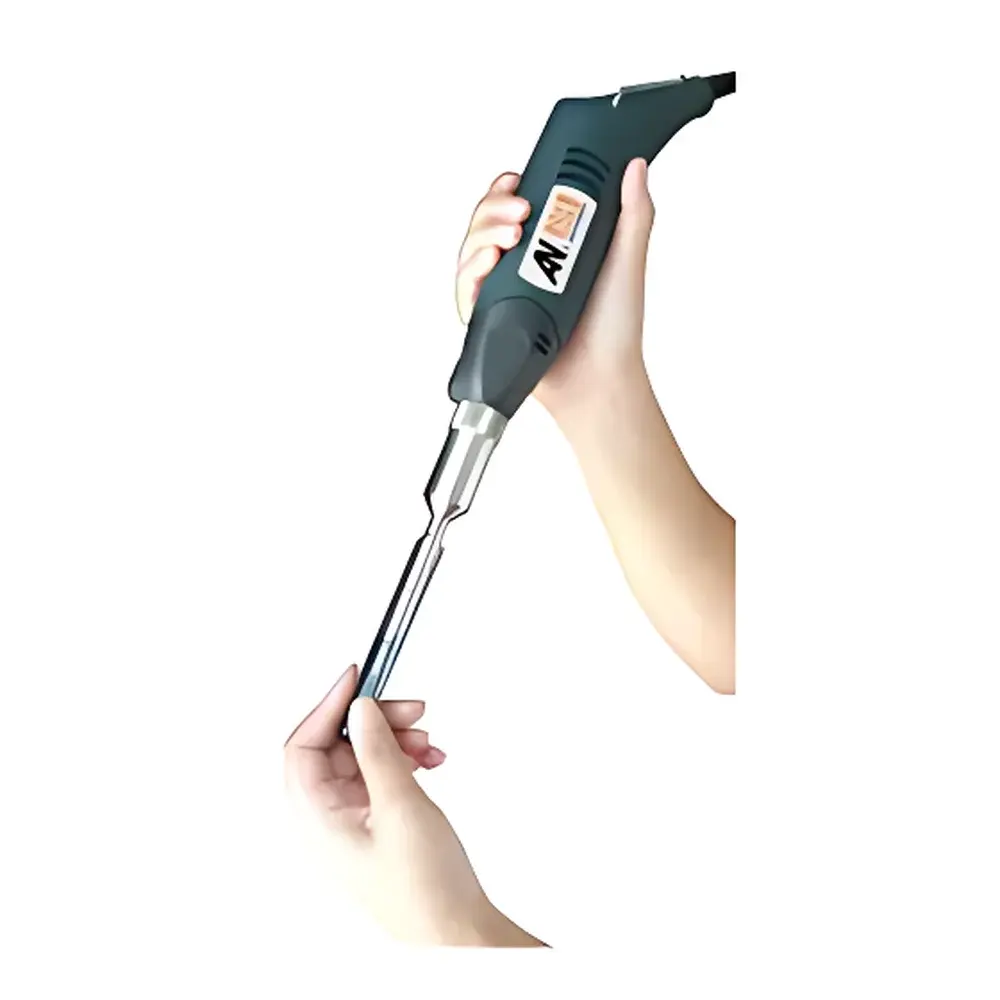
Jihepu AD145S-P Handheld High-Shear Homogenizer
| Brand | Jihepu |
|---|---|
| Origin | Shandong, China |
| Manufacturer Type | Authorized Distributor |
| Instrument Type | Probe-type Rotor-Stator Homogenizer |
| Dimensions (W×D×H) | 380 × 80 × 50 mm |
| Weight | 1.0 kg (net), 1.6 kg (gross) |
| Speed Range | 5,000–35,000 rpm |
| Input Power | 145 W |
| Output Power | 110 W |
| Rated Torque | 3.1 N·cm |
| Voltage | AC 220 V |
| Frequency | 50/60 Hz |
| Duty Cycle | S1 (Continuous Operation) |
| Control Method | 6-Position Mechanical Speed Dial |
| Working Head Material | ASTM A276 Type 316 Stainless Steel |
| Bearing Material | PTFE |
| Max. Ambient Temperature | 40 °C |
| Max. Relative Humidity | 80 % |
| Max. Operating Temperature (for probe) | 120 °C |
| Standard Probe | G10 (6–250 mL, ≤200 mPa·s) |
| Optional Probes | G6 (0.2–10 mL), G8 (1–60 mL) |
| Rotor Tip Speed | 8–13 m/s (depending on probe) |
| Minimum Immersion Depth | 12–20 mm |
| Stator Diameter | 6–10 mm |
| Probe Length | 123–178 mm |
Overview
The Jihepu AD145S-P Handheld High-Shear Homogenizer is a precision-engineered rotor-stator device designed for laboratory-scale dispersion, emulsification, homogenization, and particle size reduction of viscous and heterogeneous liquid-phase samples. It operates on the principle of controlled hydrodynamic shear: high-speed rotation of a stainless steel rotor within a fixed stator generates intense localized fluid velocity gradients, turbulent eddies, and cavitation effects—enabling rapid breakdown of immiscible phases (e.g., oil-in-water or water-in-oil systems), disruption of cellular structures, and uniform distribution of suspended particles. Unlike magnetic stirrers or low-shear mixers, this instrument delivers reproducible, scalable results in batch-mode operation with minimal thermal load and no external cooling requirement for short-duration protocols (<5 min). Its compact handheld form factor supports ergonomic operation directly inside standard glass beakers, centrifuge tubes, or reaction vessels—eliminating transfer losses and cross-contamination risks common in benchtop homogenizers.
Key Features
- Robust 6-position mechanical speed dial enabling precise, repeatable selection across a wide operational range (5,000–35,000 rpm), with corresponding rotor tip speeds of 8–13 m/s depending on probe geometry.
- Interchangeable probe system (G6, G8, G10) engineered to match sample volume (0.2–250 mL) and viscosity (up to 200 mPa·s), ensuring optimal energy transfer and minimal foaming or overheating.
- ASTM A276 Type 316 stainless steel wetted parts provide corrosion resistance against organic solvents, acids, bases, and biological media—critical for compliance with GLP and ISO 17025-accredited workflows.
- PTFE bearings ensure low-friction, maintenance-free operation under repeated sterilization cycles (autoclavable at 121 °C for 20 min) and compatibility with aggressive cleaning agents.
- Continuous-duty S1-rated motor with thermal overload protection maintains stable torque output (3.1 N·cm) during extended processing, supporting reproducible homogenization across sequential batches.
- Ergonomic housing (380 × 80 × 50 mm, net weight 1.0 kg) features non-slip grip and balanced center-of-gravity design—optimized for one-handed control and fatigue-free handling during routine QC testing or R&D formulation development.
Sample Compatibility & Compliance
The AD145S-P accommodates diverse sample matrices including aqueous suspensions, lipophilic emulsions, polymer solutions, microbial lysates, nanoparticle dispersions, and semi-solid ointments. It is routinely employed in applications requiring adherence to ASTM D445 (kinematic viscosity), ISO 7027 (turbidity), USP (emulsion droplet size), and ICH Q5C (protein stability assessment). All probes meet FDA-compliant material specifications (21 CFR 177.1520 for PTFE; 21 CFR 178.3570 for SS316), and the unit’s electrical design conforms to IEC 61010-1:2012 for laboratory equipment safety. While not intrinsically rated for hazardous area use, it complies with CE marking requirements for electromagnetic compatibility (EMC Directive 2014/30/EU) and low-voltage safety (LVD Directive 2014/35/EU).
Software & Data Management
As a manually operated analog instrument, the AD145S-P does not integrate digital connectivity or firmware-based data logging. However, its deterministic mechanical control architecture ensures full traceability: speed settings are physically indexed and independently verifiable using calibrated tachometers (e.g., ISO 5326-certified optical sensors). Users may document operating parameters—including probe type, immersion depth, duration, and ambient conditions—in paper-based or electronic lab notebooks compliant with 21 CFR Part 11 when paired with validated audit-trail-enabled LIMS platforms. Calibration verification intervals are recommended every 6 months per ISO/IEC 17025:2017 Clause 6.5.2.
Applications
- Pharmaceutical development: Preparation of nanoemulsions for transdermal delivery, homogenization of topical ointments (per USP ), and cell lysis in bioprocess upstream validation.
- Food science: Stabilization of dressings, sauces, and functional beverage suspensions; reduction of particle size in fruit pulp formulations per AOAC 985.29 guidelines.
- Cosmetic R&D: Emulsification of sunscreen actives (e.g., avobenzone in octocrylene), dispersion of pearlescent pigments, and viscosity profiling of surfactant-based cleansers.
- Materials research: Exfoliation of graphene oxide dispersions, deagglomeration of ceramic nanoparticles (TiO₂, SiO₂), and preparation of conductive ink precursors.
- Academic laboratories: Teaching core principles of colloidal stability, interfacial rheology, and shear-induced phase inversion in physical chemistry and chemical engineering curricula.
FAQ
What is the maximum recommended processing time per cycle to avoid thermal degradation?
For heat-sensitive samples (e.g., proteins, enzymes, or thermolabile actives), limit continuous operation to ≤90 seconds per cycle, followed by ≥60-second cooling intervals. Total cumulative run time should not exceed 5 minutes per session without external cooling.
Can the AD145S-P be used with corrosive solvents such as chloroform or concentrated HCl?
While the SS316 probe resists mild organic solvents, prolonged exposure to strong oxidizers (e.g., >10% HCl) or halogenated hydrocarbons may compromise surface passivation. Always rinse immediately with deionized water and ethanol post-use, and inspect for pitting before reuse.
Is the G10 probe autoclavable?
Yes—the G10 probe (including shaft and stator) is fully autoclavable at 121 °C, 15 psi for 20 minutes. Do not autoclave the main unit housing or speed dial assembly.
How often should the PTFE bearings be replaced?
Under typical laboratory usage (≤2 hrs/day), PTFE bearings maintain functional integrity for ≥12 months. Replace if audible grinding occurs or if rotor wobble exceeds 0.1 mm radial runout measured with a dial indicator.
Does Jihepu provide calibration certificates traceable to NIST standards?
Factory calibration reports (speed verification only) are supplied with each unit. NIST-traceable third-party calibration services are available through authorized service centers upon request—valid for 12 months from date of issuance.



