
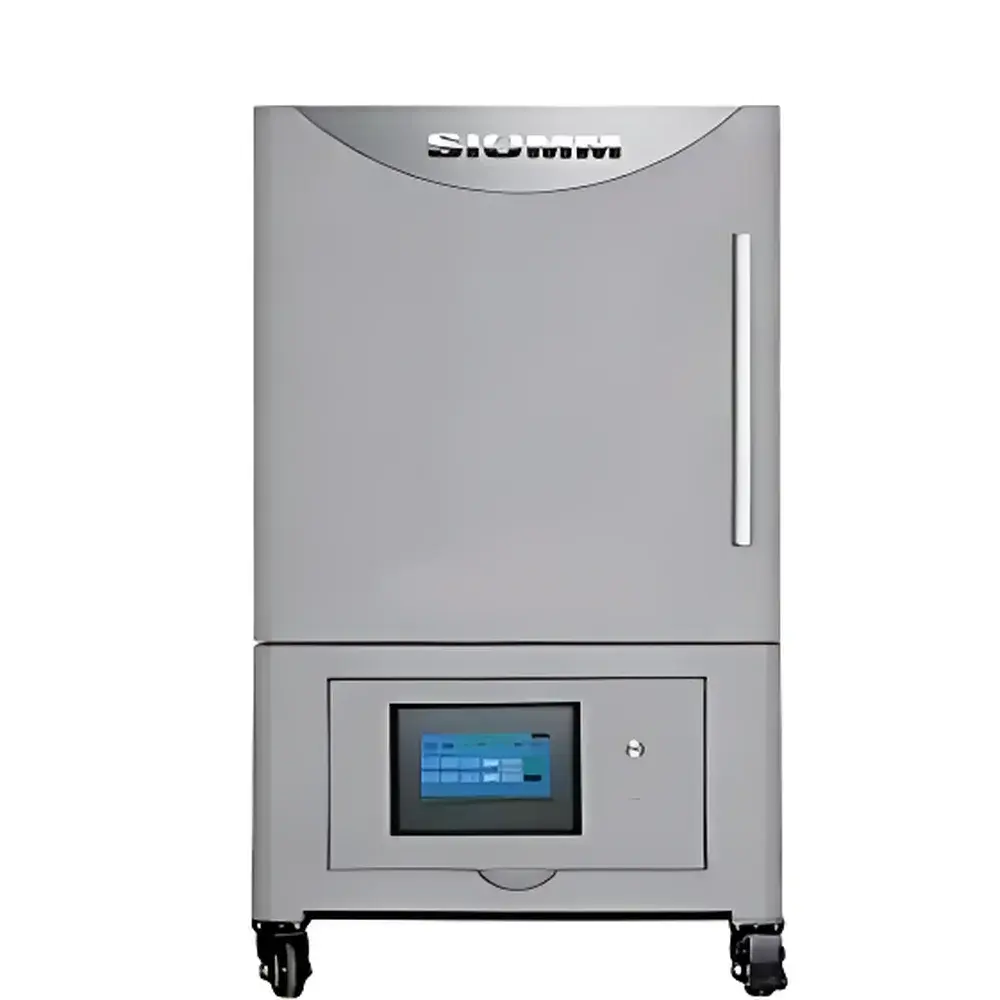
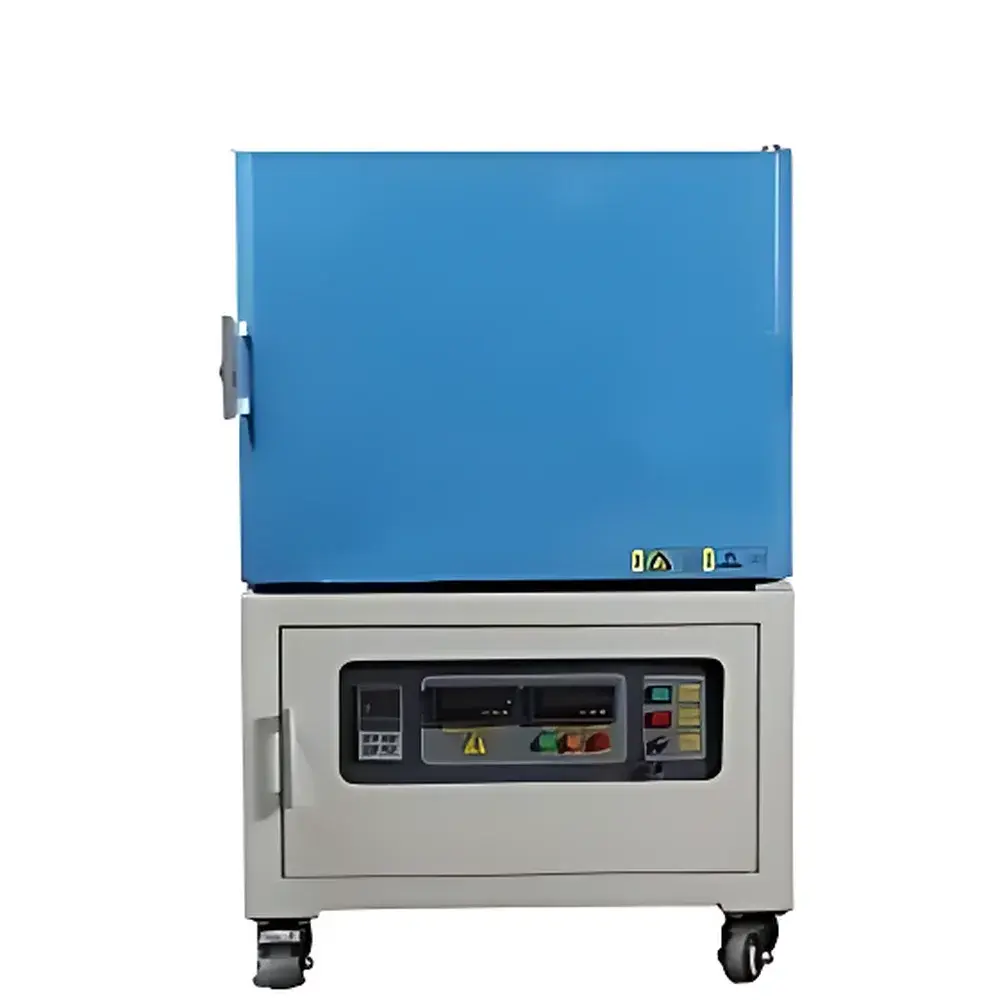
Jihepu SXL-1700 Precision Box-Type High-Temperature Muffle Furnace
| Brand | Jihepu |
|---|---|
| Origin | Shandong, China |
| Model | SXL-1700 |
| Maximum Temperature | 1650 °C (continuous operation ≤1600 °C) |
| Temperature Uniformity | ±1 °C |
| Power Supply | AC 220 V, 50/60 Hz (6 kW) or AC 380 V, 50/60 Hz (14 kW) |
| Heating Element | High-Purity Silicon Molybdenum (MoSi₂) Rods |
| Internal Chamber Dimensions | 300 × 250 × 200 mm (D×W×H) |
| Control System | 7-inch TFT Touchscreen with 50-segment Programmable PID Controller |
| Thermal Insulation | Vacuum-adsorbed Al₂O₃ Polycrystalline Fiber Panels with 1700 °C Ceramic Coating |
| Safety Features | Door-Interlocked Power Cut-off, Over-Temperature Alarm, Leakage Protection, Air-Cooled Double-Wall Housing |
| Compliance | CE Certified (GB/1067/4189/12 Issue 1), GB/T 10066.1–2004, GB/T 10067.4–2005 |
Overview
The Jihepu SXL-1700 Precision Box-Type High-Temperature Muffle Furnace is engineered for rigorous thermal processing in academic research laboratories, materials science institutes, and industrial R&D environments. Operating on the principle of resistive heating via silicon molybdenum (MoSi₂) elements within a fully insulated refractory chamber, this furnace delivers stable, repeatable high-temperature conditions up to 1650 °C—optimized for continuous operation at ≤1600 °C. Its design prioritizes thermal homogeneity, long-term structural integrity, and operator safety, making it suitable for applications requiring precise thermal profiles under inert or air atmospheres—including ceramic sintering, powder calcination, metallurgical heat treatment, and advanced material phase transformation studies.
Key Features
- 7-inch capacitive touchscreen interface with intuitive graphical user interface (GUI), supporting multi-language display and real-time parameter visualization.
- 50-segment programmable temperature ramp-soak profile capability; stored protocols can be recalled independently without cross-contamination of setpoints between material-specific processes.
- Vacuum-adsorbed polycrystalline alumina fiber insulation panels (1700-grade), engineered in Japan, provide ultra-low thermal conductivity (<0.15 W/m·K at 1000 °C) and minimal shrinkage after repeated thermal cycling.
- Internally coated with proprietary high-emissivity ceramic insulation layer rated to 1700 °C, enhancing radiant heat reflection and improving energy efficiency by up to 18% compared to standard fiber linings.
- Modular “plug-and-play” furnace chamber assembly with engineered expansion relief vents mitigates stress-induced cracking during thermal cycling, extending service life beyond 5,000 operational hours.
- Right-hinged door with mechanical interlock ensures automatic power disconnection upon opening—compliant with IEC 61000-6-2 and EN 61000-6-4 electromagnetic compatibility standards.
- Dual-wall steel housing with forced-air cooling system maintains external surface temperature below 45 °C during full-load operation, satisfying OSHA 1910.147 thermal hazard guidelines.
Sample Compatibility & Compliance
The SXL-1700 accommodates standard high-purity alumina, zirconia, and silicon carbide crucibles (available as optional accessories). Its chamber geometry supports uniform heating of samples up to 150 mL volume or 200 g mass, with validated temperature uniformity of ±3 °C across the working zone (per ASTM E220-19 calibration methodology). The furnace meets Chinese national standards GB/T 10066.1–2004 (general safety requirements for industrial electrothermal equipment) and GB/T 10067.4–2005 (safety specifications for laboratory furnaces). CE certification (GB/1067/4189/12 Issue 1) confirms conformity with EU Machinery Directive 2006/42/EC and Low Voltage Directive 2014/35/EU. While not inherently classified for hazardous atmosphere use, optional purge fittings enable integration with nitrogen or argon gas lines for controlled-atmosphere experiments.
Software & Data Management
All temperature programs, real-time thermocouple readings (B-type, rear-mounted for representative chamber core measurement), and alarm logs are timestamped and stored internally. Data export is supported via USB 2.0 port—users may transfer CSV-formatted session records directly to Windows-based PCs for post-processing in Excel or MATLAB. The embedded controller implements non-volatile memory retention, preserving up to 100 program files and 30 days of event history (including over-temperature triggers, door-open events, and power interruptions). Although no remote Ethernet or RS-485 interface is integrated by default, the unit’s digital output signals (alarm relay, ready status) allow integration into centralized lab monitoring systems compliant with ISO/IEC 17025:2017 Clause 6.4.3 for instrument interconnectivity and audit trail maintenance.
Applications
This furnace serves as a primary thermal platform for reproducible high-temperature processing in multiple domains: ceramic oxide sintering (e.g., YSZ, AlN, BaTiO₃); precursor decomposition and solid-state reaction synthesis; ash content determination per AOAC 942.05 and ASTM D3174-22; thermal gravimetric pre-treatment prior to XRD or SEM analysis; catalyst activation and regeneration cycles; and quality assurance testing of refractory raw materials per ISO 2477:2015. Its stability and repeatability make it suitable for GLP-compliant laboratories performing method validation under USP or pharmacopeial thermal sterilization process development.
FAQ
What is the recommended maximum ramp rate for extended furnace longevity?
For optimal heating element and insulation lifetime, Jihepu recommends a maximum heating rate of ≤10 °C/min to peak temperature, particularly when operating above 1200 °C.
Can the furnace operate continuously at 1600 °C?
Yes—continuous operation at 1600 °C is permitted per specification, provided ambient temperature remains below 30 °C and adequate ventilation is maintained per IEC 60079-14 requirements for electrical equipment in non-hazardous locations.
Is B-type thermocouple calibration traceable to NIST standards?
The supplied B-type thermocouple is factory-calibrated against reference standards accredited to ISO/IEC 17025; users may perform field verification using portable dry-block calibrators meeting ASTM E2847-21 criteria.
Does the unit support data logging compliance with FDA 21 CFR Part 11?
While the built-in USB export provides raw time-series data, full Part 11 compliance (electronic signatures, audit trails, role-based access) requires third-party LIMS or SCADA integration—no native electronic signature functionality is embedded.
What maintenance intervals are specified for the MoSi₂ heating elements?
Under typical usage (≤10 cycles/week at ≤1600 °C), silicon molybdenum rods require visual inspection every 500 hours; replacement is advised when resistance increases by >15% from baseline or visible surface pitting exceeds 10% of total length.



