
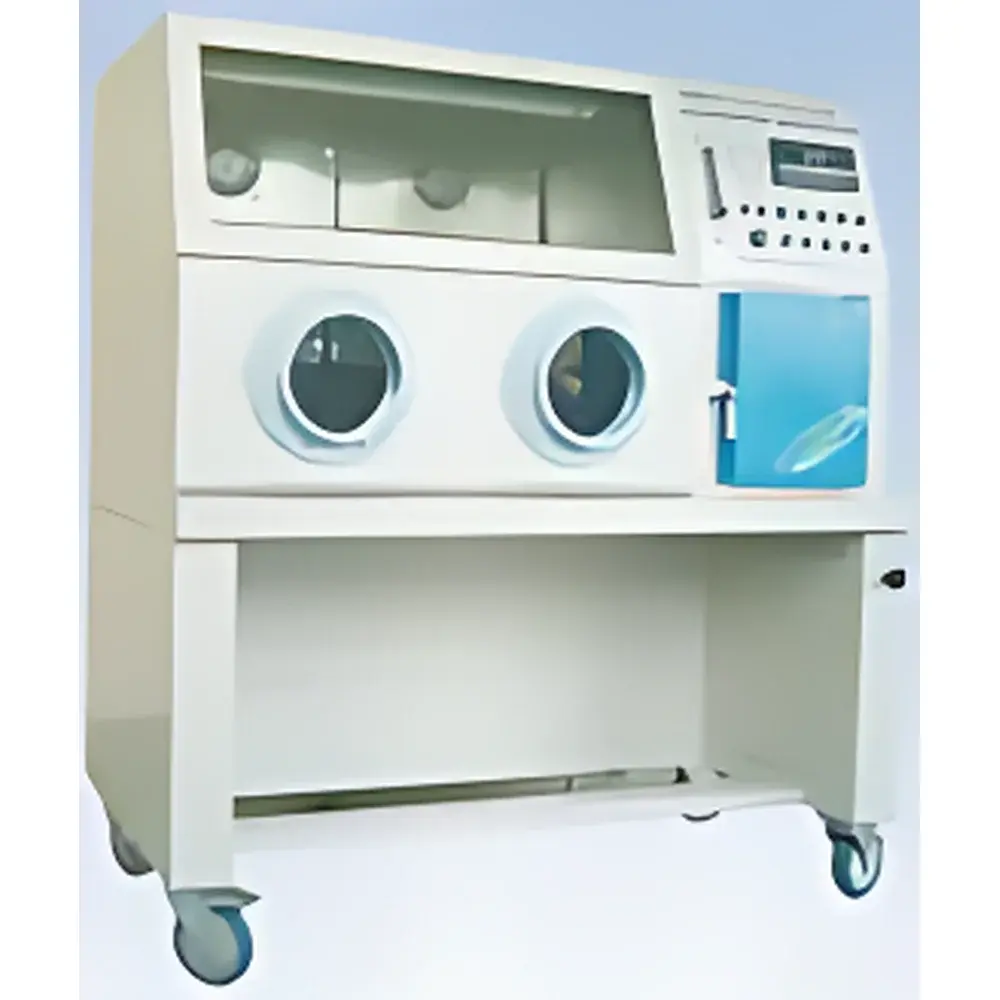
Jinhoo JH-YP-2 Anaerobic Chamber System
| Key | Brand: Jinhoo |
|---|---|
| Model | JH-YP-2 |
| Anaerobic Transition Time (Sampling Chamber) | <5 min |
| Anaerobic Transition Time (Operating Chamber) | >60 min |
| Anaerobic Environment Retention (Operating Chamber, gas flow off) | >12 h |
| Temperature Range (Culture Chamber) | RT+3°C to 50°C |
| Temperature Stability | ±0.3°C |
| Temperature Uniformity | ±1.0°C |
| Power Supply | 220 V, 50 Hz, 600 W |
| Culture Chamber Internal Dimensions | 250 × 190 × 290 mm |
| Operating Chamber Internal Dimensions | 800 × 650 × 660 mm |
| Overall Dimensions | 1260 × 730 × 1380 mm |
| Construction | Stainless Steel Body, Tempered Safety Glass Front Window |
| Gas Control | Adjustable Flow Regulators, Catalytic Oxygen Scavenger, HEPA-Filtered Inlet Gas |
| UV Sterilization | Integrated Germicidal UV Lamp |
| Safety Features | Over-Temperature Protection, Microprocessor-Based PID Temperature Controller |
| Compliance | Designed for ISO 13485-aligned lab environments, compatible with GLP documentation workflows |
Overview
The Jinhoo JH-YP-2 Anaerobic Chamber System is a fully integrated, dual-chamber microbiological workstation engineered for the reliable cultivation, isolation, and manipulation of strict anaerobes—including obligate anaerobes such as Clostridium, Bacteroides, and Fusobacterium—under precisely controlled oxygen-free conditions. Unlike passive jar-based systems, this chamber employs active gas management via catalytic oxygen removal, continuous gas purging (typically with N2/H2/CO2 mixtures), and real-time environmental stabilization to achieve and sustain O2 concentrations below 5 ppm. The system comprises three functional zones: a rapid-transition sampling chamber (<5 min to anaerobiosis), a spacious main operating chamber (≥60 min to full anaerobiosis), and an independent temperature-regulated culture chamber. Its architecture follows ISO 13485-informed design principles for medical microbiology labs and supports reproducible, operator-safe handling without atmospheric exposure—eliminating the risk of oxidative damage during subculturing or colony picking.
Key Features
- Microprocessor-controlled PID temperature regulation in the culture chamber (RT+3°C to 50°C), with stability of ±0.3°C and uniformity of ±1.0°C across the full volume—validated per ASTM E2251 for laboratory incubation equipment.
- Dual stainless steel construction (304 grade) for corrosion resistance and cleanability; front viewing window fabricated from laminated, impact-resistant tempered glass meeting EN 12600 Class P2 safety standards.
- Integrated catalytic deoxygenation unit with palladium-coated alumina catalyst, enabling continuous O2 scavenging at ambient temperature without consumable replacement during standard operation.
- HEPA-filtered (ISO Class 5 compliant) gas inlet system with precision needle valves for independent control of N2, H2, and CO2 flow rates—supporting custom gas blends per ATCC or CLSI M11-A9 protocols.
- Onboard germicidal UV-C lamp (254 nm, 15 W) with interlocked safety cutoff, ensuring surface decontamination between sessions while complying with IEC 62471 photobiological safety requirements.
- Dedicated sterilization accessories: electric inoculating loop heater (max. 850°C), paraffin wax sterilizer, adjustable tube rack, and glove ports with silicone-based tactile gloves rated for repeated autoclaving.
Sample Compatibility & Compliance
The JH-YP-2 accommodates standard microbiological formats including Petri dishes (up to 150 mm), anaerobic blood agar plates, thioglycollate broth tubes, and pre-reduced anaerobically sterilized (PRAS) media vials. Its operating chamber volume (343 L) allows simultaneous handling of up to 24 plate stacks or 48 slant tubes. The system meets mechanical and electrical safety requirements per IEC 61010-1:2010 and is designed to support compliance with FDA 21 CFR Part 11 when paired with validated electronic log software (e.g., LabArchives or Thermo Fisher SampleManager). All gas pathways are constructed from electropolished 316L stainless steel tubing to prevent leaching and ensure trace-metal-free atmospheres required for fastidious pathogen work.
Software & Data Management
While the JH-YP-2 operates via embedded hardware controls (no proprietary software required), its microprocessor controller logs timestamped temperature readings every 30 seconds, stores up to 30 days of operational history, and exports CSV-formatted data via USB port for integration into LIMS or ELN platforms. Optional RS-485 Modbus RTU interface enables remote monitoring and alarm triggering (e.g., temperature deviation >0.5°C, O2 sensor fault) within enterprise SCADA environments. Audit trails comply with ALCOA+ principles when used with 21 CFR Part 11–compliant third-party data acquisition systems.
Applications
- Clinical microbiology: Isolation and identification of anaerobic pathogens from wound, abscess, and intra-abdominal specimens per CLSI M43 guidelines.
- Gut microbiome research: Cultivation of uncultured Clostridia clusters (e.g., Ruminococcus gnavus, Faecalibacterium prausnitzii) under physiologically relevant low-O2 gradients.
- Pharmaceutical QC: Anaerobic stability testing of probiotic formulations and antibiotic susceptibility profiling (e.g., metronidazole MIC determination).
- Environmental microbiology: Enrichment of sulfate-reducing bacteria (SRB) and methanogens from sediment or bioreactor samples.
- Veterinary diagnostics: Culture of Actinomyces spp. and Porphyromonas levii from bovine mastitis or equine periodontal disease specimens.
FAQ
What gas mixture is recommended for optimal anaerobic performance?
A standard blend of 85% N2, 10% H2, and 5% CO2 is recommended for most clinical isolates; H2 enables catalytic O2 removal, while CO2 supports growth of capnophilic anaerobes.
How often does the catalytic converter require maintenance?
Under normal use (8 h/day, 5 days/week), the palladium catalyst remains effective for ≥24 months; regeneration is possible via 2-h bake-out at 250°C in inert gas—no replacement parts needed.
Can the chamber be validated for GMP environments?
Yes—IQ/OQ protocols are available upon request, including temperature mapping (ASTM F2652), O2 sensor calibration (traceable to NIST-certified gas standards), and glove integrity testing (ASTM D6319).
Is the system compatible with hydrogen sulfide-producing organisms?
Yes—the stainless steel interior and gas train materials resist H2S corrosion; optional activated carbon filter upgrade is available for extended H2S mitigation.
What is the maximum allowable load for continuous operation?
The system is rated for continuous duty at ambient temperatures ≤30°C and relative humidity ≤70%; sustained operation above these limits may reduce catalyst lifespan and increase power consumption by ≤12%.



