
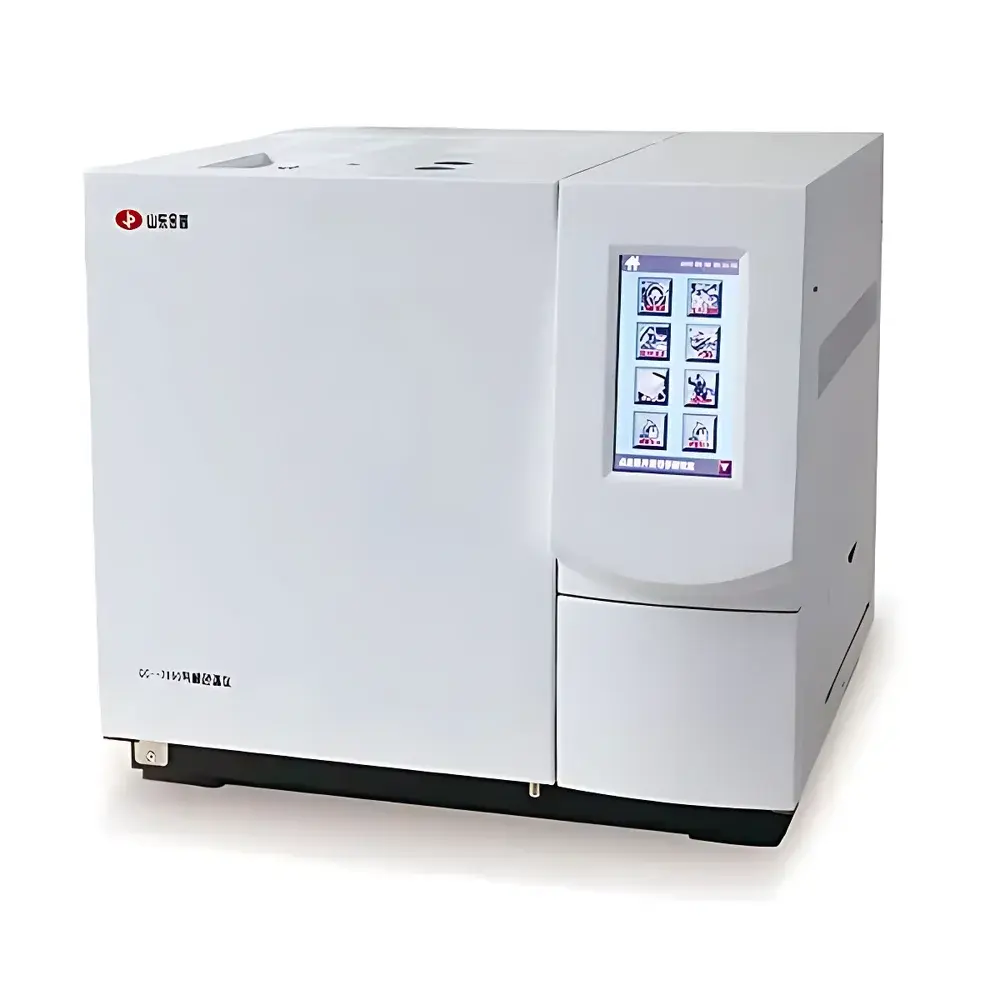
Jinpu GC-7890 Laboratory Gas Chromatograph
| Brand | Jinpu |
|---|---|
| Origin | Shandong, China |
| Model | GC-7890 |
| Instrument Type | Benchtop Laboratory Gas Chromatograph |
| Temperature Range | -80 °C to 450 °C (with cryogenic cooling) |
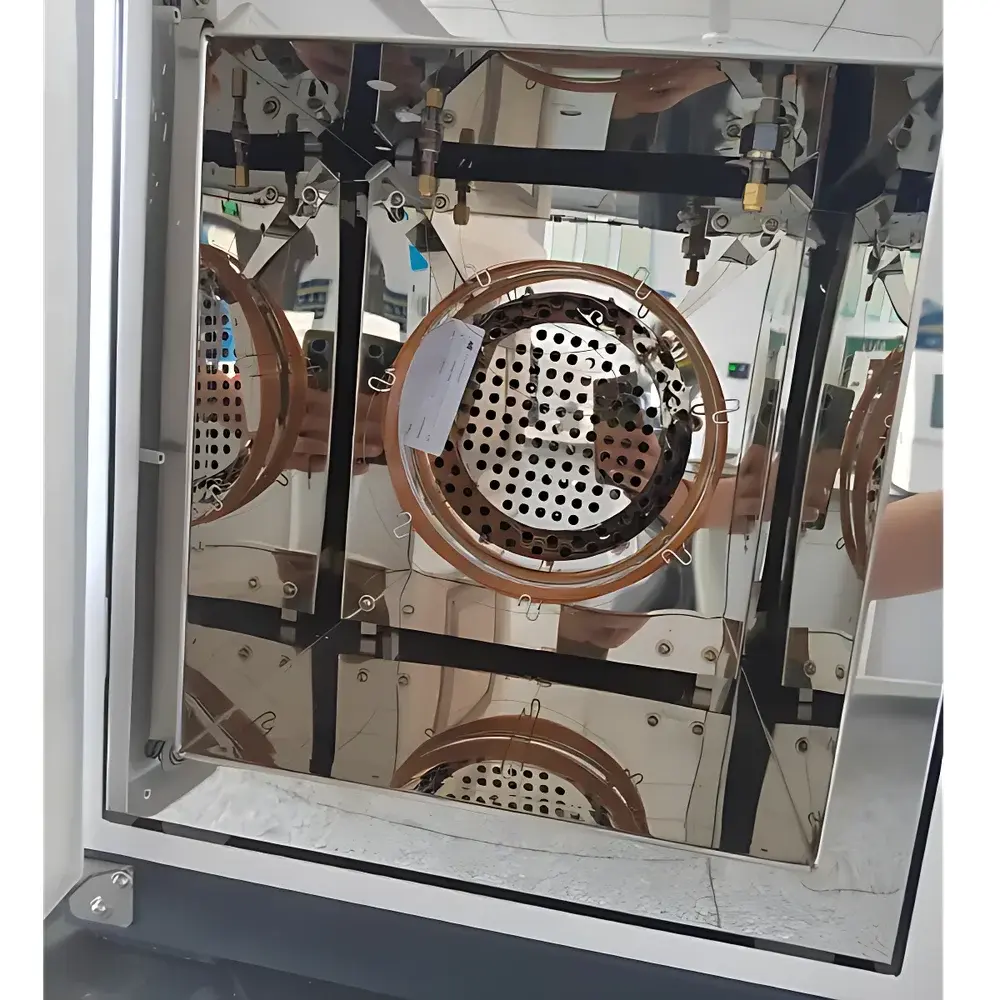
| Column Compatibility | Dual packed columns or dual capillary columns |
| Detector Configurations | Dual TCD, Dual FID, or hybrid TCD/FID |
| Programmed Temperature | 7-step ramp, 6-zone independent temperature control |
| Injector Options | Manual, auto-sampler, headspace, thermal desorption, gas valve |
| Detection Sensitivity (FID) | ≤1×10⁻¹¹ g/s (benzene) |
| (ECD) | ≤1×10⁻¹³ g/mL (γ-HCH) |
| (NPD) | ≤5×10⁻¹² g/s (azobenzene) |
| Temperature Accuracy | ±0.1 °C |
| Heating Rate | 0.1–40 °C/min |
| Power Supply | AC 220 V ±10%, 50 Hz, 2.2 kW |
| Dimensions | 660 × 460 × 465 mm |
| Weight | 60 kg |
Overview
The Jinpu GC-7890 is a modular, high-stability laboratory gas chromatograph engineered for precise separation and quantitative analysis of volatile and semi-volatile organic compounds in complex matrices. Based on classical carrier-gas-driven partition chromatography, the system separates analytes according to their relative volatility and polarity as they elute through thermally controlled capillary or packed columns. Its architecture supports both single- and multi-dimensional configurations—including heart-cutting and comprehensive 2D-GC (GC×GC) setups—enabling enhanced peak capacity and resolution for co-eluting components. Designed for routine QC, regulatory testing, and method development, the GC-7890 meets foundational operational requirements for laboratories performing fatty acid profiling in edible oils, residual ethylene oxide (EO) quantification in sterilized medical devices, and congener analysis in distilled spirits (e.g., Chinese baijiu). The instrument operates under ISO/IEC 17025-aligned workflows and supports audit-ready data handling when paired with compliant chromatography data systems (CDS).
Key Features
- Wide operational temperature range: −80 °C to 450 °C using optional liquid nitrogen or dry ice cooling—enabling cryogenic trapping and high-temperature residue analysis.
- Six independently controlled temperature zones, including dual inlet ovens and detector compartments, with 7-stage programmable ramping (0.1–40 °C/min, adjustable in 0.1 °C increments).
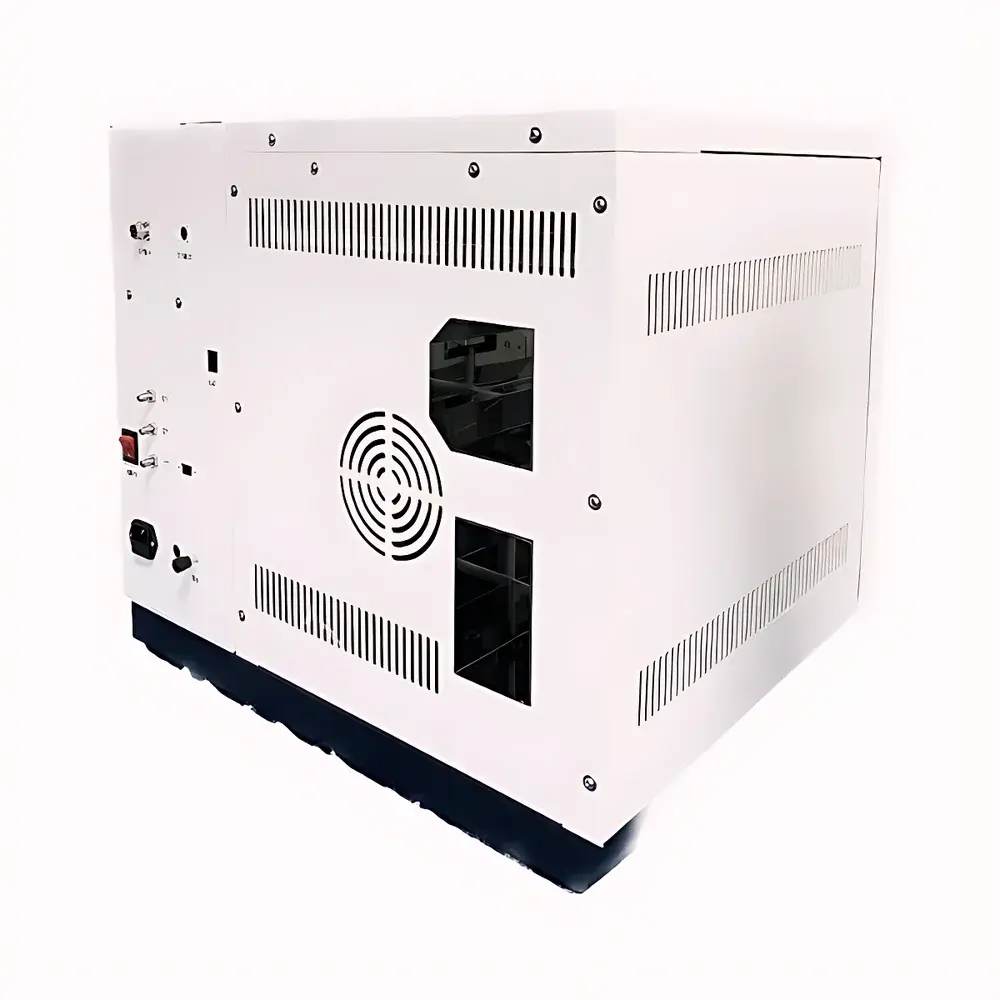
- Intelligent dual rear-door design with active airflow modulation ensures rapid column oven cooldown and thermal stability during gradient runs.
- Integrated self-diagnostic subsystem continuously monitors heater circuits, Pt100 sensor integrity (open/short detection), and over-temperature conditions—triggering audible/visual alerts and safe shutdown protocols.
- Modular detector bay accommodates up to three simultaneous detectors: dual flame ionization (FID), dual thermal conductivity (TCD), or hybrid combinations (e.g., FID + ECD + NPD) with dedicated methanizer support for CO/CO₂ conversion.
- Patented integrated heating-injection module (ZL 2012 20286908.X) and auto-sampling acquisition logic (ZL 2012 20285852.6) ensure reproducible vaporization kinetics and timing-critical sequence execution.
- Digital signal output via optional built-in 24-bit ADC eliminates external analog interface dependencies and reduces noise coupling in regulated environments.
Sample Compatibility & Compliance
The GC-7890 accepts diverse sample introduction methods—including split/splitless manual injection, autosamplers (up to 150-vial capacity), headspace vials (static/dynamic), thermal desorption tubes (TDU), and gas-tight loop valves—making it suitable for liquid, solid, and gaseous samples. It complies with core performance criteria referenced in ASTM D6584 (fatty acid methyl ester analysis), ISO 10993-7 (ethylene oxide residue testing), and GB/T 10345–2007 (Chinese baijiu congener profiling). While not pre-certified to FDA 21 CFR Part 11, its hardware architecture supports integration with validated CDS platforms that provide electronic signature, audit trail, and role-based access control required for GLP/GMP compliance. All thermal modules meet IEC 61010-1 safety standards for laboratory electrical equipment.
Software & Data Management
The GC-7890 operates with vendor-supplied GC Control Suite (v3.x), a Windows-based application supporting real-time parameter monitoring, method storage, sequence queuing, and basic peak integration. Raw data are saved in standard .CDF format (compatible with OpenLab CDS, Chromeleon, and Empower). For regulated environments, laboratories must deploy third-party 21 CFR Part 11-compliant software to enforce user authentication, electronic signatures, and immutable audit trails. The instrument’s RS-232 and Ethernet interfaces enable remote diagnostics and scheduled maintenance logging. Firmware updates are delivered via secure USB key with version-controlled release notes and impact assessments.
Applications
- Fatty Acid Composition Analysis: Quantification of C8–C24 saturated/unsaturated fatty acids (as FAMEs) in vegetable oils, fish oils, and margarines per AOAC 996.06 and ISO 5508.
- Ethylene Oxide Residue Testing: Detection of EO and ethylene chlorohydrin in polymeric medical packaging at sub-ppm levels using headspace-GC/ECD per ISO 10993-7 Annex B.
- Baijiu Congener Profiling: Separation and quantitation of esters (ethyl acetate, ethyl lactate), higher alcohols (isoamyl alcohol, propanol), and aldehydes (acetaldehyde) using capillary DB-WAX or equivalent columns.
- Pesticide Residue Screening: Multi-residue analysis of organophosphorus (NPD), organochlorine (ECD), and pyrethroid compounds in food extracts following QuEChERS preparation.
- Environmental VOC Monitoring: Analysis of benzene, toluene, ethylbenzene, and xylenes (BTEX) in air canisters or water purge-and-trap extracts (EPA Method 8260D).
FAQ
Does the GC-7890 support method validation per ICH Q2(R2)?
Yes—its temperature precision (±0.1 °C), retention time repeatability (10⁷ for FID/ECD) satisfy core parameters for system suitability testing. Full validation requires lab-specific protocol development and documented IQ/OQ/PQ.
Can it be operated under nitrogen carrier gas for ECD applications?
Yes—the ECD module is optimized for nitrogen or argon/methane make-up gases. Carrier gas selection must align with detector specifications and column manufacturer recommendations.
Is remote instrument monitoring supported?
The embedded Ethernet port enables ping-based connectivity checks and firmware-level status polling. Full remote control (e.g., method launch, temperature setpoint adjustment) requires integration with enterprise-grade CDS platforms.
What maintenance intervals are recommended for the FID jet and collector?
Cleaning is advised every 200 injections or weekly in high-throughput labs. Use ultrasonic bath with methanol followed by nitrogen blow-dry. Routine inspection of the platinum igniter and ceramic nozzle is included in quarterly PM checklists.
Does the system comply with RoHS or REACH directives?
The GC-7890 conforms to China’s SJ/T 11364–2014 (RoHS-equivalent) and includes material declarations per EU REACH SVHC screening. Full compliance documentation is available upon request with purchase order.





