
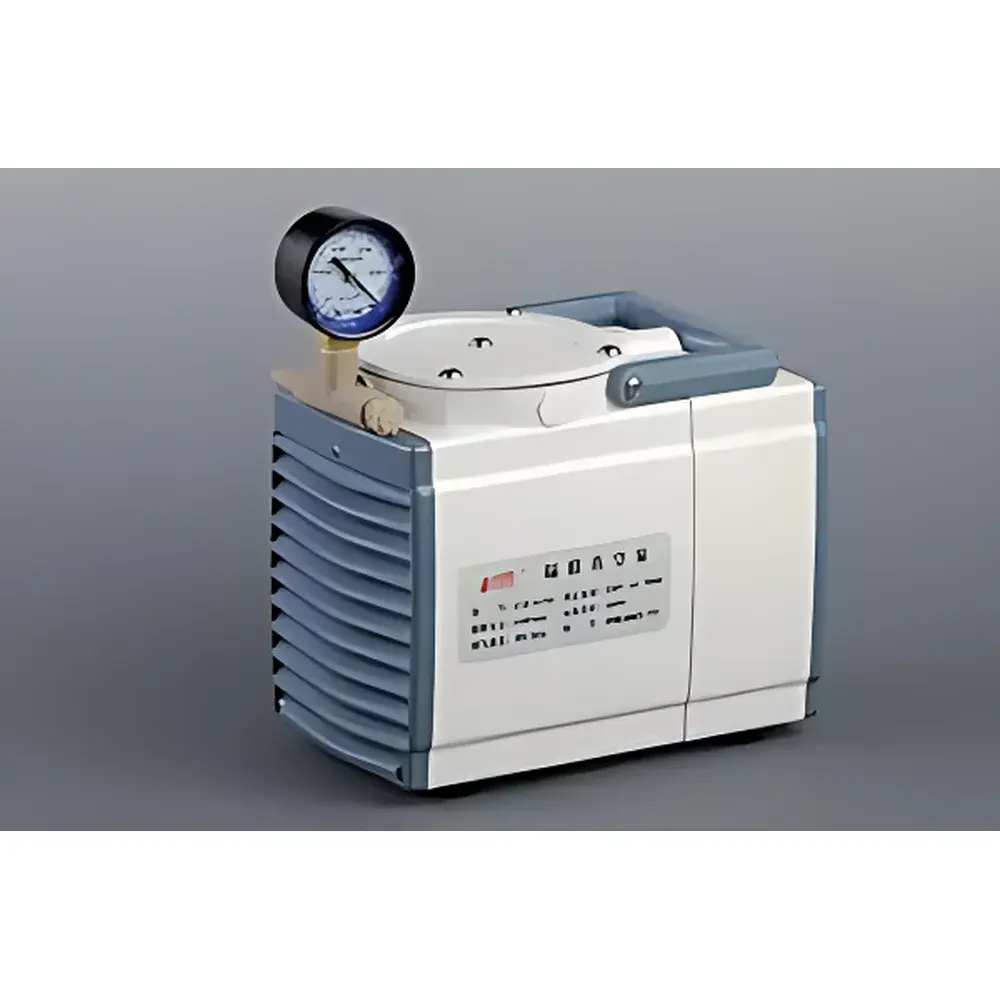
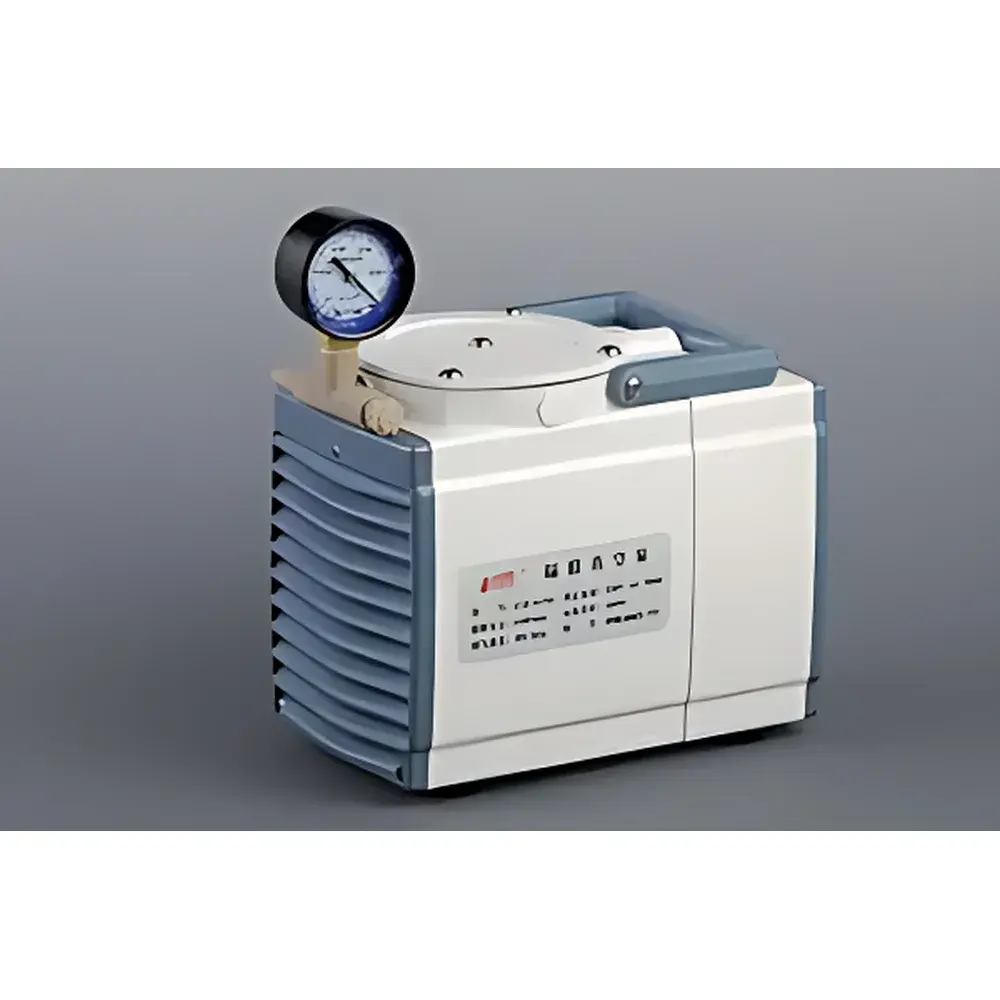
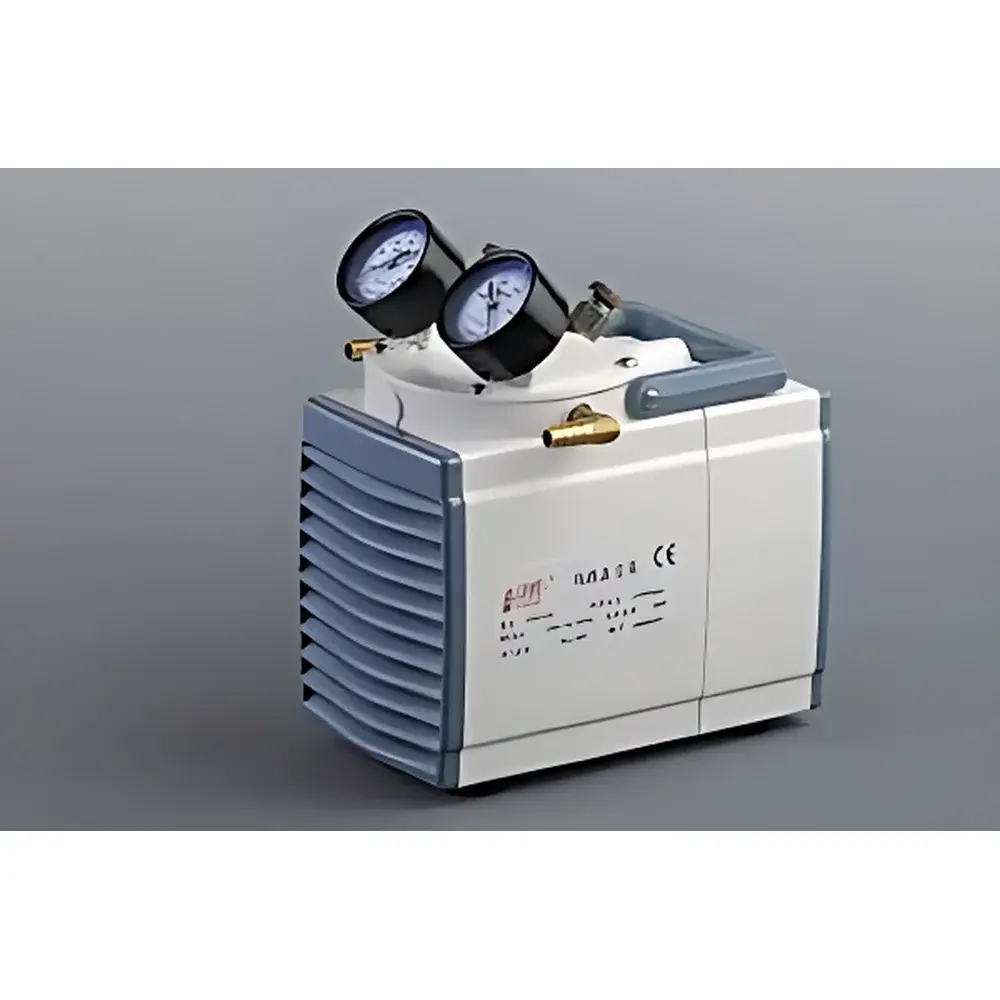
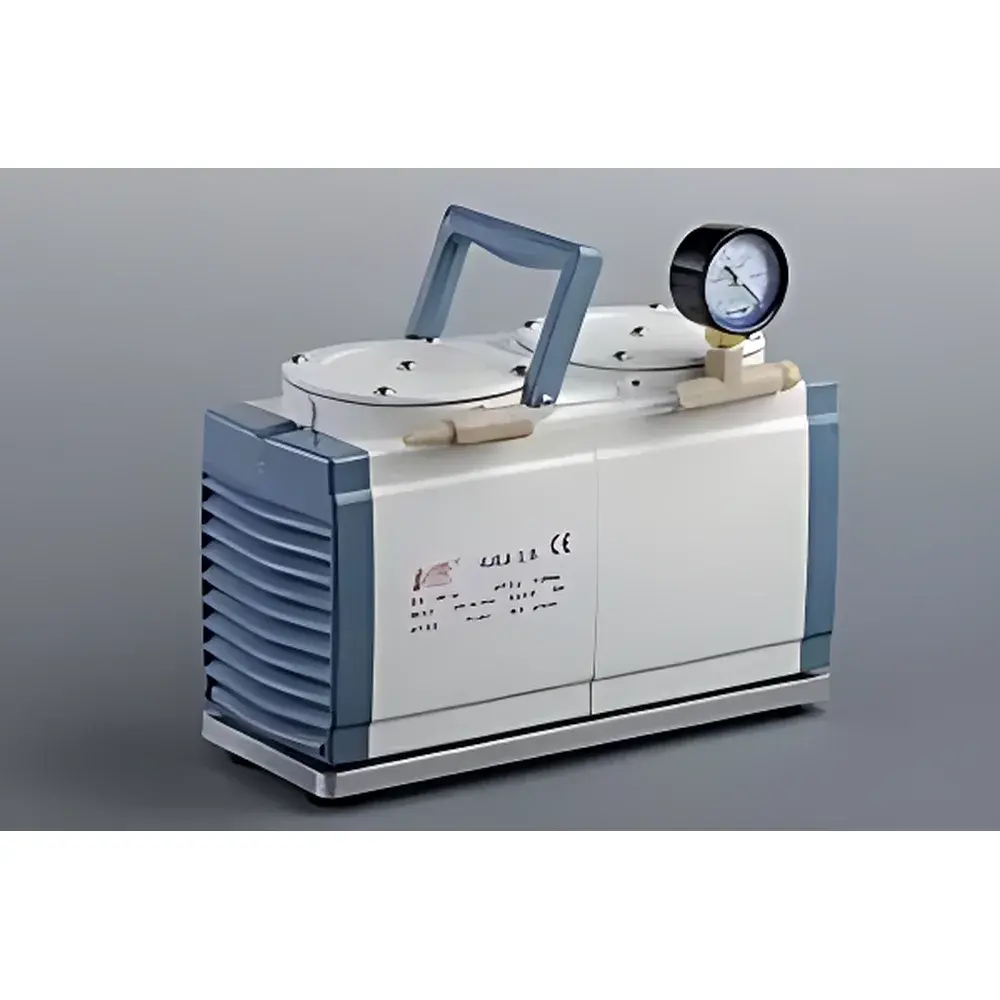
JINTENG GM-0.33A Corrosion-Resistant Oil-Free Diaphragm Vacuum Pump
| Brand | JINTENG |
|---|---|
| Origin | Tianjin, China |
| Pump Type | Diaphragm Vacuum Pump |
| Product Type | Oil-Free Vacuum Pump |
| Ultimate Vacuum Pressure | ≤ 0.075 MPa (≤ 75 mbar) |
| Pumping Speed | 20 L/min |
| Motor Power | 160 W |
| Noise Level | < 50 dB(A) |
| Weight | 7.5 kg |
| Dimensions (L×W×H) | 215 × 120 × 235 mm |
| Inlet/Outlet Port Diameter | φ6 mm |
| Operating Temperature Range | 7–40 °C |
| Diaphragm Material | Fluoroelastomer (FKM) |
| Pump Housing | PTFE-Coated |
| Cooling | Self-Cooling Air Exhaust System |
| Pressure Regulation | Adjustable Vacuum Output |
| Compliance | Designed for GLP-compliant laboratory environments |
Overview
The JINTENG GM-0.33A is a compact, oil-free diaphragm vacuum pump engineered for precision and reliability in routine laboratory vacuum applications. Utilizing a positive-displacement mechanism driven by an electromagnetically actuated fluorocarbon elastomer (FKM) diaphragm, it achieves contamination-free operation without lubricants—eliminating hydrocarbon backstreaming, oil vapor carryover, or maintenance-associated downtime. Its sealed gas path, fully coated with chemically inert PTFE, ensures resistance to acidic vapors, organic solvents, and mildly corrosive gases commonly encountered during filtration, rotary evaporation, vacuum drying, and degassing procedures. With an ultimate vacuum of ≤ 0.075 MPa (≤ 75 mbar) and a stable pumping speed of 20 L/min at ambient conditions, the GM-0.33A delivers reproducible performance across extended duty cycles, supporting ISO/IEC 17025-aligned workflows where vacuum stability directly impacts analytical repeatability.
Key Features
- Oil-free operation with FKM diaphragm—no lubrication required, zero risk of sample contamination or vacuum chamber oil ingress
- PTFE-coated pump housing and internal gas pathways—resistant to HCl, HNO₃, acetone, ethanol, ethyl acetate, and other common lab solvents
- Self-cooling air exhaust system—enables continuous 24-hour operation without thermal shutdown or performance drift
- Adjustable vacuum output via integrated pressure regulation—supports method-specific vacuum setpoints for filtration, concentration, or degassing
- Low-noise design (< 50 dB[A] at 1 m)—suitable for shared lab spaces and noise-sensitive environments
- Ergonomic footprint (215 × 120 × 235 mm) and integrated carrying handle—optimized for benchtop mobility and space-constrained installations
- Four vacuum suction cups on base—ensures mechanical stability during high-vibration processes such as vacuum-assisted filtration
Sample Compatibility & Compliance
The GM-0.33A is validated for use with aqueous, polar organic, and moderately aggressive chemical streams typical in pharmaceutical QC, environmental analysis, and academic research labs. Its PTFE-coated wetted parts meet USP Class VI biocompatibility criteria for non-reactivity, while its oil-free architecture inherently satisfies FDA 21 CFR Part 11 requirements for audit-trail-capable instrumentation when paired with compliant data acquisition systems. Though not certified to ATEX or IECEx standards, the pump complies with IEC 61000-6-3 (EMC emission limits) and IEC 61000-6-2 (immunity), and its design supports GLP/GMP documentation practices—including calibration traceability, preventive maintenance logs, and operational qualification (OQ) protocols. It is routinely deployed in ASTM D854-compliant soil density testing, USP <797> sterile filtration setups, and ISO 14644-1 cleanroom support systems.
Software & Data Management
As a standalone analog vacuum source, the GM-0.33A does not include embedded firmware or digital interfaces. However, its pressure-regulated output is compatible with third-party vacuum controllers (e.g., VACUUBRAND VRD series, KNF NP series analog modules) and programmable logic controllers (PLCs) via 0–10 V or 4–20 mA feedback loops. When integrated into automated systems, it supports electronic logging of runtime hours, thermal status (via optional external thermistor), and vacuum setpoint adherence—facilitating compliance with ALCOA+ data integrity principles. For manual operation, the pump includes a calibrated analog vacuum gauge port (optional accessory) enabling real-time verification against NIST-traceable reference instruments.
Applications
- Vacuum-assisted membrane filtration (e.g., 0.22 µm sterilization of buffers, HPLC mobile phase degassing)
- Rotary evaporation support for low-boiling-point solvent removal under controlled sub-atmospheric pressure
- Desiccator evacuation and vacuum oven pre-conditioning in material science and polymer characterization
- Gas sampling and purge-and-trap preparation in environmental VOC analysis workflows
- Cell culture hood vacuum line backup and aspiration manifold supply in biosafety Level 2 laboratories
- Support for Karl Fischer titration systems requiring stable, dry, oil-free vacuum for coulometric moisture determination
FAQ
Is the GM-0.33A suitable for continuous operation?
Yes—the self-cooling exhaust system and thermally optimized motor winding allow uninterrupted 24/7 duty cycling within the specified ambient temperature range (7–40 °C).
What materials contact the process gas stream?
The wetted components consist exclusively of FKM diaphragm, PTFE-coated aluminum pump head, stainless steel valve plates, and EPDM sealing gaskets—collectively resistant to pH 1–12 aqueous solutions and common organic solvents.
Can this pump be used with corrosive gases like HCl or Cl₂?
It is rated for intermittent exposure to diluted acidic vapors (e.g., < 5% v/v HCl in air); for sustained exposure to aggressive halogens or oxidizers, consult the chemical compatibility chart and consider upstream scrubbing or dedicated corrosion-rated alternatives.
Does the GM-0.33A require periodic oil changes or lubrication?
No—this is a true oil-free design. The only scheduled maintenance involves inspecting the diaphragm every 6,000 operating hours or annually, whichever occurs first.
How is vacuum level regulated during operation?
A manually adjustable needle valve controls inlet flow, allowing fine-tuning of vacuum setpoint between atmospheric pressure and the ultimate vacuum limit (≤ 75 mbar).



