
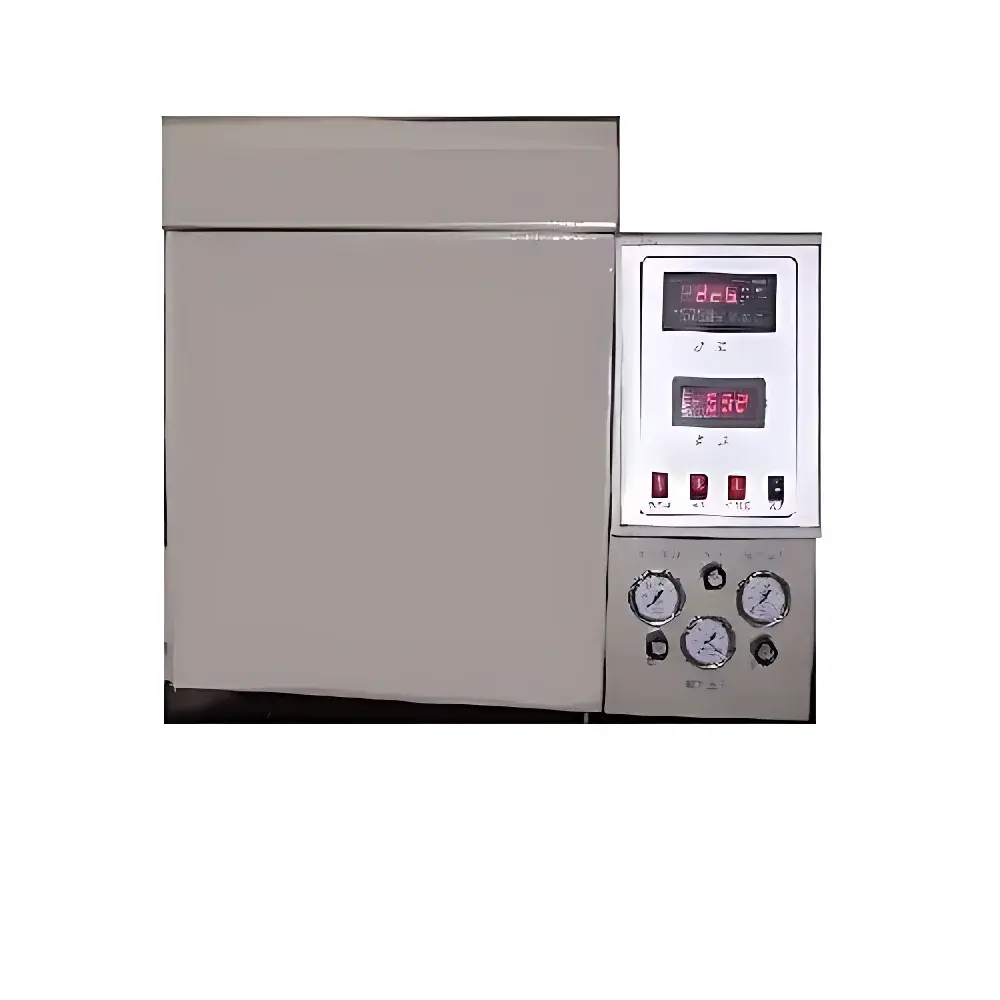
JK-8000 Micro-Sulfur Analyzer by Jingke Ruida
| Brand | Jingke Ruida (JKRD) |
|---|---|
| Origin | USA |
| Model | JK-8000 |
| Detection Principle | Flame Photometric Detection (FPD) with Dual FPD Configuration |
| Detection Wavelength | 394 nm |
| Minimum Detectable Sulfur Concentration | ≤0.02 ppm (v/v) |
| Sensitivity (as sulfur) | ≤8×10⁻¹² g/s |
| Baseline Noise | ≤0.5 mV/h |
| Oven Temperature Range | Ambient to 400 °C ±1 °C |
| Column Material Compatibility | PTFE-lined flow path |
| Sample Types | Natural gas, coal gas, coke oven gas, LPG, food-grade CO₂, flue gas, biogas |
| Regulatory Compliance | ASTM D6667, ISO 8573-5, USP <621>, GLP/GMP-ready data handling |
| Software | Integrated chromatography workstation with audit trail, peak integration, calibration curve generation, and report export (PDF/CSV) |
Overview
The JK-8000 Micro-Sulfur Analyzer is a dedicated gas-phase chromatographic system engineered for trace-level sulfur speciation and total sulfur quantification in industrial process gases and environmental streams. It operates on the principle of flame photometric detection (FPD), where sulfur-containing compounds are pyrolyzed in a hydrogen-rich flame, generating electronically excited S₂* molecules that emit characteristic luminescence at 394 nm. This narrow-band emission is isolated via an interference filter and converted into a proportional electrical signal by a high-gain photomultiplier tube (PMT). The dual-FPD configuration—paired with selectable large-bore capillary or packed columns—enables simultaneous or sequential analysis of individual sulfur species (e.g., H₂S, COS, CH₃SH, SO₂) and total sulfur via back-flush methodology. Unlike generic GC systems, the JK-8000 integrates a fully PTFE-wetted flow path from sample inlet through combustion chamber, mitigating adsorption losses—particularly critical for reactive, polar analytes such as SO₂ and mercaptans. Its thermal stability (oven control ±1 °C from ambient to 400 °C) ensures reproducible retention times across extended runs, supporting compliance with method-defined precision requirements in regulated environments.
Key Features
- Dual flame photometric detector architecture enabling concurrent or switchable operation for speciated sulfur analysis and total sulfur determination
- PTFE-lined pneumatic and column flow path to prevent sulfur compound adsorption, especially critical for SO₂, sulfides, and thiols
- High-sensitivity PMT detection with calibrated response to sulfur mass flow (≤8×10⁻¹² g/s) and sub-ppm detection limit (≤0.02 ppm v/v for H₂S in N₂ matrix)
- Programmable temperature-controlled oven with ±1 °C stability over 0–400 °C range, supporting complex multi-step temperature gradients
- Back-flush capability for rapid elution of non-polar hydrocarbons, eliminating co-elution interference in high-methane or high-alkane matrices (e.g., biogas, natural gas)
- Modular column selection: compatible with both stainless-steel packed columns (for robustness) and fused-silica capillaries (for resolution), all PTFE-sealed
- Integrated high-voltage PMT power supply with real-time gain stabilization and baseline drift compensation
Sample Compatibility & Compliance
The JK-8000 is validated for direct injection and quantitative analysis of sulfur species in compressed gases including natural gas, syngas, coke oven gas, liquefied petroleum gas (LPG), food-grade carbon dioxide (per ISO 8573-5 and USP ), and flue gas streams. Its PTFE-constrained design meets material compatibility requirements for corrosive and reactive sulfur compounds under ISO 14644-1 cleanroom-grade handling protocols. The system supports full traceability per FDA 21 CFR Part 11 when operated with compliant chromatography software—including electronic signatures, audit trails, and immutable raw data archiving. Method performance aligns with ASTM D6667 (determination of total volatile sulfur in light hydrocarbons) and ASTM D5504 (determination of sulfur compounds in natural gas by GC–FPD), and is routinely deployed in ammonia synthesis, methanol production, pressure swing adsorption (PSA) unit monitoring, and biogas upgrading facilities where catalyst protection and corrosion mitigation are mission-critical.
Software & Data Management
The JK-8000 interfaces with a validated chromatography data system (CDS) featuring ISO/IEC 17025-compliant acquisition, processing, and reporting modules. Calibration curves are generated using certified standard gas mixtures (NIST-traceable), with linear dynamic range spanning three orders of magnitude (0.02–100 ppm). Peak integration employs valley-to-valley and tangent skim algorithms with manual override; retention time locking ensures cross-run alignment. All analytical sequences—including method parameters, instrument logs, and raw detector signals—are stored with time-stamped metadata. Audit trail functionality records user actions, method edits, and result modifications, satisfying GLP and GMP documentation requirements. Export formats include PDF analytical reports, CSV peak tables, and XML-based raw data interchange for LIMS integration.
Applications
- Monitoring desulfurization efficiency of ZnO, activated carbon, and amine-based sorbents in syngas and reformate streams
- Verifying sulfur clearance in food-grade CO₂ prior to beverage carbonation (USP , EC No. 1333/2008)
- Quantifying H₂S and organic sulfides in biogas feedstock to protect anaerobic digester membranes and CHP engine catalysts
- SO₂ measurement in flue gas post-scrubber for environmental reporting (EPA Method 15/16)
- Trace sulfur speciation in hydrogen streams for PEM fuel cell feedstock qualification (ISO 14687-2)
- Quality control of LNG and pipeline natural gas against ISO 8573-5 Class 2 purity limits
FAQ
What sulfur species can the JK-8000 reliably quantify?
H₂S, carbonyl sulfide (COS), methyl mercaptan (CH₃SH), dimethyl sulfide (DMS), dimethyl disulfide (DMDS), and SO₂—with method-dependent resolution down to 0.02 ppm v/v.
Is the system suitable for unattended operation in continuous process monitoring?
Yes, when integrated with automated gas sampling valves and scheduled sequence methods; typical duty cycle supports 24/7 operation with <1% RSD over 72-hour validation runs.
How does the dual-FPD configuration improve analytical robustness?
One detector is optimized for speciated analysis using a separation column; the second operates in total sulfur mode via back-flush, enabling cross-verification without hardware reconfiguration.
Does the system require helium or other specialty carrier gases?
No—hydrogen and synthetic air are sufficient for both carrier and detector support gases; helium-free operation reduces consumable cost and safety overhead.
Can the JK-8000 be upgraded for compliance with 21 CFR Part 11?
Yes, with licensed CDS software featuring role-based access control, electronic signatures, and permanent audit log storage—validated per IQ/OQ protocols.






