
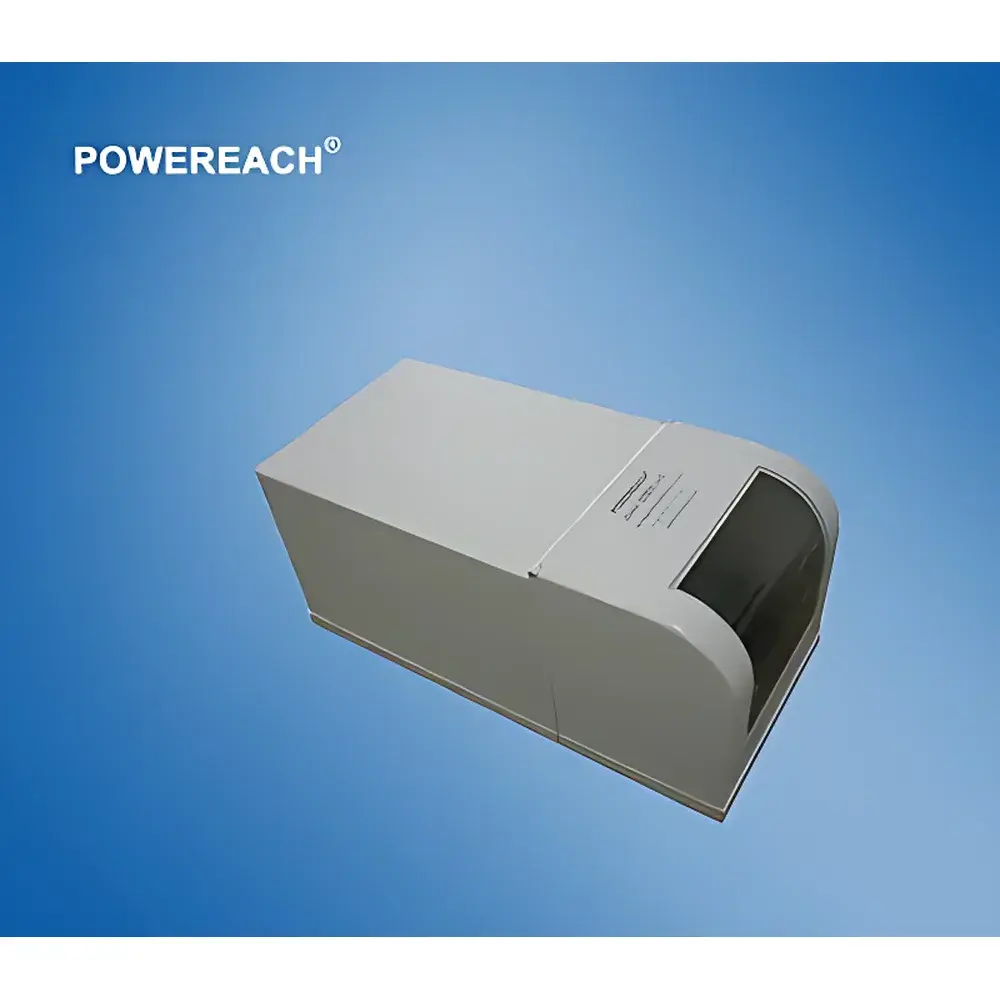
JN01 Concentrated Slurry Zeta Potential Analyzer
| Origin | Beijing, China |
|---|---|
| Manufacturer Type | Distributor |
| Origin Category | Domestic |
| Model | JN01 |
| Pricing | Upon Request |
Overview
The JN01 Concentrated Slurry Zeta Potential Analyzer is a specialized electrophoretic instrument engineered for the quantitative determination of zeta potential in high-concentration, non-dilute colloidal dispersions—systems where conventional microelectrophoresis instruments (e.g., JS94 series) fail due to optical opacity, particle sedimentation, or insufficient signal-to-noise ratio. Unlike laser Doppler velocimetry (LDV) or phase analysis light scattering (PALS) methods that rely on tracking individual particle motion under an electric field, the JN01 employs a mass-exchange principle grounded in electrokinetic sedimentation theory. In this approach, charged particles migrate under a controlled DC electric field and accumulate on a removable electrode integrated into the base of the sample cell. The net mass deposition—defined as the difference between the mass of deposited particles and the mass of displaced dispersion medium—is derived indirectly via real-time transmittance monitoring. As particle concentration changes during electrophoretic accumulation, the optical transmittance of the boundary layer adjacent to the electrode shifts predictably. By calibrating transmittance against known concentration gradients (using reference solutions), the system computes effective mass gain with higher reproducibility than direct microbalance-based weighing—especially critical for viscous, opaque, or heterogeneous slurries common in industrial process streams.
Key Features
- Mass-exchange zeta potential measurement method validated for concentrated dispersions (up to 30–40 vol% solids, depending on density contrast)
- Rotating sample cell design minimizes gravitational settling of coarse particles (>5 µm) during analysis, ensuring representative ensemble behavior
- No optical detection limit: insensitive to particle size distribution breadth—captures contributions from both submicron colloids and larger suspended aggregates
- Transmittance-derived mass gain calibration eliminates mechanical microbalance drift and environmental vibration artifacts inherent in direct weighing systems
- Modular electrode assembly enables rapid cleaning, replacement, and compatibility with aggressive media (e.g., drilling muds, alkaline paper coatings, acidic leachates)
- Integrated voltage control (0–500 V DC, adjustable ramp rate) with current monitoring for real-time assessment of dispersion stability and conduction pathway integrity
Sample Compatibility & Compliance
The JN01 is optimized for opaque, viscous, and high-solids-content suspensions typical of petroleum drilling fluids, mineral processing pulps, wastewater flocs, paper coating formulations, and cementitious slurries. It accommodates samples with viscosities up to 500 mPa·s and conductivities ranging from 100 µS/cm to 50 mS/cm. While the instrument itself does not embed regulatory software, its operational methodology aligns with ASTM D7825–19 (Standard Test Method for Zeta Potential of Colloidal Dispersions by Electrophoretic Light Scattering) principles—adapted here for non-optical, mass-based quantification. Data acquisition supports GLP-compliant documentation when paired with external calibrated instruments (e.g., certified digital densimeters, standard-reference viscosity standards per ISO 3104, conductivity meters traceable to NIST SRM 3199). All electrical components conform to IEC 61010-1:2010 safety requirements for laboratory equipment.
Software & Data Management
The JN01 operates via a dedicated Windows-based control interface that records time-resolved transmittance curves, applied field strength, current draw, and ambient temperature. Raw transmittance data are exported in CSV format for post-processing using user-supplied calibration coefficients (density, refractive index increment, medium viscosity). The software does not perform automated zeta potential calculation; instead, it provides structured templates aligned with the Smoluchowski-Hückel framework for manual computation—requiring input of measured conductivity (κ), dynamic viscosity (η), dielectric permittivity (ε), and electrophoretic mobility (µE) derived from slope analysis of mass-vs.-time plots. Audit trails—including operator ID, timestamp, calibration file version, and instrument configuration—are exportable to support FDA 21 CFR Part 11–aligned workflows when hosted on validated networked systems.
Applications
- Petroleum Engineering: Quantifying zeta potential of bentonite- and polymer-based drilling muds to optimize rheological modifiers and inhibit shale hydration
- Water & Wastewater Treatment: Mapping charge neutralization thresholds for coagulant dosing (e.g., Al2(SO4)3, FeCl3) in municipal and industrial effluents containing organic colloids and metal hydroxides
- Paper Science & Technology: Controlling cationic starch adsorption, filler retention, and coating pigment dispersion stability in high-solids kaolin/titanium dioxide slurries
- Mineral Processing: Evaluating surface charge reversal points during froth flotation conditioning with xanthates or fatty acid collectors
- Construction Materials: Assessing electrostatic stabilization of nano-silica or metakaolin in alkali-activated binders and self-consolidating concrete admixtures
- Academic Research: Teaching core electrokinetic concepts—including Helmholtz-Smoluchowski assumptions, double-layer compression, and the role of ionic strength—in physical chemistry and colloid science laboratories
FAQ
What auxiliary instruments are required for operation?
A calibrated conductivity meter (±1% accuracy), pycnometer or digital densimeter (±0.001 g/cm³), and capillary viscometer or rotational viscometer (calibrated per ISO 3104 or ASTM D445) are mandatory for computing zeta potential from raw transmittance data.
Can the JN01 measure zeta potential in non-aqueous media?
Yes—provided the medium exhibits sufficient ionic conductivity (>50 µS/cm) and optical contrast for transmittance calibration; common solvents include ethylene glycol, propylene carbonate, and low-water-content ethanol/water mixtures.
Is temperature control available?
The base unit does not include active thermal regulation; however, the sample cell is compatible with external Peltier-stage integration or water-jacketed holders for isothermal studies between 10–60 °C.
How is electrode polarization addressed during long-duration runs?
The instrument applies symmetrical voltage reversal cycles at user-defined intervals to mitigate electrode polarization and hydrogen/oxygen evolution, preserving interfacial integrity over extended measurements.
Does the system support Good Manufacturing Practice (GMP) documentation?
While the JN01 lacks embedded electronic signatures or role-based access control, its data export architecture and metadata tagging enable integration into validated LIMS or ELN platforms compliant with Annex 11 and ALCOA+ principles.



