
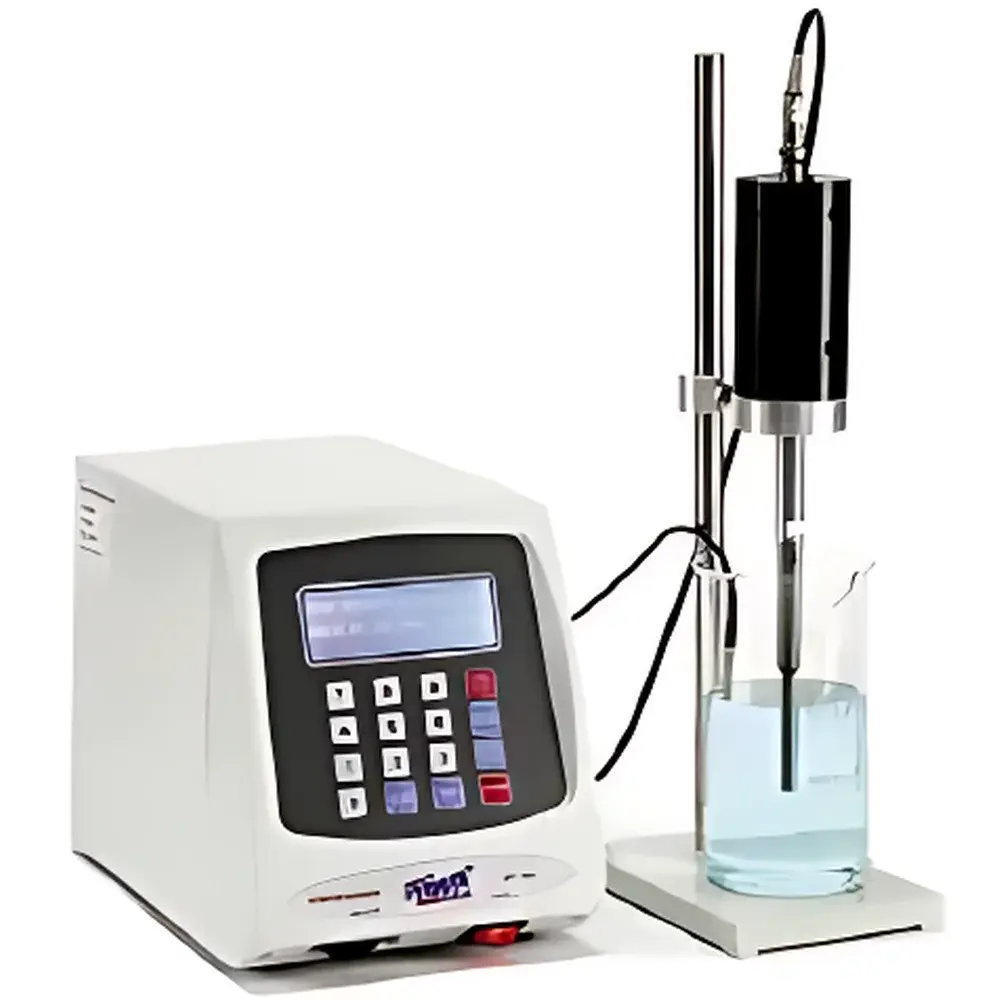
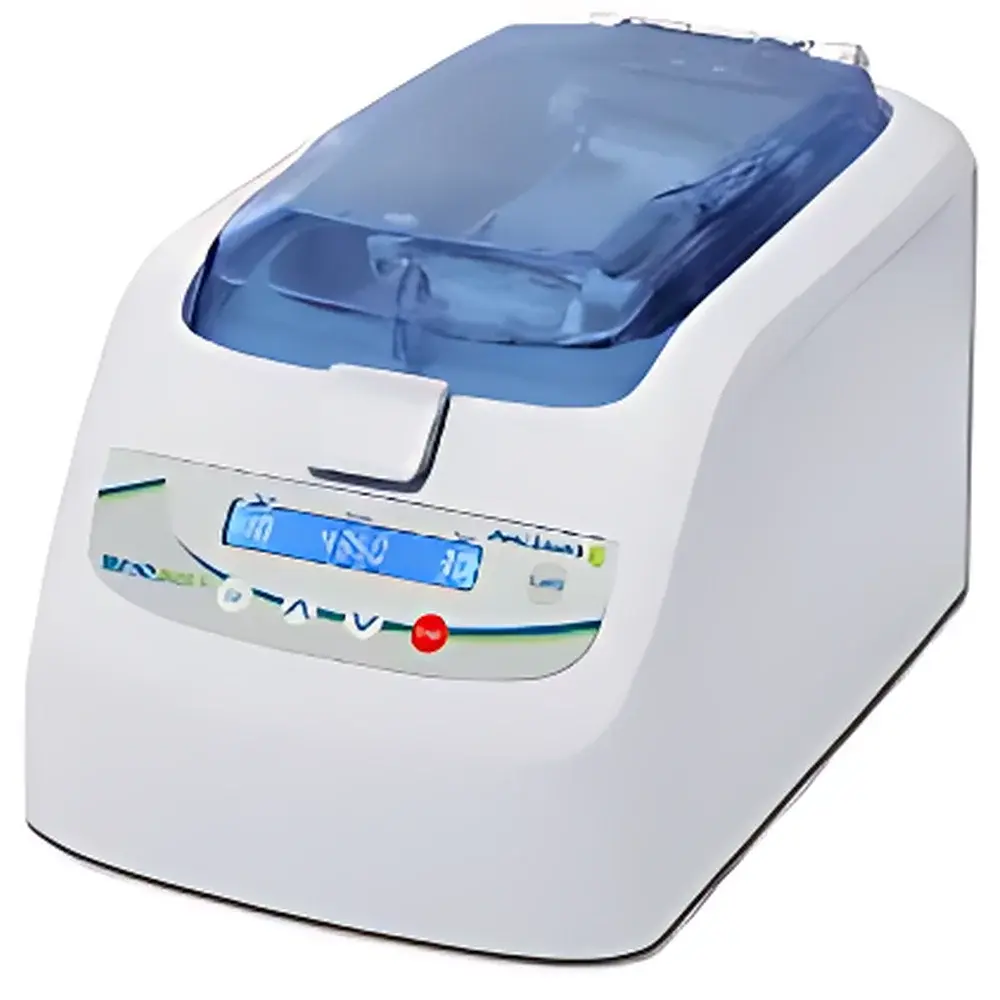
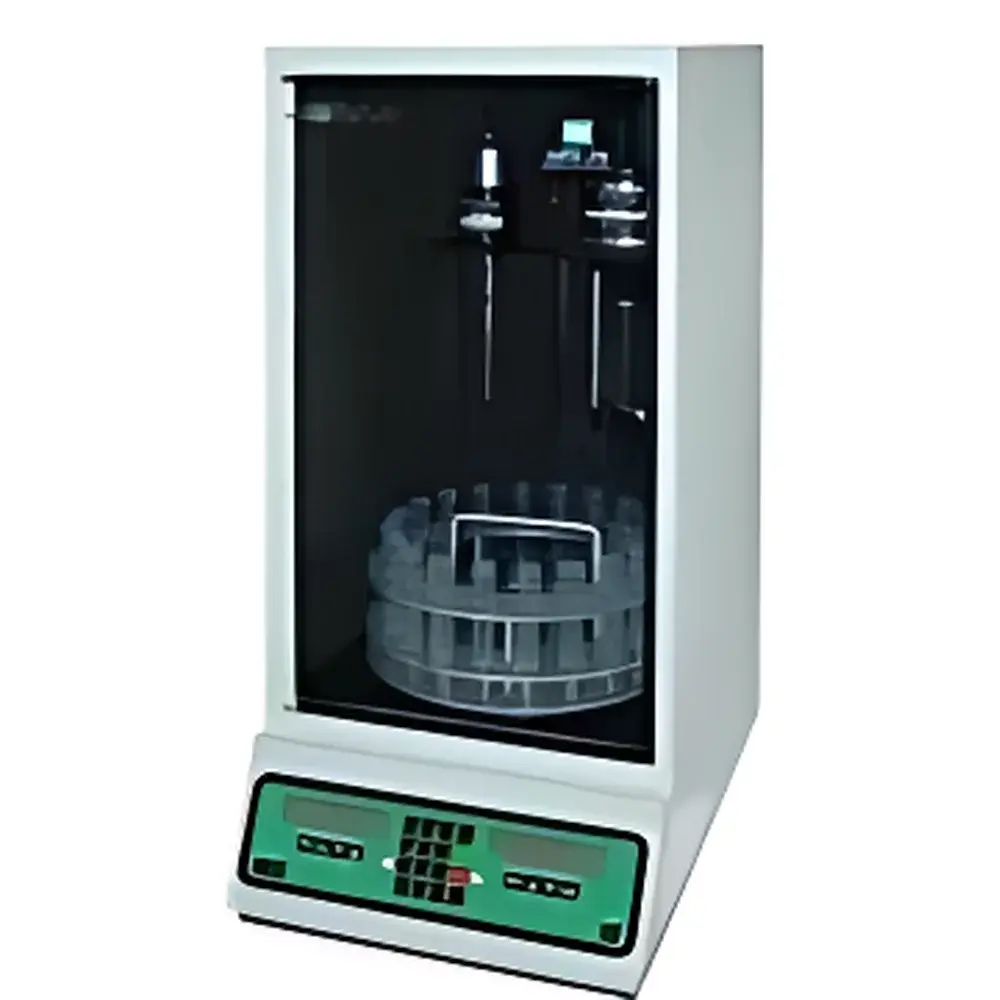
JP CY-500 Ultrasonic Homogenizer
| Brand | JP |
|---|---|
| Origin | Spain |
| Model | CY-500 |
| Instrument Type | Ultrasonic Probe Homogenizer |
| Dimensions (W×D×H) | 280 × 440 × 260 mm |
| Processing Volume Range | 10–40,000 mL |
| Transducer Material | Titanium Alloy Probe (Φ5.6 mm × 60 mm) |
| Frequency | 20 kHz |
| Power Supply | 220 V, 50 Hz |
Overview
The JP CY-500 Ultrasonic Homogenizer is a high-performance, benchtop probe-type sonicator engineered for precise cell disruption, emulsification, dispersion, and molecular extraction in research and quality control laboratories. It operates on the principle of high-intensity ultrasonic cavitation: an integrated piezoelectric transducer converts electrical energy into mechanical oscillations at a stable frequency of 20 kHz. These oscillations are transmitted through a titanium alloy probe (Φ5.6 mm × 60 mm), inducing rapid pressure fluctuations in the liquid medium. This generates transient microbubbles that collapse violently—releasing localized energy in the form of shockwaves, microstreaming, and extreme transient temperatures (>5,000 K) and pressures (>1,000 atm). Such controlled cavitation enables efficient lysis of microbial cells, mammalian tissues, and plant materials; fragmentation of nucleic acids; and uniform dispersion of nanoparticles, liposomes, and colloidal suspensions—without thermal degradation when operated under pulsed mode.
Key Features
- Digitally controlled ultrasonic generator with LCD interface supporting up to 10 user-defined protocols
- Pulse mode operation with adjustable duty cycle and interval timing to minimize sample heating and preserve labile biomolecules
- Titanium alloy probe (Grade 5 Ti-6Al-4V) with optimized geometry for high acoustic coupling efficiency and corrosion resistance
- Integrated temperature monitoring capability via optional probe-mounted sensor or external thermocouple input
- Robust chassis construction featuring metal epoxy-coated housing and ABS front panel for electromagnetic shielding and mechanical durability
- Modular design with vertically adjustable support arm and universal clamp for secure probe positioning across varying vessel heights (up to 44 cm)
- Compliant with IEC 61000-6-3 (EMC emission standards) and IEC 61000-6-2 (immunity requirements)
Sample Compatibility & Compliance
The CY-500 accommodates sample volumes from 10 mL (microcentrifuge tubes) to 40 L (large beakers or jacketed reactors), enabling scalable processing across R&D, QC, and pilot-scale applications. It is routinely employed in EPA Method 3540C (Soxhlet extraction alternatives), USP (liposome size distribution analysis), and ISO 13320:2020 (laser diffraction particle sizing preparation). When used with validated SOPs and audit-trail-enabled software (see Software & Data Management), the system supports GLP-compliant workflows and meets documentation requirements for FDA 21 CFR Part 11–aligned environments. The titanium probe is compatible with aqueous buffers, organic solvents (e.g., chloroform, ethanol), and mild acidic/basic solutions—though prolonged exposure to strong oxidizers (e.g., HNO₃, H₂O₂) is not recommended.
Software & Data Management
While the CY-500 operates as a standalone instrument with local parameter control, it features RS-232 and optional USB connectivity for integration with laboratory information management systems (LIMS) or custom scripting environments (e.g., Python-based automation via SCPI commands). All protocol executions—including amplitude setting, total duration, pulse-on/pulse-off intervals, and real-time power output—are timestamped and stored in non-volatile memory. Optional data logging firmware enables CSV export of time-stamped amplitude, temperature, and cumulative energy metrics—facilitating traceability, method validation, and root-cause analysis during process deviations. Audit trail functionality satisfies ALCOA+ principles (Attributable, Legible, Contemporaneous, Original, Accurate) for regulated environments.
Applications
- Cell lysis and subcellular fractionation (E. coli, yeast, mammalian suspension cultures)
- Nucleic acid shearing for NGS library prep (DNA fragmentation, RNA hydrolysis)
- Liposome and nanolipid particle formation (e.g., mRNA-LNP formulation support)
- Emulsification of oil-in-water and water-in-oil systems for food, cosmetic, and pharmaceutical development
- Dispersion of carbon nanotubes, graphene oxide, and metal oxide nanoparticles in polymer matrices
- Soil and sediment extraction per EPA SW-846 Methods 3540C and 3550C
- Removal of dissolved gases from viscous media prior to rheological or spectroscopic analysis
- Accelerated solvent-assisted reactions (e.g., transesterification, ester hydrolysis)
FAQ
What is the maximum continuous operating time per cycle?
The CY-500 supports up to 99 minutes 59 seconds of continuous or pulsed operation per program; thermal protection circuitry automatically interrupts output if internal transducer temperature exceeds 75 °C.
Can the probe be autoclaved?
No—the titanium probe is not designed for steam sterilization; instead, it should be cleaned with 70% ethanol or mild detergent followed by rinsing with deionized water and air-drying.
Is the noise-dampening chamber included standard or optional?
The double-walled acoustic enclosure with transparent polycarbonate door is supplied as a standard accessory to comply with OSHA 29 CFR 1910.95 occupational noise exposure limits (<85 dBA at 1 m).
Does the system support variable amplitude control?
Yes—amplitude is digitally adjustable from 10% to 100% of full power (0–500 W nominal output), with resolution of ±1% and repeatability better than ±3% across the operating range.
What maintenance is required for long-term reliability?
Annual inspection of transducer bonding integrity and probe tip erosion is recommended; replacement probes and gaskets are available as genuine JP service parts with serial-number traceability.



