
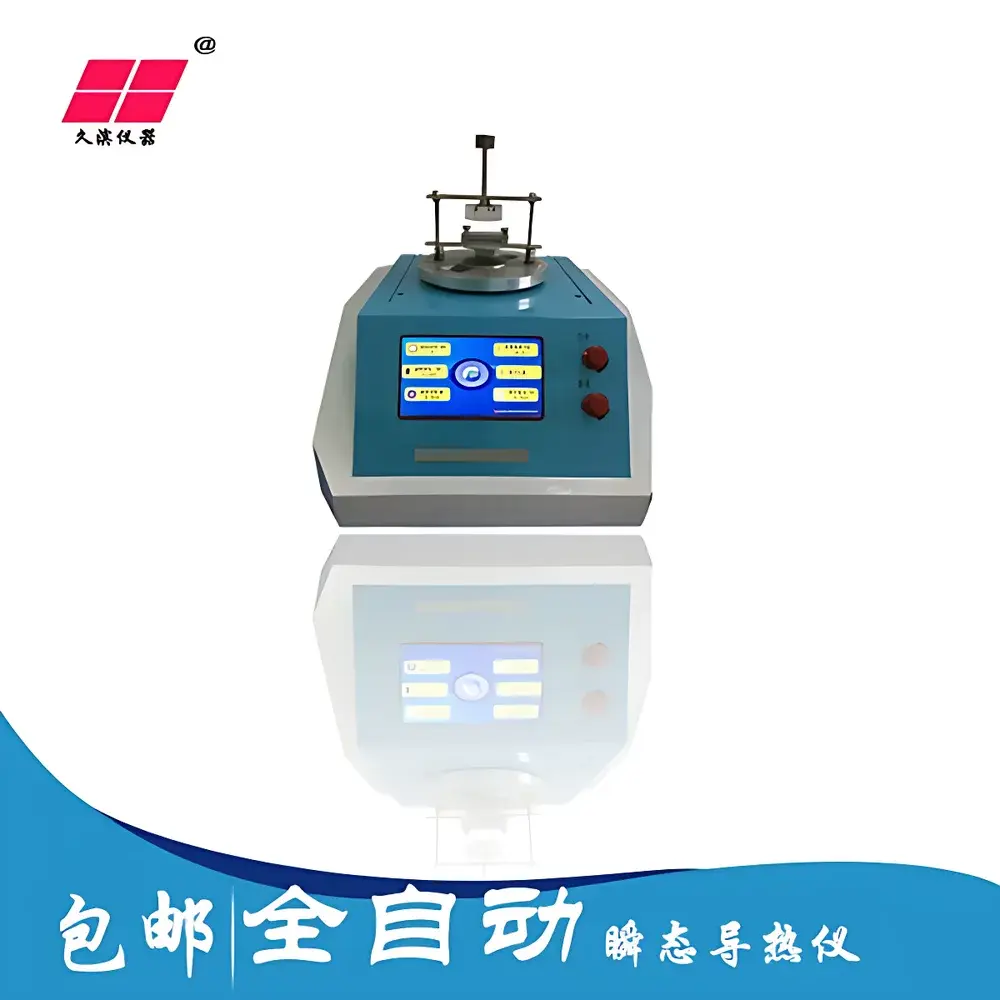
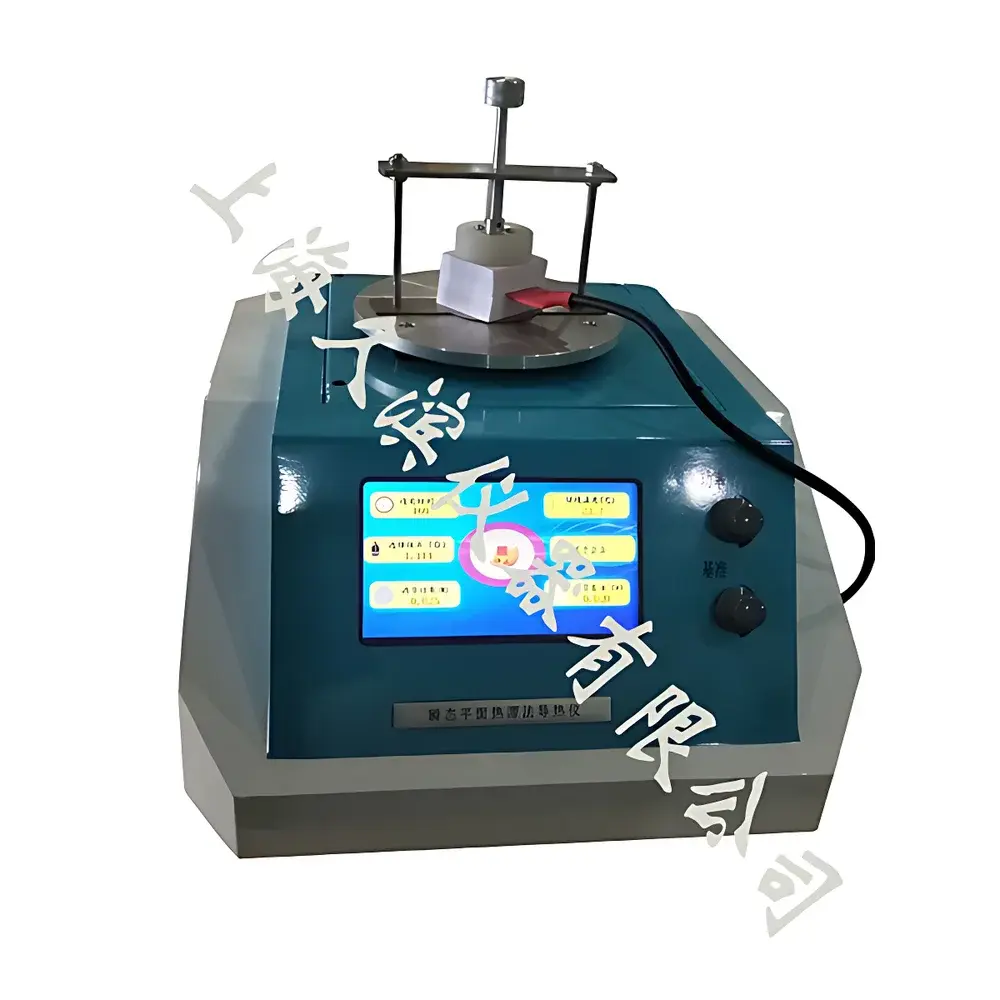
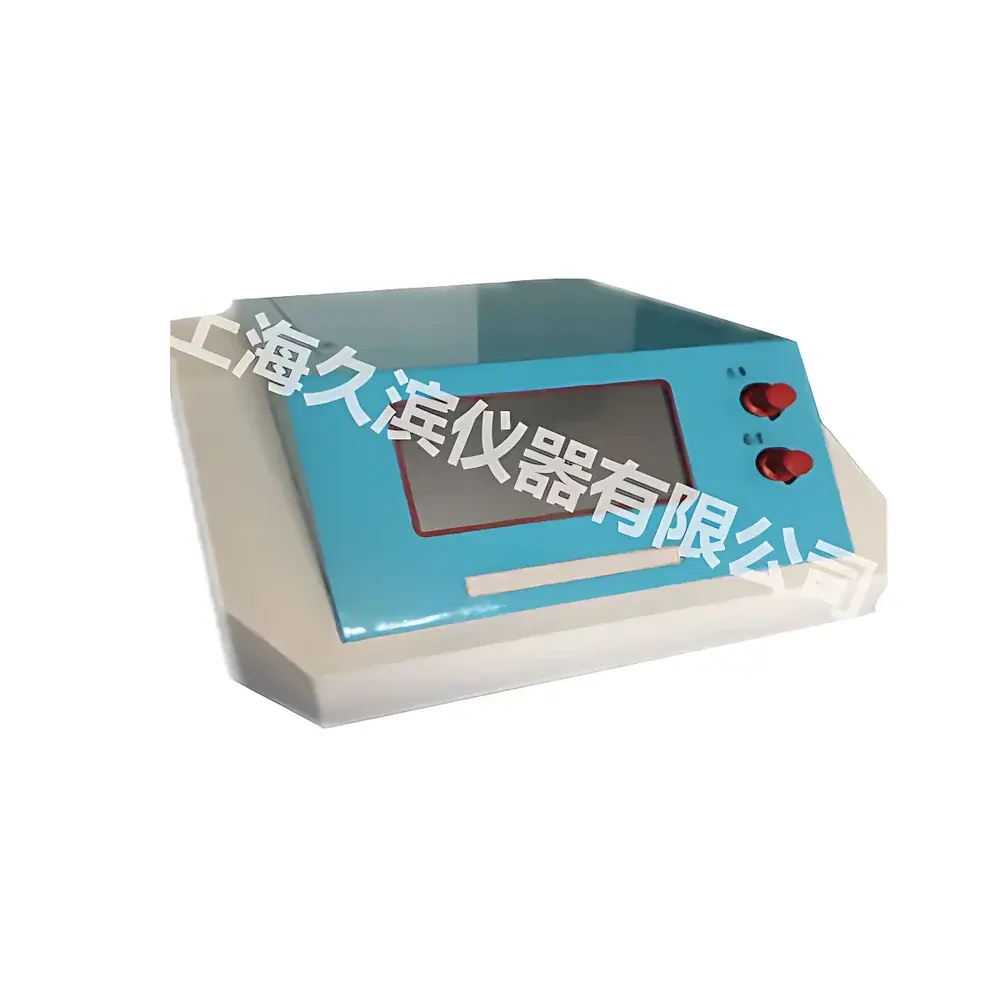
JuBen JB-S Transient Plane Source (TPS) Thermal Conductivity Analyzer
| Brand | JuBen |
|---|---|
| Origin | Shanghai, China |
| Model | JB-S |
| Measurement Principle | Transient Plane Source (TPS) Method |
| Dimensions (L×W×H) | 500 × 800 × 1200 mm |
| Accuracy | ±3% |
| Thermal Conductivity Range | 0.005–300 W/(m·K) |
| Repeatability | ±3% |
Overview
The JuBen JB-S Transient Plane Source (TPS) Thermal Conductivity Analyzer is a laboratory-grade instrument engineered for rapid, non-destructive, and high-reproducibility measurement of thermal conductivity in solid and semi-solid materials—including honeycomb sandwich panels, polymer composites, insulating foams, ceramics, metals, and phase-change materials. Based on the ISO 22007-2 standard, the TPS method applies a thin, double-sided nickel sensor acting simultaneously as both heater and temperature sensor. A short-duration current pulse generates transient heat flow into the sample, and the resulting temperature rise is recorded with microsecond resolution. Thermal conductivity is calculated directly from the slope of the log(temperature) versus log(time) curve during the early-time response—eliminating the need for steady-state equilibration and minimizing contact resistance errors common in guarded-hot-plate or heat-flow-meter methods.
Key Features
- Transient Plane Source (TPS) methodology compliant with ISO 22007-2, enabling measurements within seconds per test
- Wide dynamic range: 0.005 to 300 W/(m·K), suitable for thermal insulators (e.g., aerogels, PU foam) and high-conductivity metals (e.g., aluminum, copper)
- Integrated dual-sensor configuration ensures symmetrical heat diffusion and eliminates one-sided boundary effects
- ±3% accuracy and ±3% repeatability across the full measurement range, validated against NIST-traceable reference materials
- Rugged benchtop architecture with precision-machined sample holder, adjustable clamping force, and thermally isolated base plate
- No requirement for vacuum chambers or external cooling units—operates under ambient laboratory conditions (20–25°C, 40–60% RH)
- Self-calibrating sensor with built-in reference resistor and real-time drift compensation
Sample Compatibility & Compliance
The JB-S accommodates flat, isotropic, or mildly anisotropic solids with minimum thickness ≥ 1 mm and surface flatness ≤ 20 µm. Honeycomb core panels (e.g., aluminum, Nomex®, or fiberglass-reinforced phenolic cores) are routinely tested using custom-fit sensor inserts that bridge cell geometry without compressing the structure. Sample diameters from 25 mm to 100 mm are supported; optional fixtures enable testing of irregular geometries via conformal sensor mounting. All measurement protocols align with ASTM D5470 (thermal transmission properties of thermally conductive electrical insulation materials) and ISO 22007-2 (plastics — determination of thermal conductivity and thermal diffusivity — Part 2: Transient plane source method). Data acquisition and reporting support GLP-compliant audit trails, including operator ID, timestamp, environmental metadata, and raw sensor voltage vs. time logs.
Software & Data Management
The JB-S is controlled via Windows-based JuBen TPS Control Suite v3.2, featuring intuitive wizard-guided test setup, real-time curve visualization, and automated parameter extraction. Software includes batch processing mode for multi-sample sequences, statistical summary reports (mean, SD, CV%), and export to CSV, Excel, or PDF formats. Raw data files retain full 16-bit resolution and are stored with embedded calibration certificates. The system supports FDA 21 CFR Part 11 compliance through optional electronic signature modules, role-based access control, and immutable audit logs—enabling use in regulated environments such as pharmaceutical packaging validation (e.g., thermal barrier assessment of blister foil laminates) or automotive battery module R&D.
Applications
- Quality assurance of aerospace honeycomb panels used in aircraft flooring and radomes
- Thermal interface material (TIM) screening for EV battery pack thermal management systems
- R&D of flame-retardant insulation boards for building envelope certification (EN 13163, EN 13165)
- Characterization of graphite-based thermal pads and metal matrix composites in high-power electronics
- Validation of thermal homogeneity in multi-layer printed circuit board (PCB) substrates
- Material qualification for medical device housings requiring ISO 10993-5 biocompatibility and thermal safety assessment
FAQ
What sample preparation is required for honeycomb core testing?
Minimal preparation is needed: surfaces must be clean, dry, and free of coatings or sealants. For open-cell honeycombs, a thin thermal interface paste (e.g., α-alumina-based) may be applied to ensure full sensor contact without compressing the core.
Can the JB-S measure anisotropic thermal conductivity?
Yes—the instrument supports directional measurements by rotating the sensor relative to the material’s principal axes; however, true orthotropic analysis requires complementary diffusivity data from laser flash apparatus (e.g., LFA 467).
Is calibration traceable to national standards?
Yes—each sensor ships with a factory calibration certificate traceable to NIST SRM 1470 (fused quartz) and NIST SRM 1469 (stainless steel), with optional annual recalibration services available.
Does the system require external cooling or vacuum?
No—measurements are performed at ambient pressure and temperature. Optional Peltier-controlled stage (-10°C to +80°C) is available for temperature-dependent studies.
How is contact resistance minimized during testing?
The TPS method inherently mitigates interfacial resistance through symmetric heating and mathematical deconvolution of the early-time thermal response; additionally, the sensor’s low mass and high surface-area-to-volume ratio reduce thermal lag.



