
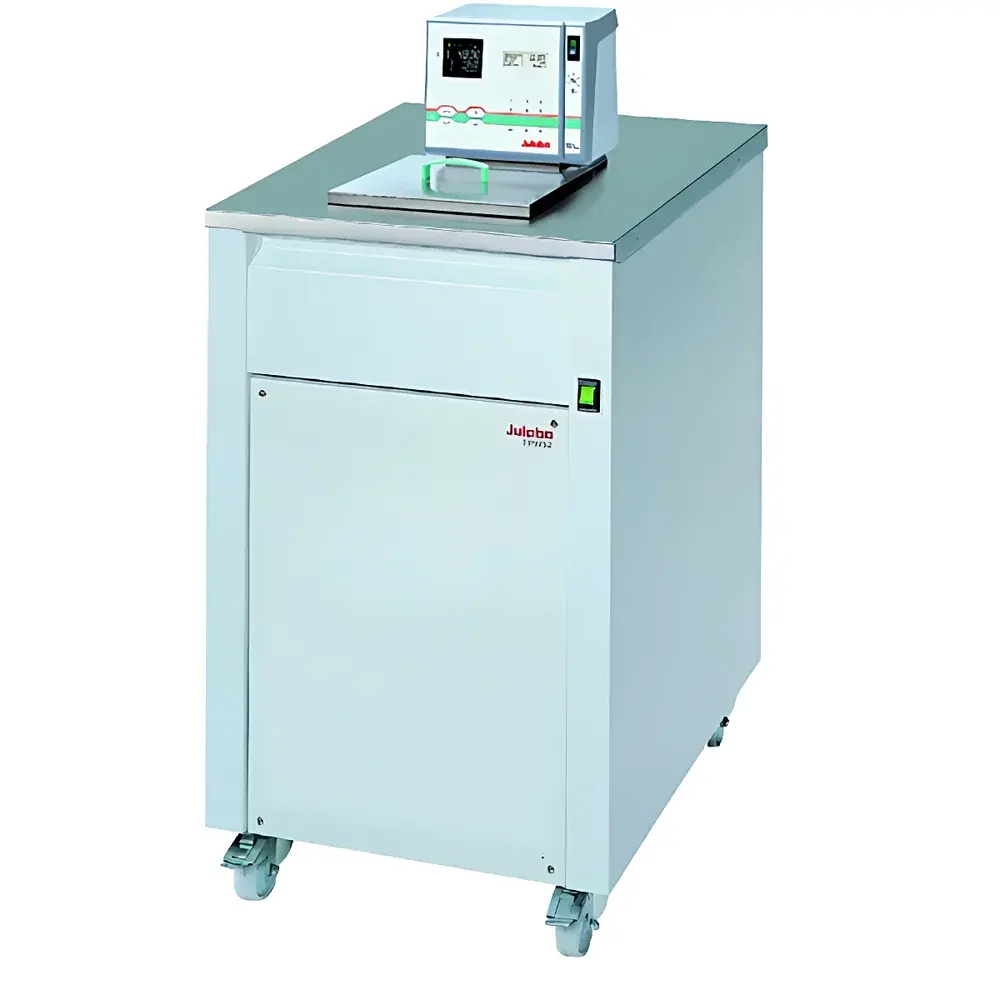
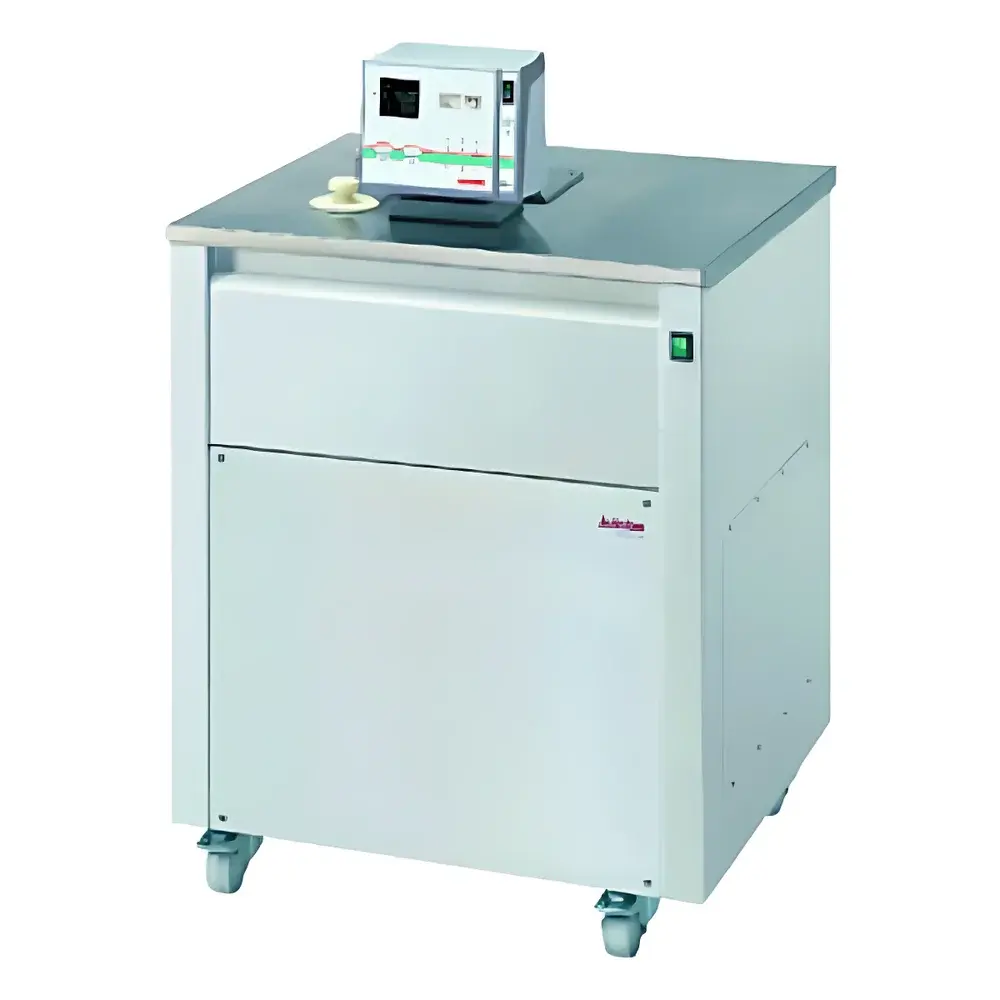
Julabo FP52-SL-150C and FP55-SL-150C Ultra-Low Temperature Heating/Cooling Circulating Bath
| Brand | Julabo |
|---|---|
| Origin | Germany |
| Model | FP52-SL-150C / FP55-SL-150C |
| Bath Volume | 24 L / 27 L |
| Temperature Range | −60 °C to +150 °C |
| Temperature Stability | ±0.05 °C |
| Display Resolution | 0.01 °C |
| Heating Power | 3 kW (FP52), 5.5 kW (FP55) |
| Refrigeration Power (at −60 °C) | 0.1 kW (FP52), 0.13 kW (FP55) |
| Pump Flow Rate | 22–26 L/min |
| Max. Pump Pressure | 0.7 bar |
| Refrigerant | R404A |
| GWP | 3922 |
| DIN 12876-1 Classification | Class III (FL) |
| Communication Interfaces | RS232, RS485 (optional Profibus) |
| Programmable Ramp/Soak | 6×60 steps |
Overview
The Julabo FP52-SL-150C and FP55-SL-150C are high-performance ultra-low temperature heating/cooling circulating baths engineered for precise, stable, and reproducible thermal control in demanding laboratory and industrial applications. Designed around a dual-mode refrigeration architecture—comprising a single-stage compressor system with R404A refrigerant and advanced thermal management—the units deliver continuous operation from −60 °C to +150 °C. Unlike conventional circulators limited by ambient heat rejection or insufficient low-temperature lift, the FP-SL series integrates ACC (Active Cooling Control) and FP (Fractional Power) refrigeration modulation to maintain consistent cooling capacity across the full range while minimizing energy consumption. The FP55-SL variant features higher heating power (5.5 kW vs. 3 kW) and enhanced refrigeration output at sub-zero setpoints, making it suitable for rapid thermal cycling of high-thermal-mass systems such as jacketed reactors or calorimetry cells. Both models comply with DIN 12876-1 Class III (FL) safety requirements for flammable liquid handling and feature reinforced insulation layers to suppress frost formation and condensation during extended low-temperature operation.
Key Features
- VFD + LCD dual-display interface with backlighting for simultaneous monitoring of bath temperature, external sensor input, setpoint, pump status, and alarm conditions
- ICC (Intelligent Control Circuit) self-tuning algorithm automatically optimizes PID parameters based on real-time thermal load and fluid viscosity
- TCF (Temperature Compensation Function) dynamically adjusts heater/refrigeration output to counteract ambient fluctuations and fluid property drift
- ATC3 three-point calibration support enables traceable temperature verification using certified Pt100 probes at −20 °C, 0 °C, and +40 °C
- SmartPump™ variable-speed circulation system modulates motor torque in response to fluid density and viscosity changes—ensuring constant flow rate across wide temperature spans
- Integrated external Pt100 input allows direct feedback control of process temperatures in external loops (e.g., reactor jackets or chromatography columns)
- Programmable 6-segment × 60-step ramp/soak profiles stored internally; supports timed start, hold, and gradient transitions
- RS232 and optional RS485/Profibus interfaces enable integration into centralized LabVantage, DeltaV, or SCADA environments with audit-trail-capable logging
- Electromagnetic valve port standard for coordinated control of auxiliary cooling water circuits or high-pressure booster pumps (HSP)
- Front-mounted drain valve, removable air-intake grilles, and tool-free access to condenser coils simplify routine maintenance and compliance with ISO/IEC 17025 preventive maintenance schedules
Sample Compatibility & Compliance
The FP52/55-SL series accommodates a broad spectrum of heat transfer media—including water, water/glycol mixtures, silicone oils, and low-viscosity synthetic heat transfer fluids—within its 24 L (FP52) or 27 L (FP55) stainless-steel reservoirs. Internal dimensions support immersion of standard laboratory vessels up to Ø7 cm × 22 cm (FP52) or Ø7 cm × 23 cm (FP55). All wetted parts conform to FDA-compliant materials (316L SS bath, EPDM seals), and the unit is certified to IEC 61010-1:2010 for electrical safety in laboratory environments. It meets EN 61326-1 for electromagnetic compatibility and carries CE marking under the EU Machinery Directive. For regulated quality environments, firmware supports 21 CFR Part 11-compliant electronic signatures and user-access-level restrictions when paired with validated software platforms.
Software & Data Management
Native RS232 communication permits bidirectional command execution (e.g., SET TEMP=−40.00, QUERY STATUS?) and real-time data streaming at configurable intervals. Optional Julabo WinPC software provides graphical trend visualization, CSV export, and alarm event tagging synchronized with system timestamps. When integrated via RS485 Modbus RTU or Profibus DP, the bath becomes a node in distributed control architectures—enabling automated SOP execution, deviation alerts, and electronic batch record generation per ALCOA+ principles. Internal memory retains ≥30 days of 1-second-resolution temperature logs, accessible via serial dump or triggered USB export (with optional adapter).
Applications
- Calibration of thermocouples, RTDs, and infrared sensors across extended cryogenic ranges
- Thermal validation of pharmaceutical stability chambers and accelerated aging studies (ICH Q1A–Q1E)
- Temperature control of FTIR, UV-Vis, and fluorescence spectrometers requiring sub-ambient detector cooling
- Process simulation for chemical synthesis, polymerization, and crystallization kinetics under controlled thermal gradients
- Material testing per ASTM D5276 (low-temp impact resistance), ISO 6722 (automotive wiring cold-bend), and MIL-STD-810G Method 502.6
- Support of GLP/GMP-compliant dissolution apparatus (USP ) and dissolution calibrators
FAQ
What is the difference between FP52-SL-150C and FP55-SL-150C?
The FP55-SL-150C delivers higher heating power (5.5 kW vs. 3 kW) and greater refrigeration capacity below −20 °C, enabling faster thermal ramp rates and improved stability in high-heat-load external systems.
Can this bath operate continuously at −60 °C?
Yes—both models are rated for continuous operation at −60 °C when used with appropriate heat transfer fluid (e.g., 50% ethylene glycol/water or specialized low-temp silicone oil) and adequate ventilation per manufacturer-specified clearance requirements.
Is external temperature control supported out of the box?
Yes—each unit includes a dedicated Pt100 input channel for closed-loop control of external processes; no additional hardware is required for basic external sensor feedback.
Does the unit support 21 CFR Part 11 compliance?
The hardware and firmware provide foundational capabilities (user authentication, audit trail buffer, electronic signature prompts); full compliance requires implementation within a validated software environment meeting organizational SOPs.
What maintenance intervals are recommended for long-term reliability?
Condenser cleaning every 3 months (or per local dust load), refrigerant pressure verification annually, and ATC3 calibration every 6 months—aligned with ISO/IEC 17025 Clause 6.4.6 for measurement equipment assurance.



