
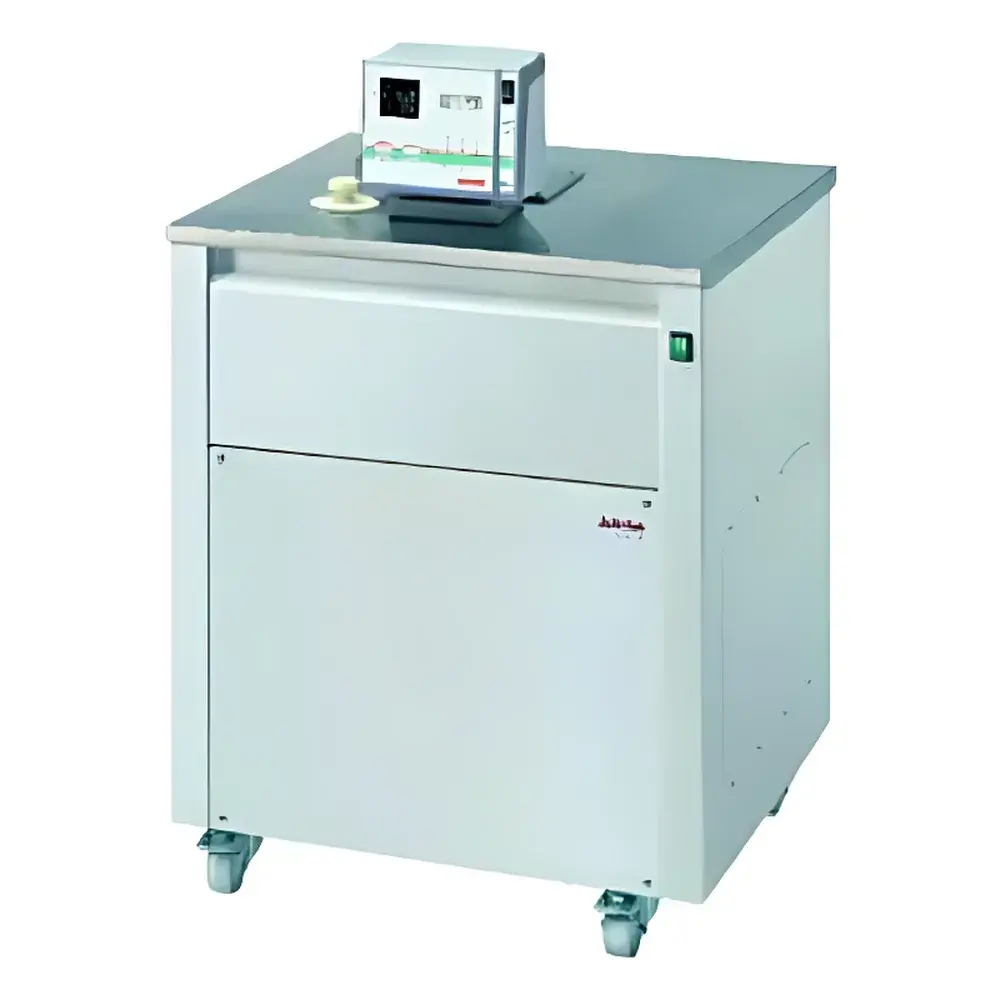
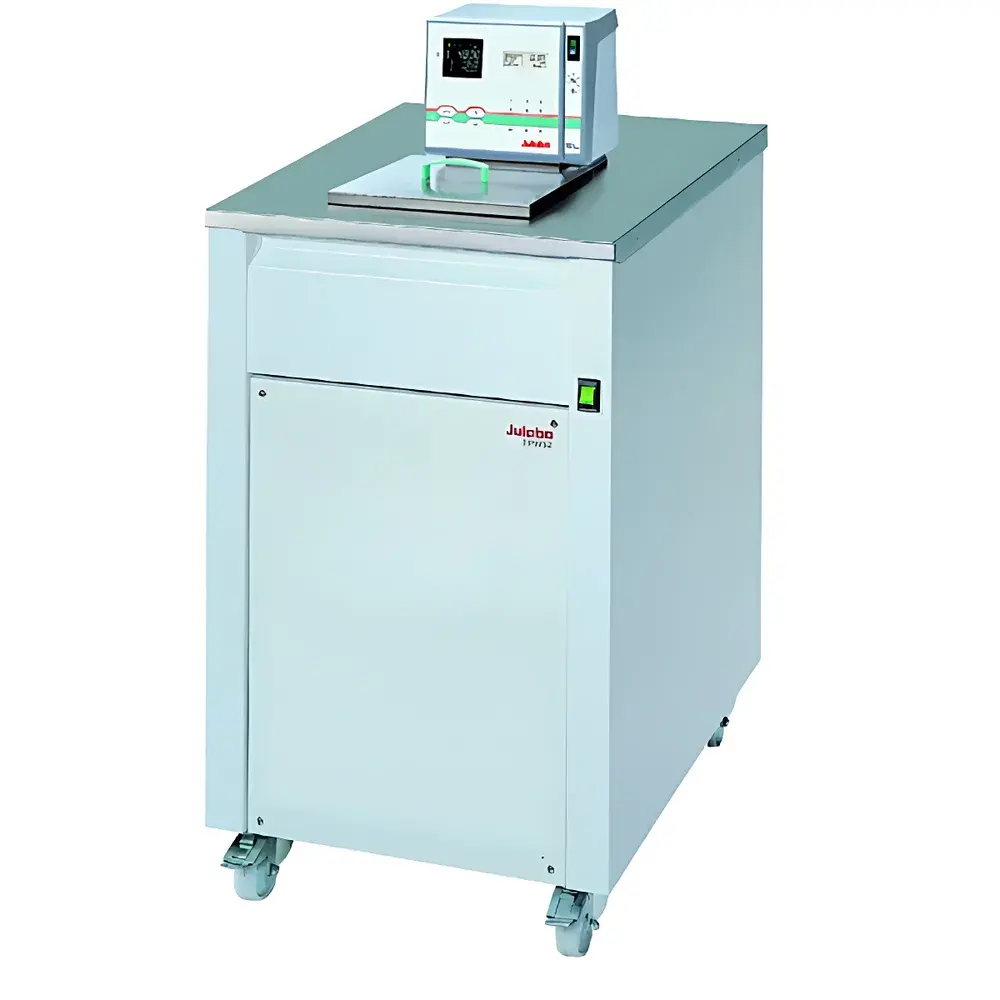
JULABO FPW52-SL-150C and FPW55-SL-150C Ultra-Low Temperature Heating & Cooling Circulating Baths
| Brand | JULABO |
|---|---|
| Origin | Germany |
| Model | FPW52-SL-150C / FPW55-SL-150C |
| Bath Volume | 24 L |
| Temperature Range | –60 °C to +150 °C |
| Temperature Stability | ±0.05 °C |
| Temperature Resolution | 0.01 °C |
| Pump Flow Rate | 22–26 L/min |
| Max. Pump Pressure | 0.7 bar |
| Refrigerant | R404A (GWP 3922) |
| Compressor Cooling | Water-cooled |
| Compliance | DIN 12876-1 Class III (FL) |
| Communication Interfaces | RS232, RS485, optional Profibus |
| External PT100 Input | Integrated |
| Programmable Steps | 6 × 60 |
| Heating Power | 3 kW |
| Refrigeration Power (at –60 °C) | 0.1 kW (FPW52), 0.13 kW (FPW55) |
Overview
The JULABO FPW52-SL-150C and FPW55-SL-150C are high-performance ultra-low temperature heating and cooling circulating baths engineered for precision thermal control in demanding laboratory and industrial applications. Designed around a dual-stage refrigeration architecture with water-cooled compressors and R404A refrigerant, these units deliver stable, reproducible temperature regulation across an exceptionally wide operating range—from –60 °C to +150 °C—with stability maintained at ±0.05 °C under dynamic load conditions. Their core function is to supply thermally conditioned fluid—either water, water-glycol mixtures, or silicone oil—to external systems (e.g., reactors, spectrometers, material testers) via robust internal/external circulation. The integrated SmartPump technology dynamically adjusts motor torque and flow output in response to changes in fluid viscosity and system backpressure, ensuring consistent heat transfer performance even during rapid temperature ramps or extended operation at cryogenic extremes. Unlike conventional thermostats, the FPW-SL series incorporates active refrigerant management strategies—including ACC (Adaptive Cold Control) and FP (Fractional Power) modulation—to maintain precise cooling capacity across the full span without overcooling or energy waste.
Key Features
- VFD + LCD dual-display interface with backlighting for simultaneous monitoring of bath temperature, setpoint, external sensor input, pump status, and alarm history
- ICC (Intelligent Control Circuit) self-tuning algorithm automatically optimizes PID parameters for each temperature segment, improving transient response and steady-state accuracy
- TCF (Thermal Compensation Function) compensates for thermal lag between bath sensor and external process point, enhancing closed-loop control fidelity
- ATC3 three-point calibration routine supports traceable temperature validation using NIST-traceable Pt100 probes at user-defined setpoints (e.g., –40 °C, 25 °C, +100 °C)
- SmartPump variable-speed circulation system adapts pressure and flow (22–26 L/min, 0.4–0.7 bar max) to maintain optimal Reynolds number across viscosity shifts
- Integrated external Pt100 input enables direct feedback control of remote process temperatures—critical for jacketed reactor applications requiring ISO 17025-compliant thermal validation
- RS232 and RS485 serial interfaces support bidirectional communication with SCADA, LIMS, or PLC systems; optional Profibus module enables integration into automated manufacturing environments compliant with IEC 61131-3
- Electromagnetic valve port and HSP pump interface allow coordinated control of auxiliary cooling water circuits and high-static-pressure delivery lines
- Removable front air grille and rear condenser access panel simplify preventive maintenance per manufacturer-recommended service intervals (every 12 months or 2000 operating hours)
- DIN 12876-1 Class III (FL) certification confirms suitability for flammable liquid handling, including ethanol-, acetone-, or xylene-based heat transfer media
Sample Compatibility & Compliance
These circulating baths accommodate a broad spectrum of heat transfer fluids—including deionized water, 30–50% ethylene glycol/water blends, and low-volatility silicone oils (e.g., DC200 series)—enabling compatibility with diverse sample matrices and apparatus geometries. Internal wetted materials (316 stainless steel reservoir, EPDM/PtFE seals, brass pump housing) resist corrosion from mildly acidic or alkaline solutions commonly used in electrochemical or polymer synthesis workflows. All FPW-SL models comply with European CE directives (2014/30/EU EMC, 2014/35/EU LVD), RoHS 2011/65/EU, and carry DIN 12876-1 Class III (FL) classification for safe operation with flammable media up to flash point 60 °C. For regulated environments, firmware supports audit-trail-enabled logging (timestamped setpoint changes, alarms, calibration events) aligned with FDA 21 CFR Part 11 data integrity principles when paired with validated third-party software.
Software & Data Management
The built-in controller stores up to six independent temperature programs, each comprising 60 ramp/soak steps with programmable rate limits (0.1–10 °C/min), dwell times, and conditional triggers (e.g., “hold until external Pt100 reaches target”). Logged data—including real-time bath temperature, external probe reading, pump speed %, compressor duty cycle, and error codes—is timestamped and exportable via RS232 to CSV-compatible spreadsheet tools or LabVIEW-compatible drivers. Optional JULABO WinControl software provides graphical trend analysis, multi-channel overlay, and automated report generation meeting GLP documentation requirements. All parameter modifications are logged with operator ID (if network-authenticated), date/time stamp, and pre-/post-change values—supporting traceability during QA/QC audits.
Applications
- Material science: Thermal cycling of polymer composites, rheological testing of viscoelastic fluids at sub-zero shear conditions
- Pharmaceutical development: Controlled crystallization studies, dissolution apparatus calibration (USP ), stability chamber qualification (ICH Q5C)
- Chemical engineering: Jacketed reactor temperature profiling for exothermic nitration or hydrogenation reactions
- Analytical instrumentation: Cooling of CCD detectors in Raman spectrometers, thermal conditioning of GC oven compartments
- Automotive R&D: Low-temperature validation of battery electrolyte conductivity and thermal interface material (TIM) performance
- Calibration labs: Reference standard temperature sources for thermometer and RTD verification per ISO/IEC 17025 Clause 6.5.2
FAQ
What is the difference between FPW52-SL-150C and FPW55-SL-150C?
The FPW55-SL-150C features a higher-capacity compressor and enhanced heat exchanger design, delivering marginally greater refrigeration power at ultra-low temperatures (e.g., 0.13 kW at –60 °C vs. 0.1 kW for FPW52), along with reduced weight (146 kg vs. 190 kg) due to optimized structural layout.
Can this unit operate continuously at –60 °C?
Yes—both models are rated for continuous operation from –60 °C to +150 °C when installed with adequate water-cooling capacity (minimum 15 °C inlet, ≤30 °C outlet, ≥2.5 bar supply pressure) and ambient conditions within 5–40 °C per DIN 12876-1.
Is external temperature control supported out-of-the-box?
Yes—the integrated Pt100 input channel allows direct connection of an external probe; the controller can be configured to regulate bath output based on that external measurement rather than internal sensor feedback.
Does the unit meet FDA 21 CFR Part 11 requirements?
The hardware supports Part 11-aligned data governance (audit trail, electronic signatures via external authentication systems, data immutability); full compliance requires validated configuration and procedural controls implemented by the end user per their quality system.
What maintenance is required for long-term reliability?
Annual inspection of refrigerant charge, condenser cleaning, pump seal integrity check, and verification of ATC3 calibration points using certified reference standards are recommended to maintain specification adherence over 10+ years of service life.



