
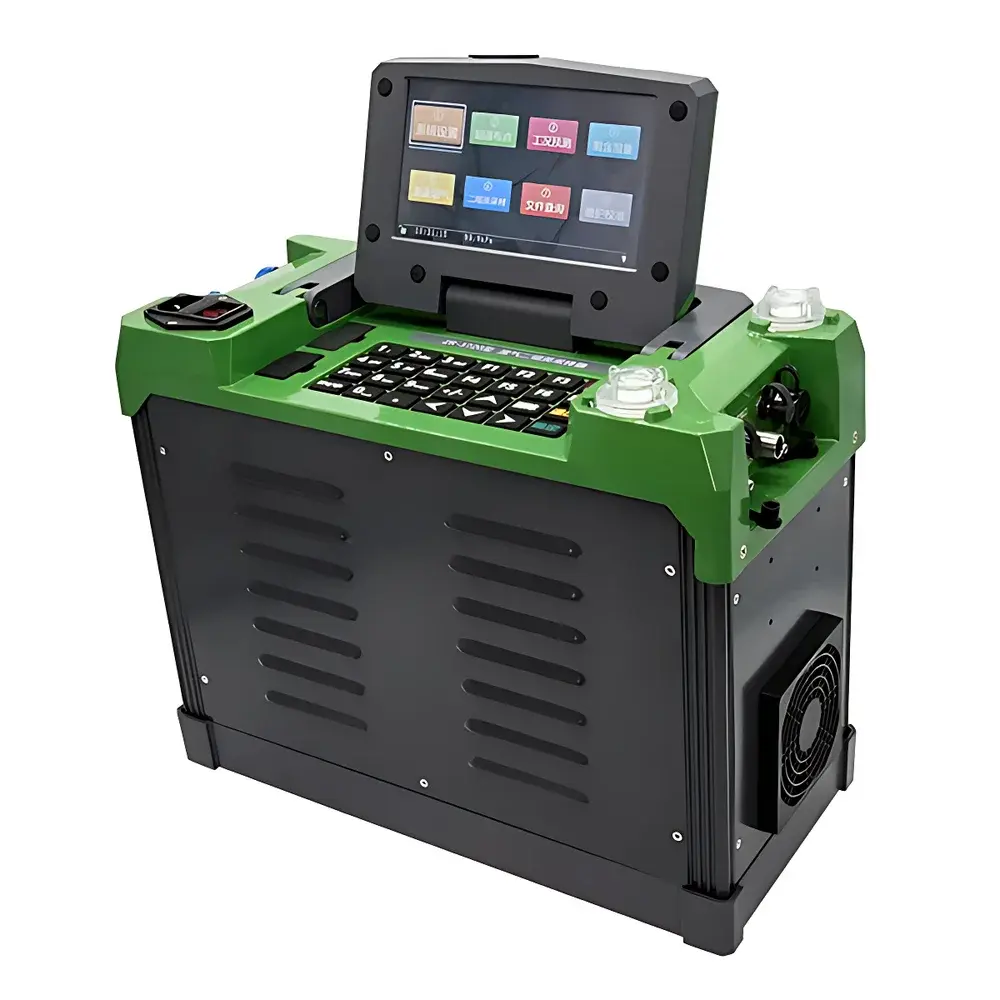
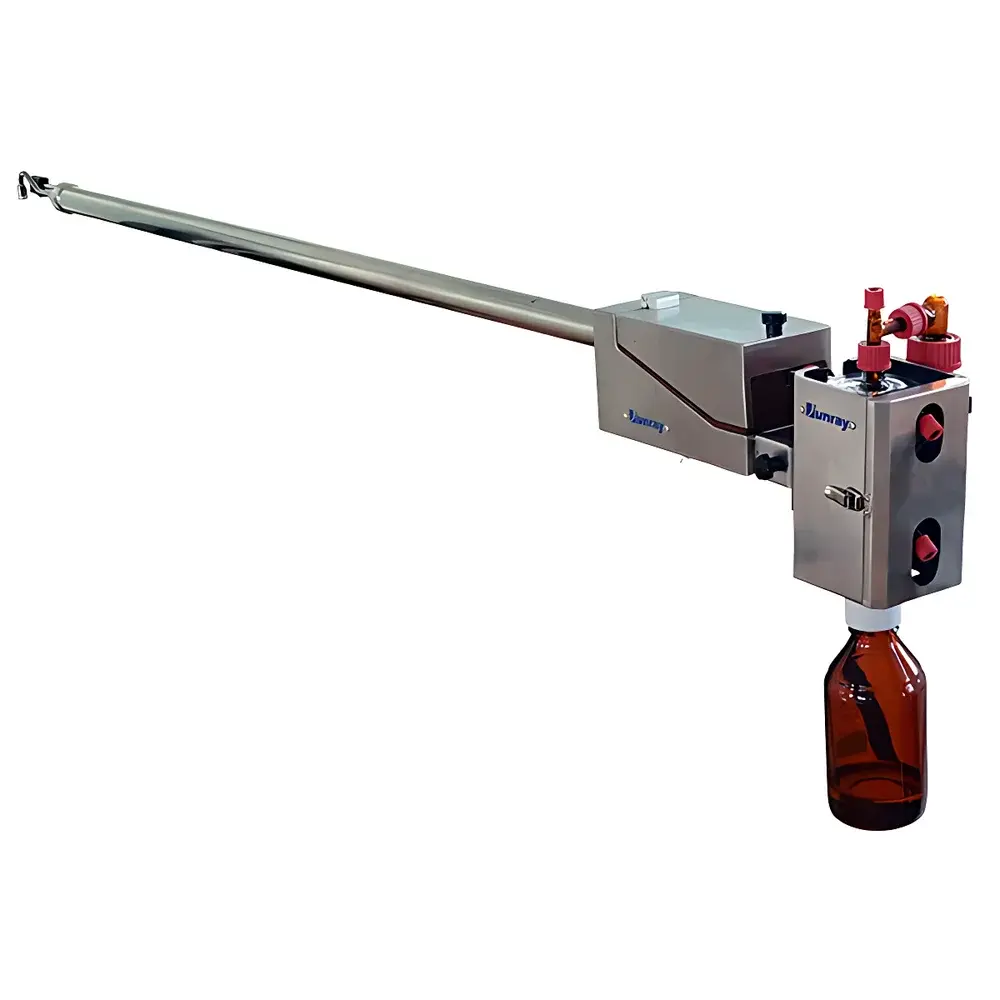
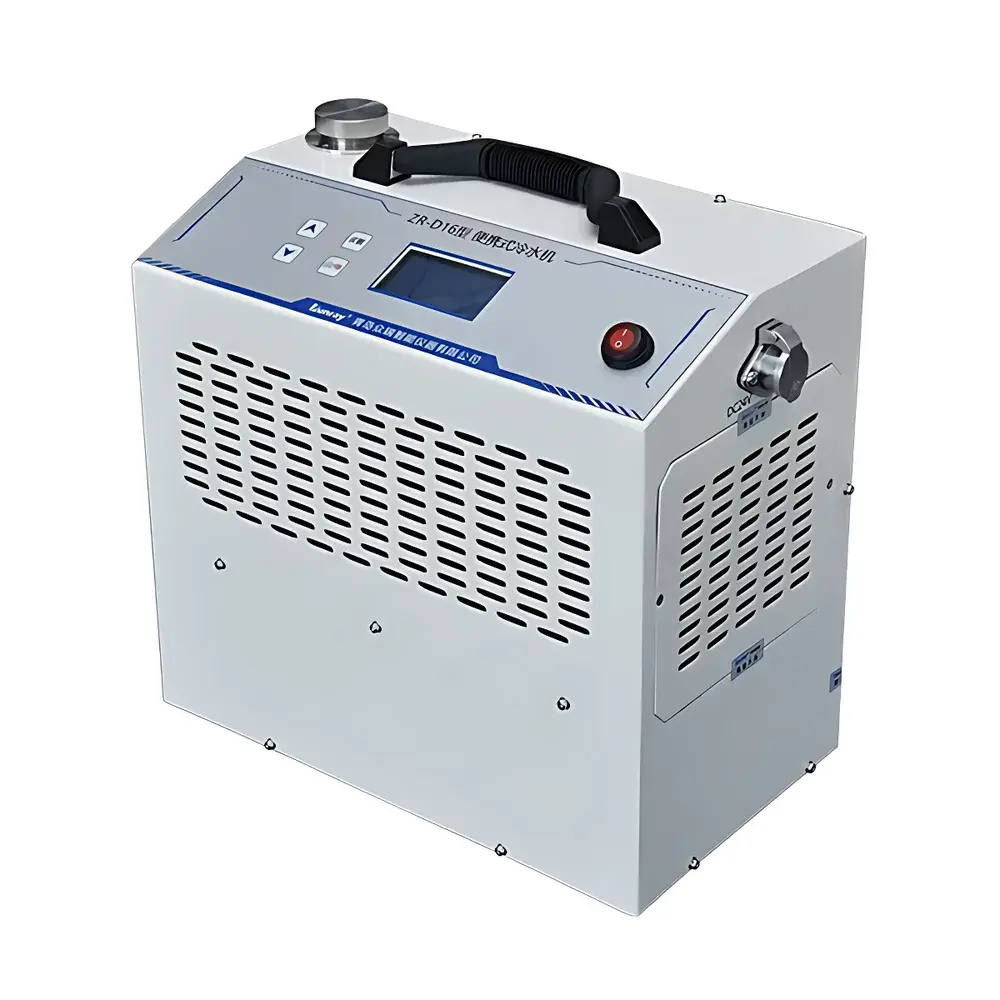
Junray ZR-3720 Dioxin Sampling System for Stack Emissions
| Brand | Junray |
|---|---|
| Origin | Shandong, China |
| Manufacturer Type | Direct Manufacturer |
| Model | ZR-3720 |
| Compliance | HJ/T 365–2007, HJ 77.2–2008, UNI EN 1948, EPA Method 23 |
| Sampling Principle | Isokinetic Sampling Based on Pitot Tube Velocity Tracking |
| Display | 5.6-inch Color Touchscreen (Chinese UI) |
| Pump | Imported High-Negative-Pressure, High-Flow Rate Diaphragm Pump with ABB Frequency Converter |
| Temperature Control | Dual-mode (Heating & Cooling), PID-Controlled, ±1 °C Stability |
| Sample Collection | Titanium Probe with Interchangeable Nozzles, Quartz Fiber Filter + XAD-2 Resin Trap |
| Data Storage | USB Export Supported, Power-Failure Memory Retention |
| Printing | High-Speed Thermal Printer with Real-Time Report Output |
| Environmental Monitoring Standards Support | Dry/Wet-Bulb, Condensation, and Manual Moisture Input Modes |
| Flow Calibration | Automatic Standard Condition Conversion (273.15 K, 101.325 kPa) Using Real-Time Barometric Pressure & Ambient Temperature Measurement |
| Safety & Integrity | Leak-Proof Pneumatic Architecture, Inert Gas Path (PTFE/SST), Password-Protected Calibration Parameters, Factory Reset Function |
Overview
The Junray ZR-3720 Dioxin Sampling System is a field-deployable, isokinetic stack sampling instrument engineered for regulatory-compliant collection of dioxin and furan congeners (PCDD/Fs) from industrial exhaust streams. It operates on the fundamental principle of pitot tube–based isokinetic sampling, dynamically tracking flue gas velocity to maintain precise flow equivalence between the sampling nozzle and the ambient stream—ensuring representative particulate and vapor-phase fraction capture per ISO 16000-8 and EPA Method 23 requirements. Designed specifically for source testing applications, the system meets the methodological rigor of HJ/T 365–2007 (for hazardous and medical waste incinerators), HJ 77.2–2008 (ambient air and stack emissions), UNI EN 1948 (European standard for stationary source monitoring), and U.S. EPA Method 23 (dioxin/furan measurement in combustion exhaust). Its architecture integrates thermal management, inert sampling train materials, and real-time environmental parameter compensation to minimize analyte loss, adsorption, or degradation during transit.
Key Features
- Modular mechanical design enables rapid field assembly and transport—total system mass < 25 kg, footprint optimized for mobile laboratory deployment and confined-stack access.
- High-reliability diaphragm pump with ABB variable-frequency drive delivers stable high-flow operation (up to 1.2 m³/h at −40 kPa) under high-dust, high-moisture, and elevated-temperature conditions; maintenance-free service life exceeds 10,000 operating hours.
- Dual-mode temperature control system (heating/cooling) maintains probe, filter, and sorbent trap zones within ±1 °C of setpoint across ambient ranges from −10 °C to 50 °C, critical for preventing condensation-induced PCDD/F re-volatilization or breakthrough.
- Titanium sampling probe with interchangeable nozzles (diameters: 4–12 mm) ensures geometric compatibility with diverse duct geometries and enables strict adherence to isokinetic criteria (±10% velocity match) as defined in EN 1948-1.
- Full inert gas path constructed from electropolished stainless steel, PTFE-lined tubing, and quartz fiber filter cartridges minimizes surface-catalyzed decomposition and metallic interference.
- 5.6-inch resistive touchscreen interface with localized Chinese firmware supports intuitive workflow navigation, real-time diagnostics, and context-sensitive prompts—including dynamic alerts for pressure drop anomalies, temperature deviation, or flow instability.
Sample Compatibility & Compliance
The ZR-3720 collects both particle-bound and gaseous-phase dioxins using a dual-media configuration: a heated quartz fiber filter (retains particulates) followed by a thermally stabilized XAD-2 resin trap (captures semi-volatile organics). This configuration aligns with the sampling train specifications outlined in HJ 77.2–2008 and EPA Method 23. All wet-basis moisture determinations are supported via three validated approaches: manual input, psychrometric (dry/wet bulb), or chilled-mirror condensation—each feeding into automatic standard-cubic-meter (SCM) volume correction per ISO 14644-3 and EN 15259. The system’s pneumatic integrity is verified through automated leak-check routines (< 0.5% full-scale drift over 5 min), satisfying QA/QC protocols required for GLP-aligned environmental laboratories and third-party verification audits.
Software & Data Management
Onboard embedded firmware logs time-stamped operational parameters—including stack velocity, differential pressure, filter/resin temperatures, actual and standard volumetric flow, cumulative sampled volume, and ambient barometric pressure—at 1-second resolution. Data are stored internally with non-volatile memory retention and exportable via USB 2.0 to FAT32-formatted drives. Timestamps are synchronized to an integrated RTC with lithium backup battery (≥3 years lifespan), ensuring traceability for regulatory reporting. Calibration constants—including K-factor, nozzle coefficient, and thermal offset values—are password-protected (AES-128 encrypted storage) and recoverable via one-touch factory reset. No cloud connectivity or remote telemetry is implemented, preserving data sovereignty and compliance with national information security policies governing environmental monitoring infrastructure.
Applications
The ZR-3720 is deployed in statutory emission testing programs including: commissioning verification of hazardous waste incinerators and medical waste treatment facilities; routine compliance monitoring of municipal solid waste (MSW) incineration plants; performance evaluation of cement kilns co-processing hazardous feedstocks; and environmental impact assessment (EIA) studies for thermal treatment installations. It is also utilized in research settings investigating congener-specific partitioning behavior under varying combustion stoichiometry, flue gas quench rates, and APCD (air pollution control device) configurations—providing reproducible, metrologically sound sample matrices for subsequent HRGC-HRMS analysis per ISO/IEC 17025-accredited laboratories.
FAQ
What standards does the ZR-3720 comply with for dioxin sampling?
It conforms to HJ/T 365–2007, HJ 77.2–2008, UNI EN 1948 (Parts 1–3), and U.S. EPA Method 23—covering isokinetic sampling protocol, train configuration, and quality assurance requirements.
Can the system operate in high-humidity or low-temperature stack environments?
Yes—the dual-mode thermal control system actively heats or cools critical zones to maintain target temperatures regardless of ambient extremes, and the inert gas path prevents water-induced adsorption artifacts.
Is the sampling train compatible with HRGC-HRMS analysis workflows?
Absolutely—the use of quartz fiber filters and XAD-2 resin, combined with inert material selection and controlled thermal history, preserves congener integrity and meets the pre-analytical stability criteria specified in EPA 1613B and ISO 18073.
Does the instrument support audit-ready data traceability?
Yes—real-time clock stamping, power-failure memory retention, encrypted calibration storage, and thermal printer output collectively fulfill documentation requirements for GLP, ISO/IEC 17025, and national environmental inspection mandates.
How is isokinetic tracking accuracy verified during operation?
Velocity matching is continuously calculated using pitot-static differential pressure and real-time gas composition inputs; tracking error remains within ±5% of target velocity under normal operating conditions, with automatic alarm triggers beyond ±10%.
Related Products







