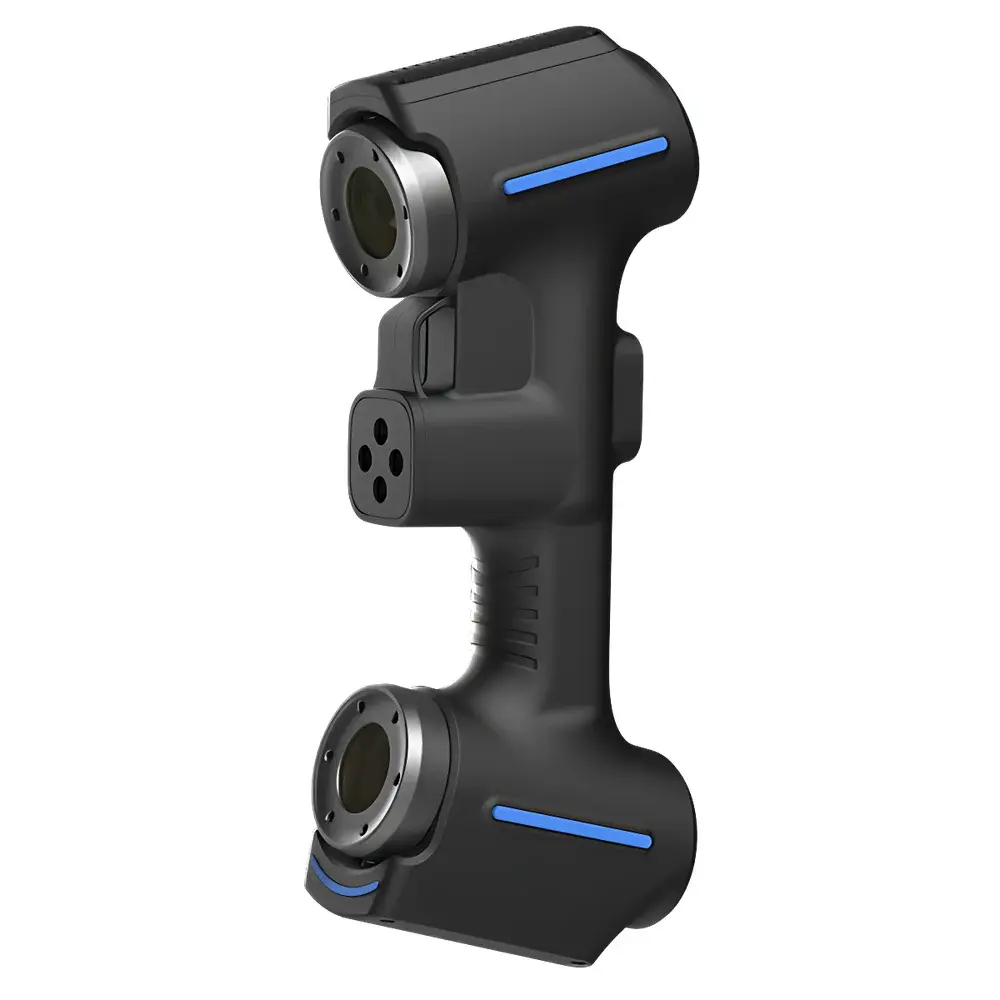
Junray ZR-4000 Airflow Visualization Analyzer
| Brand | Junray |
|---|---|
| Origin | Shandong, China |
| Manufacturer Type | Original Equipment Manufacturer (OEM) |
| Country of Origin | Domestic (PRC) |
| Model | ZR-4000 |
| Dimensions | 240 × 410 × 300 mm |
| 雾 Generation Duration | ≥30 min |
| 雾 Particle Size | ~10 µm (water-based, non-contaminating) |
| Application Range | ISO Class 1–ISO Class 10,000 cleanrooms |
| 雾 Delivery Hose | Transparent, flexible, extendable up to 1 m |
| Water Level Indicator | Integrated visual gauge |
| Safety Feature | Automatic dry-run protection |
Overview
The Junray ZR-4000 Airflow Visualization Analyzer is a purpose-built engineering instrument designed for qualitative and semi-quantitative assessment of airflow patterns in controlled environments. It operates on the principle of neutrally buoyant tracer particle visualization—generating a consistent, low-concentration aerosol plume composed of ultrasonically atomized deionized water droplets with a median aerodynamic diameter of approximately 10 µm. These particles closely follow laminar and turbulent airflow trajectories without perturbing the velocity field, enabling high-fidelity optical capture of air movement direction, uniformity, and turbulence boundaries. The system complies with the observational methodology specified in ISO 14644-3:2019 (Cleanrooms and associated controlled environments — Part 3: Test methods) for airflow pattern evaluation and supports validation protocols required under Annex 1 of the EU GMP Guidelines and FDA’s Aseptic Processing Guidance. It is not a quantitative velocity measurement device; rather, it serves as a critical pre-validation and routine operational qualification tool for unidirectional (laminar) and non-unidirectional (turbulent) airflow systems.
Key Features
- Continuous雾 generation capability exceeding 30 minutes per fill, ensuring sufficient duration for full-room or localized airflow mapping under steady-state conditions.
- Optically transparent, kink-resistant polyurethane雾 delivery hose—visible along its entire length for real-time alignment verification and capable of extension to 1 meter without pressure loss or雾 coalescence.
- Integrated water-level indicator with calibrated scale, enabling precise monitoring of reservoir volume and minimizing operator-induced variability during repeated tests.
- Auto-shutoff circuitry activated upon detection of low water level, preventing transducer overheating and extending ultrasonic nebulizer lifespan.
- Contamination-controlled雾 generation: uses only USP-grade purified water; no surfactants, oils, or propellants—fully compliant with ISO 14644-1 particle cleanliness requirements and pharmaceutical Grade A/B environment constraints.
- Compact benchtop footprint (240 × 410 × 300 mm) with stable base geometry, optimized for mobility between ISO Class 1–10,000 cleanroom zones without requiring permanent installation or external power conditioning.
Sample Compatibility & Compliance
The ZR-4000 is engineered exclusively for use with purified water meeting ASTM D1193 Type II or equivalent specifications. It does not support glycerol/water mixtures, PSL particles, or oil-based tracers. Its operational envelope aligns with ISO 14644-3 Annex B (Airflow Pattern Testing), ISO 14644-4 (Design and Construction), and EU GMP Annex 1 (Manufacture of Sterile Medicinal Products). When deployed in conjunction with calibrated digital video recording equipment (e.g., 1080p/60fps or higher), the resulting footage satisfies documented evidence requirements for regulatory audits—including FDA 21 CFR Part 11-compliant electronic records when paired with validated software platforms. The device itself carries no CE marking or IEC 61010 certification; users must verify local electrical safety compliance prior to deployment in EU or North American facilities.
Software & Data Management
The ZR-4000 is a hardware-only visualization tool and does not include embedded firmware, onboard storage, or proprietary software. All data acquisition, annotation, timestamping, and archiving are performed externally using industry-standard video capture systems (e.g., OBS Studio, NIS-Elements, or LabVIEW-integrated frame grabbers). For regulated environments, users typically integrate the ZR-4000 into broader validation workflows governed by SOPs referencing ASTM E2919 (Standard Guide for Validation of Cleanroom Performance) and employing electronic signature-enabled review systems that maintain full audit trails per ALCOA+ principles. No firmware updates or cybersecurity patches apply, eliminating associated validation overhead.
Applications
- Verification of unidirectional airflow integrity at critical processing points (e.g., ISO Class 5 laminar flow hoods, filling lines, isolators).
- Detection of turbulence ingress at doorways, transfer ports, or HVAC diffuser interfaces in ISO Class 7–8 background areas.
- Root cause analysis of particle excursions via retrospective airflow path reconstruction.
- Operator training and procedural competency assessment—visualizing impact of gowning, movement, or equipment placement on local airflow stability.
- Supporting requalification after facility modifications, filter replacements, or HVAC balancing adjustments.
FAQ
Can the ZR-4000 be used in ISO Class 1 environments?
Yes—provided the water meets stringent purity requirements (e.g., TOC < 50 ppb, conductivity ≤ 1.0 µS/cm) and all handling procedures comply with ISO 14644-1 contamination control protocols.
Is compressed air or nitrogen required for operation?
No—the ZR-4000 relies solely on ultrasonic nebulization and requires only standard AC power (100–240 VAC, 50/60 Hz); no auxiliary gas supply is needed.
Does the device meet FDA 21 CFR Part 11 requirements?
The hardware itself is not subject to Part 11; however, when integrated into a validated electronic record system with audit trail, electronic signatures, and secure data storage, the overall workflow may achieve Part 11 compliance.
What maintenance is required?
Quarterly descaling of the ultrasonic transducer using 1% citric acid solution and annual inspection of hose integrity and electrical insulation resistance per internal calibration SOPs.
Can fog concentration be adjusted?
No—the output rate is fixed to ensure reproducible particle loading density per ISO 14644-3 recommendations; variable output would compromise test comparability across timepoints and facilities.