
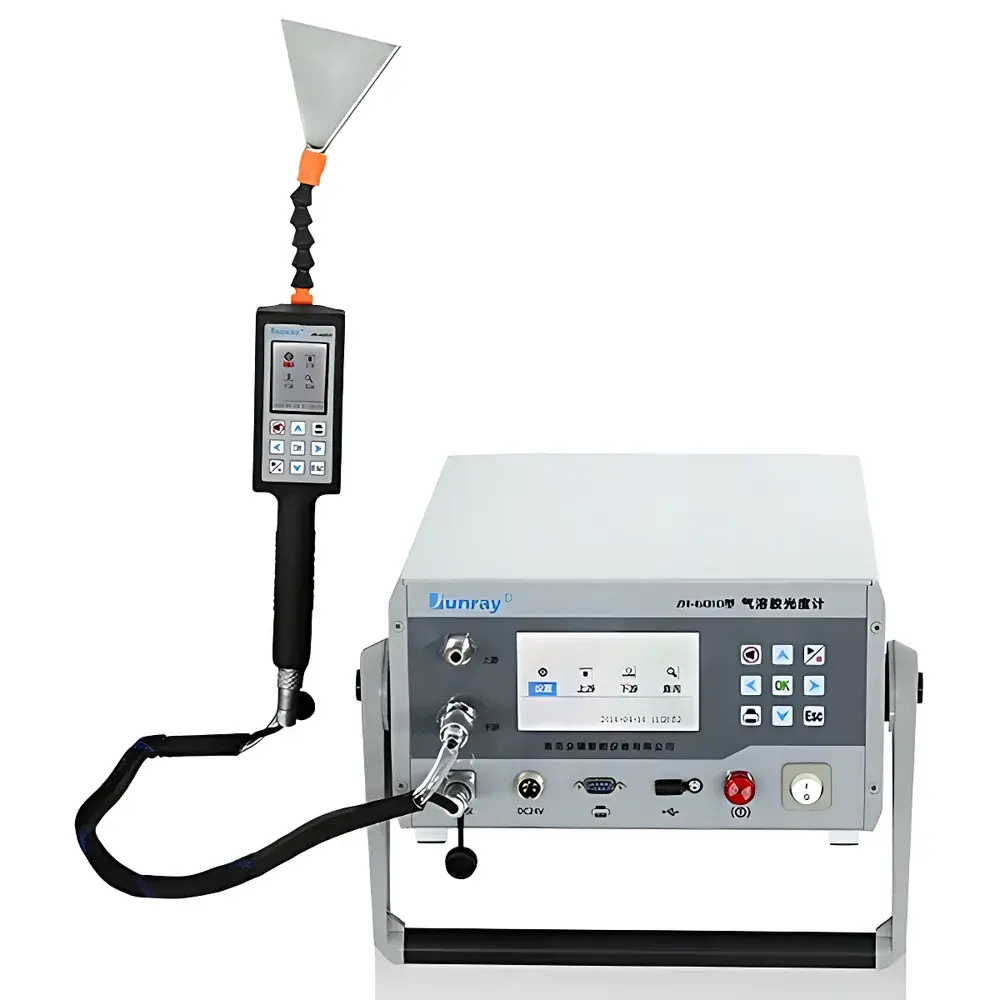
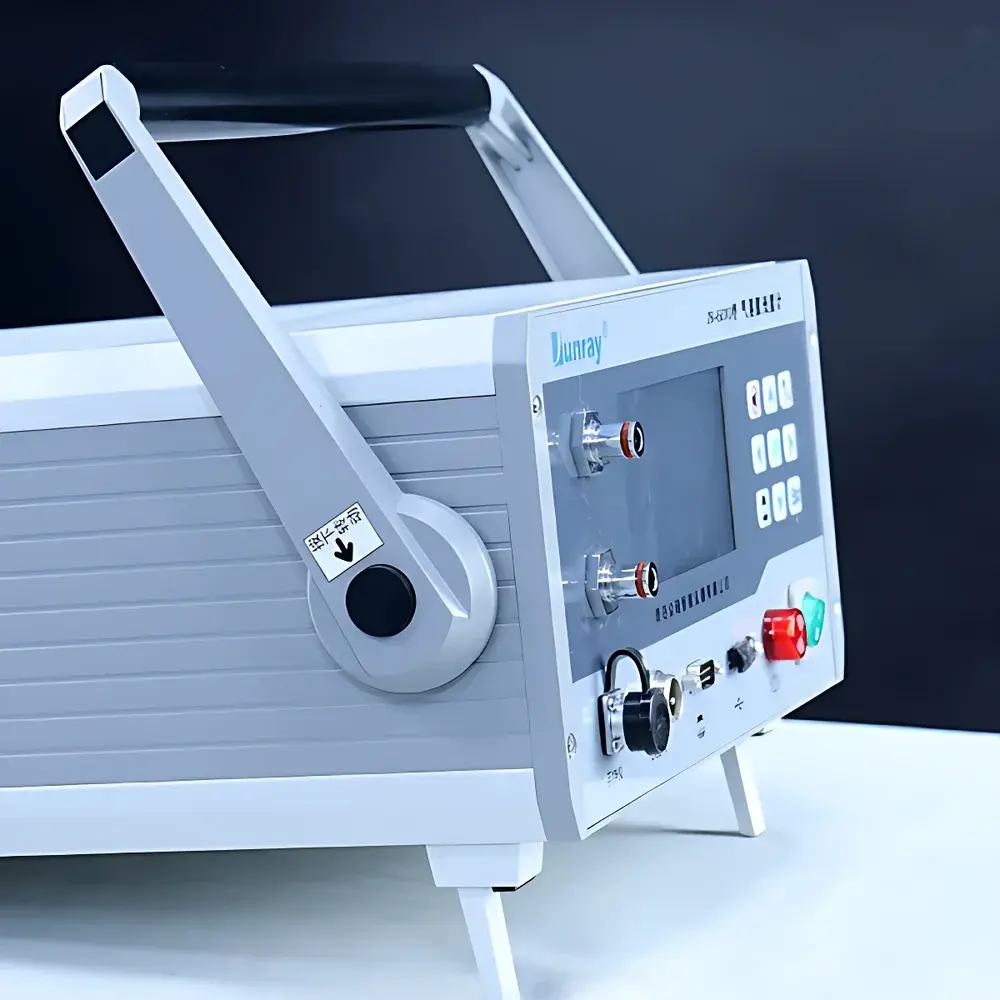
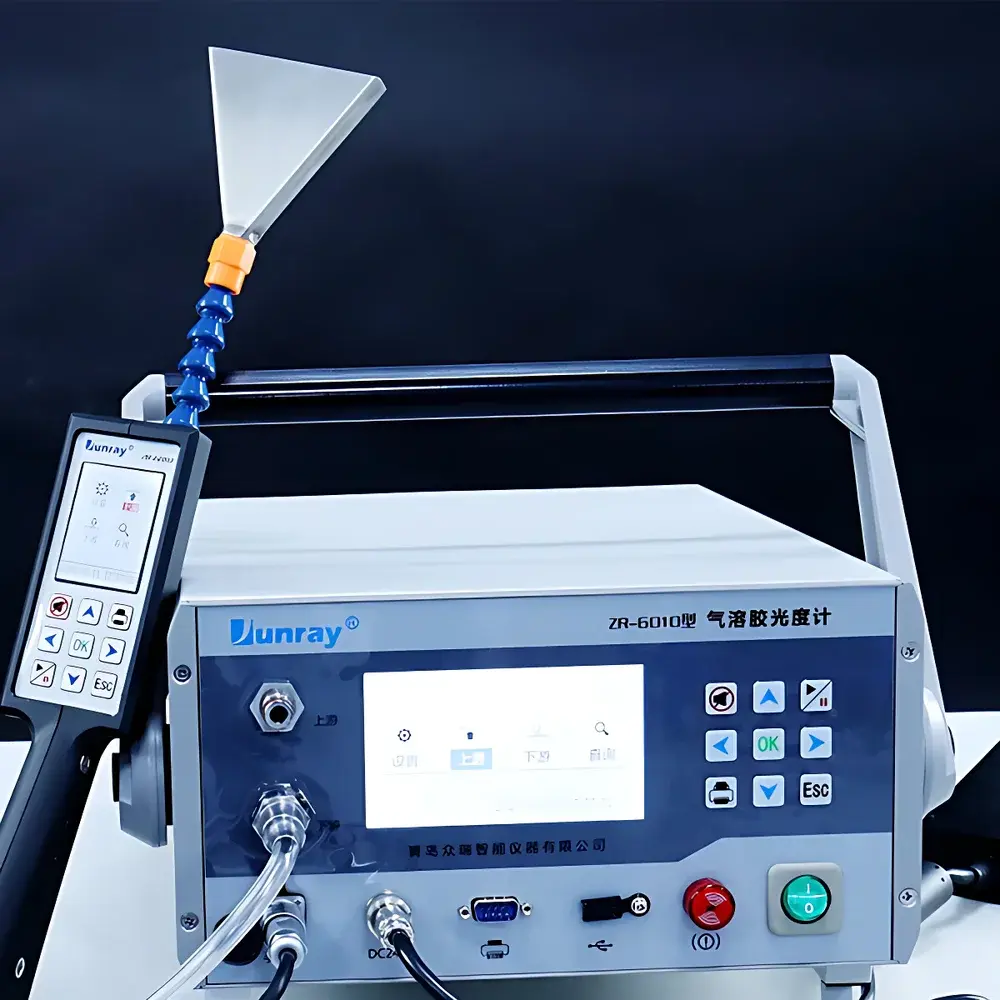
Junray ZR-6010 Aerosol Photometer for HEPA Filter Leak Testing in Biological Safety Cabinets (GMP-Compliant)
| Brand | Junray |
|---|---|
| Origin | Shandong, China |
| Manufacturer Type | OEM Manufacturer |
| Region of Origin | Domestic (China) |
| Model | ZR-6010 |
| Instrument Type | Aerosol Photometer |
| Detection Principle | Mie Scattering |
| Aerosol Compatibility | PAO, DOP, and other polydisperse oil-based aerosols |
| Display | Color graphic LCD with Chinese menu interface |
| Data Storage | Internal memory (≥10,000 records) |
| Output Interface | USB port for U-disk data export, thermal printer support |
| Compliance Standards | ISO 14644-3:2005, GB 50591–2010, YY 0569–2005, NSF/ANSI 49–2002, China GMP (2010) Annex on Facilities & Equipment |
Overview
The Junray ZR-6010 Aerosol Photometer is a purpose-built, GMP-compliant instrument engineered for quantitative leak testing of high-efficiency particulate air (HEPA) and ultra-low penetration air (ULPA) filters installed in biological safety cabinets (BSCs), laminar flow hoods, cleanrooms, HVAC terminal units, and containment enclosures. Operating on the physical principle of Mie scattering, the ZR-6010 measures light intensity scattered by polydisperse oil-based aerosol particles—typically polyalphaolefin (PAO) or di(2-ethylhexyl) sebacate (DOP)—introduced upstream of the filter under test. The photometric signal is linearly proportional to aerosol mass concentration over its operational dynamic range, enabling real-time, ratio-based calculation of filter penetration (leak rate) as defined in ISO 14644-3:2005 and YY 0569–2005. Unlike particle counters, which enumerate discrete particles per cubic foot, photometers provide rapid, continuous, and highly reproducible concentration readings ideal for scanning large filter surfaces and verifying integrity during commissioning, routine qualification, and post-maintenance validation.
Key Features
- Laser-based light source with extended operational lifetime (>10,000 hours), ensuring stable scattering intensity and long-term measurement consistency.
- High-sensitivity photomultiplier tube (PMT) detector optimized for low-concentration aerosol detection in the 0.1–100 mg/m³ range, supporting both upstream challenge and downstream scanning protocols.
- Configurable aerosol mode selection (PAO, DOP, or custom calibration factors) to align with facility-specific standard operating procedures and regulatory expectations.
- Dual-display architecture: integrated color graphic LCD on main unit and synchronized readout on handheld probe—enabling simultaneous concentration monitoring at sampling point and system-level overview.
- Real-time leak rate calculation displayed as % penetration, updated continuously during probe scanning; visual and audible alarms trigger automatically upon exceeding user-defined threshold (e.g., 0.01% for BSCs per YY 0569).
- Onboard non-volatile memory stores ≥10,000 timestamped records including location tags, aerosol type, upstream concentration, downstream reading, and calculated penetration.
- USB host interface supports direct data export to FAT32-formatted USB flash drives; optional thermal printer integration enables immediate hardcopy generation of scan reports compliant with GLP/GMP documentation requirements.
- PC connectivity via dedicated software suite for data visualization, report generation (PDF/CSV), and audit trail management—including operator ID, timestamp, parameter settings, and calibration history.
- Self-diagnostic routines monitor optical path integrity, laser output stability, and PMT response; automatic shutdown safeguards against erroneous measurements due to component drift or contamination.
Sample Compatibility & Compliance
The ZR-6010 is validated for use with standardized challenge aerosols specified in international and national standards, including PAO-4 (polyalphaolefin, median diameter ~0.3 µm) and DOP (di(2-ethylhexyl) sebacate). It meets the functional performance criteria outlined in ISO 14644-3:2005 (Section 8.3.2: “Aerosol Photometer Method”), GB 50591–2010 (Clause 12.4.2), YY 0569–2005 (Annex C), and NSF/ANSI 49–2002 (Section 7.3.2). Its design supports full compliance with China’s 2010 Good Manufacturing Practice (GMP) Guidelines for Pharmaceutical Facilities, particularly Annex I (Facilities and Equipment), where HEPA filter integrity verification is mandated prior to operation and after any maintenance event. While not intrinsically certified to FDA 21 CFR Part 11, the instrument’s data export, audit log, and user-access control capabilities—when implemented within a validated IT environment—support alignment with electronic record and signature requirements under GxP frameworks.
Software & Data Management
The ZR-6010 is supported by proprietary Windows-based desktop software that establishes a secure bidirectional communication link via USB. The application enables remote configuration of sampling intervals, alarm thresholds, aerosol type, and calibration coefficients. All acquired data—including raw analog signals, calculated leak rates, GPS-tagged scan coordinates (if enabled via external module), and operator annotations—are stored with immutable timestamps and checksum-verified integrity. Export formats include CSV for statistical analysis in JMP or Minitab, and PDF with embedded digital signatures for regulatory submission. Audit trails record every parameter change, calibration event, and data export action—fully traceable to individual user accounts. The software architecture adheres to ALCOA+ principles (Attributable, Legible, Contemporaneous, Original, Accurate, Complete, Consistent, Enduring, Available) required for GMP-compliant documentation.
Applications
The ZR-6010 serves as a primary qualification tool across pharmaceutical manufacturing, biotechnology R&D, clinical diagnostics, and academic biosafety programs. Typical deployment scenarios include: (1) Pre- and post-installation integrity testing of HEPA filters in Class II A2 and B2 biological safety cabinets; (2) Routine periodic scanning of cleanroom ceiling modules per ISO 14644-3 acceptance criteria; (3) Verification of glovebox and isolator barrier integrity following decontamination cycles; (4) Commissioning and requalification of HVAC terminal filters in Grade A/B clean zones; (5) Validation of exhaust filtration systems in nuclear or high-containment laboratories; (6) Troubleshooting airflow bypass paths in negative-pressure containment enclosures. Its portability, battery-powered handheld probe, and intuitive workflow reduce qualification cycle time without compromising metrological rigor.
FAQ
What aerosol types are compatible with the ZR-6010?
The instrument supports PAO, DOP, and other oil-based polydisperse aerosols. Calibration factors can be adjusted to match facility-specific challenge agents.
Does the ZR-6010 meet ISO 14644-3 requirements for photometer-based filter testing?
Yes—it fulfills the performance specifications for aerosol photometers in Section 8.3.2, including minimum sensitivity, linearity, and response time.
Can the ZR-6010 generate GMP-compliant test reports?
When used with its official software and configured with user authentication, electronic signatures, and audit trail logging, it supports creation of compliant reports meeting Annex 11 and China GMP documentation expectations.
Is calibration traceable to national standards?
Calibration is performed using NIST-traceable reference aerosol generators and gravimetrically verified challenge concentrations; certificate of calibration includes uncertainty budget per ISO/IEC 17025.
What is the recommended maintenance interval?
Optical path cleaning and zero-point verification are advised before each qualification campaign; annual factory recalibration is recommended to maintain metrological confidence.







