
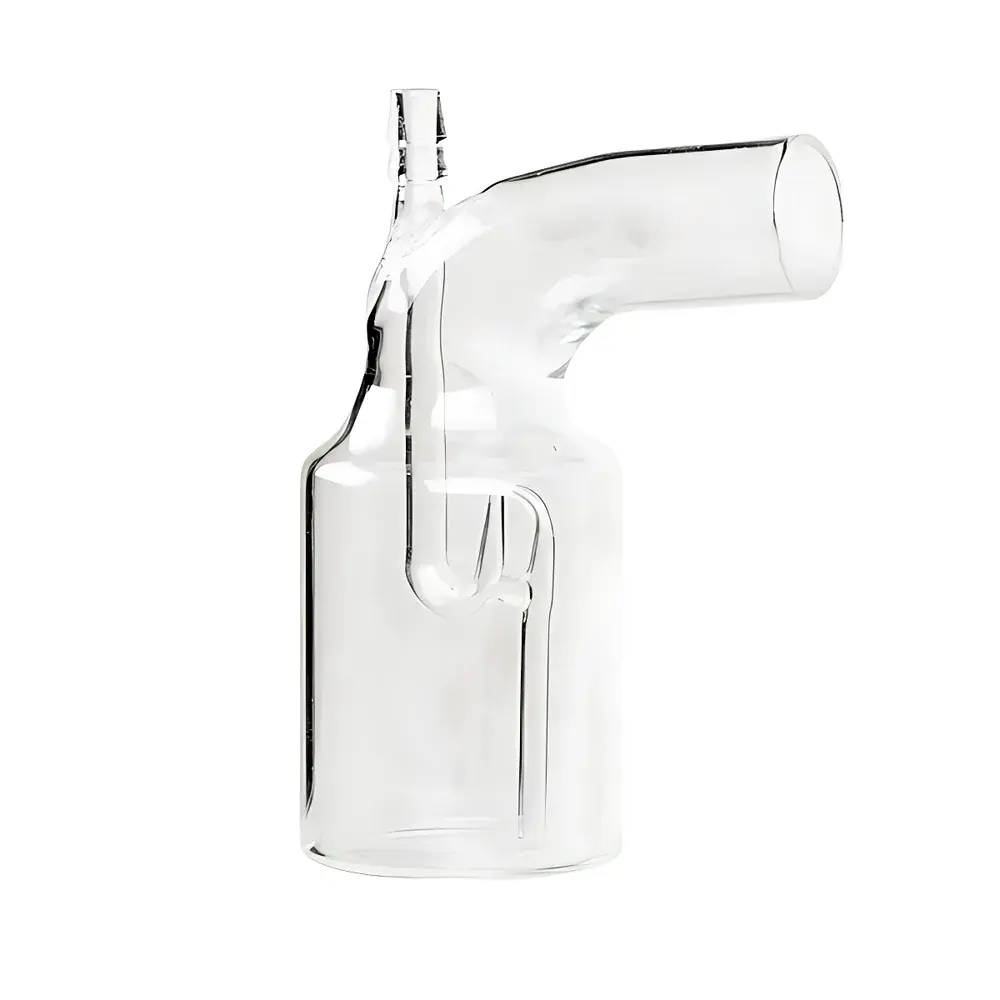
Junray ZR-C03 Microbial Aerosol Generator
| Brand | Junray |
|---|---|
| Model | ZR-C03 |
| Origin | Shandong, China |
| Manufacturer | Junray Instrument Co., Ltd. |
| Construction | Borosilicate Glass Body |
| Interface Configuration | Dual-port design — one for compressed gas supply (e.g., nitrogen or clean dry air), one combined inlet/outlet for microbial suspension loading and aerosol egress |
| Mounting | Compatible with standardized glassware support stands (e.g., ring stand with clamp) |
| Regulatory Alignment | Compliant with GB/T 18204.3–2013 (China National Standard for Air Microbiological Testing Methods) and aligned with ISO 14698-1:2003 principles for bioaerosol generation in controlled environments |
Overview
The Junray ZR-C03 Microbial Aerosol Generator is a precision-engineered laboratory device designed to produce reproducible, monodisperse-to-polydisperse bioaerosols from liquid suspensions of viable microorganisms—including bacteria (e.g., Bacillus atrophaeus, Pseudomonas fluorescens), fungal spores, and viral surrogates—for use in validation, challenge testing, and performance evaluation of air sampling systems, biological safety cabinets (BSCs), cleanroom monitoring protocols, and HVAC filtration efficiency studies. It operates on the principle of pneumatic nebulization: compressed gas (typically ≤30 psi) flows through a calibrated nozzle, inducing Venturi-driven aspiration of microbial suspension into the high-velocity airstream. Shear forces and turbulent mixing within the nozzle region atomize the liquid phase into discrete droplets—subsequently desiccated in ambient air to form solid or semi-solid bioaerosol particles ranging from ~0.5 µm to >5 µm aerodynamic diameter, depending on suspension viscosity, gas pressure, and nozzle geometry. As a dedicated accessory to the Junray ZR-1011 and ZR-1012 airborne microbial samplers, the ZR-C03 ensures methodologically consistent aerosol delivery under controlled environmental conditions.
Key Features
- Borosilicate glass construction ensures chemical inertness, thermal stability, and optical clarity for real-time visual inspection of fluid dynamics and potential clogging.
- Dual-interface configuration: a dedicated gas inlet port (standard 1/8″ NPT or quick-connect fitting) and a combined fill/spray port with leak-tight septum-sealed cap—enabling sterile loading and minimizing operator exposure during biosafety Level 1–2 procedures.
- No-moving-parts architecture eliminates motor-driven components, reducing maintenance requirements and enhancing long-term reliability in continuous-use settings.
- Modular compatibility with standard laboratory gas regulators, mass flow controllers, and humidification modules for precise control over aerosol output rate (typically 0.1–2.0 mL/min suspension feed) and particle size distribution profile.
- Designed for integration into ISO 14644-3 compliant aerosol challenge test rigs, supporting both static and dynamic exposure chamber configurations.
Sample Compatibility & Compliance
The ZR-C03 accommodates aqueous suspensions of Gram-positive and Gram-negative bacteria, yeasts, and mold spores suspended in saline, peptone water, or low-viscosity nutrient broths (≤5 cP). It is not intended for use with organic solvents, high-salt solutions (>0.9% NaCl), or viscous carriers (e.g., glycerol-based media), which may impair nebulization efficiency or cause nozzle fouling. The generator complies with GB/T 18204.3–2013 for indoor air microbiological detection methodology and supports adherence to ISO 14698-1:2003 Annex A guidance on bioaerosol generation for contamination control validation. When operated within defined pressure and suspension parameters, it facilitates GLP-aligned experimental repeatability and traceable aerosol dosing—critical for regulatory submissions related to medical device sterilization validation (e.g., ISO 11137) and pharmaceutical environmental monitoring (EU GMP Annex 1).
Software & Data Management
As a hardware-only aerosol generation module, the ZR-C03 does not incorporate embedded firmware or digital interfaces. Its operation is fully manual and analog, requiring external instrumentation (e.g., digital pressure gauges, calibrated rotameters, or mass flow meters) for parameter documentation. Users are advised to log operational variables—including inlet pressure (psi), suspension volume loaded (mL), total run time (min), and ambient temperature/humidity—within validated electronic lab notebooks (ELNs) or LIMS platforms compliant with 21 CFR Part 11 for audit-trail integrity. Junray provides accompanying SOP templates compatible with ISO/IEC 17025-accredited laboratories for method qualification and equipment verification.
Applications
- Performance qualification of impactor samplers (e.g., Andersen, SAS, BioTrak) and filter-based air monitors.
- Challenge testing of HEPA and ULPA filters per ISO 14644-3 and IEST-RP-CC034.2 protocols.
- Validation of decontamination cycles (e.g., hydrogen peroxide vapor, UV-C) in isolators and transfer hatches.
- Calibration and inter-laboratory comparison studies for quantitative air microbiology.
- Educational demonstration of aerosol physics, respiratory pathogen transmission modeling, and containment system efficacy assessment.
FAQ
Is the ZR-C03 compatible with non-Junray air samplers?
Yes—provided the aerosol outlet can be physically coupled via standard tubing (e.g., Tygon® or silicone) and the sampler’s inlet flow rate and pressure drop remain within the ZR-C03’s operational envelope (recommended backpressure < 5 kPa).
What sterilization methods are recommended for the glass body?
Autoclaving at 121 °C for 20 minutes is validated; avoid thermal shock by gradual cooling. Ethanol immersion (70%) followed by UV-C irradiation (254 nm, ≥15 min) is acceptable for rapid turnaround between runs.
Can the ZR-C03 generate aerosols from dried spore preparations?
No—it requires liquid-phase suspensions. Lyophilized cultures must first be rehydrated and homogenized to achieve uniform dispersion prior to loading.
Does Junray provide calibration certificates or metrological traceability?
The ZR-C03 is supplied with a factory verification report confirming dimensional accuracy and interface tolerances. Traceable calibration of associated gas flow/pressure instrumentation remains the user’s responsibility per ISO/IEC 17025 requirements.







