
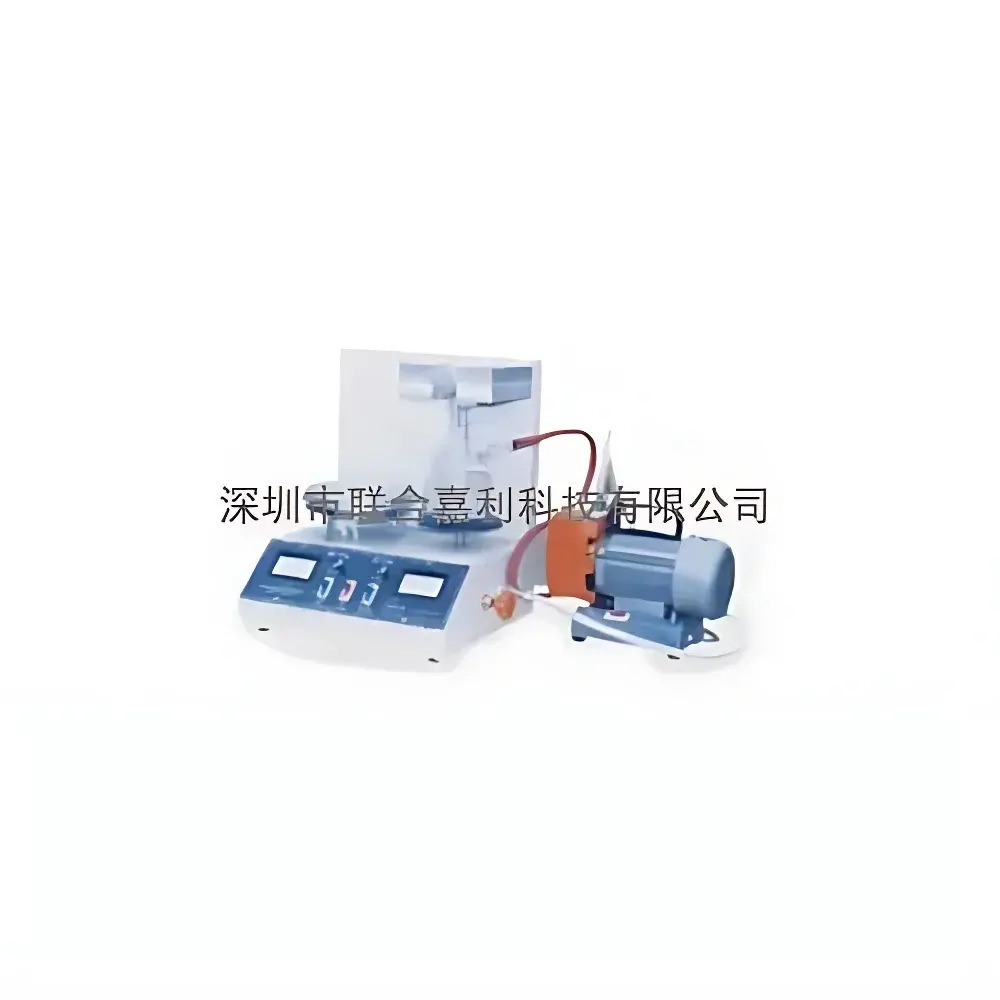
KA-114 Karrie Petroleum Products and Additives Mechanical Impurities Analyzer
| Brand | Karrie |
|---|---|
| Origin | Shenzhen, China |
| Model | KA-114 |
| Input Voltage | AC 220 V ±20 V, 50 Hz |
| Hot Plate Power | 0–600 W (adjustable) |
| Heating Mantle Power | 0–300 W (adjustable) |
| Construction | Powder-coated steel enclosure with precision-machined aluminum heating elements |
| Vacuum Control | Integrated analog vacuum regulator valve |
| Display | Dual LCD voltage indicators |
Overview
The KA-114 Karrie Petroleum Products and Additives Mechanical Impurities Analyzer is a dedicated laboratory instrument engineered for quantitative determination of mechanically insoluble particulate matter in liquid petroleum products and lubricant additives—fully compliant with the procedural and apparatus requirements specified in GB/T 511–2010, “Standard Test Method for Mechanical Impurities in Petroleum Products and Additives.” The analyzer operates on the principle of hot filtration under controlled vacuum conditions: samples are heated to specified temperatures (typically 80–100 °C, per GB/T 511), dissolved or suspended in a suitable solvent (e.g., toluene or xylene), and then filtered through a pre-weighed quantitative filter paper or membrane. Residual solids retained on the filter are dried, cooled in a desiccator, and gravimetrically quantified to yield mechanical impurity content as mass percent (% w/w). This method remains the reference technique for routine quality control in refinery laboratories, additive manufacturing facilities, and third-party testing centers where regulatory conformance, batch release verification, and material traceability are critical.
Key Features
- Integrated dual-heating architecture: independently adjustable 600 W hot plate and 300 W electric heating mantle ensure precise thermal control during sample dissolution and filtration—critical for preventing premature crystallization or asphaltene precipitation.
- Aluminum-machined heating surfaces with powder-coated steel housing provide thermal stability, corrosion resistance, and ease of decontamination between analyses.
- Non-flame heating design eliminates ignition hazards associated with open flame methods, supporting safe operation in Class I Division 2 hazardous locations when installed per NEC guidelines.
- Dual LCD voltage displays enable real-time monitoring of both hot plate and heating mantle output—facilitating reproducible temperature ramping and inter-laboratory method transfer.
- Front-mounted analog vacuum regulator valve allows fine-tuned suction rate adjustment (typically 10–40 kPa), minimizing filter clogging and ensuring uniform cake formation for accurate gravimetric recovery.
- Modular assembly supports ISO/IEC 17025-compliant calibration protocols: heating uniformity mapping, vacuum line leak testing, and filter support dimensional verification can be performed using standard metrology tools.
Sample Compatibility & Compliance
The KA-114 accommodates a broad range of petroleum-based matrices including base oils, engine oils, gear oils, hydraulic fluids, fuel oil blends, and multifunctional additive concentrates. It is validated for use with ASTM D2276 (for jet fuels), ASTM D4304 (for turbine oils), and IP 359 (for residual fuel oils) where mechanical impurity assessment is referenced. All wetted components comply with NIST-traceable material specifications, and the system meets general electrical safety requirements per GB 4793.1–2007 (equivalent to IEC 61010-1). Documentation packages include factory calibration certificates, GB/T 511 test procedure SOP templates, and raw data recording forms aligned with GLP audit expectations.
Software & Data Management
The KA-114 is a manually operated benchtop instrument without embedded firmware or digital connectivity. Data acquisition follows traditional paper-based or LIMS-integrated manual entry workflows. Users record voltage settings, filtration duration, vacuum pressure, ambient temperature/humidity, filter tare/mass values, and final impurity weight in accordance with internal SOPs. To support 21 CFR Part 11 compliance in regulated environments, laboratories may pair the instrument with validated electronic lab notebooks (ELNs) that enforce audit trails, electronic signatures, and role-based access control for all analytical records generated during GB/T 511 testing.
Applications
- Refinery QC labs: screening crude distillates and finished lubricants for catalyst fines, rust particles, or storage tank sediment prior to shipment.
- Additive package manufacturers: verifying absence of undispersed carrier solids or agglomerated dispersants in concentrate formulations.
- Independent testing laboratories: performing contract analysis for ISO 8573-1 compressed air contaminants (when adapted with appropriate solvent extraction).
- Maintenance & reliability departments: diagnosing wear debris patterns in in-service engine oils via sequential filtration and microscopic particle counting (per ISO 4406).
- Educational institutions: teaching standardized gravimetric separation techniques and ASTM/GB methodology fundamentals in petroleum engineering curricula.
FAQ
Does the KA-114 include automated temperature logging or data export capability?
No. The instrument provides analog voltage regulation and visual LCD readouts only; temperature must be verified externally using calibrated thermocouples or infrared thermometers.
Can the KA-114 be used for water-contaminated samples?
Not directly. Water-miscible samples require pre-treatment per GB/T 511 Section 7.3 (e.g., centrifugation or dehydration with anhydrous sodium sulfate) prior to hot filtration.
What filter media are recommended for compliance with GB/T 511?
Quantitative ashless filter paper (e.g., Whatman Grade 41 or equivalent, 11 cm diameter) or 0.45 µm mixed cellulose ester membranes, pre-dried at 105 °C and weighed to ±0.1 mg accuracy.
Is CE or UKCA marking available for this model?
The KA-114 is manufactured for domestic Chinese market compliance (GB standards); international conformity assessments (e.g., CE, UKCA, UL) require separate third-party certification and are not included in standard configuration.
How often should the vacuum regulator valve be serviced?
Inspect and clean the valve quarterly using isopropyl alcohol; replace O-rings annually or after 500 operational cycles to maintain consistent vacuum control performance.





