
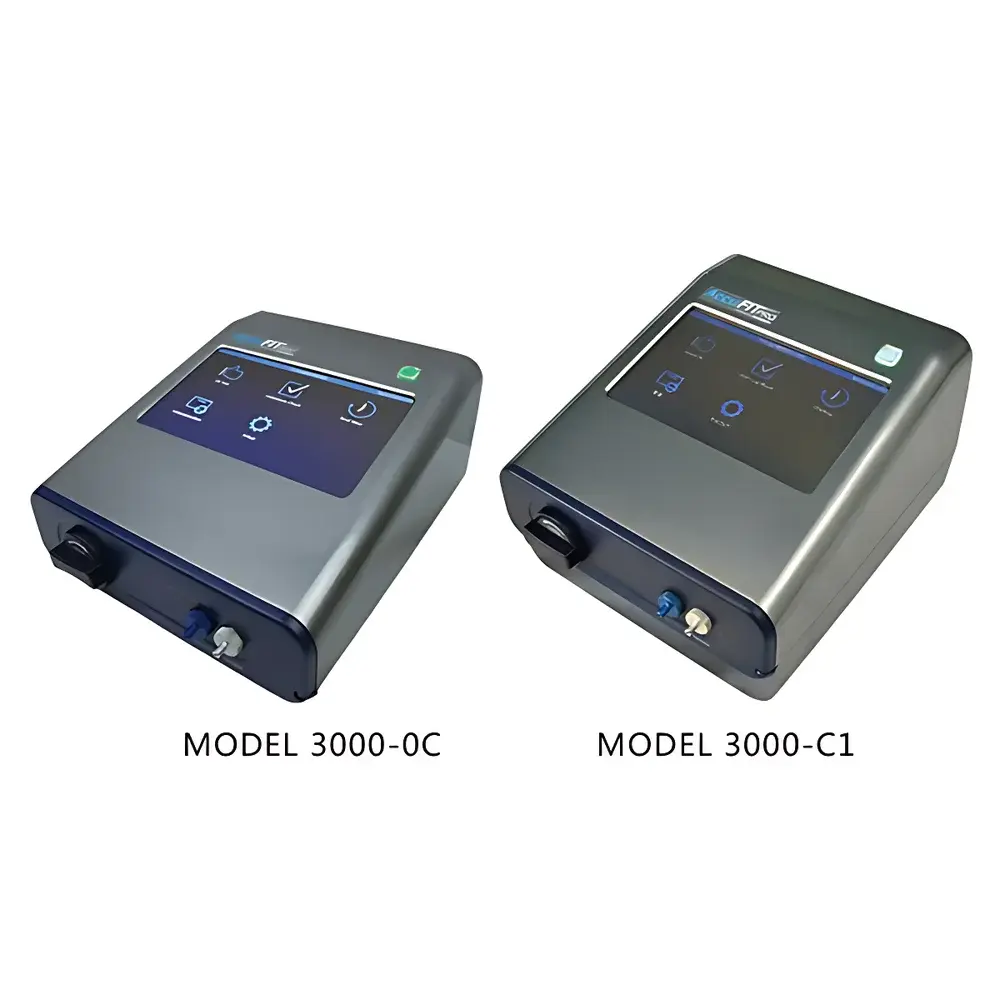
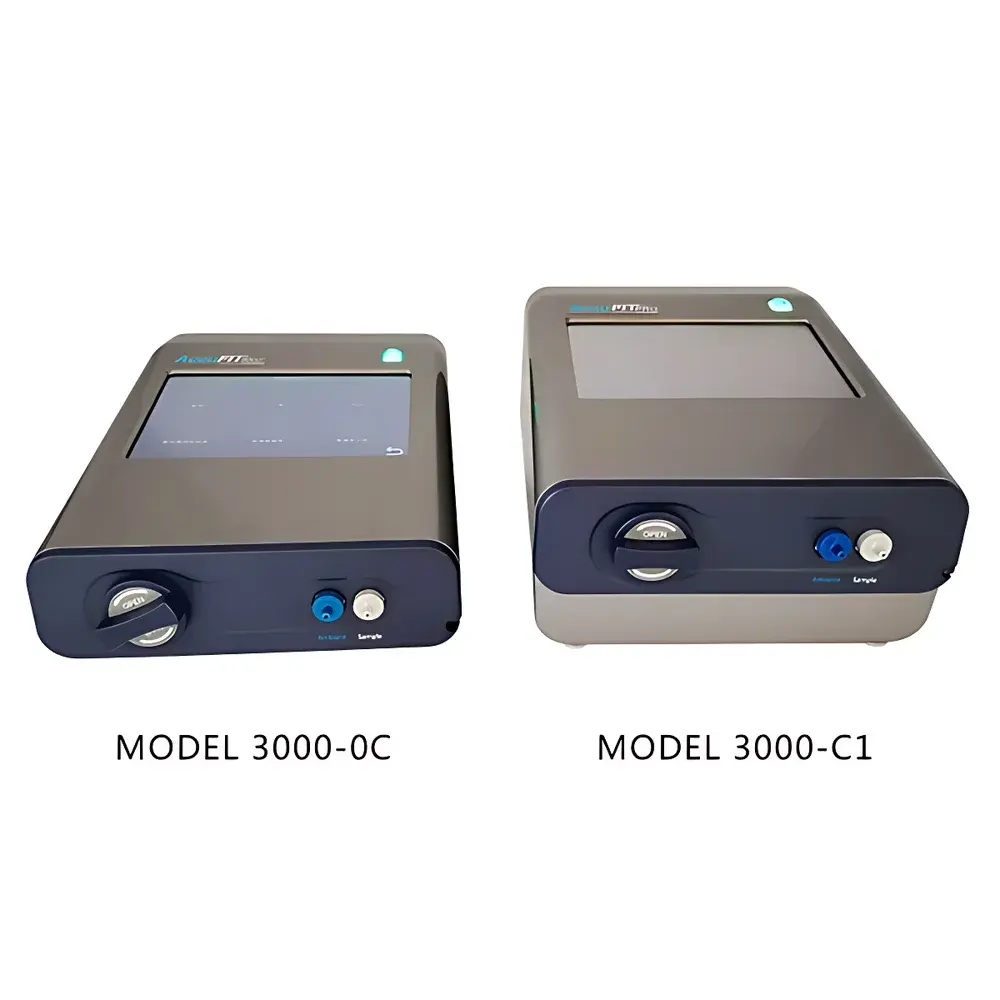
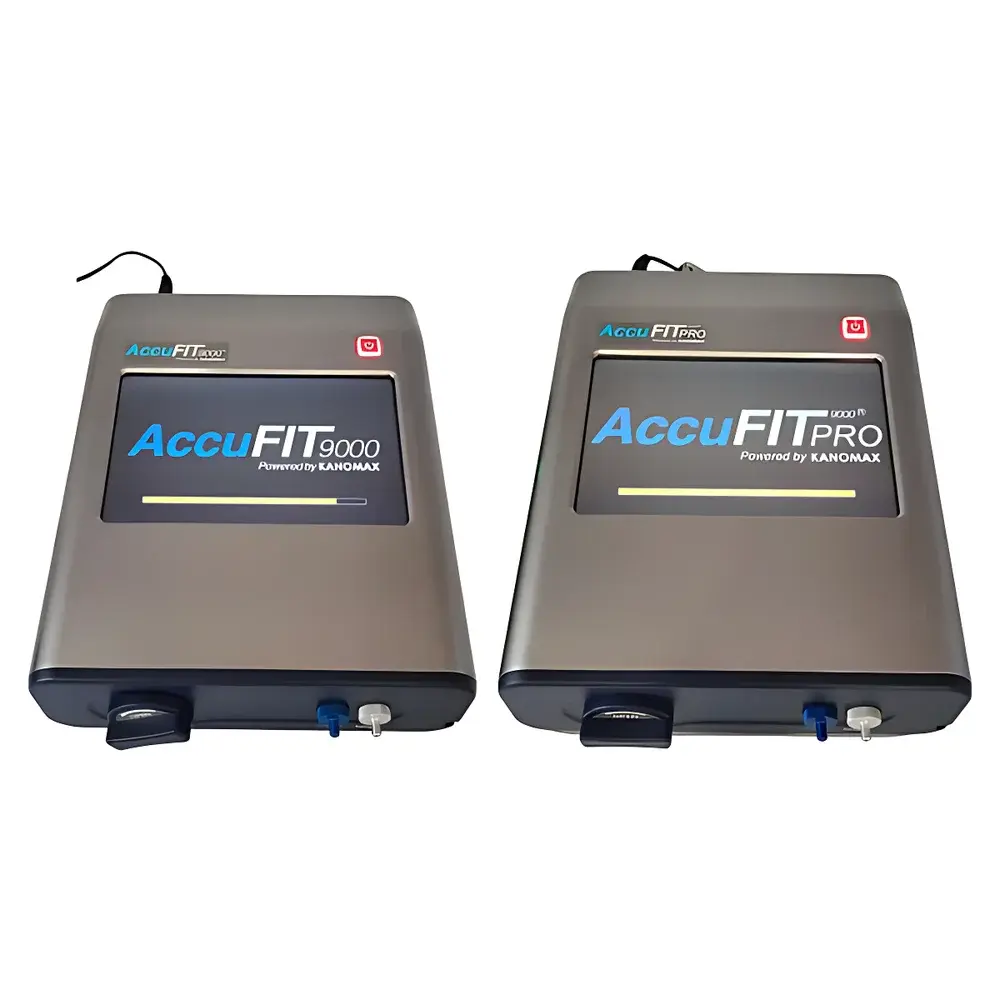
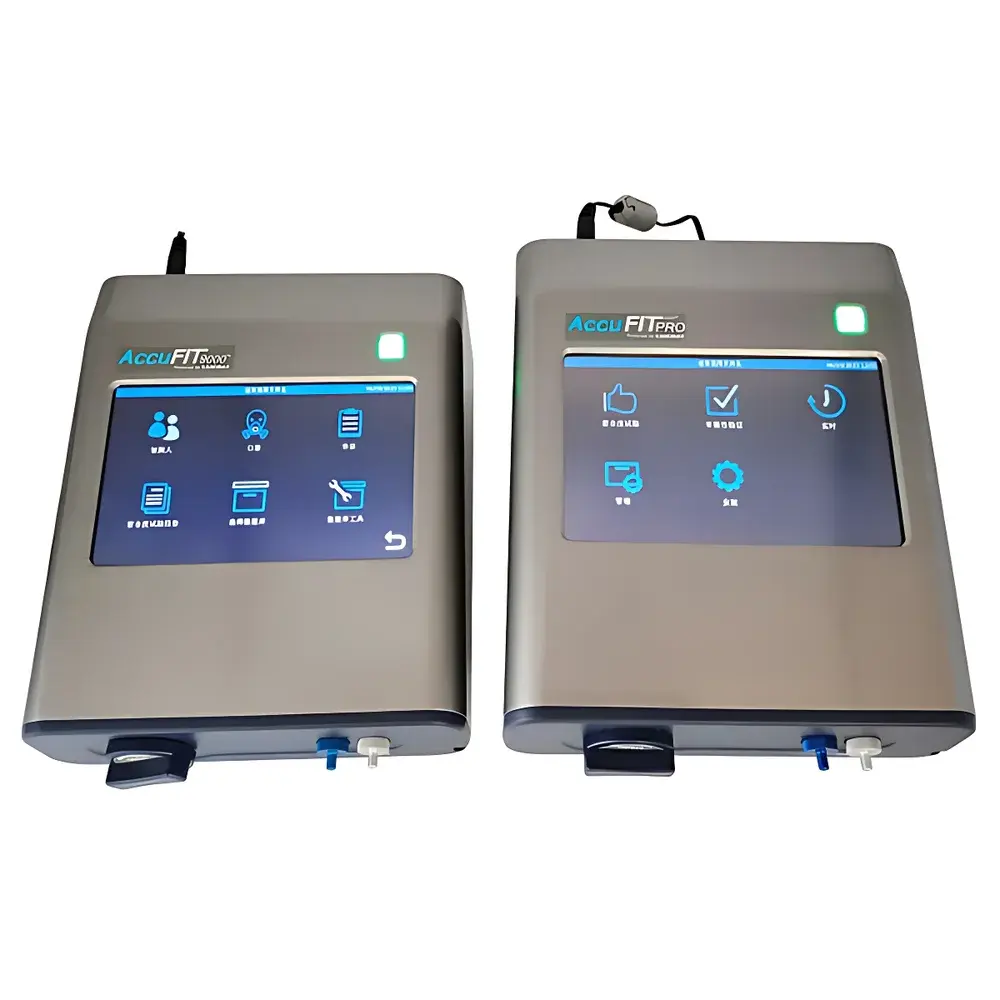
Kanomax 3000-0C / 3000-C1 Quantitative Respirator Fit Tester
| Brand | Kanomax |
|---|---|
| Origin | Japan |
| Model | 3000-0C / 3000-C1 |
| Particle Size Range | 0.015–1.0 µm (3000-C1), 0.02–1.0 µm (3000-0C) |
| Counting Range | 0–100,000 particles/cm³ |
| Sampling Flow Rate | 100 cm³/min |
| Total Flow Rate | 700 cm³/min |
| Fit Factor Calculation | Direct Cout/Cin ratio |
| Test Agent | ≥99.5% isopropanol or ethanol |
| Display | 7-inch full-color TFT touchscreen |
| Operating Temperature | 10–35 °C, 20–85% RH (non-condensing) |
| Storage Temperature | −20–50 °C, 0–85% RH (non-condensing) |
| Power Supply | AC 110–240 V, 50/60 Hz |
| Dimensions (W×H×D) | 208×117×262 mm (3000-0C), 208×152×263 mm (3000-C1) |
| Weight | 2.3 kg (3000-0C), 3.1 kg (3000-C1) |
| Communication Interfaces | USB, Ethernet, Wi-Fi |
| Data Export | Microsoft Excel-compatible reports |
| Software Compatibility | Windows 7/8/10, .NET Framework 3.5 |
| Multi-unit Control | Up to 4 units per PC |
| Supported Standards | OSHA 1910.134, CSA Z94.4, ANSI/AIHA Z88.10, UK HSE INDG479, GB 19083–2010, GB 2626–2019, GB/T 32610–2016 |
Overview
The Kanomax 3000-0C and 3000-C1 Quantitative Respirator Fit Testers are precision-engineered instruments designed to objectively assess the facepiece-to-face seal integrity of all classes of tight-fitting respiratory protective equipment (RPE). Unlike qualitative fit testing methods—such as saccharin or Bitrex® bitterant challenges—these devices employ a quantitative condensation particle counter (CPC)-based methodology. By generating a controlled aerosol of ≥99.5% pure isopropanol or ethanol, the system nucleates ultrafine particles in the size range of 0.015–1.0 µm (3000-C1) or 0.02–1.0 µm (3000-0C), enabling highly reproducible measurement of ambient particle concentration outside the respirator (Cout) and inhaled concentration inside the facepiece (Cin). The resulting fit factor (FF = Cout/Cin) provides an objective, numerical metric compliant with international occupational health and safety regulations. This principle ensures traceable, operator-independent verification of respirator performance under real-world breathing dynamics—including normal, deep, and talking protocols.
Key Features
- True quantitative assessment via CPC-based aerosol generation and dual-channel particle counting (ambient + intramask)
- Dedicated N95 test mode on the 3000-C1 model, preconfigured for pass/fail evaluation against 100 FF threshold per OSHA and GB 2626–2019 requirements
- Multi-standard protocol library: OSHA 1910.134, CSA Z94.4, ANSI/AIHA Z88.10, UK HSE INDG479, GB 19083–2010, GB 2626–2019, and GB/T 32610–2016
- 7-inch full-color resistive touchscreen interface with six language options: English, Japanese, Chinese, French, Spanish, and Portuguese
- Modular test configuration support: DS2, DL2, RS2, RL2, and custom protocol definition
- Integrated sampling architecture with separate atmospheric inlet (left) and intramask probe port (right), ensuring minimal cross-contamination and flow stability
- Robust thermal and humidity management: validated operation from 10–35 °C and 20–85% RH (non-condensing)
Sample Compatibility & Compliance
The 3000-0C and 3000-C1 accommodate the full spectrum of certified respiratory protection devices, including disposable N95/N99/N100, P1/P2/P3 filtering facepieces, elastomeric half-masks and full-facepieces, reusable cartridge-based respirators, powered air-purifying respirators (PAPRs), supplied-air systems (SARs), and self-contained breathing apparatus (SCBA). Each device supports standardized test sequences aligned with regulatory definitions of “acceptable fit,” including minimum required fit factors (e.g., FF ≥ 100 for N95 filtering facepieces per OSHA and GB 2626–2019; FF ≥ 500 for full-facepieces). All firmware and test algorithms are developed in accordance with ISO/IEC 17025 principles for calibration traceability, and raw data logs include timestamped audit trails suitable for GLP/GMP environments and FDA 21 CFR Part 11-compliant record retention when paired with validated software configurations.
Software & Data Management
Kanomax FitTest Pro software (Windows 7/8/10, .NET Framework 3.5) enables centralized control of up to four 3000-series units from a single workstation. The application supports real-time synchronization of test parameters, live particle count visualization, and automated calculation of pass/fail outcomes per selected standard. Data export is natively formatted for Microsoft Excel (.xlsx), preserving all metadata—including subject ID, respirator model, test mode, environmental conditions, individual exercise phase results, and final fit factor. Raw counts (Cout, Cin) and intermediate calculations are stored in encrypted binary logs on removable USB drives, ensuring data integrity during transfer and archival. Network deployment via Ethernet or Wi-Fi allows integration into institutional LIMS or EHS management platforms, while USB direct connection facilitates offline field use in remote or regulated facilities lacking network infrastructure.
Applications
These instruments serve critical roles across clinical, industrial, and public safety domains. In healthcare settings, they verify surgical N95 respirator fit prior to high-risk aerosol-generating procedures, supporting infection control compliance under WHO and CDC guidance. Manufacturing and construction sites deploy them for routine RPE validation among workers exposed to airborne particulates, solvents, or engineered nanomaterials. Fire departments and law enforcement agencies utilize the portable form factor and battery-ready design (via optional external power banks) for rapid on-site fit verification before hazardous material response. Regulatory laboratories and third-party certification bodies rely on the 3000-C1’s N95-specific mode and standardized reporting to conduct accredited conformity assessments per CNAS-CL01 and ILAC-MRA frameworks.
FAQ
What distinguishes the 3000-C1 from the 3000-0C?
The 3000-C1 includes a dedicated N95 test mode with preloaded pass/fail logic and extended particle detection down to 0.015 µm; the 3000-0C supports general quantitative fit testing but lacks N95-specific automation.
Is isopropanol the only acceptable test agent?
No—≥99.5% pure ethanol is a fully supported alternative, with identical aerosol generation efficiency and regulatory acceptance under all referenced standards.
Can the instrument be used in high-humidity environments?
Yes, provided relative humidity remains below 85% and no condensation forms on optical surfaces or internal flow paths; built-in thermal stabilization maintains CPC sensitivity across the full 10–35 °C operating range.
Does the system require annual recalibration?
While not mandated by OSHA, Kanomax recommends annual factory recalibration using NIST-traceable CPC reference standards to maintain measurement uncertainty within ±5% at 1000 particles/cm³, consistent with ISO 21501-4.
Are test reports compliant with FDA 21 CFR Part 11?
When deployed with validated FitTest Pro software, electronic signatures, audit trails, and secure user authentication meet predicate controls for Part 11 compliance in pharmaceutical and medical device manufacturing environments.
Related Products







