
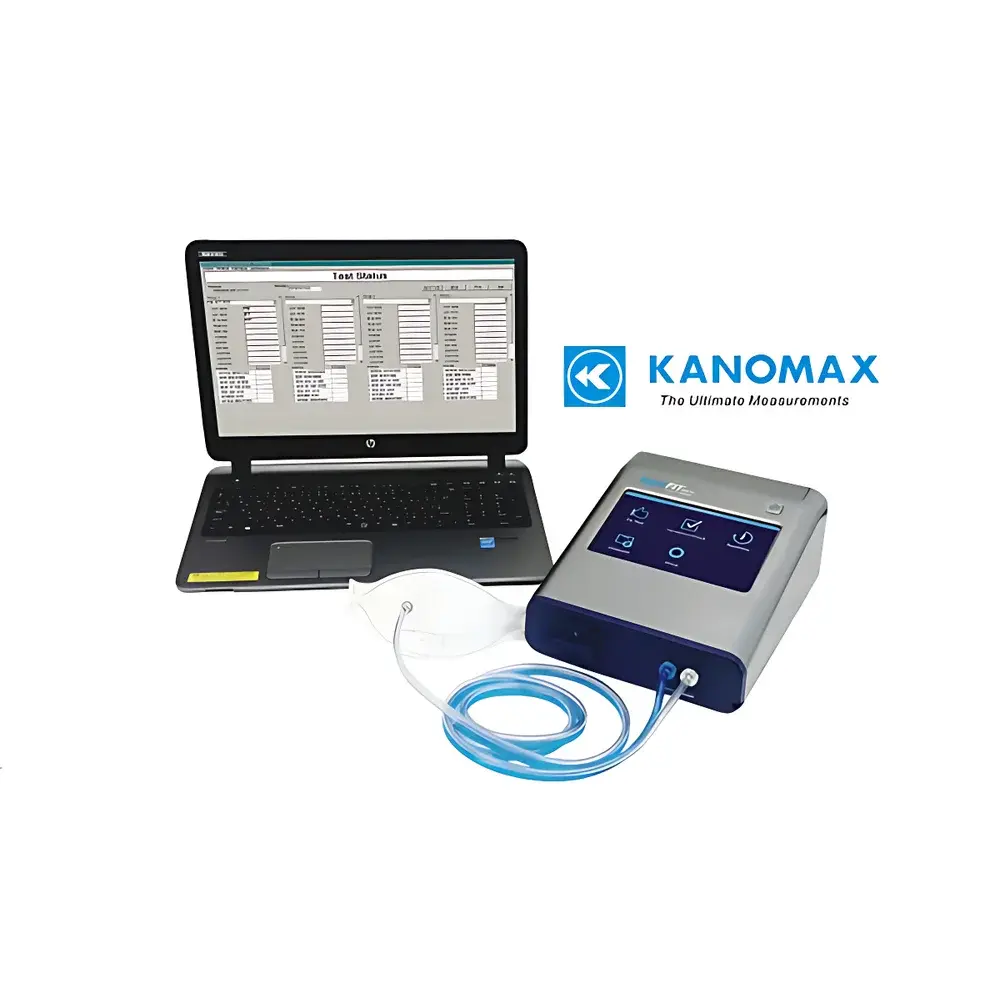
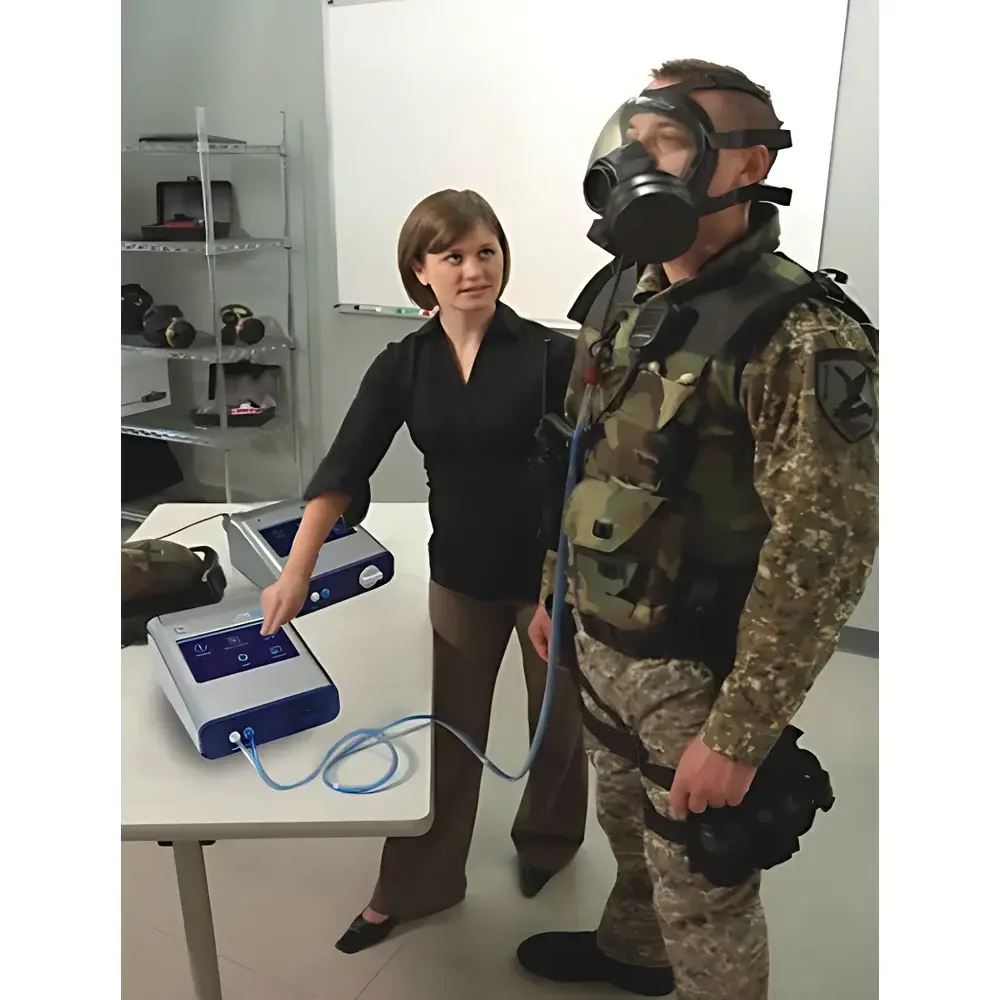
Kanomax 3000-0C Quantitative Fit Testing (QNFT) System
| Brand | Kanomax |
|---|---|
| Origin | Japan |
| Model | 3000-0C |
| Compliance | OSHA 29 CFR 1910.134, CSA Z94.4, NIOSH 42 CFR Part 84 |
| Display | 7-inch full-color capacitive touchscreen |
| Control | Standalone operation or PC-controlled (up to 4 units via LAN/Wi-Fi/USB) |
| Language Support | English, French, Spanish, Portuguese |
| Interface | USB 2.0, 10/100 Mbps Ethernet, IEEE 802.11 b/g/n Wi-Fi |
| Construction | CNC-machined aluminum chassis |
| Test Modes | Quantitative fit testing for disposable respirators (N95, N99, P3, KN95, HEPA), half-mask, full-facepiece, gas mask, PAPR, and SCBA respirators |
Overview
The Kanomax 3000-0C is a precision-engineered Quantitative Fit Testing (QNFT) system designed to objectively measure the fit performance of respiratory protective equipment in occupational and clinical environments. Unlike qualitative methods relying on subjective sensory response, the 3000-0C employs condensation nuclei counting (CNC) technology—based on real-time aerosol particle concentration measurement—to calculate the fit factor (FF) as the ratio of ambient particle concentration to that inside the respirator facepiece. This principle complies with the fundamental methodology defined in OSHA 29 CFR 1910.134 Appendix A and CSA Z94.4 Annex H, ensuring traceable, auditable, and repeatable results required for regulatory compliance and occupational health program validation.
Key Features
- High-fidelity CNC-based particle detection with sub-micron sensitivity, optimized for ambient particle concentrations ranging from 10⁴ to 10⁶ particles/cm³—enabling robust FF calculation across diverse workplace aerosol conditions.
- Integrated 7-inch capacitive touchscreen interface with anti-glare coating and glove-compatible operation, supporting four language options (English, French, Spanish, Portuguese) for multinational deployment.
- Modular control architecture allowing both standalone execution of standardized test protocols (e.g., OSHA-defined 8-exercise protocol) and synchronized multi-unit operation via Ethernet or Wi-Fi—up to four 3000-0C units can be managed concurrently from a single Windows-based workstation.
- CNC-machined aluminum enclosure ensures mechanical stability, EMI shielding, and long-term calibration integrity under industrial field conditions.
- Comprehensive I/O suite including USB 2.0 host/device ports, 10/100 Mbps Ethernet with DHCP/Static IP support, and dual-band Wi-Fi (2.4 GHz & 5 GHz) for secure data export, remote firmware updates, and integration into enterprise health & safety management platforms.
Sample Compatibility & Compliance
The 3000-0C supports quantitative fit testing across the full spectrum of certified respirators, including disposable filtering facepiece respirators (FFRs) such as N95, N99, P3, KN95, and HEPA-class masks; reusable elastomeric half-mask and full-facepiece respirators; chemical cartridge gas masks; powered air-purifying respirators (PAPRs); and self-contained breathing apparatus (SCBA) facepieces. All test sequences adhere strictly to the procedural requirements outlined in OSHA 29 CFR 1910.134, CSA Z94.4-22, and ISO 16900-1:2015. The system generates audit-ready PDF reports containing subject ID, test date/time, respirator model, exercise sequence timestamps, real-time fit factor curves, pass/fail determination per ANSI/ASSP Z88.10-2022 thresholds, and operator signature—fully compliant with GLP documentation standards and suitable for FDA-regulated healthcare facility audits.
Software & Data Management
Kanomax FitTest Manager software (v3.2+) provides centralized configuration, test scheduling, result archiving, and statistical analysis. Data are stored in encrypted SQLite databases with optional SQL Server integration for large-scale enterprise deployments. Each test record includes full metadata (ambient temperature/humidity logging, pump flow verification, sensor drift compensation logs) and supports 21 CFR Part 11-compliant electronic signatures, audit trails, and role-based user access control. Export formats include CSV (for SPSS/Minitab), XML (for HL7/FHIR interoperability), and password-protected PDFs with embedded digital signatures—ensuring alignment with ISO/IEC 17025 accredited laboratory information management systems (LIMS).
Applications
The 3000-0C is deployed in hospital infection control programs to verify N95 fit for staff during pandemic response; in semiconductor and pharmaceutical cleanroom operations where particle ingress must remain below 10⁻³ leakage rate; in mining and construction sites subject to silica and diesel particulate exposure; by fire departments validating SCBA facepiece integrity before hazardous materials response; and within national metrology institutes conducting inter-laboratory proficiency testing under ILAC-P15 guidelines. Its portability (12.8 kg), battery-operated mode (optional), and rapid warm-up time (<90 s) make it equally suited for mobile occupational health clinics and fixed-site industrial hygiene laboratories.
FAQ
What respirator types are validated for use with the 3000-0C?
The system is validated for all NIOSH-certified respirators—including FFRs (N95, N99, P100), elastomeric half/full facepieces, gas masks, PAPRs, and SCBAs—as specified in the Kanomax Validation Report #K-FT-3000-0C-VR-2023.
Does the 3000-0C require annual recalibration?
Yes. Kanomax recommends annual factory recalibration against NIST-traceable aerosol generators and CPC reference instruments, with optional on-site verification using Kanomax’s certified calibration kit (Part No. K-CAL-3000-0C).
Can test data be integrated into existing HR or EHS platforms?
Yes. Through RESTful API and HL7 v2.5 message support, FitTest Manager exports structured fit test records directly to SAP EHS, Intelex, or Sphera GRC platforms.
Is the 3000-0C compatible with EU EN 13272:2022 requirements?
While primarily aligned with North American QNFT standards, its CNC detection methodology and reporting structure satisfy the technical equivalence criteria under EN 13272:2022 Annex B for quantitative fit assessment.
What is the minimum ambient particle concentration required for valid testing?
The system operates reliably at ambient concentrations ≥10,000 particles/cm³ (0.02–1.0 µm); built-in ambient monitoring ensures automatic test suspension if levels fall below this threshold.
Related Products







