
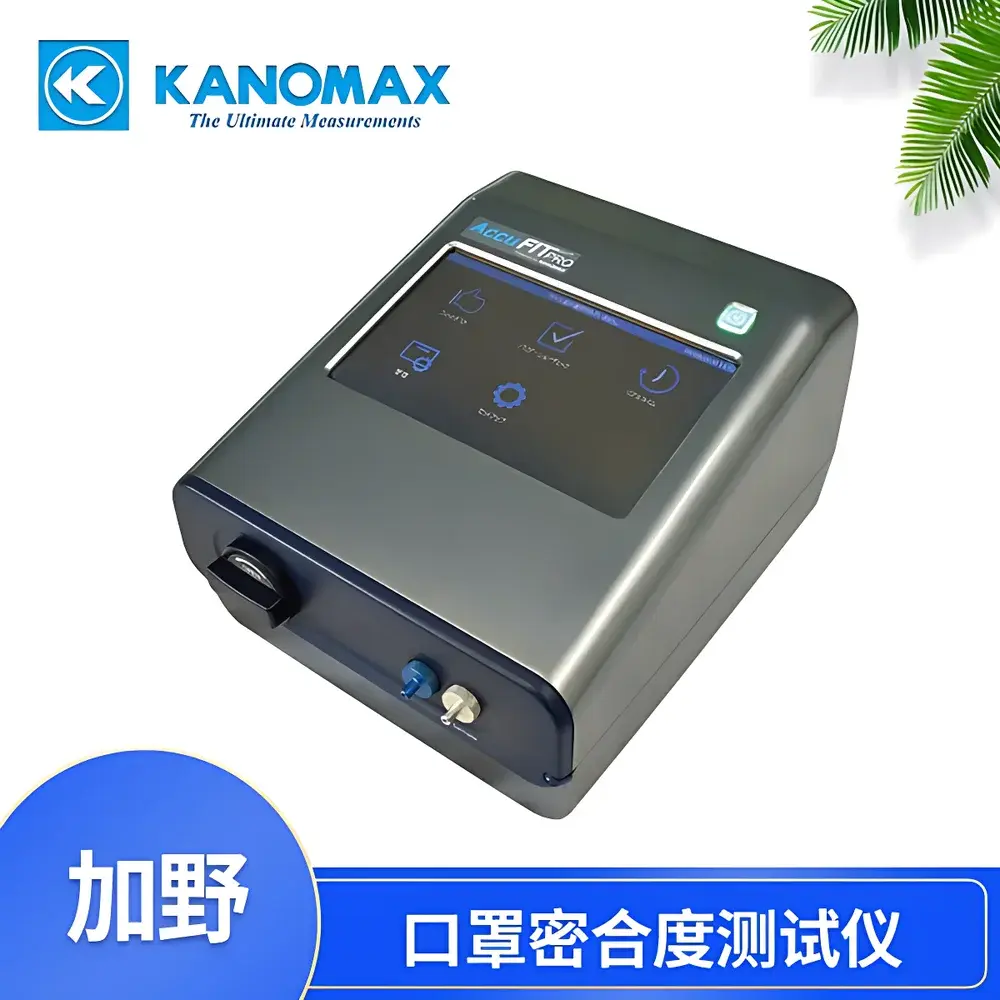
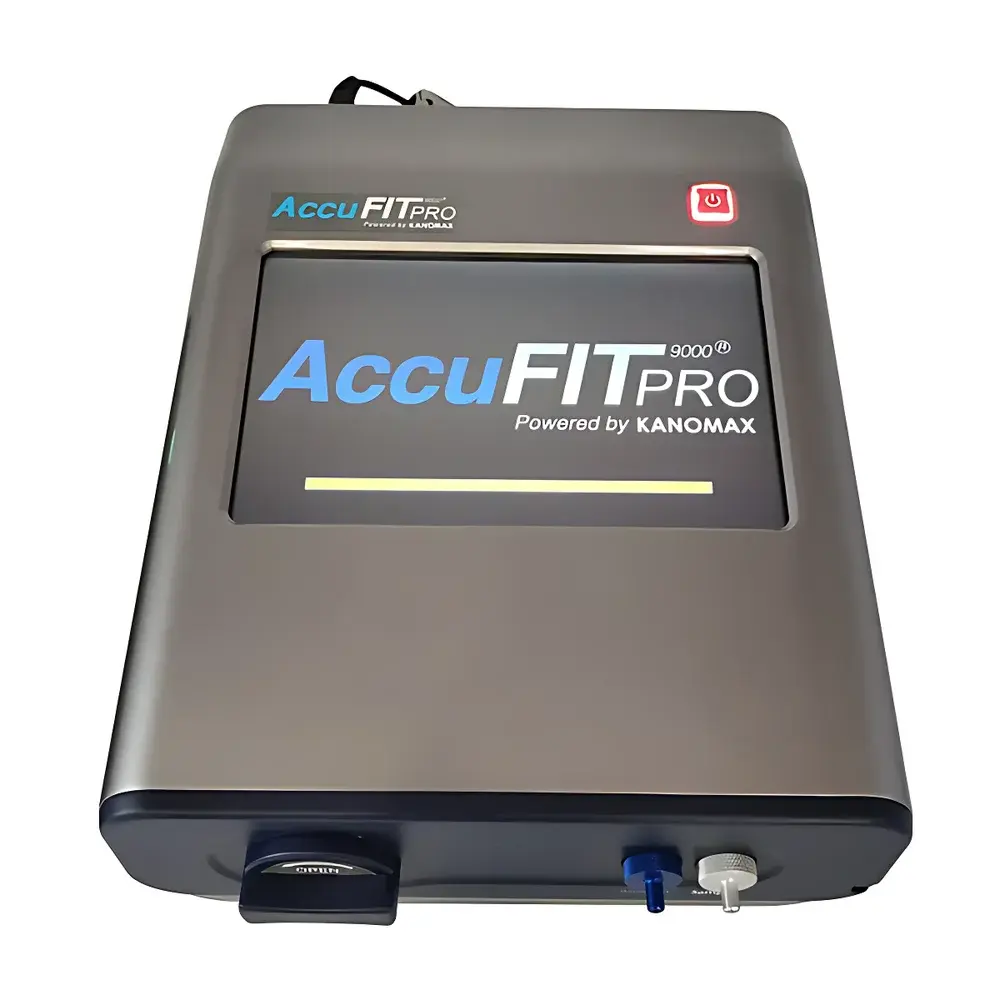
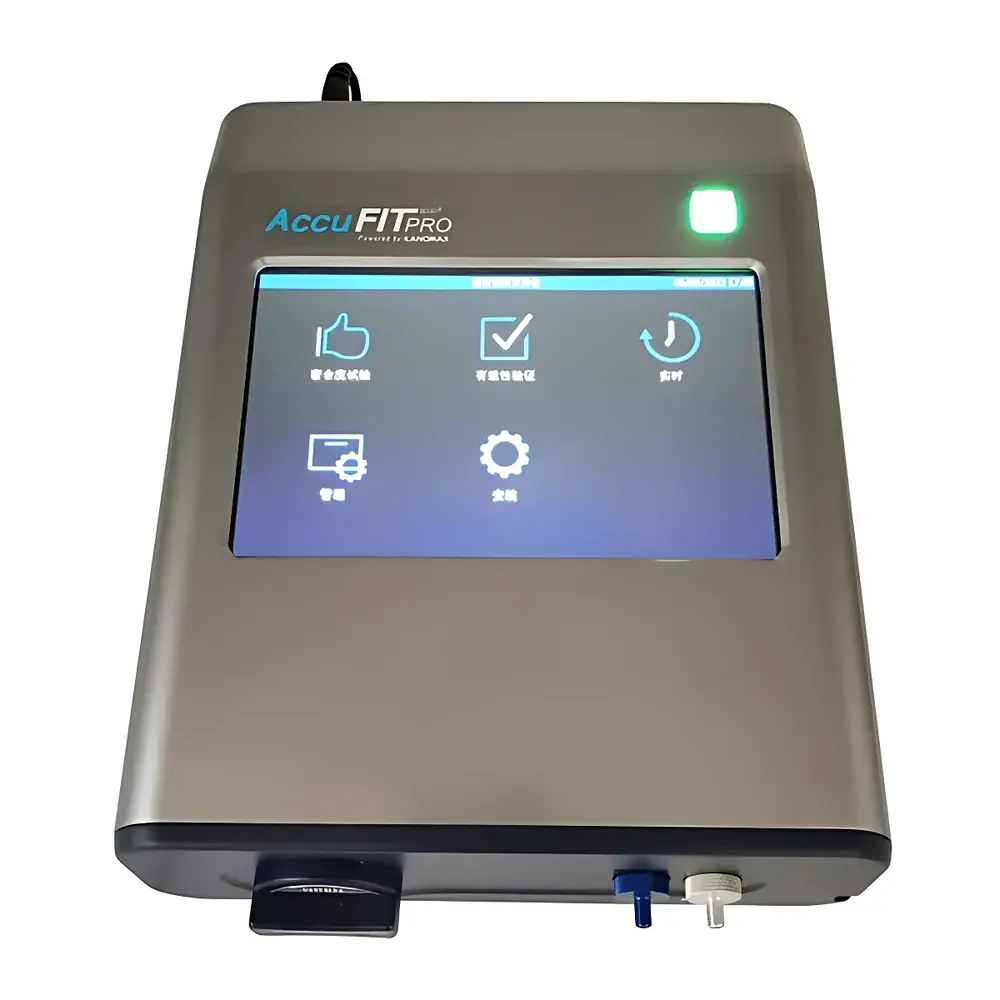
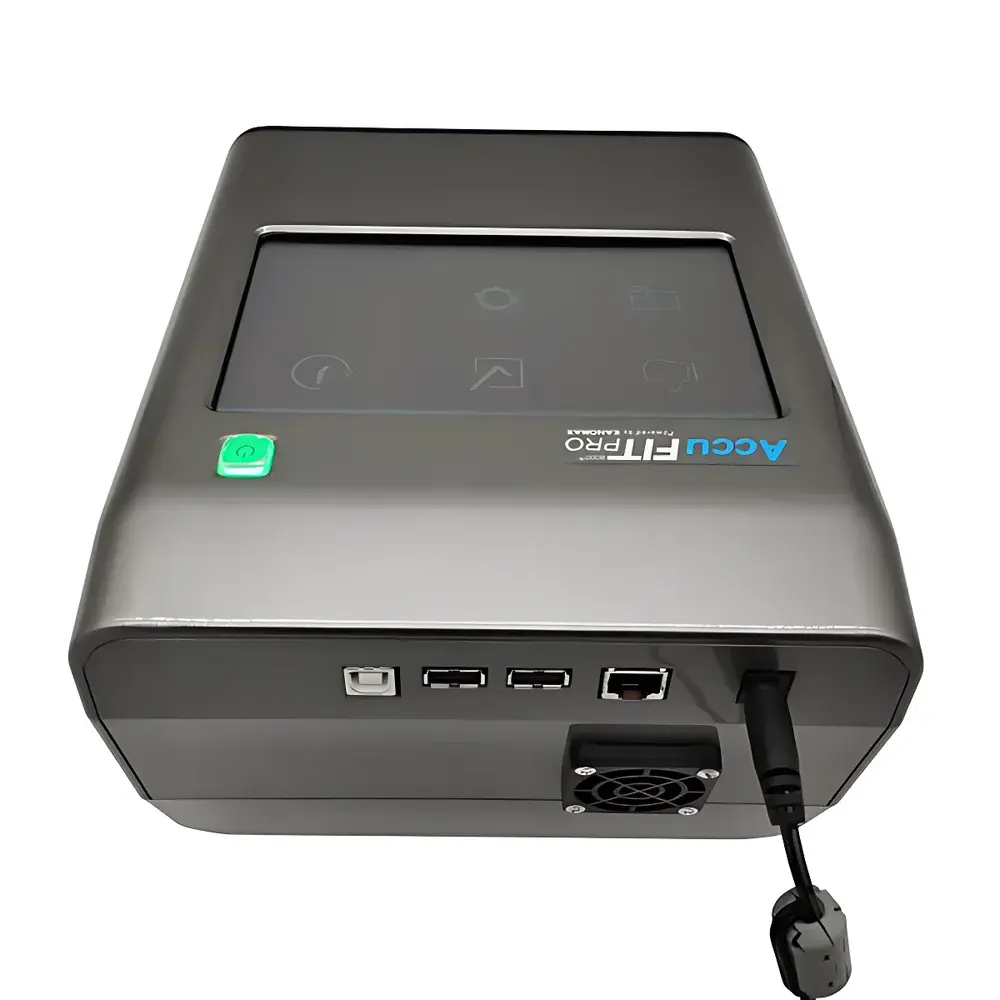
Kanomax 3000-C1 Quantitative Respirator Fit Tester
| Brand | Kanomax |
|---|---|
| Origin | China (Liaoning) |
| Model | 3000-C1 |
| Particle Size Range | 0.015–1.0 µm |
| Aerosol Concentration Range | 0–100,000 particles/cm³ |
| Sampling Flow Rate | 100 cm³/min |
| Total Flow Rate | 700 cm³/min |
| Fit Factor Calculation Method | Direct Cout/Cin Ratio |
| Test Agent | ≥99.5% Isopropanol or Ethanol |
| Display | 7-inch TFT color touchscreen |
| Operating Temperature | 10–35 °C |
| Relative Humidity (Operating) | 20–85% RH (non-condensing) |
| Power Supply | AC 110–240 V, 50/60 Hz |
| Dimensions (W×H×D) | 208 × 152 × 263 mm |
| Weight | 3.1 kg |
| Communication Interfaces | USB, Ethernet, Wi-Fi |
| Software Compatibility | Windows 7/8/10, .NET Framework 3.5 |
| Data Export Format | Microsoft Excel |
| Compliance Standards | OSHA 1910.134, CSA Z94.4, ANSI/AIHA Z88.10, UK HSE INDG 479, GB 19083–2010, GB 2626–2019, GB/T 32610–2016 |
Overview
The Kanomax 3000-C1 Quantitative Respirator Fit Tester is an ISO/IEC 17025-aligned instrument engineered for objective, real-time assessment of respirator facepiece seal integrity under dynamic breathing conditions. It employs the Condensation Particle Counter (CPC) principle—where submicron aerosol particles (0.015–1.0 µm) generated from ≥99.5% isopropanol or ethanol are counted upstream (ambient air) and downstream (inside the respirator facepiece) to compute the quantitative fit factor (FF) as the ratio Cout/Cin. Unlike qualitative methods relying on taste or odor thresholds (e.g., saccharin or Bitrex®), the 3000-C1 delivers traceable, operator-independent results with high reproducibility across repeated tests. Its design adheres to regulatory frameworks governing occupational respiratory protection—including OSHA 1910.134 Appendix A, CSA Z94.4-22, ANSI/AIHA Z88.10-19, and Chinese national standards GB 2626–2019 (for particulate-filtering half masks) and GB 19083–2010 (for medical protective masks). The instrument operates without requiring subject exposure to irritants, thereby improving test compliance and reducing physiological stress during workplace fit testing programs.
Key Features
- True quantitative fit assessment via CPC-based particle counting, eliminating subjective interpretation inherent in qualitative protocols.
- Dedicated N95 mode enabling direct pass/fail evaluation against the minimum required fit factor of 100 per OSHA and GB 2626–2019 criteria.
- Multi-standard protocol library preconfigured for OSHA, CSA, ANSI/AIHA, HSE, and GB-series standards—supporting DS2, DL2, RS2, RL2, and custom test sequences.
- 7-inch full-color capacitive touchscreen interface with six-language support (English, Japanese, Chinese, French, Spanish, Portuguese) for global deployment in multilingual work environments.
- Robust dual-flow architecture: 100 cm³/min sampling flow for precise particle detection and 700 cm³/min total system flow ensuring stable aerosol generation and rapid equilibration during exhalation/inhalation cycles.
- Modular connectivity—USB, Ethernet, and Wi-Fi—enabling remote monitoring, centralized data aggregation, and integration into enterprise-level occupational health management systems.
Sample Compatibility & Compliance
The 3000-C1 is validated for use with all tight-fitting respirators certified under international and domestic filtration classifications, including but not limited to N95, KN95, FFP2, P2, P3, DS/DL/RS/RL series, elastomeric half/full facepieces, powered air-purifying respirators (PAPRs), self-contained breathing apparatus (SCBA), and chemical cartridge respirators. Its aerosol generation and detection methodology satisfies the technical requirements outlined in ISO 16900-1:2018 (Respiratory protective devices — Methods of test — Part 1: Determination of inward leakage), and supports GLP-aligned documentation practices when paired with audit-trail-enabled software configurations. All test reports comply with FDA 21 CFR Part 11 requirements for electronic records when deployed with validated software versions and appropriate user access controls.
Software & Data Management
The proprietary Kanomax FitTest Manager software (Windows 7/8/10, .NET Framework 3.5) enables centralized control of up to four 3000-C1 units simultaneously—ideal for high-throughput industrial hygiene labs or hospital infection control departments. Test parameters, subject demographics, environmental conditions (temperature/humidity), and raw particle counts are timestamped and stored locally or exported directly to encrypted USB drives. Reports are generated in native Microsoft Excel format (.xlsx), supporting automated pivot-table analysis, batch statistical summaries, and integration with LIMS platforms. Audit logs record operator ID, test start/stop times, calibration events, and any parameter modifications—facilitating internal quality reviews and external regulatory inspections.
Applications
This instrument serves critical roles in occupational safety verification across diverse sectors: healthcare facilities validating surgical N95 respirators for aerosol-generating procedures; manufacturing plants assessing PAPR performance in paint-spray booths; fire departments certifying SCBA seal integrity prior to structural firefighting; pharmaceutical cleanroom operators verifying elastomeric respirator fit during sterile processing; and government-accredited testing laboratories conducting third-party conformity assessments per GB/T 32610–2016 (daily protective masks) and GB 2626–2019. Its portability (3.1 kg), battery-free AC operation, and rapid setup (<90 seconds) make it suitable for both fixed-lab and mobile field-testing deployments.
FAQ
What aerosol agent is required for operation?
Isopropanol or ethanol with purity ≥99.5% is specified; no alternative agents (e.g., sodium chloride or dioctyl phthalate) are supported.
Does the 3000-C1 require annual calibration by a certified lab?
Yes—per ISO/IEC 17025 and manufacturer recommendations, annual traceable calibration of the CPC sensor and flow meters is mandatory for continued compliance with OSHA and GB standards.
Can the device store test data internally without a computer?
No internal memory is provided; all data must be saved to USB drive or transmitted via network interface during or immediately after testing.
Is the instrument compatible with respirators containing exhalation valves?
Yes—valved respirators are fully supported, provided the test protocol accounts for valve-specific leakage pathways per ANSI/AIHA Z88.10 Annex B.
What is the minimum ambient humidity required for stable isopropanol aerosol generation?
Relative humidity must remain ≥20% RH during operation to ensure consistent droplet nucleation and avoid CPC undercounting due to evaporation artifacts.
Related Products







