
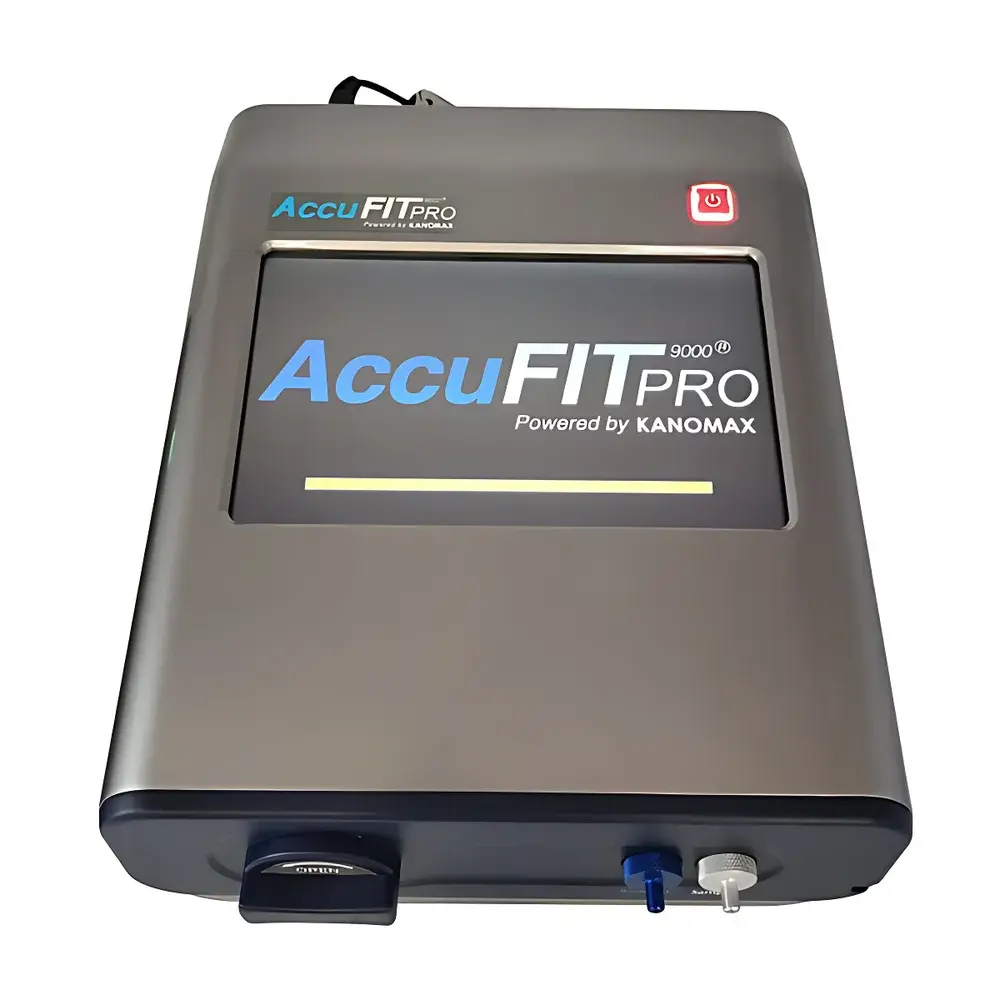
Kanomax 3000-C1 Respirator Fit Testing System
| Brand | Kanomax |
|---|---|
| Origin | Japan |
| Model | 3000-C1 |
| Particle Size Range | 0.015–1.0 µm |
| Concentration Range | 0–100,000 particles/cm³ |
| Sampling Flow Rate | 100 cm³/min |
| Total Flow Rate | 700 cm³/min |
| Fit Factor Calculation Method | Direct Cout/Cin ratio |
| Test Agent | ≥99.5% Isopropyl Alcohol or Ethanol |
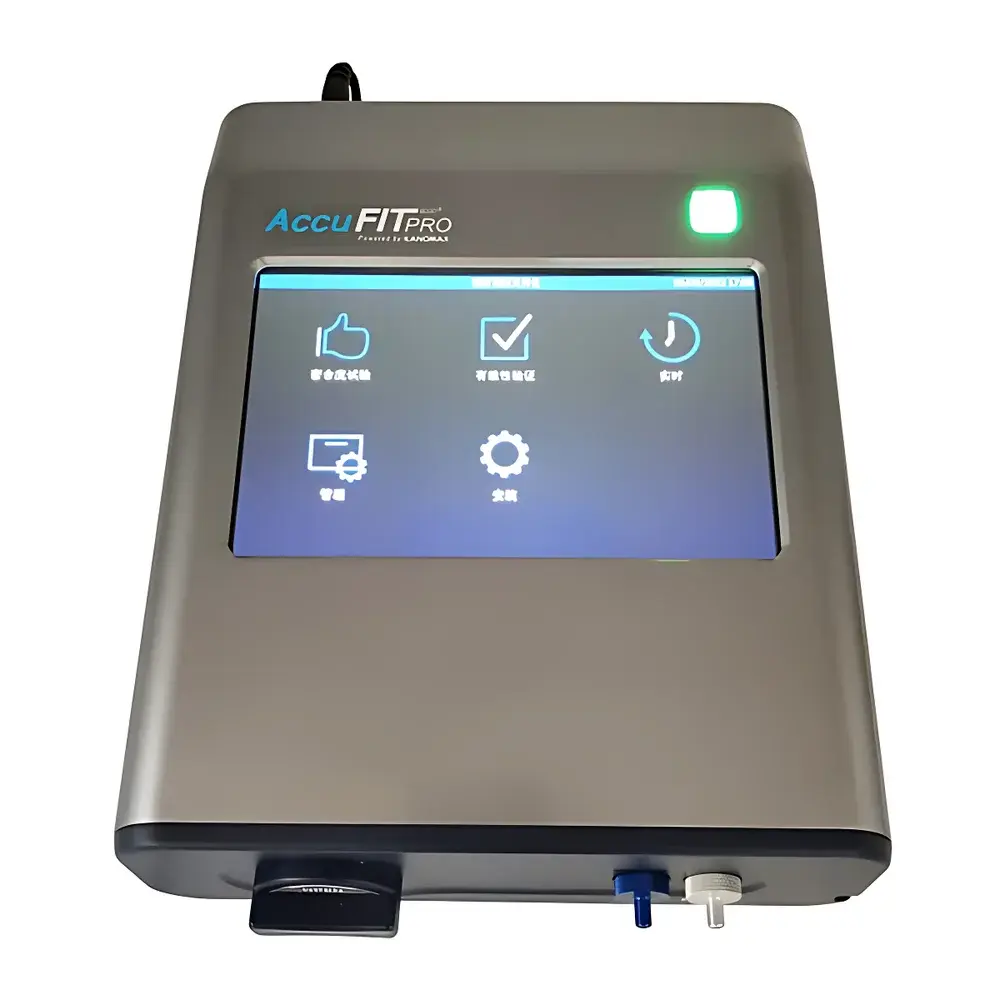
| Display | 7-inch true-color touchscreen |
| Languages | English, Japanese, Chinese, French, Spanish, Portuguese |
| Compliance Standards | OSHA 29 CFR 1910.134, CSA Z94.4, ANSI/AIHA Z88.10, HSE INDG479, GB 19083–2010, GB 2626–2019, GB/T 32610–2016 |
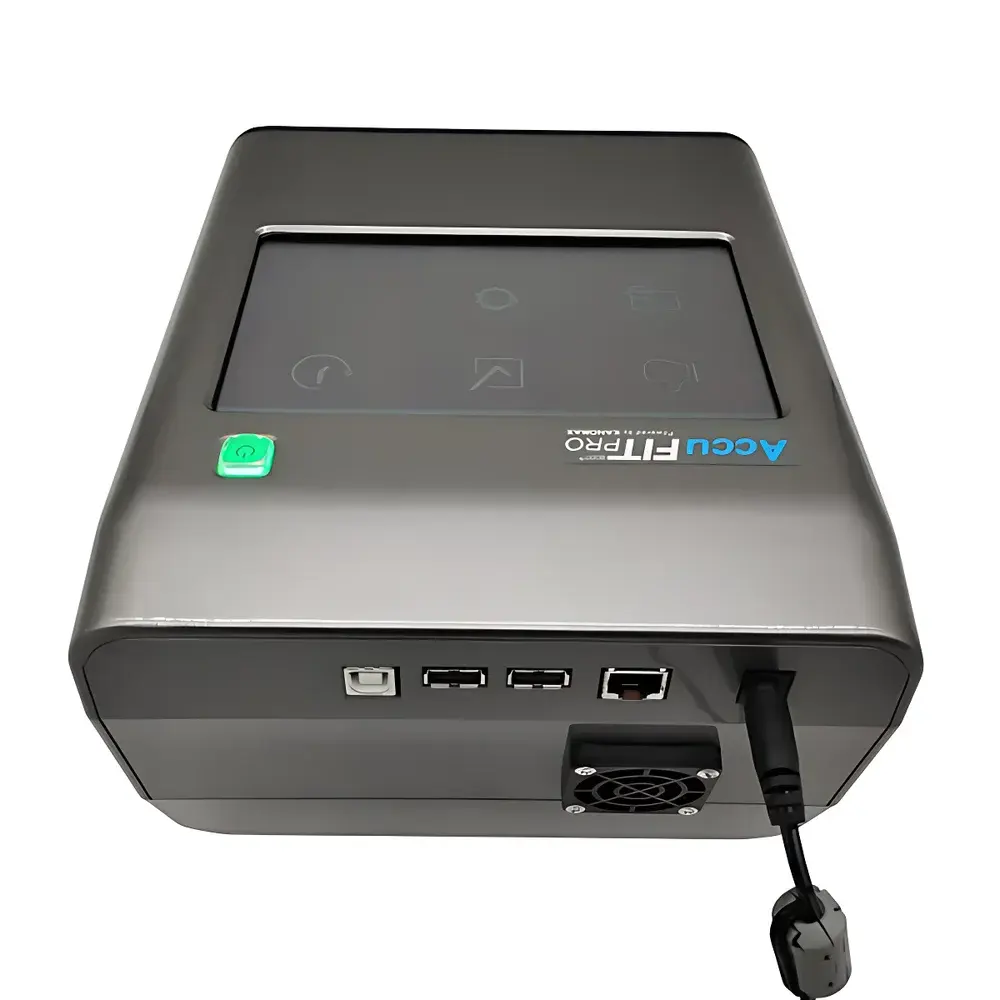
| Communication Interfaces | USB, Ethernet, Wi-Fi |
| Software Compatibility | Windows 7/8/10, .NET Framework 3.5 |
| Data Export Format | Microsoft Excel |
| Operating Environment | 10–35 °C, 20–85% RH (non-condensing) |
| Dimensions (W×H×D) | 208 × 152 × 263 mm |
| Weight | 3.1 kg |
Overview
The Kanomax 3000-C1 Respirator Fit Testing System is a quantitative, condensation particle counter (CPC)-based fit testing instrument engineered for precision, regulatory compliance, and operational robustness in occupational health and safety environments. It operates on the principle of real-time aerosol particle counting to determine respirator facepiece seal integrity by measuring the ratio of ambient particle concentration (Cout) to intramask concentration (Cin). This direct Cout/Cin methodology delivers objective, numerical fit factors—eliminating subjectivity inherent in qualitative methods such as saccharin or Bitrex® taste tests. The system generates a polydisperse challenge aerosol from ≥99.5% isopropyl alcohol or ethanol vapor, which condenses into ultrafine particles within the 0.015–1.0 µm range—optimal for detecting leakage paths typical of N95 filtering facepiece respirators and higher-efficiency elastomeric and powered air-purifying respirators (PAPRs).
Key Features
- Integrated N95-specific test mode with automated pass/fail assessment per CDC/NIOSH and GB 2626–2019 criteria
- Multi-standard protocol library supporting OSHA, CSA Z94.4, ANSI/AIHA Z88.10, HSE INDG479, and Chinese national standards (GB 19083–2010, GB/T 32610–2016)
- 7-inch high-resolution capacitive touchscreen with intuitive icon-driven navigation and six-language UI (English, Japanese, Chinese, French, Spanish, Portuguese)
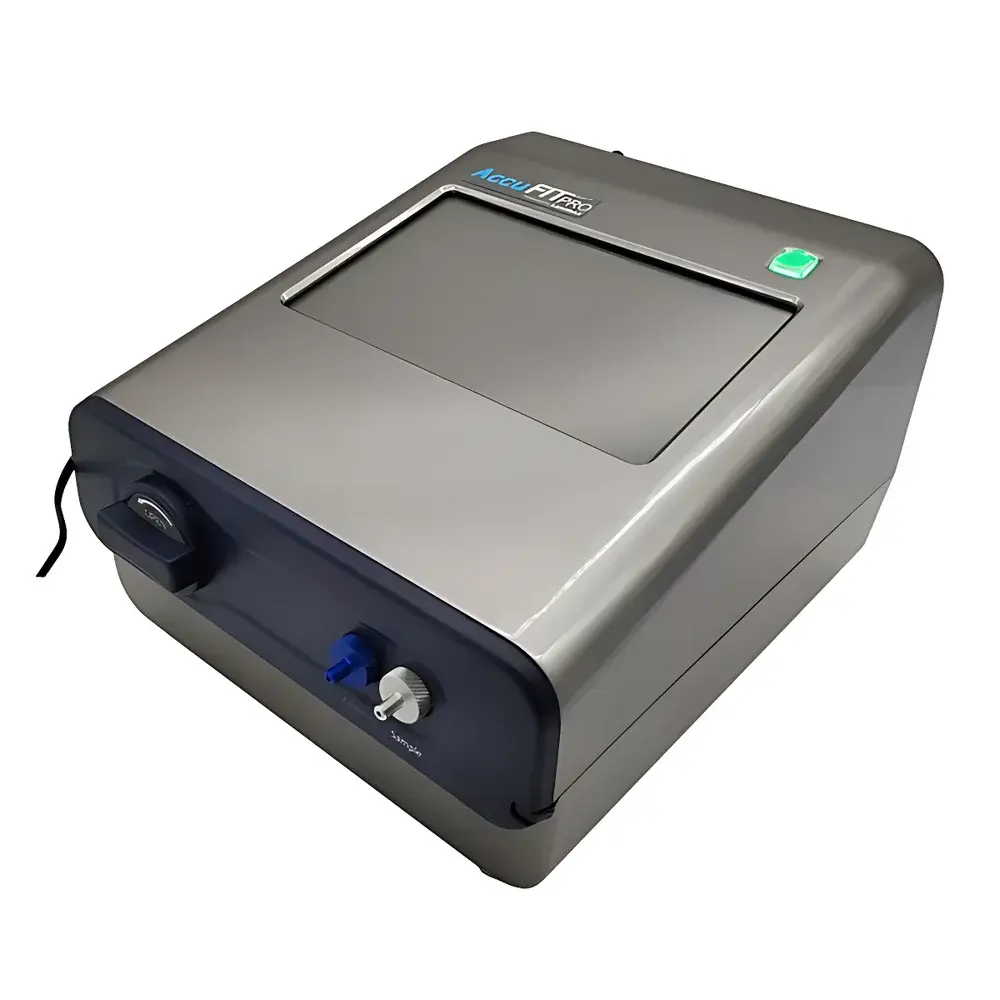
- Dual-sampling architecture: simultaneous ambient (left port) and intramask (right port) sampling at precisely controlled flow rates (100 cm³/min sampling; 700 cm³/min total system flow)
- Modular communication suite: native USB host/device, 10/100BASE-T Ethernet, and IEEE 802.11 b/g/n Wi-Fi for remote monitoring and fleet management
- Compact, portable design (208 × 152 × 263 mm; 3.1 kg) with integrated AC adapter and battery-ready power architecture
Sample Compatibility & Compliance
The 3000-C1 accommodates a comprehensive range of respiratory protection devices—including disposable N95, KN95, FFP2, and P2 respirators; reusable elastomeric half- and full-facepieces; PAPRs; supplied-air respirators (SARs); and self-contained breathing apparatus (SCBA). Its validated test protocols meet requirements for GLP-aligned documentation and support audit readiness under FDA 21 CFR Part 11 when used with compliant software configurations. All test sequences generate timestamped, operator-identified records with digital signatures, enabling traceability required by ISO/IEC 17025-accredited laboratories and occupational health departments in hospitals, manufacturing facilities, fire services, and construction sites.
Software & Data Management
Kanomax FitTest Pro software (Windows 7/8/10, .NET Framework 3.5) enables centralized control of up to four 3000-C1 units from a single workstation. The application supports automated report generation in Microsoft Excel format—including raw particle counts, calculated fit factors, pass/fail status, test duration, environmental conditions, and user metadata. Data export is secured via encrypted USB storage; networked deployments allow secure data archival to enterprise NAS or LIMS systems. Audit trails log all configuration changes, test initiations, and result modifications—fully satisfying GMP and ISO 9001 documentation integrity requirements.
Applications
- Annual and pre-shift respirator fit verification for healthcare workers using surgical N95 respirators (per GB 19083–2010 and CMS guidelines)
- Validation of industrial respirator programs across chemical, pharmaceutical, and semiconductor manufacturing
- Fire department SCBA and APR fit certification per NFPA 1500 and CSA Z94.4
- Research-grade evaluation of novel mask materials and sealing geometries in university and government labs
- Third-party conformity assessment for PPE manufacturers seeking CE, UKCA, or CCC certification
FAQ
What particle generation method does the 3000-C1 use?
It employs a thermally controlled alcohol vapor condensation nucleation process to generate stable, monodisperse-to-polydisperse aerosols in the 0.015–1.0 µm range—optimized for detecting submicron leakage pathways.
Can the system be used without a PC?
Yes—the 3000-C1 operates autonomously via its onboard touchscreen interface, storing test results directly to USB flash drives. PC connectivity is optional for advanced reporting and multi-unit coordination.
Which respirator types are supported out-of-the-box?
All major commercial models—including 3M, Honeywell, MSA, Scott, HSP, and Kimberly-Clark—are supported via interchangeable test kits (sold separately), each calibrated for specific facepiece geometry and exhalation valve configuration.
Does the instrument comply with FDA 21 CFR Part 11?
When deployed with FitTest Pro software configured for electronic signatures, audit trails, and role-based access control, it meets technical prerequisites for Part 11 compliance in regulated environments.
What maintenance is required for long-term accuracy?
Annual calibration verification against NIST-traceable CPC standards is recommended. Routine checks include zero-count filter validation, alcohol purity verification, and touchscreen calibration—procedures documented in the bilingual service manual.







