
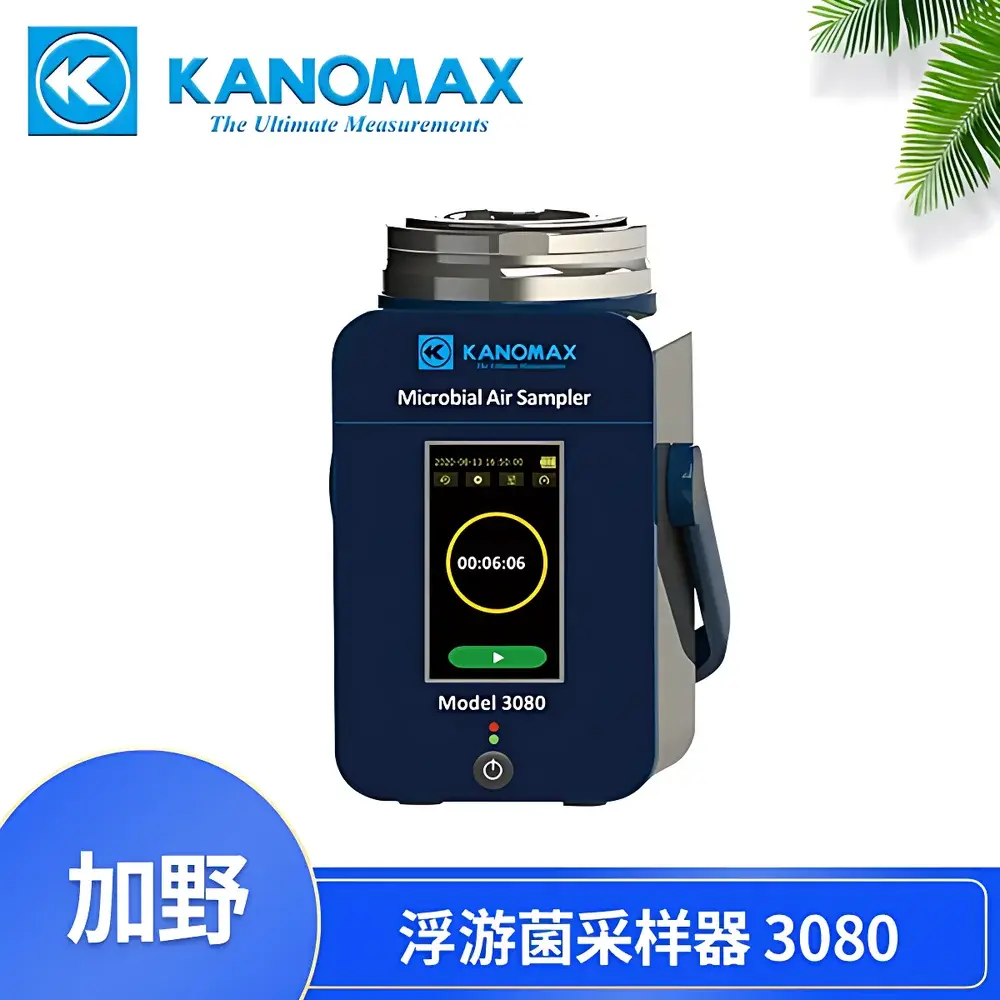
KANOMAX 3080+ Andersen-Principle Air Microbial Sampler
| Brand | KANOMAX |
|---|---|
| Origin | Japan |
| Model | 3080+ |
| Sampling Principle | Andersen Impaction |
| Flow Rate | 100 L/min |
| Flow Accuracy | ±2.5% |
| Sampling Duration | 10 s to 1 h |
| Delay Time | 0 s to 23 h 59 min 59 s |
| Sampling Volume Range | 20–6000 L |
| Sampling Cycles | 2–300 or continuous |
| Operating Environment | 0–40 °C, 0–90% RH (non-condensing) |
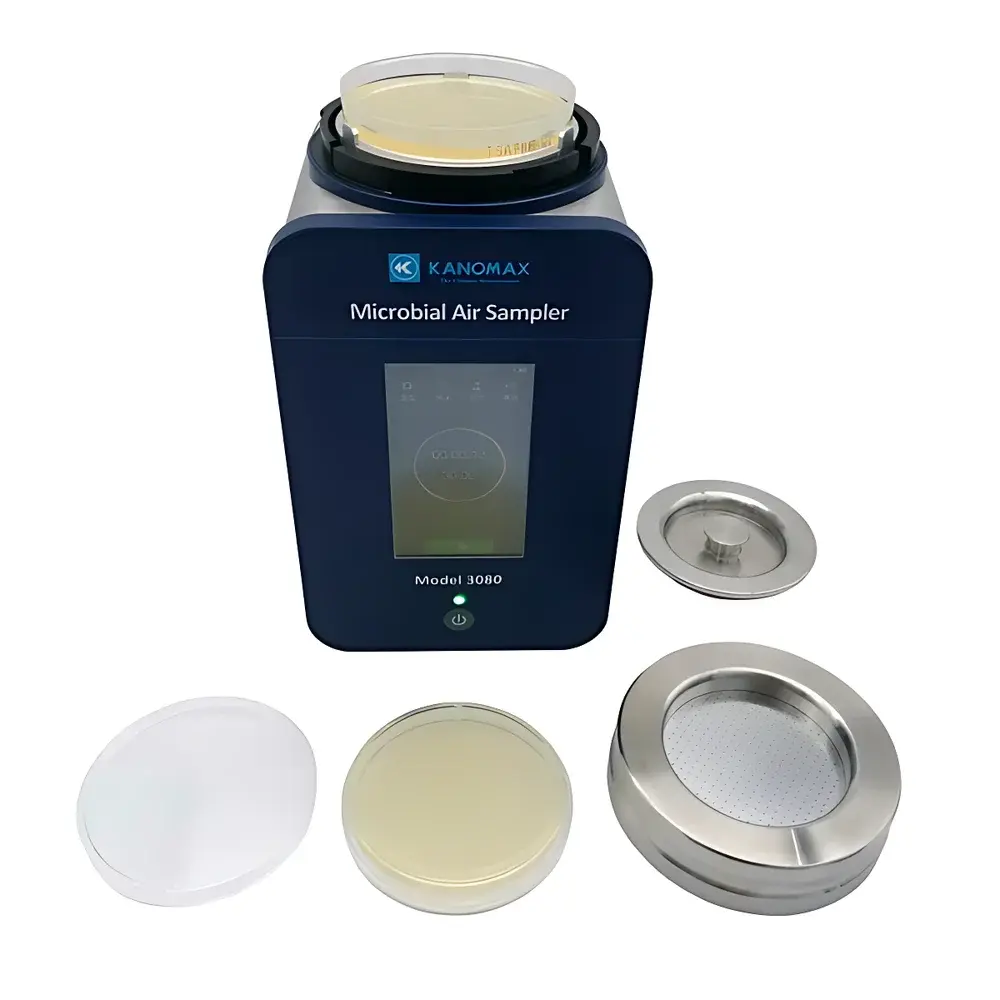
| Sampling Head Material | 316 Stainless Steel |
| Exhaust Filter Class | ISO Class 3 |
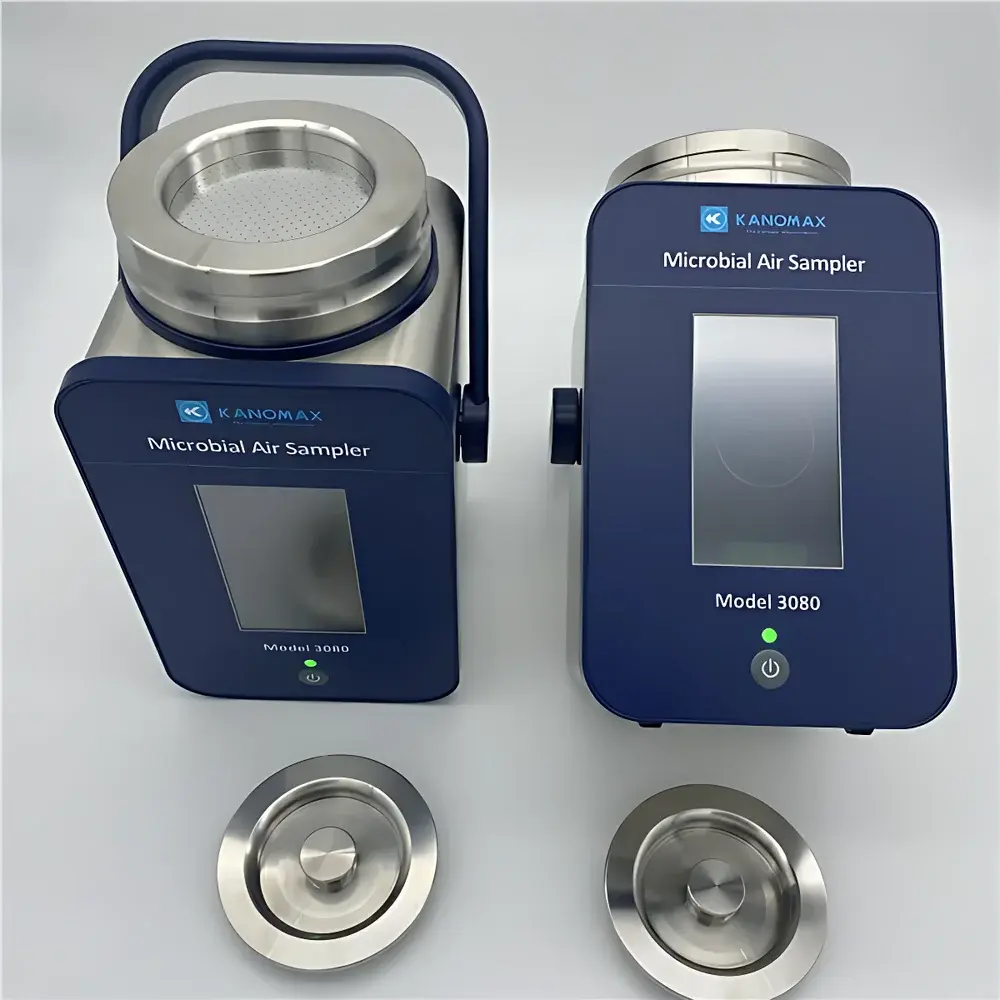
| Display | 4.3-inch color touchscreen |
| Data Storage | 10,000 internal records + USB export (CSV) |
| Communication | USB, RS-485 (Modbus RTU) |
| Power | Rechargeable Li-ion battery (7 h runtime) + AC adapter (100–240 V) |
| Dimensions | 136 × 235 × 133 mm |
| Weight | 3.2 kg |
| User Management | 64 editable users with multi-level permission control and audit trail |
| Language Support | English, Japanese, Chinese |
| Remote Control | Infrared (supports up to 5 units simultaneously) |
| Optional Accessories | Tripod, high-pressure gas sampling kit, thermal printer |
Overview
The KANOMAX 3080+ Andersen-Principle Air Microbial Sampler is a precision-engineered instrument designed for quantitative assessment of viable airborne microorganisms in controlled and critical environments. It operates on the well-established Andersen impactor principle—utilizing inertial impaction across six sequential stages—to physically separate and deposit viable particles onto standard agar-based culture media (e.g., 90–100 mm or 55–84 mm Petri dishes) according to aerodynamic diameter. With a calibrated nominal flow rate of 100 L/min and an impact velocity maintained below 20 m/s, the system ensures high collection efficiency for particles ≥0.65 µm while preserving microbial viability for subsequent colony-forming unit (CFU) enumeration. Its robust architecture, stainless-steel sampling head, and integrated ISO Class 3 exhaust filtration meet stringent requirements for biosafety and environmental containment during operation in cleanrooms, isolators, and other GxP-regulated facilities.
Key Features
- Andersen-type 6-stage cascade impactor with validated particle size cut-points per ISO 14698-1 and USP <71> guidance
- 316 stainless-steel sampling head—autoclavable, corrosion-resistant, and compatible with routine sterilization protocols
- Real-time flow monitoring with audible and visual alarm activation upon deviation exceeding ±2.5% tolerance
- Configurable sampling parameters: volume (20–6000 L), duration (10 s–1 h), delay time (0 s–23 h 59 min 59 s), and cycle count (2–300 or continuous)
- Multi-level user access control supporting up to 64 editable accounts with role-based permissions and full audit trail compliant with FDA 21 CFR Part 11 expectations
- Infrared remote operation enabling synchronized control of up to five units—ideal for spatial mapping or parallel monitoring in large-scale cleanroom validation
- 4.3-inch color touchscreen interface with intuitive navigation, real-time status feedback, and three-language support (English, Japanese, Chinese)
Sample Compatibility & Compliance
The 3080+ accommodates standard Petri dish formats (90–100 mm and 55–84 mm diameters), ensuring compatibility with widely adopted microbiological culture media including TSA, SDA, and Sabouraud dextrose agar. Its mechanical design and airflow dynamics conform to ISO 14698-1:2003 (Biocontamination control — Part 1: General principles and methods) and align with EU GMP Annex 1 (2022) recommendations for environmental monitoring in sterile manufacturing. The built-in ISO Class 3 exhaust filter prevents release of collected bioaerosols into the ambient environment, supporting safe operation within biosafety cabinets and Grade A/B cleanroom zones. All firmware and data handling routines support ALCOA+ data integrity principles, and the device is suitable for use under GLP and GMP frameworks requiring traceable, attributable, legible, contemporaneous, original, accurate, and complete records.
Software & Data Management
Data acquisition and reporting are fully integrated into the embedded operating system. Each measurement record stores date/time stamp, operator ID, location tag, sampling volume, elapsed time, cycle number, flow status, and pass/fail indicators. Internal memory retains up to 10,000 entries; data export is supported via USB drive in CSV format for downstream analysis in Excel, LIMS, or statistical process control platforms. Optional thermal printer integration enables immediate hard-copy generation of sampling reports at point-of-use. Communication via RS-485 Modbus RTU allows seamless integration into centralized environmental monitoring systems (EMS) and SCADA architectures. Audit logs capture all configuration changes, user logins, parameter edits, and alarm events—ensuring full compliance with regulatory expectations for electronic record retention and review.
Applications
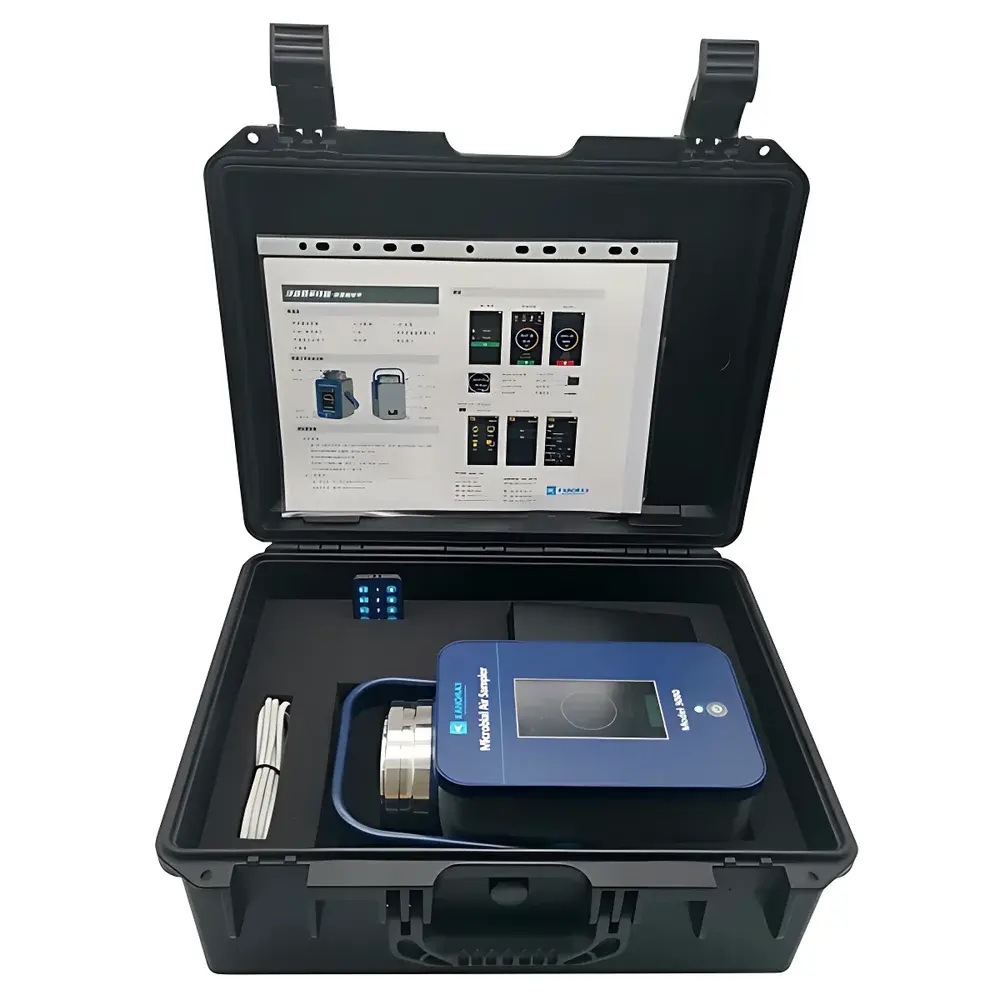
The KANOMAX 3080+ serves as a primary tool for routine and qualification-grade air microbial monitoring across regulated industries. It is routinely deployed in pharmaceutical aseptic processing suites, hospital isolation rooms, biotechnology cleanrooms, food and beverage production lines, semiconductor fabrication environments, museum conservation labs, and academic biosafety laboratories. Its adaptability extends to dynamic monitoring of isolators, gloveboxes, laminar flow hoods, and transport containers. Field applications include HVAC system validation, filter integrity testing support, and post-decontamination verification following vaporized hydrogen peroxide (VHP) or chlorine dioxide treatments. The instrument’s portability, battery autonomy (7 hours), and ruggedized housing make it equally effective for both static and mobile surveillance strategies.
FAQ
What particle size range does the 3080+ effectively collect?
The six-stage Andersen impactor provides discrete cut-points from approximately 7.0 µm down to 0.65 µm, enabling size-resolved microbial deposition consistent with ISO 14698-1 performance criteria.
Is the device compliant with FDA 21 CFR Part 11?
Yes—the system implements multi-tiered user authentication, electronic signatures, tamper-evident audit trails, and secure data export mechanisms aligned with Part 11 technical and procedural controls.
Can the sampling head be autoclaved?
Yes—the 316 stainless-steel head is rated for repeated autoclaving at 121 °C, 15 psi for 20 minutes without degradation of structural or aerodynamic performance.
Does the 3080+ support integration with existing EMS platforms?
Yes—via RS-485 Modbus RTU protocol, the instrument can transmit real-time flow status, sampling completion signals, and error codes to supervisory systems for centralized logging and alerting.
What is the recommended calibration frequency?
Annual calibration against a NIST-traceable flow standard is recommended; field verification using a primary calibrator (e.g., dry cal gas meter) should be performed prior to each critical monitoring campaign.
Related Products







