
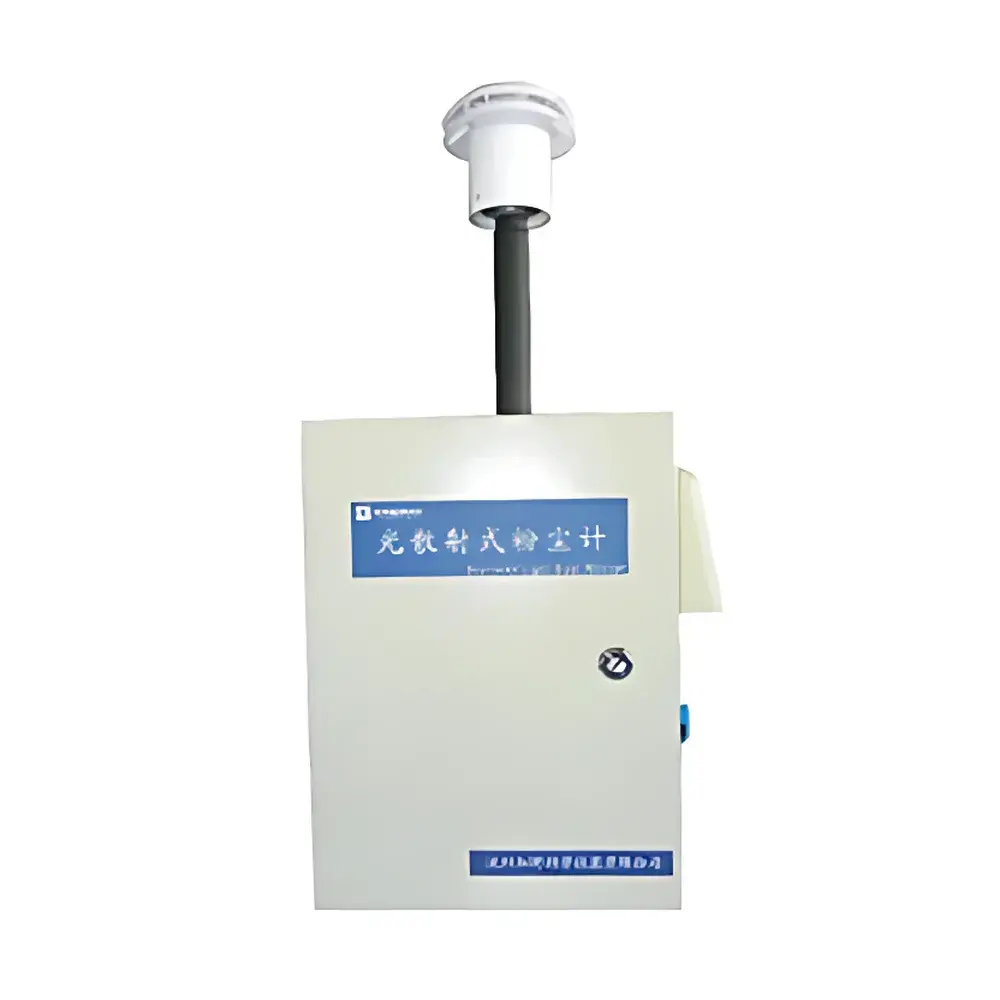
Kanomax SDM-II Laser Dust Monitor
| Brand | Kanomax |
|---|---|
| Origin | Japan |
| Model | SDM-II |
| Measurement Range | 0.01–10.00 mg/m³ |
| Resolution | 0.01 mg/m³ |
| Accuracy | ±10% |
| Relative Error | ≤±2% |
| Sampling Flow Rate | 1.7 L/min |
| Detection Principle | Laser Scattering (90° Forward Light Scattering) |
| Safety Rating | Non-Explosive |
| Communication Interface | RS485 |
| Zero & Span Auto-Calibration | Yes |
| Alarm Threshold Setting | Yes |
| Built-in Dehumidification | Yes |
| Filter Membrane Sampling Module | Included |
| Compliance | ISO 12103-1 A2 Fine Test Dust Compatible, Meets JIS B 7960 for Optical Dust Monitors |
Overview
The Kanomax SDM-II Laser Dust Monitor is a precision optical particulate matter (PM) analyzer engineered for continuous, real-time measurement of airborne dust mass concentration in ambient and occupational environments. Utilizing advanced 90° forward light scattering detection with a stable semiconductor laser source, the SDM-II quantifies suspended particulates—including PM2.5, PM10, and total suspended particulates (TSP)—based on Mie scattering theory calibrated against gravimetric reference standards. Its optical architecture is optimized to minimize angular sensitivity drift and moisture-induced signal attenuation, enabling robust field operation in variable humidity conditions. Designed for regulatory-grade monitoring rather than qualitative screening, the instrument delivers traceable mass concentration outputs traceable to ISO 12103-1 A2 fine test dust calibration protocols and conforms to Japanese Industrial Standard JIS B 7960 for optical dust monitors. It is not intended for intrinsically safe or hazardous area deployment due to its non-explosion-proof enclosure classification.
Key Features
- Real-time optical mass concentration output with 1-second update interval and internal data logging (up to 30 days at 1-minute intervals)
- Dual-mode operation: continuous laser scattering measurement + integrated filter membrane sampling port for concurrent gravimetric validation per ISO 10175-2 and EPA Method 201A
- Automatic zero-point and span calibration routines using internal clean-air purge and reference aerosol injection (optional accessory)
- Onboard dehumidification system utilizing Peltier-cooled condensation trap, maintaining optical path stability at RH ≤95% without external desiccant
- User-configurable alarm thresholds with relay output (NO/NC) and visual/audible alert indicators
- RS485 Modbus RTU interface supporting integration into SCADA, BMS, or centralized environmental data acquisition platforms
- Fixed sampling flow rate of 1.7 L/min maintained via temperature-compensated mass flow controller, ensuring consistent isokinetic aspiration across ambient pressure gradients
Sample Compatibility & Compliance
The SDM-II is validated for use with ambient aerosols containing mineral dust, construction-derived particles, road wear debris, and industrial fly ash—materials exhibiting refractive indices between 1.45–1.65 and density ranges of 2.2–2.7 g/cm³. It excludes sub-micron volatile organic compounds (VOCs), oil mists, or highly hygroscopic salts without prior conditioning. Regulatory alignment includes compliance with Japanese Ministry of Environment Notification No. 252 (2019) for fixed-site dust monitoring, and technical equivalency to EN 15267-3 for automated measuring systems under EU air quality directives. While not certified to ATEX or IECEx, its electrical design meets IEC 61000-6-2 (immunity) and IEC 61000-6-4 (emissions) standards. Data integrity supports GLP-compliant workflows through audit-trail-enabled configuration logs and time-stamped calibration records.
Software & Data Management
Instrument configuration, data retrieval, and firmware updates are managed via Kanomax’s proprietary PC-based software (SDM Control Suite v3.2), compatible with Windows 10/11 and supporting CSV export, trend graphing, and alarm event filtering. All operational parameters—including flow rate, laser power, photodetector gain, and calibration coefficients—are stored with write-protected timestamps. The RS485 interface enables direct integration with third-party data loggers compliant with Modbus RTU register map v1.4 (holding registers 40001–40020). Raw scattering voltage outputs and compensated concentration values are transmitted simultaneously, allowing independent algorithm verification. Audit trails comply with FDA 21 CFR Part 11 requirements when deployed with validated electronic signature modules and network-access-controlled user roles.
Applications
- Construction site perimeter monitoring per OSHA Technical Manual Section III: Chapter 2 (Particulate Exposure)
- Municipal roadside dust surveillance networks aligned with WHO Air Quality Guidelines (AQG) for PM10
- Industrial stack emissions pre-screening in cement plants, quarries, and aggregate processing facilities
- Indoor air quality assessment in warehouses, logistics hubs, and material handling zones where respirable dust exposure risk exceeds 50% of OEL
- Research-grade field validation of low-cost sensor networks using co-located gravimetric reference sampling
FAQ
Does the SDM-II require annual factory recalibration?
Yes. Kanomax recommends traceable recalibration every 12 months at an ISO/IEC 17025-accredited service center using NIST-traceable PM10 reference aerosols and flow standardization against primary rotameters.
Can the built-in dehumidifier eliminate fogging during rain events?
The Peltier-based condenser reduces dew point by up to 15°C below ambient, preventing lens fogging under sustained high-humidity exposure; however, direct rainfall ingress must be prevented via proper weatherproof housing (IP65-rated enclosure recommended).
Is filter-based gravimetric correction mandatory for regulatory reporting?
While optical readings are admissible for trend analysis and alarm triggering, official compliance reporting (e.g., to local environmental bureaus) typically requires periodic parallel gravimetric sampling per ISO 7708:1995 and national implementation guidelines.
What is the maximum cable length for RS485 communication?
Up to 1,200 meters at 9.6 kbps baud rate with shielded twisted-pair cabling and proper termination resistors; performance degrades beyond 100 meters without repeaters in electrically noisy industrial settings.
Related Products







