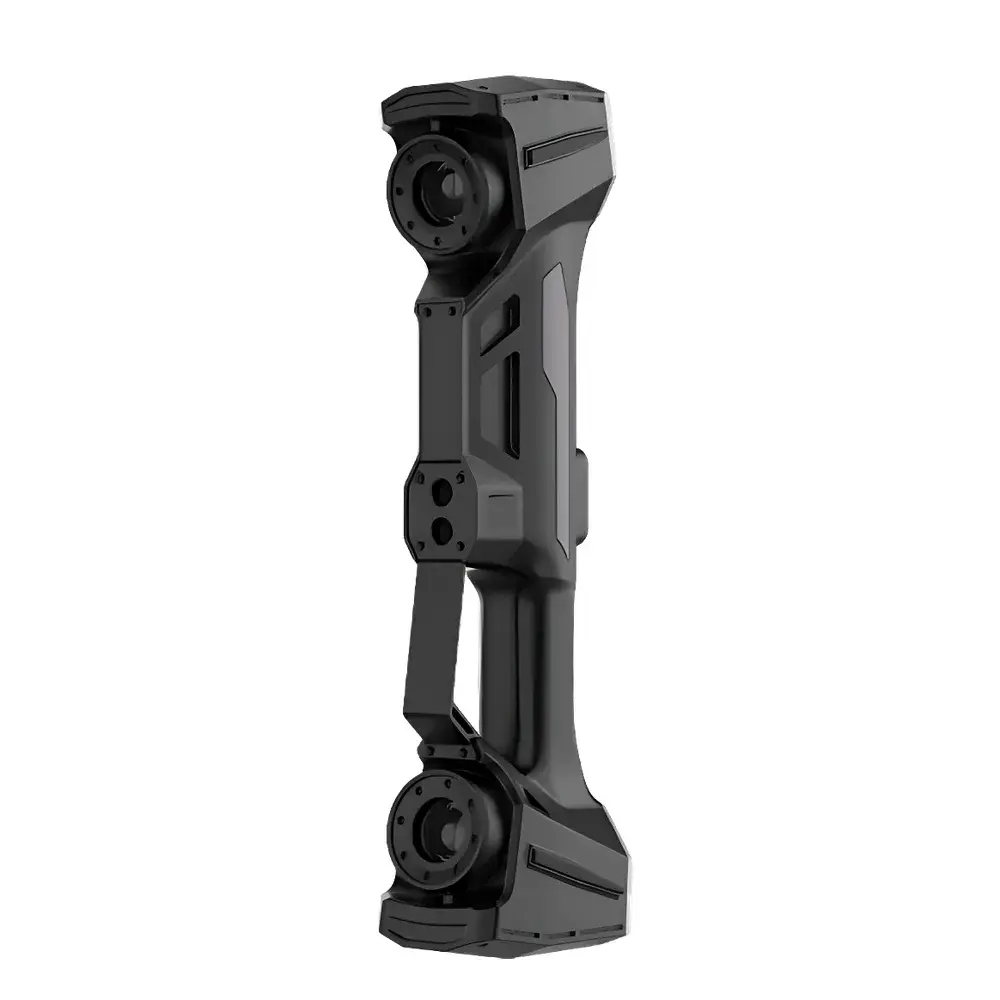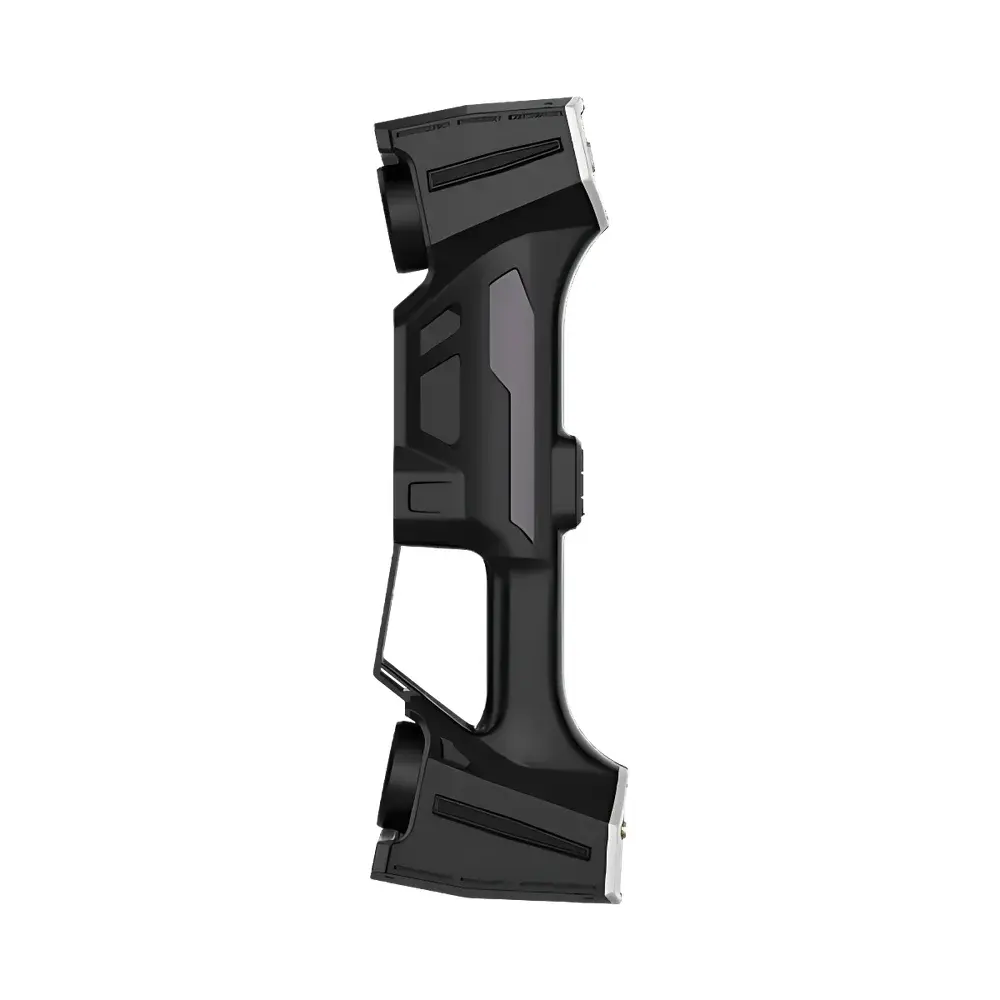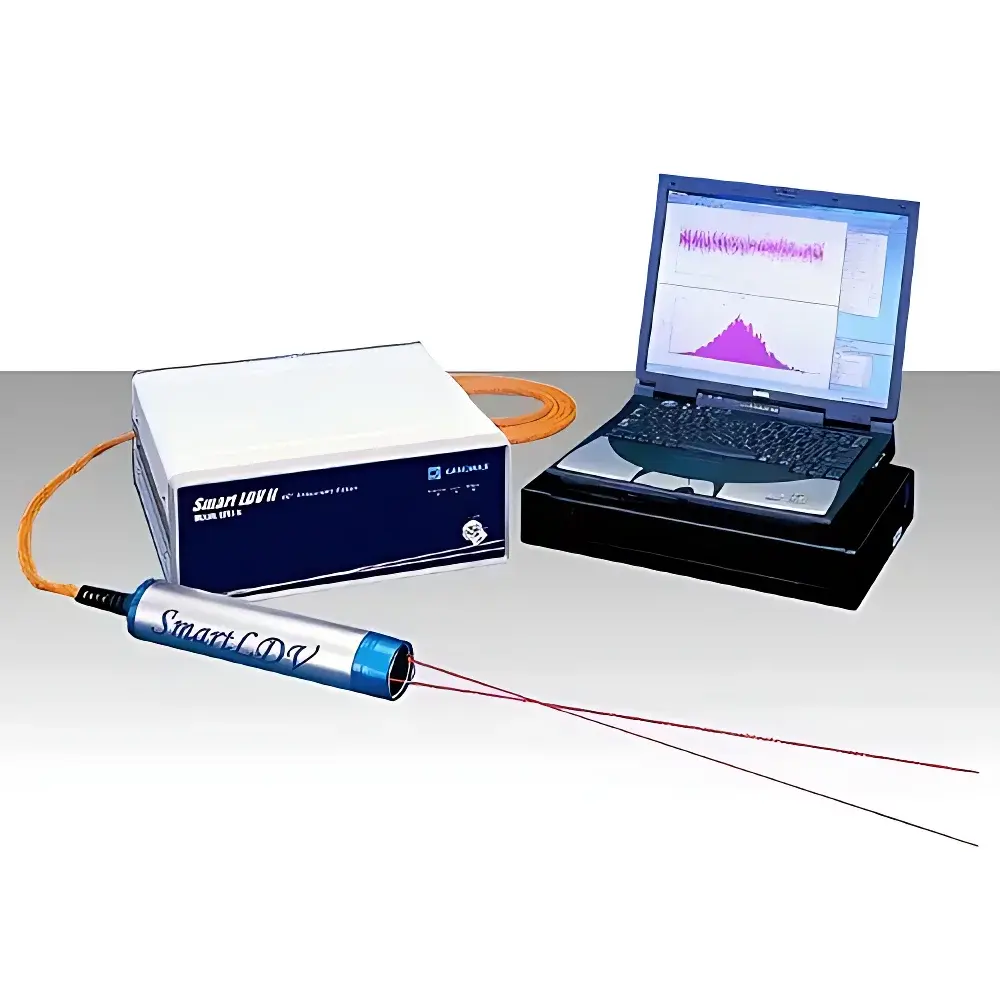
KANOMAX Smart LDV II Compact Laser Doppler Velocimeter System
| Brand | KANOMAX |
|---|---|
| Origin | Japan |
| Model | Smart LDV II |
| Velocity Range | –40 to +100 m/s |
| Laser Source | Laser Diode, λ = 660 nm, 60 mW |
| Focal Distances | 150 / 200 / 250 / 300 / 350 / 400 mm |
| Focal Spot Size | 0.13 mm × 0.13 mm |
| Probe Dimensions | 61 mm (dia.) × 312 mm (length) |
| Doppler Shift Frequency Range | 0.01–10 MHz |
| Probe Weight | 2.5 kg |
| Signal Processor (Model 8008) | 8-bit FFT, 1 kHz–40 MHz bandwidth, 16,000 data points/sec, full-size PCI board |
| Traverse System | 3-axis, max vertical load 7 kg, translation speed 80 mm/sec, positioning accuracy ±0.025 mm |
| Interface | RS232C, BNC I/O, interlock connector |
Overview
The KANOMAX Smart LDV II Compact Laser Doppler Velocimeter System is a precision optical instrument engineered for non-intrusive, high-resolution velocity measurements in gaseous and low-density fluid flows. Based on the fundamental principle of laser Doppler anemometry (LDA), the system detects frequency shifts in coherent light scattered by moving particles—typically naturally occurring dust, seeding aerosols, or combustion byproducts—within the measurement volume. Unlike thermal or pressure-based flowmeters, the Smart LDV II delivers point-wise, time-resolved velocity data with inherent immunity to electromagnetic interference, temperature gradients, and flow-induced probe vibration. Its dual-beam, fiber-coupled transceiver architecture enables stable fringe formation at precisely defined focal distances, supporting repeatable measurements across wind tunnel test sections, combustor exit planes, and boundary layer investigations. Designed for laboratory and industrial R&D environments, the system prioritizes optical stability, ease of alignment, and integration readiness with third-party data acquisition and motion control platforms.
Key Features
- Fiber-optic transceiver probe with integrated dual-beam configuration for robust fringe pattern generation and simplified optical alignment
- Compact probe housing (61 mm diameter × 312 mm length) optimized for access-limited regions including nozzle throats, combustor liners, and small-scale wind tunnels
- Selectable focal distances (150–400 mm in 50-mm increments) and sub-150-µm focal spot size (0.13 mm × 0.13 mm) enabling high spatial resolution without mechanical refocusing
- Integrated interlock safety circuit compliant with IEC 60825-1 Class 3R laser safety requirements
- Modular signal processing architecture: optional Model 8008 PCI-based signal processor supports real-time 8-bit FFT analysis, configurable frequency band (1 kHz–40 MHz), and sustained output at 16,000 data points per second
- Standard accessories include retro-reflector unit for closed-loop calibration verification, probe support block with kinematic mounting, and RS232C/BCN interface cabling for host PC communication and external trigger synchronization
Sample Compatibility & Compliance
The Smart LDV II is specifically designed for velocity characterization in non-conductive, optically accessible gas-phase flows—including air, nitrogen, helium, and combustion exhaust streams—where particle seeding (e.g., TiO₂, SiO₂, or oil droplets < 1 µm) is feasible. It is not suitable for opaque, highly scattering, or electrically conductive media such as liquid metals or dense slurries. The system complies with ISO 9001-certified manufacturing protocols at KANOMAX’s Japanese production facility and meets CE marking requirements for EMC Directive 2014/30/EU and Low Voltage Directive 2014/35/EU. When configured with GLP/GMP-compliant software logging (via third-party DAQ platforms), the system supports audit-trail-capable data capture aligned with FDA 21 CFR Part 11 expectations for regulated research environments.
Software & Data Management
The Smart LDV II operates via host PC control through standard RS232C serial protocol; no proprietary runtime environment is required. Raw Doppler burst signals are digitized and processed either onboard the Model 8008 signal board or externally using user-supplied LabVIEW, MATLAB, or Python-based acquisition frameworks. All hardware modules—including the traverse system—support TTL-level trigger input/output for synchronized multi-sensor experiments. Positional metadata from the 3-axis traverse (resolution 0.025 mm) is timestamped and multiplexed with velocity records, enabling direct mapping of mean velocity profiles, turbulence intensity fields, and Reynolds stress components. Export formats include ASCII (.csv), HDF5, and binary stream files compatible with post-processing tools such as Tecplot, ParaView, and OpenFOAM validation workflows.
Applications
- Aerodynamic characterization in low-speed and transonic wind tunnels, including wake surveys, separation zone mapping, and jet mixing studies
- Velocity profiling across combustor exit planes and afterburner sections to validate CFD boundary conditions and assess flame stabilization dynamics
- Calibration traceability for hot-wire anemometers and Pitot-static probes using co-located LDV reference measurements
- Transient flow analysis during valve actuation, pulse detonation cycles, and unsteady turbine blade passage events
- Educational laboratory use for teaching fundamental fluid mechanics concepts including laminar/turbulent transition, vorticity transport, and spectral analysis of turbulent fluctuations
FAQ
What particle size is required for reliable velocity detection?
Optimal performance is achieved with seeding particles between 0.1 µm and 1 µm in aerodynamic diameter. Smaller particles follow flow streamlines with minimal slip; larger particles reduce signal-to-noise ratio due to reduced scattering cross-section.
Can the Smart LDV II measure reverse or negative velocities?
Yes—the system resolves bidirectional flow via sign-sensitive heterodyne detection, supporting velocity ranges from –40 m/s to +100 m/s with consistent phase fidelity.
Is the probe compatible with vacuum or high-temperature environments?
The standard probe is rated for ambient operation (5–40 °C, non-condensing). For elevated temperature or vacuum applications, custom quartz viewport interfaces and water-cooled probe housings are available under KANOMAX engineering consultation.
Does the system support automated scan sequences?
When paired with the optional 3-axis traverse and host PC scripting, users can define grid-based or contour-following scan paths with programmable dwell times, position-triggered averaging, and real-time statistical convergence monitoring.
How is calibration verified onsite?
The included retro-reflector unit enables in-situ zero-velocity verification and fringe spacing validation using stationary backscatter; NIST-traceable rotating disc calibrators may be integrated for absolute velocity scale certification.