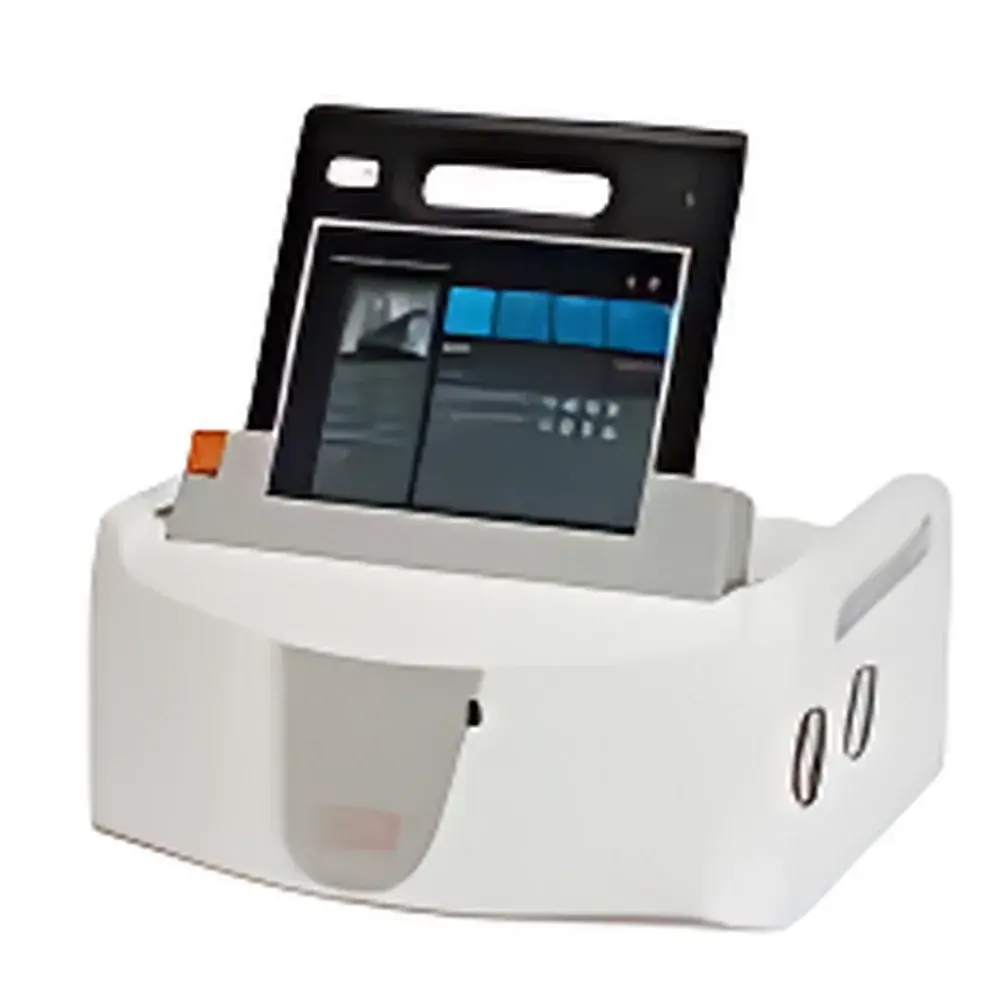
Kaye Validator AVS Wired Temperature Validation System
| Brand | Kaye |
|---|---|
| Origin | USA |
| Manufacturer Type | Authorized Distributor |
| Product Origin | Imported |
| Model | Kaye Validator AVS |
| Pricing | Upon Request |
Overview
The Kaye Validator AVS Wired Temperature Validation System is a purpose-built, ISO-certified validation platform engineered for rigorous thermal process qualification in regulated life science environments. It operates on the principle of high-accuracy, multi-channel thermocouple-based temperature and pressure measurement synchronized with real-time data acquisition and traceable calibration. Designed explicitly for pharmaceutical, biotechnology, and medical device manufacturing, the system supports validation of autoclaves, sterilizers, lyophilizers, ovens, incubators, and environmental chambers under both dry-heat and saturated steam conditions. Its architecture integrates hardware synchronization, NIST-traceable reference standards, and deterministic data logging to ensure full compliance with regulatory expectations for data integrity, auditability, and reproducibility.
Key Features
- Real-time, synchronized multi-channel acquisition—up to 48 thermocouple inputs via SIM (Sensor Input Module) with sub-second sampling resolution
- Integrated pressure sensing capability optimized for saturated steam environments, enabling simultaneous temperature–pressure correlation per ASTM F1730 and ISO 11134
- NIST-traceable IRTD-400 temperature standard with uncertainty ≤ ±0.02 °C over –95 °C to 420 °C, supporting field verification and periodic recalibration
- Dual-mode thermal calibration infrastructure: dry-block calibrators and precision oil baths covering –95 °C to 420 °C, compliant with ISO/IEC 17025 calibration laboratory requirements
- Material-optimized probe portfolio: PTFE-insulated thermocouples for moist-heat and freeze-drying applications; Kapton®-sheathed probes rated for dry-heat cycles up to 420 °C
- FDA 21 CFR Part 11–compliant software architecture featuring electronic signatures, role-based access control, audit trail with immutable timestamps, and user-defined report templates
- Pre-validated IQ/OQ documentation packages aligned with GAMP 5 guidelines, including risk assessments, test protocols, and summary reports ready for regulatory submission
Sample Compatibility & Compliance
The Kaye Validator AVS accommodates a broad spectrum of thermal validation scenarios—including steam sterilization (SAL verification), depyrogenation tunnels, lyophilizer shelf mapping, cleanroom environmental monitoring, and stability chamber qualification. All thermocouple probes are constructed to meet USP , ISO 13408-2, and EU Annex 1 requirements for material compatibility, electrical isolation, and dimensional stability under thermal stress. The system’s hardware and firmware are designed and verified per IEC 62304 (Class B), and its validation lifecycle documentation conforms to ISO 9001, ISO 13485, and PIC/S PE 009–15. Full traceability is maintained from sensor tip through signal conditioning, analog-to-digital conversion, and database storage—ensuring end-to-end data lineage required for FDA, EMA, and PMDA inspections.
Software & Data Management
The Kaye Validator Software Suite provides a validated, single-platform interface for configuration, execution, analysis, and reporting. It features deterministic data capture with time-synchronized channel tagging, configurable alarm thresholds, and automated deviation flagging. Raw data files are stored in encrypted binary format with SHA-256 hash integrity verification. Export options include CSV, PDF, and XML formats compatible with LIMS and MES integration. Audit trails record all user actions—including parameter changes, probe assignments, calibration events, and report generation—with immutable timestamps and operator identification. The software supports 21 CFR Part 11 compliance through built-in electronic signature workflows, biometric or token-based authentication, and configurable retention policies meeting GLP/GMP archival requirements (minimum 25 years).
Applications
- Autoclave and SIP (Steam-in-Place) cycle validation per ISO 17665 and HTM 2030
- Lyophilizer chamber and shelf temperature mapping during primary and secondary drying phases
- Depyrogenation tunnel qualification per USP and EU Annex 1
- Oven and hot-air sterilizer validation across pharmaceutical and device manufacturing
- Environmental chamber qualification for stability testing (ICH Q1A–Q1E)
- Wet heat process validation in bioreactor jacket systems and media sterilization vessels
- IQ/OQ/PQ execution for new thermal equipment installations per GAMP 5 and ASTM E2500
FAQ
Does the Kaye Validator AVS support wireless probe connectivity?
No—the AVS is a hardwired, deterministic validation system designed for maximum signal integrity and electromagnetic immunity in industrial sterilization environments. Wireless functionality is intentionally excluded to ensure compliance with IEC 61326-1 EMC requirements and eliminate latency or packet loss risks.
Can the system be used for humidity validation?
No—the Kaye Validator AVS is a temperature- and pressure-focused validation platform. Humidity validation requires separate, humidity-specific sensors and calibration standards compliant with ISO 17025 and ISO 14644-3.
Is the software validated out-of-the-box?
Yes—the Kaye Validator Software is supplied with pre-executed IQ/OQ documentation, including installation verification, functional testing, and security configuration checks, fully aligned with GAMP 5 Category 3 software classification.
What calibration standards are included with the system?
The system ships with the IRTD-400 high-accuracy RTD reference standard (NIST-traceable, ±0.02 °C uncertainty), along with certified dry-well and oil-bath calibration sources covering –95 °C to 420 °C.
How does the system handle probe failure during a validation run?
The AVS performs continuous channel health monitoring. Any open-circuit, short-circuit, or out-of-range condition triggers an immediate, time-stamped alert and logs the event in the audit trail without interrupting acquisition on other channels.