
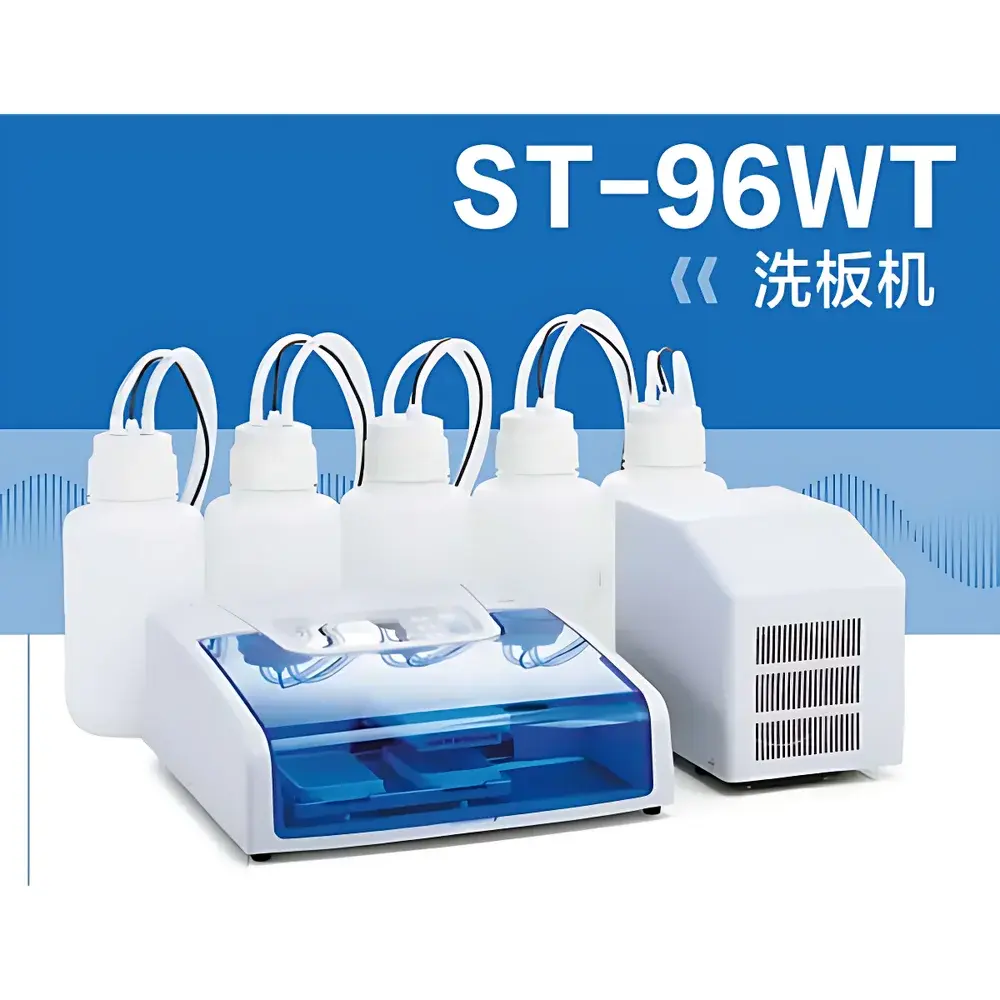
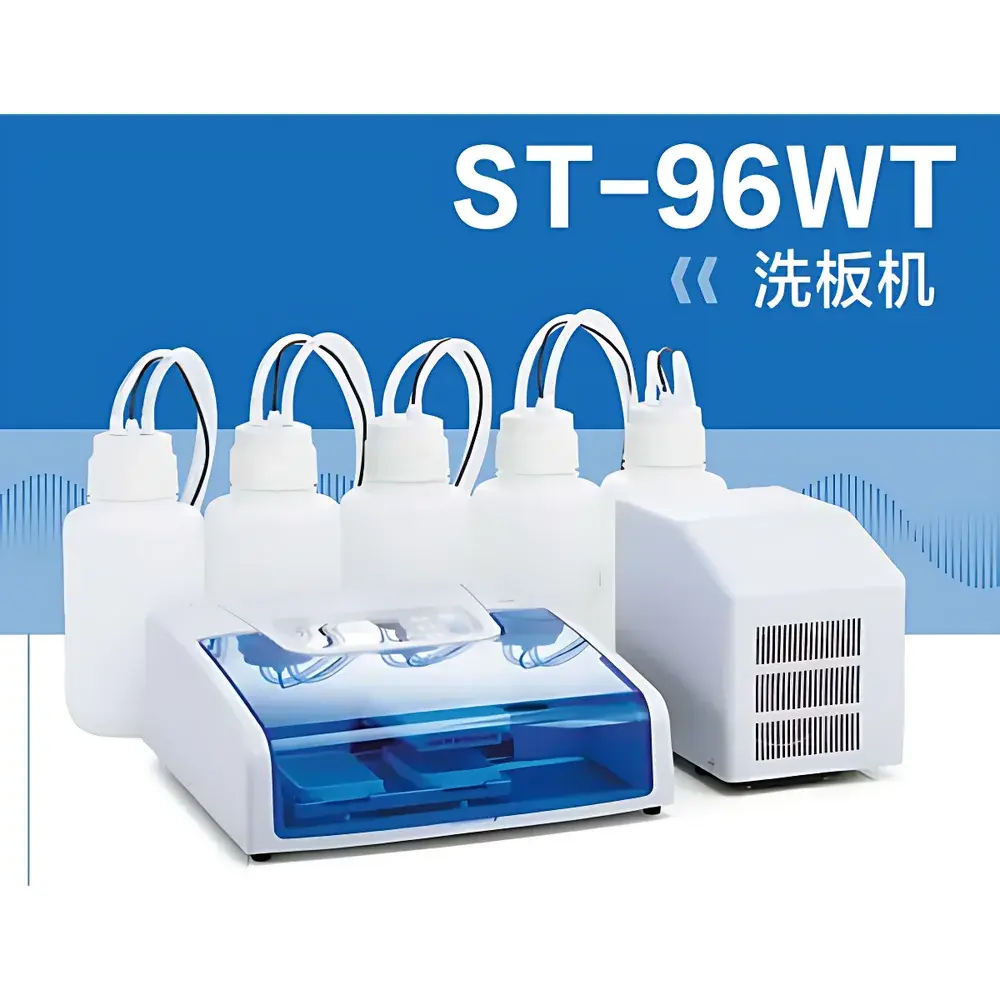
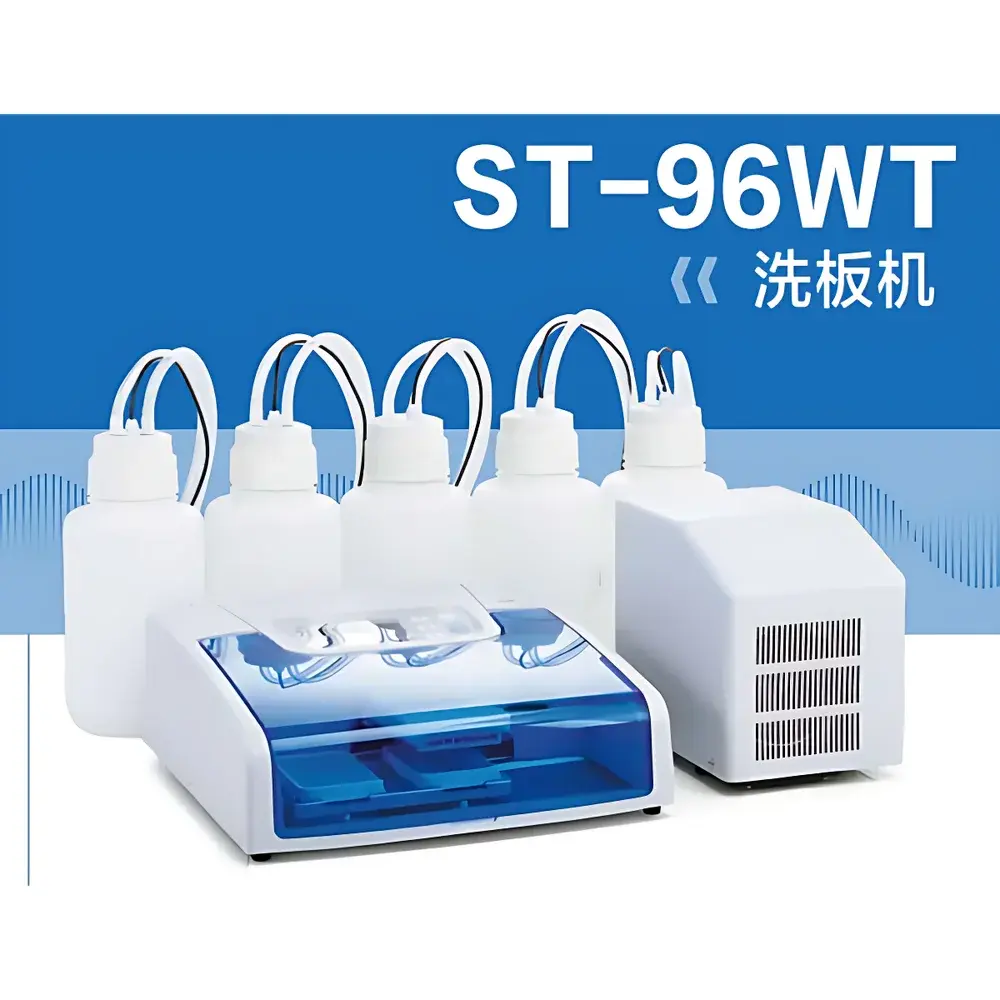
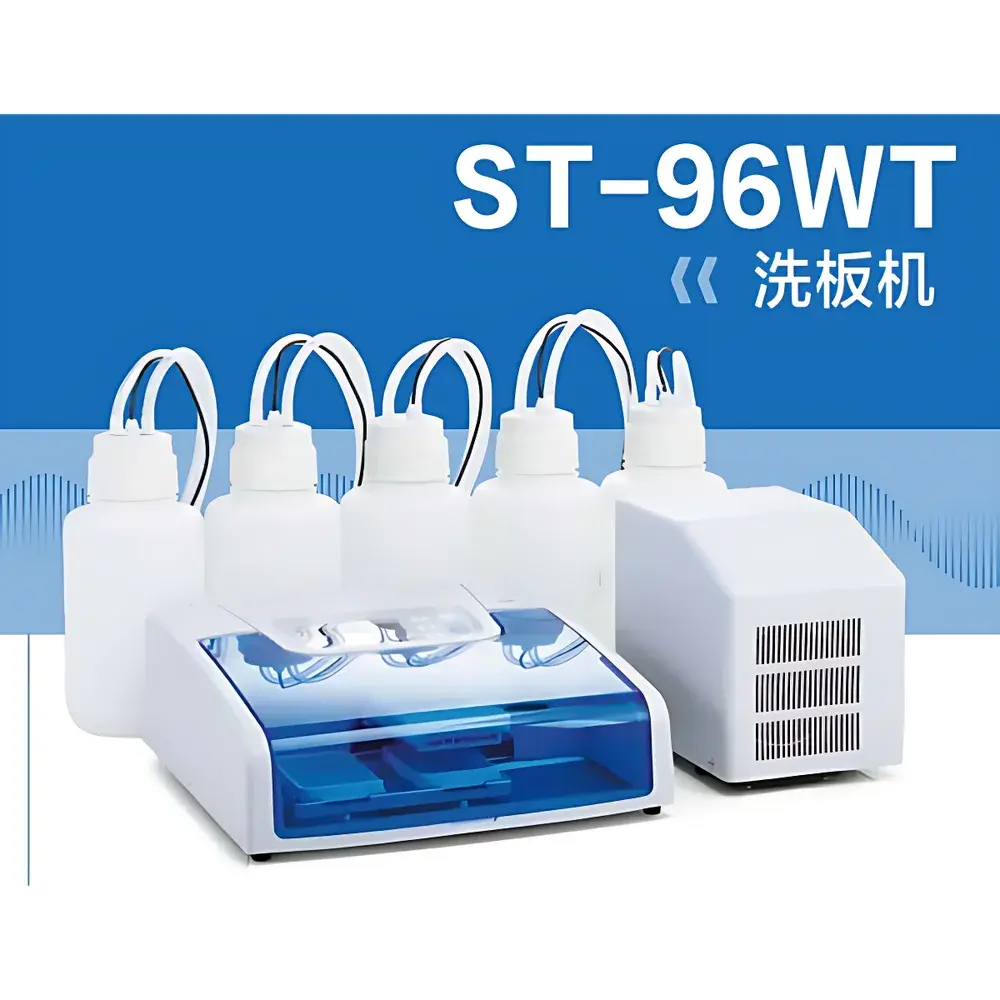
Kehua Biosciences ST-96WT 96-Well Microplate Washer
| Brand | Kehua Biosciences (KHB) |
|---|---|
| Origin | Shanghai, China |
| Model | ST-96WT |
| Instrument Type | Multifunctional Plate Washer |
| Wash Head | 96-pin |
| Rinse Head Configuration | 1–8 adjustable rinse lines |
| Wash Solution Channels | 2 independent wash solution inlets |
| Waste Liquid Channels | 2 dedicated waste outlets |
| Soak Time Range | 0–999 seconds |
| Wash Cycles | 0–100 cycles |
| Residual Liquid Volume | ≤ 0.8 µL per well |
| Orbital Shaking Function | Adjustable speed and duration |
Overview
The Kehua Biosciences ST-96WT is a high-precision, programmable 96-well microplate washer engineered for reproducible, low-residue washing in ELISA, cell-based assays, immunoassays, and other plate-based life science workflows. It operates on the principle of synchronized aspiration and dispensing using positive-pressure fluidics and vacuum-assisted removal, ensuring uniform liquid handling across all wells of standard ANSI/SLAS-compliant 96-well plates. Designed for integration into regulated laboratory environments, the ST-96WT supports consistent protocol execution with minimal operator intervention—critical for maintaining assay integrity in QC, clinical diagnostics, and preclinical research settings.
Key Features
- 96-pin stainless-steel wash head with precision-aligned nozzles for simultaneous, uniform dispensing and aspiration across full plates
- Independent dual-channel wash solution delivery system enables rapid switching between two reagents (e.g., buffer and detergent) without cross-contamination
- Dual dedicated waste channels maintain separation of aspirated fluids, reducing carryover risk and supporting compatibility with hazardous or viscous wash solutions
- Adjustable orbital shaking function with variable speed (100–1,200 rpm) and duration (0–300 s) enhances removal of loosely bound antigens, antibodies, or cellular debris
- Programmable soak time (0–999 s) and cycle count (1–100) allow fine-tuned optimization for diverse assay chemistries—including high-background or low-affinity binding systems
- Integrated external diaphragm pump delivers stable, low-noise fluid actuation with minimal mechanical vibration, preserving plate integrity and minimizing pipetting error sources
- Capacitive touchscreen interface with intuitive icon-driven navigation supports protocol storage, recall, and real-time status monitoring
Sample Compatibility & Compliance
The ST-96WT accommodates standard flat-bottom, U-bottom, and V-bottom 96-well plates (including PCR-compatible and sterile-filtered formats), as well as half-area and black-walled plates used in luminescence assays. All wetted components are constructed from chemically resistant materials (e.g., PTFE tubing, stainless-steel manifolds, and silicone-free fluid paths) to ensure compatibility with common ELISA wash buffers (e.g., PBS-T, Tris-Tween), acidic/basic solutions, and ethanol-based decontaminants. The instrument meets CE marking requirements for in vitro diagnostic (IVD) ancillary equipment and conforms to ISO 13485:2016 design control principles. Its operational parameters support alignment with CLSI EP21-A and ISO 20776-1 guidelines for automated washer validation in clinical microbiology and serology labs.
Software & Data Management
The embedded firmware supports user-defined protocol creation, versioning, and password-protected access levels (operator, supervisor, administrator). Each run logs timestamped metadata—including plate ID, protocol name, soak time, cycle count, residual volume estimate, and system error codes—to internal flash memory (≥10,000 records). Audit trail functionality complies with GLP and GMP documentation standards, recording all parameter modifications, user logins, and calibration events. Optional RS-232 or USB-C connectivity enables direct export of CSV-formatted run logs to LIMS or electronic lab notebooks (ELNs). While the ST-96WT does not natively support FDA 21 CFR Part 11 electronic signatures, its audit trail architecture is compatible with third-party digital signature middleware deployed in regulated biopharma QC labs.
Applications
- Routine ELISA washing in clinical diagnostics laboratories performing infectious disease, autoimmune, and allergy testing
- High-throughput screening (HTS) plate preparation for target validation and lead optimization studies
- Cell-based assay conditioning prior to cytokine detection, phospho-protein analysis, or receptor binding quantification
- Microbial suspension washing in antimicrobial susceptibility testing (AST) workflows
- Preparation of coated plates for lateral flow assay development and quality control
- Automated buffer exchange in nucleic acid hybridization and protein array processing
FAQ
What plate formats are supported by the ST-96WT?
The instrument is validated for ANSI/SLAS-standard 96-well microplates only; it does not support 384-well or custom-format plates.
Can the ST-96WT be integrated into robotic liquid handling workcells?
Yes—its RS-232 port supports TTL-level handshake signaling and discrete I/O triggers for synchronization with third-party deck controllers.
Is calibration required before first use?
No routine calibration is needed; however, users must perform initial verification of residual volume (<0.8 µL/well) and aspiration uniformity using gravimetric or dye-based methods per ISO 20776-1 Annex B.
Does the ST-96WT include service documentation for regulatory audits?
Yes—the shipped package includes a Factory Acceptance Test (FAT) report, electrical safety certification, and a traceable component list compliant with IEC 61010-1.
How often should the wash head be cleaned or replaced?
The 96-pin head requires daily rinsing with distilled water and weekly immersion in 70% ethanol; replacement is recommended every 12 months under continuous operation (≥8 hrs/day).





