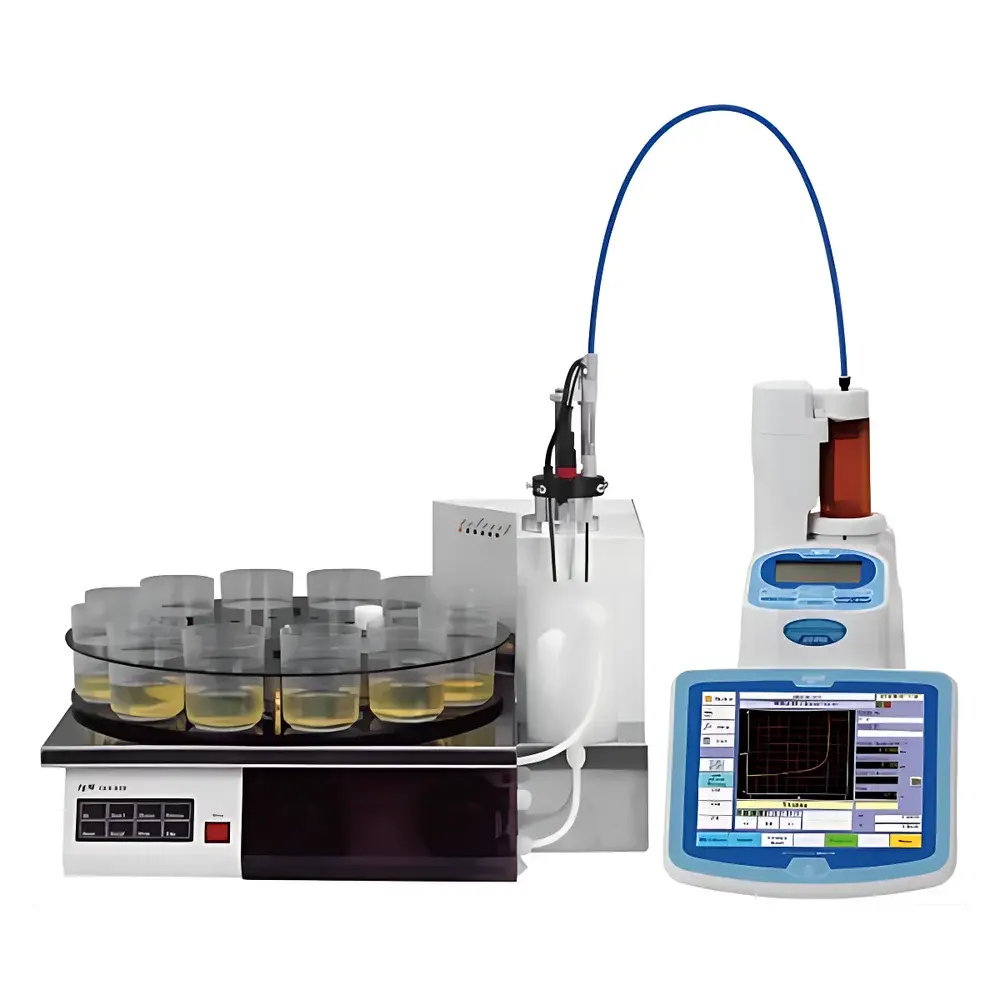
KEM AT-710M / AT-710S / AT-710B Automatic Potentiometric Titrator for Petroleum Products
| Brand | KEM (Kyoto Electronics Manufacturing) |
|---|---|
| Origin | Japan |
| Manufacturer Type | Original Equipment Manufacturer (OEM) |
| Product Category | Imported Instrumentation |
| Models | AT-710M, AT-710S, AT-710B |
| Pricing | Available Upon Request |
Overview
The KEM AT-710M / AT-710S / AT-710B Automatic Potentiometric Titrator is a modular, GLP-compliant analytical platform engineered for precise, trace-level quantification of acidic, basic, redox-active, and precipitating species in petroleum products and related hydrocarbon-based matrices. Operating on the principle of potentiometric endpoint detection—measuring the potential difference between a reference electrode (e.g., Ag/AgCl or double-junction calomel) and an indicator electrode (e.g., glass pH, platinum, silver, or ion-selective)—the system delivers high reproducibility in titrations where visual indicators are impractical due to sample color, turbidity, or low analyte concentration. Designed specifically for compliance with ASTM D664 (acid number), ASTM D2896/D4739 (base number), ASTM D1159/D2710 (bromine number/index), ASTM D3227 (mercaptan sulfur), and numerous GB, SH, NB/SH, and SN/T standards, the AT-710 series supports fully automated, method-driven workflows essential for refinery QC labs, lubricant formulation centers, and third-party testing facilities subject to ISO/IEC 17025 accreditation requirements.
Key Features
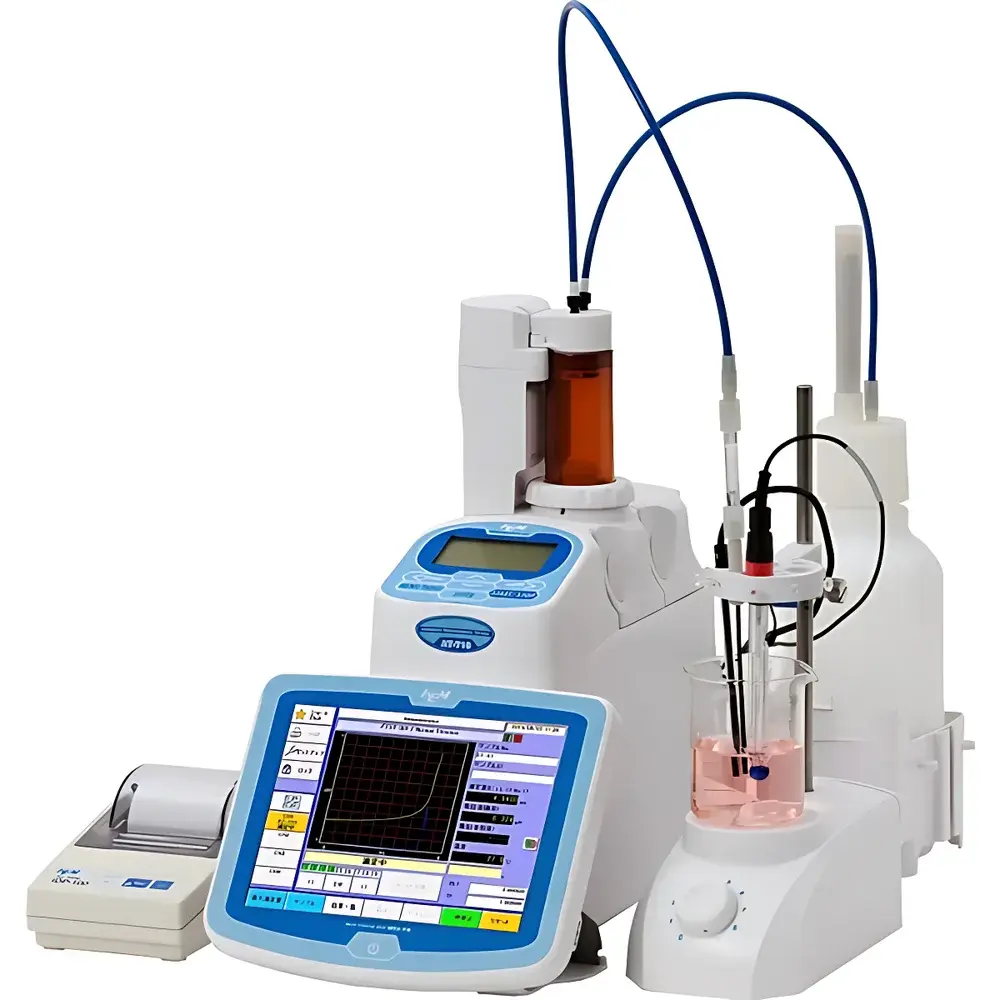
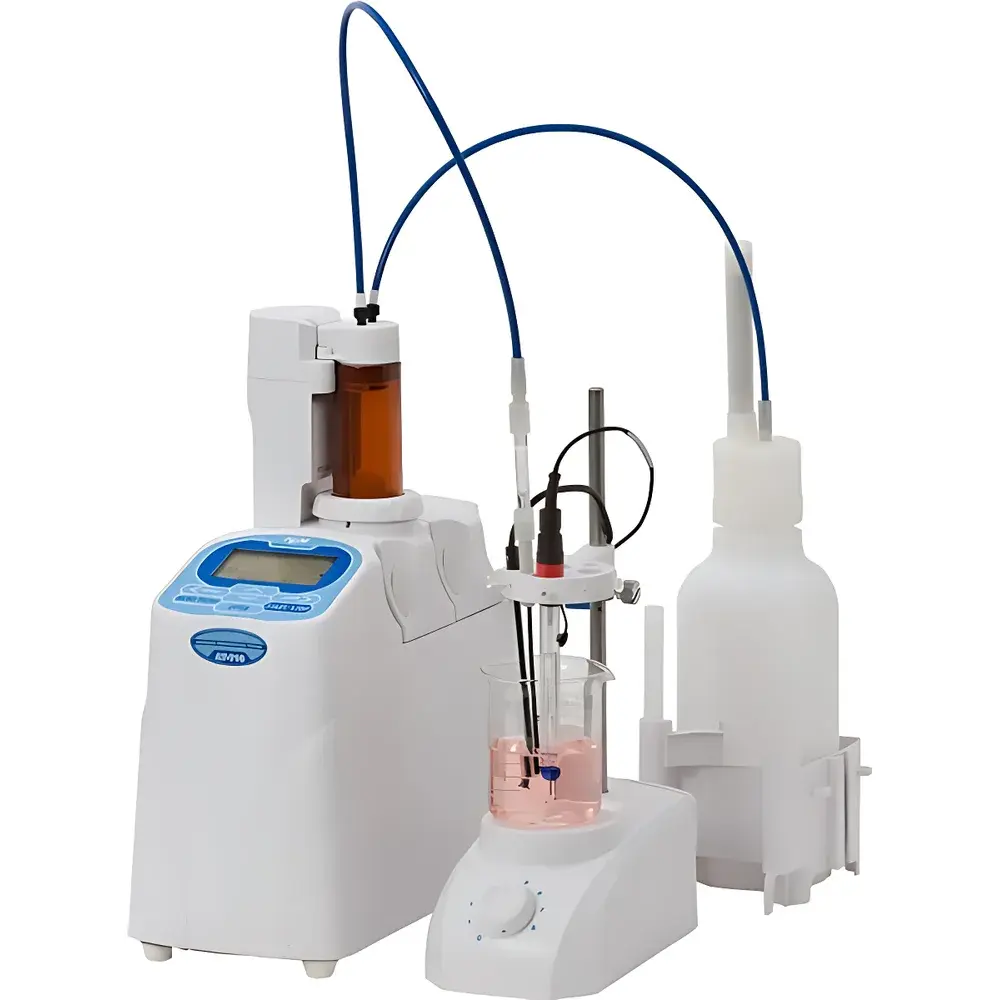
- Modular architecture: Three configurations—AT-710M (with MCU-710M measurement control unit), AT-710S (with MCU-710S), and AT-710B (standalone base unit)—enable scalability from routine QC to multi-parameter research applications.
- Precision dispensing: Standard 20 mL glass burette with brown protective sleeve; optional 1–10 mL burettes certified to ±0.001 mL repeatability (1 mL) and ±0.02 mL accuracy (20 mL), supporting trace-level analysis of high-value samples such as jet fuel or synthetic ester lubricants.
- Multi-channel electrochemical detection: Standard STD amplifier supports dual-potential (pH/mV) monitoring; optional PTA (photometric), POA (polarographic), CMT (conductometric), and TET (triple-potential) modules expand compatibility with non-potentiometric titration modes per ASTM D1159 or USP <771>.
- Regulatory-ready data integrity: Full audit trail per FDA 21 CFR Part 11 and ISO/IEC 17025 Annex A.5, including operator ID logging, reagent lot tracking, electrode calibration history, burette validation records, and scheduled performance verification alerts.
- Intuitive human-machine interface: 8.4-inch VGA touchscreen (800 × 600) with multilingual support (English, Japanese, Chinese, Korean, Russian, Spanish, German, French); real-time dual-channel potential display and dynamic titration curve visualization.
Sample Compatibility & Compliance
The AT-710 series is validated for direct analysis of crude oil, distillates (gasoline, kerosene, diesel), lubricating oils, insulating liquids (mineral and synthetic esters), biofuels (ethanol blends), and industrial aliphatic/olefinic streams. It meets methodological requirements across global regulatory frameworks: ASTM International (D664-24, D2896-21, D4739-23, D3227-24), ISO 6618 (acid number), IEC 62021-1 (insulating oil acidity), GB/T 7304–2014 (acid value), GB/T 18609–2011 (crude oil acid number), SH/T 0688–2000 (alkalinity), and NB/SH/T 0946–2017 (total acid number in turbine oils). All models comply with JJG 814–2015 (Chinese metrological verification regulation) and operate within environmental specifications of 5–35°C and ≤85% RH.
Software & Data Management
Equipped with KEM’s SOFT-CAP data acquisition and reporting software, the system enables method creation, sequence programming, statistical evaluation (mean, SD, RSD), automatic blank correction, and titrant standardization logging. Data export supports CSV, PDF, and XML formats compatible with LIMS integration. Built-in GLP functions include electronic signature enforcement, user privilege levels (administrator/operator/analyst), and tamper-evident audit logs covering all critical events: electrode calibration, burette validation, reagent replacement, and result finalization. USB and LAN interfaces facilitate secure transfer to networked PCs; RS-232 ports support legacy peripherals including analytical balances and thermal printers.
Applications
- Determination of total acid number (TAN) and total base number (TBN) in engine oils, transformer fluids, and crude fractions per ASTM D664 and D2896.
- Quantification of bromine number/index in naphthas, reformates, and aromatic hydrocarbons using electrometric titration (ASTM D1159, D2710, D5776).
- Measurement of mercaptan sulfur in aviation turbine fuels and distillates via potentiometric back-titration (ASTM D3227).
- Analysis of organic chloride content in crude oil (ASTM D4929) and salt content via AgNO₃ titration (ASTM D6470).
- Acid value assessment in non-mineral insulating oils (GB/T 41633.3–2022, NB/SH/T 0836–2010) and food-grade oils (GB 5009.229–2016).
- Saponification number determination (GB/T 8021–2003, ASTM D94) and alkalinity profiling in industrial solvents and process streams.
FAQ
What titration modes does the AT-710 support beyond standard potentiometric methods?
It supports photometric, polarographic, conductometric, and dual-potential titrations via optional amplifier modules (PTA, POA, CMT, TET), enabling compliance with ASTM D1159 (bromine number) and USP <771> (non-aqueous titrations).
How is method validation handled for regulated environments?
Each instrument includes built-in performance verification protocols, scheduled calibration reminders, full electronic audit trails, and exportable validation reports aligned with ISO/IEC 17025 and FDA 21 CFR Part 11 requirements.
Can the system integrate with laboratory information management systems (LIMS)?
Yes—via SOFT-CAP software exporting structured data (CSV/PDF/XML) and through native LAN/USB connectivity, supporting seamless LIMS ingestion and electronic batch record generation.
What electrode types are recommended for high-chloride or viscous petroleum samples?
Double-junction reference electrodes with ceramic frits and robust pH or platinum indicator electrodes are standard; KEM provides application-specific recommendations documented in technical bulletins for crude oil salt analysis and heavy fuel oil TAN testing.
Is remote operation or unattended overnight analysis supported?
With CHA-600/CHA-700 autosamplers and programmable sequence files, the AT-710M/S models support fully automated,无人值守 (unattended) multi-sample runs—including solvent exchange, electrode rinsing, and result archiving—with real-time status monitoring via Ethernet.