
KEM ADP-611 Karl Fischer Evaporator (Heated Oven Module for Coulometric/ Volumetric Moisture Determination)
| Brand | KEM (Kyoto Electronics Manufacturing) |
|---|---|
| Origin | Japan |
| Manufacturer | Yes |
| Import Status | Imported |
| Model | ADP-611 |
| Titration Mode | Fully Automated |
| Instrument Type | Volumetric or Coulometric Karl Fischer Moisture Analyzer Compatible |
| Measurement Resolution | 0.1 µg |
| Moisture Content Range | 1 ppm to 100% |
| Accuracy | ≤0.3% RSD |
| Minimum Dispensing Volume | 0–16 mL |
| Titration Control Precision | ±0.3% |
Overview
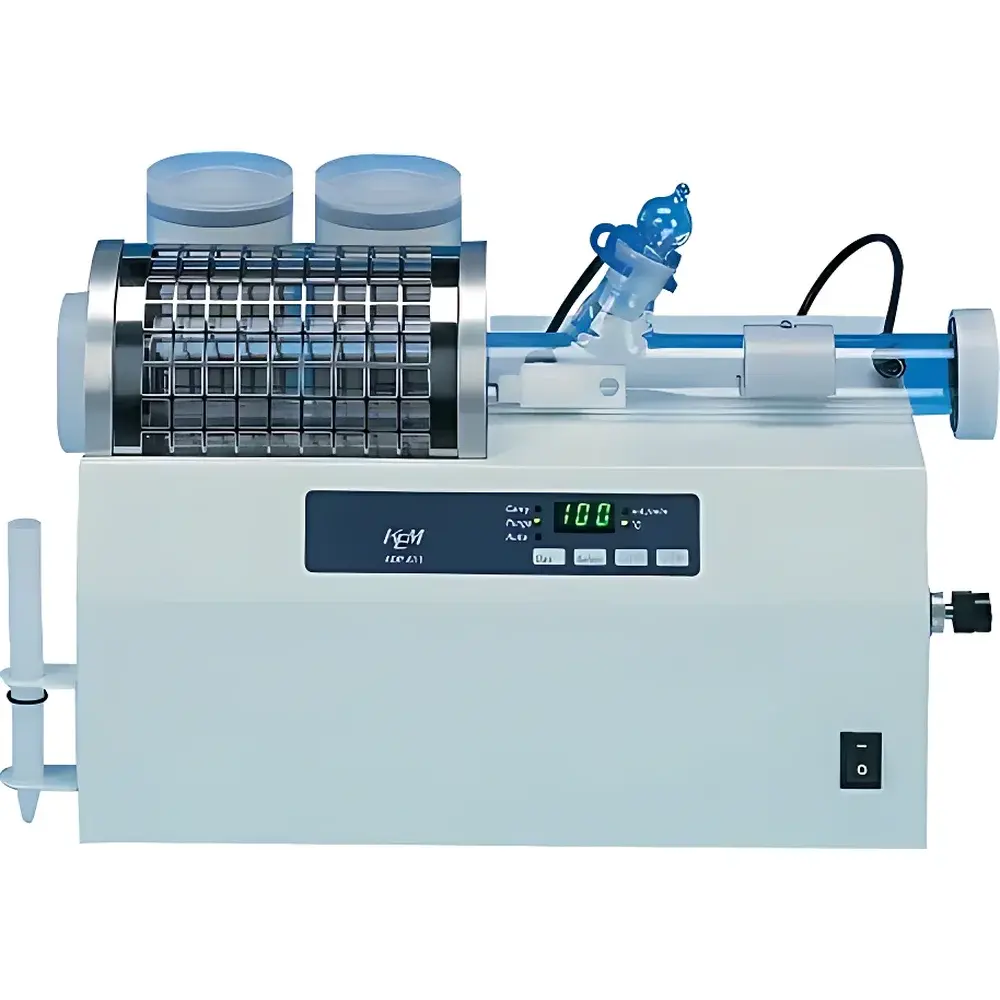
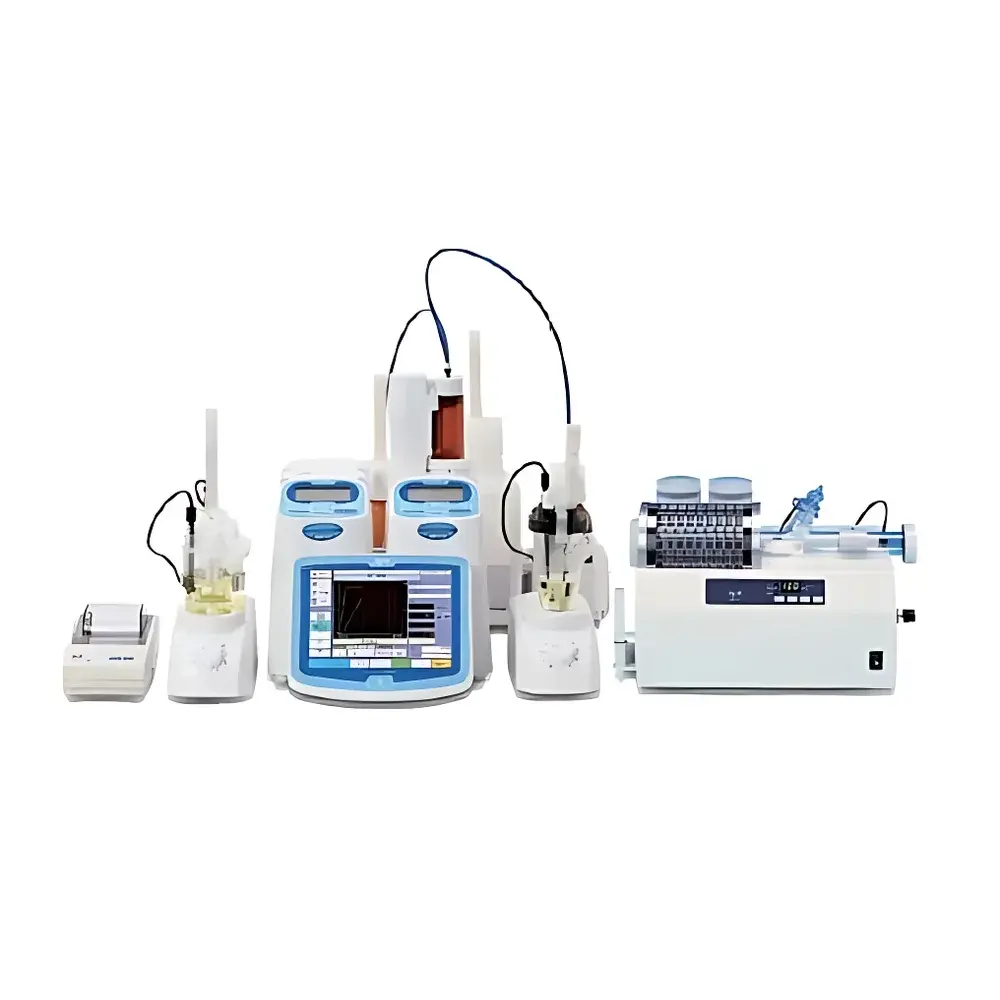
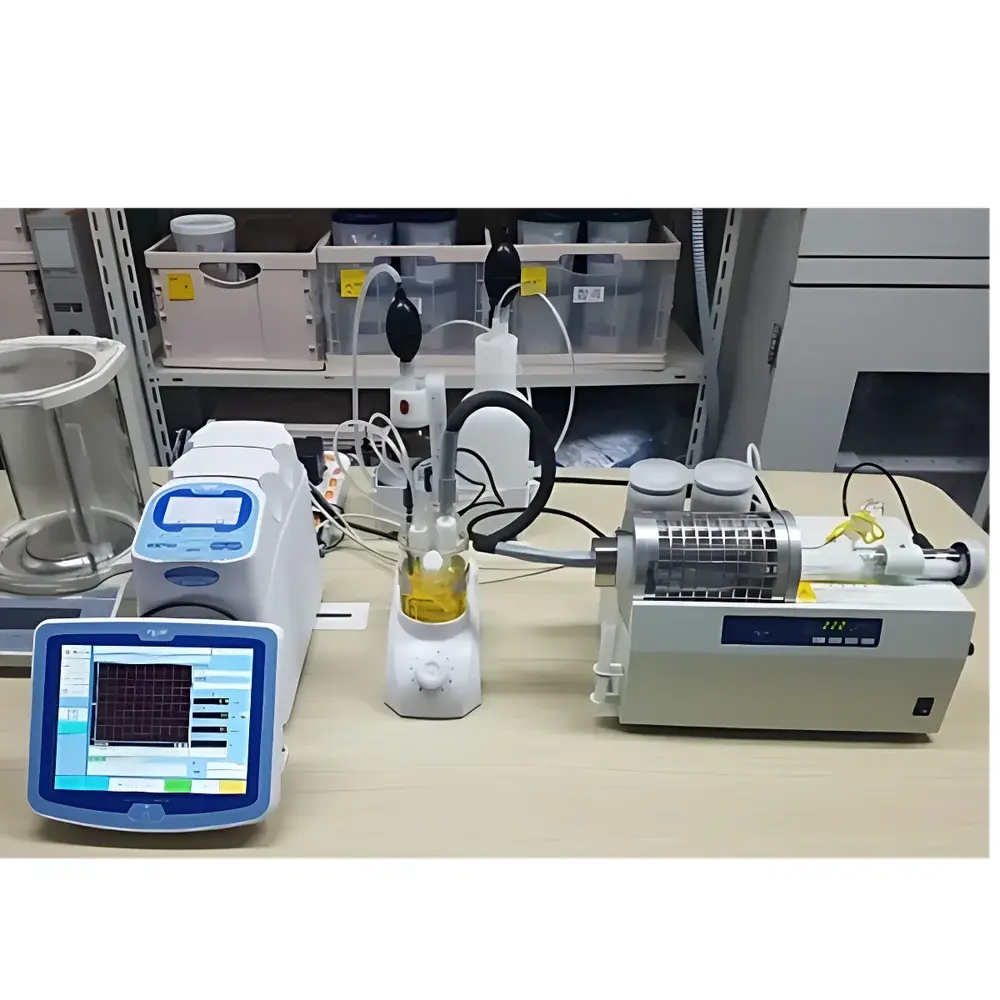
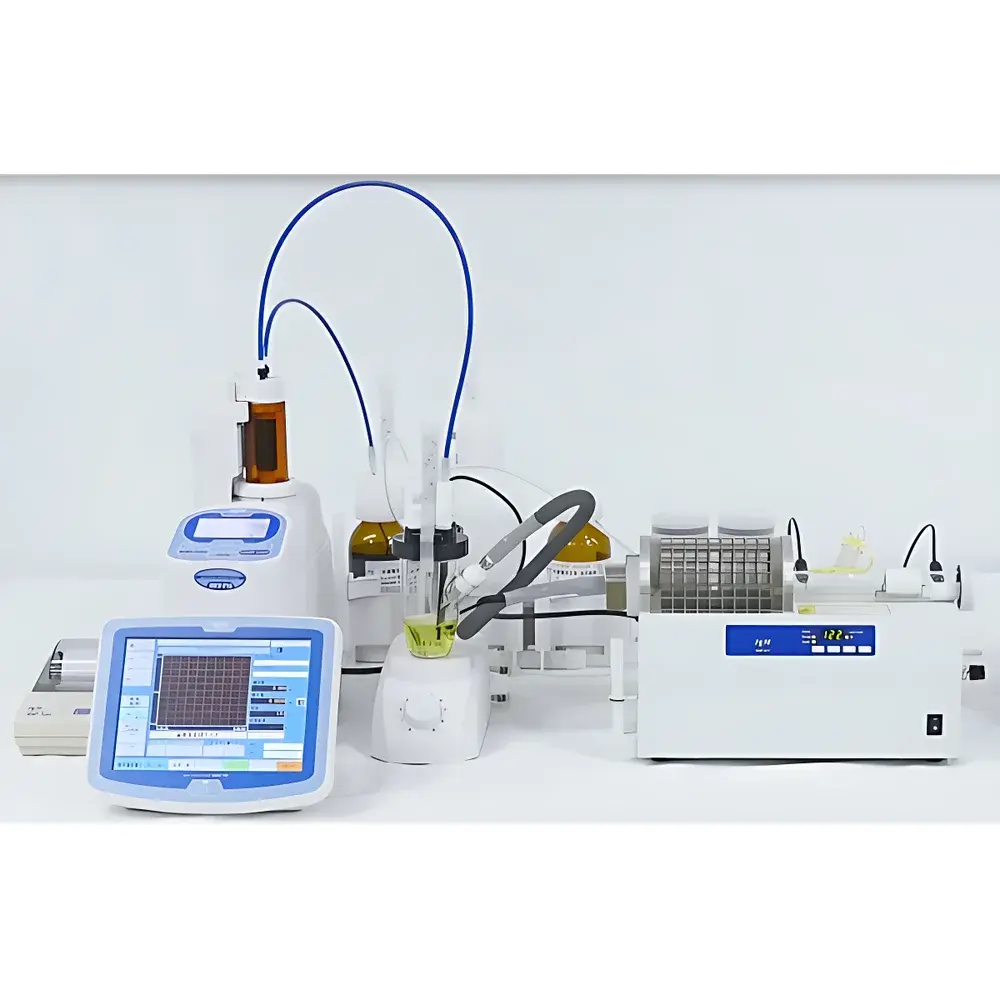
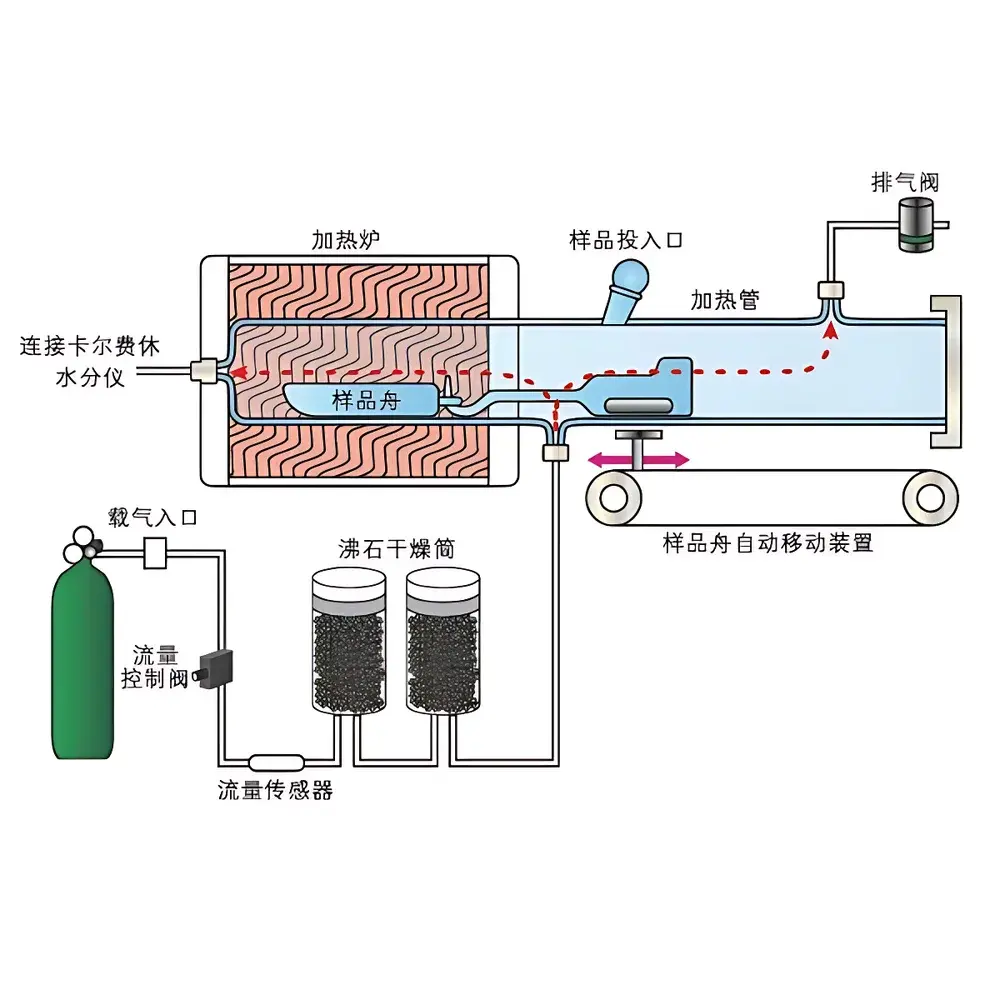
The KEM ADP-611 Karl Fischer Evaporator is a precision-engineered, thermally controlled sample heating module designed exclusively for integration with KEM’s volumetric and coulometric Karl Fischer moisture analyzers (e.g., MKV-710B, MKC-710B). It operates on the principle of thermal vaporization under inert gas flow—typically dry nitrogen or purified air—to quantitatively release bound, residual, or occluded water from solid, semi-solid, or matrix-interfering samples. The evolved water vapor is swept via heated transfer lines into the titration cell, where it reacts stoichiometrically with the Karl Fischer reagent (volumetric mode) or is electrolytically quantified at the anode (coulometric mode). This method eliminates direct sample introduction into the titration vessel, thereby preventing electrode fouling, reagent degradation, or side reactions caused by solvents, polymers, pigments, or reactive functional groups. The ADP-611 conforms rigorously to standardized thermal evaporation protocols defined in ISO 15512:2022 (plastics), ASTM D6869-21 (petrochemicals and polymers), and GB/T 45128–2023 (Chinese national standard for polymer moisture analysis), ensuring regulatory traceability and interlaboratory reproducibility.
Key Features
- Fully automated synchronization with KEM Karl Fischer titrators via Mini-DIN 8-pin interface—enabling coordinated temperature ramping, gas flow control, and titration initiation.
- Magnetic sample boat loading system minimizes operator exposure to ambient humidity and eliminates manual insertion errors.
- Transparent conductive glass heating tube (Pyrex® inner tube: Ø30 × 335 mm) allows real-time visual monitoring of sample decomposition, charring, or condensation behavior—critical for method development and troubleshooting.
- Auto-scan temperature profiling function identifies optimal evaporation temperature per sample matrix (50–300 °C range), avoiding thermal decomposition while ensuring complete water release.
- Simultaneous preheating of both sample boat and furnace tube reduces cycle time between analyses; typical turnaround is <90 seconds after initial stabilization.
- Heated transfer line (up to 150 °C) prevents condensation and water adsorption along the gas path—maintaining quantitative transport efficiency.
- Integrated safety monitoring: audible/visual alerts trigger if carrier gas flow drops below 70 mL/min or if furnace temperature deviates >±5 °C from setpoint.
Sample Compatibility & Compliance
The ADP-611 is validated for heterogeneous, non-volatile, or chemically reactive matrices that are incompatible with direct coulometric titration—including polyolefin pellets (PP, PE), engineering resins (PA6, PBT), pharmaceutical excipients (microcrystalline cellulose, lactose monohydrate), battery cathode materials (LiCoO₂, NMC), and catalyst supports (alumina, silica gels). Its design satisfies GLP/GMP documentation requirements: all operational parameters (temperature setpoint, gas flow rate, evaporation time, titration endpoint) are logged with timestamps and user IDs when paired with KEM’s dedicated software. The system supports 21 CFR Part 11-compliant audit trails when used with MKV/MKC series instruments equipped with optional security modules.
Software & Data Management
Control and data acquisition are managed through KEM’s proprietary *KEM Titration Software* (v3.2+), which provides full method scripting, multi-step temperature programming, and dynamic gas flow adjustment. Raw data—including real-time temperature curves, gas flow logs, titration curves, and endpoint detection algorithms (e.g., double potential jump, fixed delay)—are stored in .kem binary format and exportable to CSV or PDF. All measurement records include embedded metadata: instrument ID, operator login, calibration certificate IDs (for reagent titer, oven temperature sensor), and environmental conditions (lab temperature/humidity, if linked to external sensors). Electronic signatures and role-based access control align with ISO/IEC 17025:2017 clause 7.7 requirements for result validity assurance.
Applications
- Quality control of hygroscopic polymer granules prior to extrusion or injection molding.
- Moisture verification in lithium-ion battery active materials to prevent HF generation during cell assembly.
- Stability-indicating assays of lyophilized biopharmaceuticals per USP .
- Residual solvent quantification in API intermediates where water co-elutes in GC methods.
- Trace moisture analysis in electronic-grade solvents (e.g., NMP, DMF) per SEMI F57 standards.
- Research-scale dehydration kinetics studies using programmable temperature ramps and kinetic endpoint modeling.
FAQ
Is the ADP-611 compatible with non-KEM Karl Fischer titrators?
No—the ADP-611 requires native communication via KEM’s proprietary Mini-DIN 8-pin protocol for synchronized operation; third-party instruments lack firmware-level integration for temperature/gas/titration coordination.
What carrier gas purity is recommended?
Nitrogen ≥99.998% (oxygen <2 ppm, moisture <0.1 ppm) is strongly advised; compressed air must pass dual-stage desiccant + hydrocarbon traps to avoid reagent quenching.
Can the ADP-611 be used for volatile organic compound (VOC) analysis?
No—it is engineered solely for water-specific thermal release and detection; VOCs may interfere with KF reagent chemistry or generate false endpoints.
How often does the zeolite dryer require replacement?
Under continuous use at 200 °C and 150 mL/min flow, replace every 3–4 months; color-indicating zeolite (cat. #61-00258) signals saturation via blue-to-pink transition.
Does the system support method validation per ICH Q2(R2)?
Yes—linearity (1–1000 µg H₂O), accuracy (spike recovery 98.5–101.2%), repeatability (RSD <0.5% for n=6), and robustness (±2 °C temp, ±10 mL/min flow) are fully documentable using KEM’s validation templates.




