
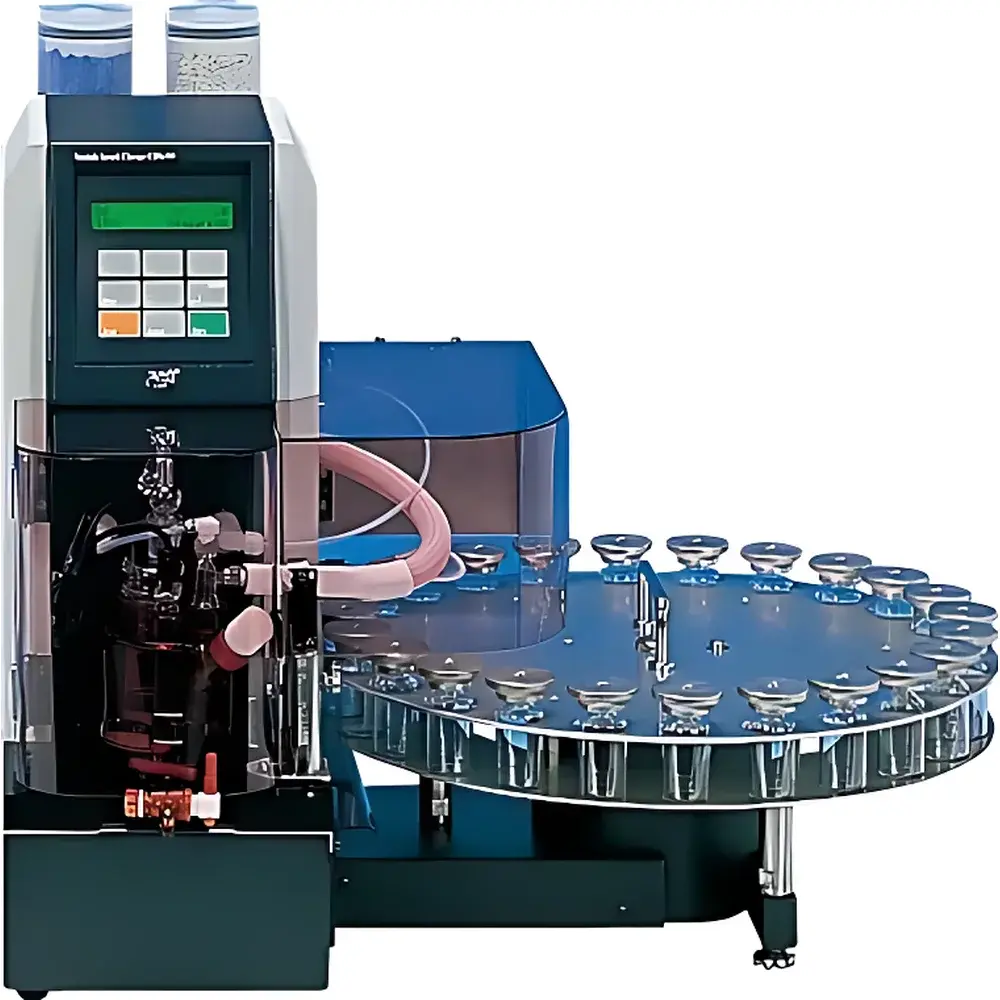
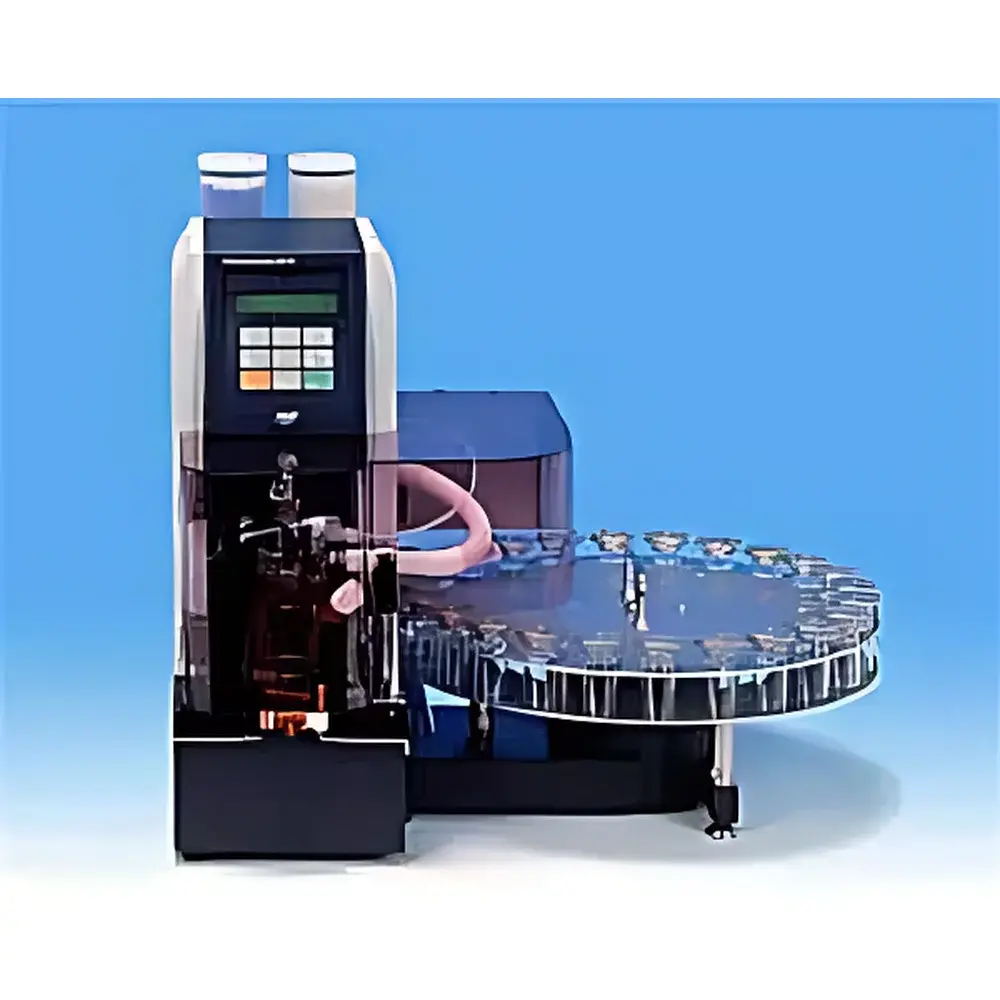
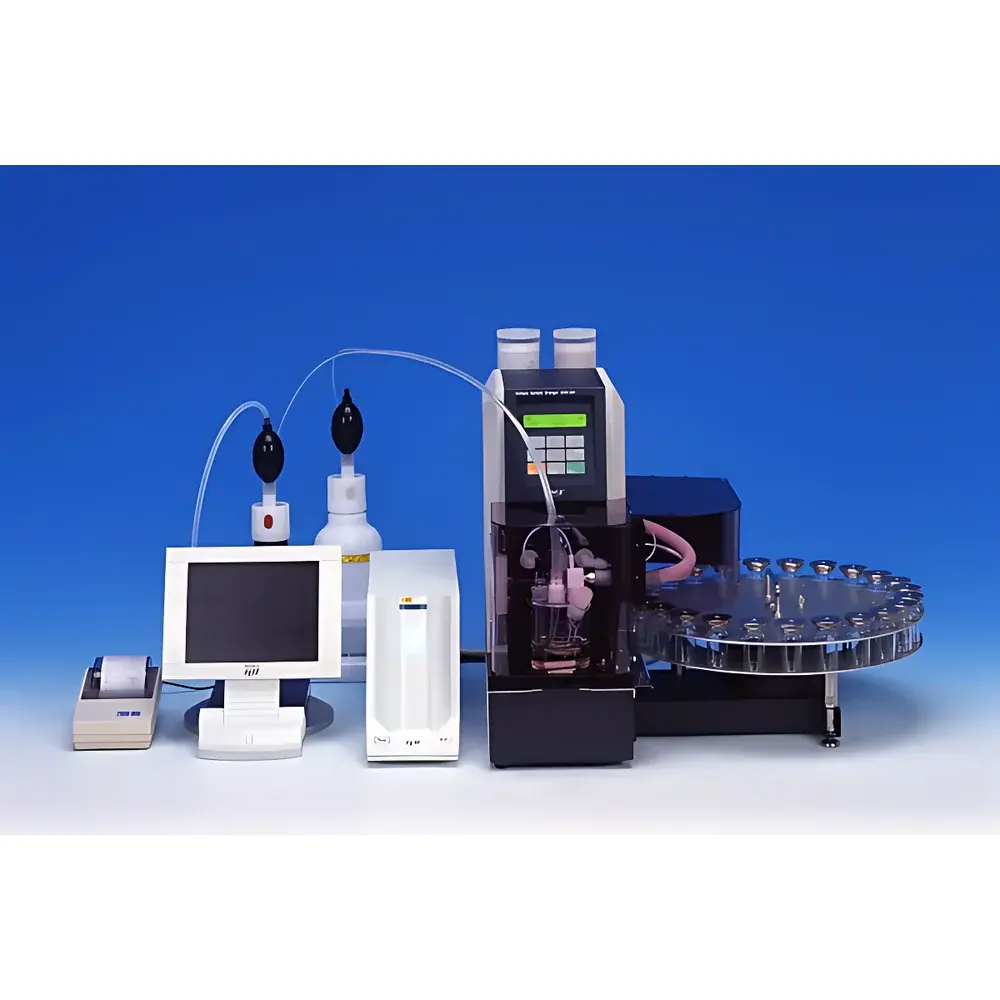
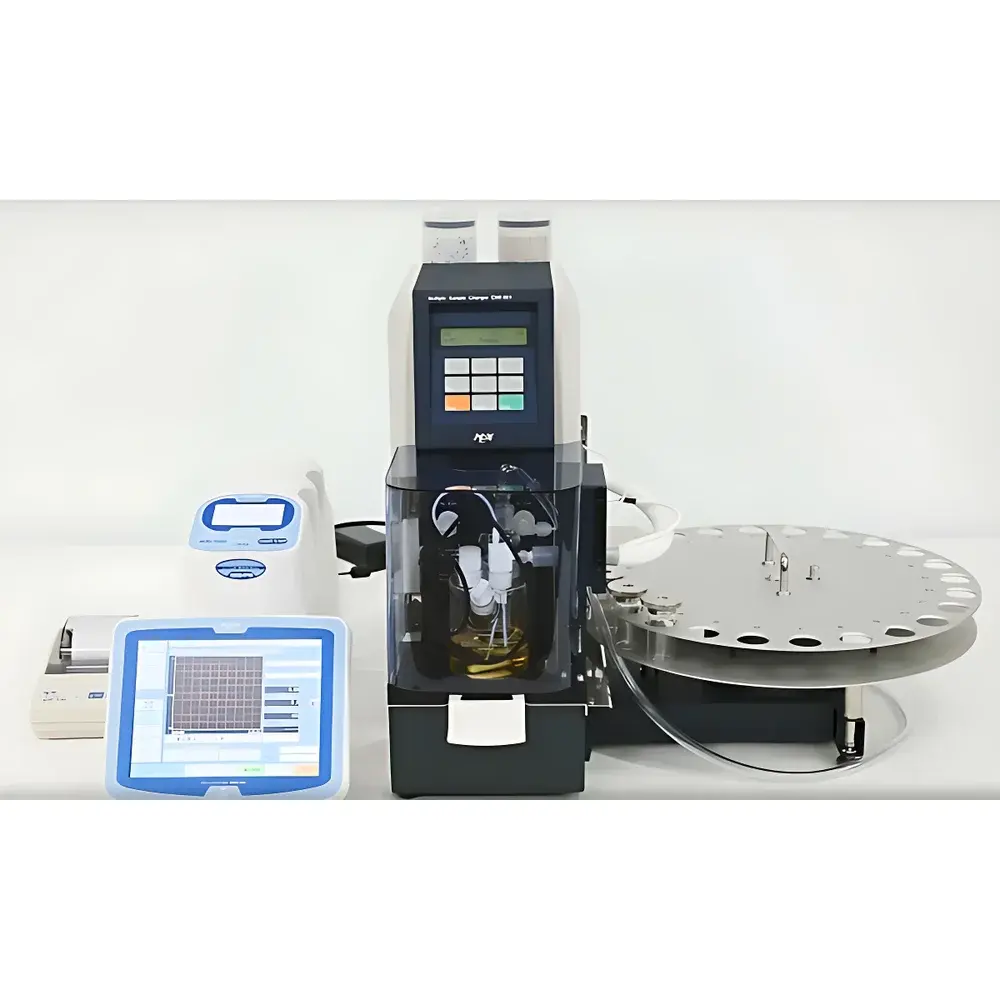
KEM CHK-501 Coulometric Karl Fischer Moisture Analyzer with Automated Heating Sample Changer
| Brand | KEM (Kyoto Electronics Manufacturing) |
|---|---|
| Origin | Japan |
| Manufacturer | Yes |
| Import Status | Imported |
| Model | CHK-501 |
| Titration Method | Fully Automated Coulometric Titration |
| Instrument Type | Coulometric Karl Fischer Moisture Analyzer |
| Measurement Resolution | 0.1 µg |
| Water Content Range | 10 µg – 300 mg |
| Accuracy | ≤0.3% RSD |
| Titration Control Precision | 0.1 µg |
| Sample Capacity | 24 positions |
| Heating Temperature Range | Ambient to 300 °C (individually programmable per sample) |
| Heater Type | Quartz Infrared Heater |
| Power Supply | AC 100–120 / 220–240 V, 50/60 Hz, ~100 W |
| Dimensions (W×D×H) | 452 × 400 × 362 mm |
| Weight | 20 kg |
Overview
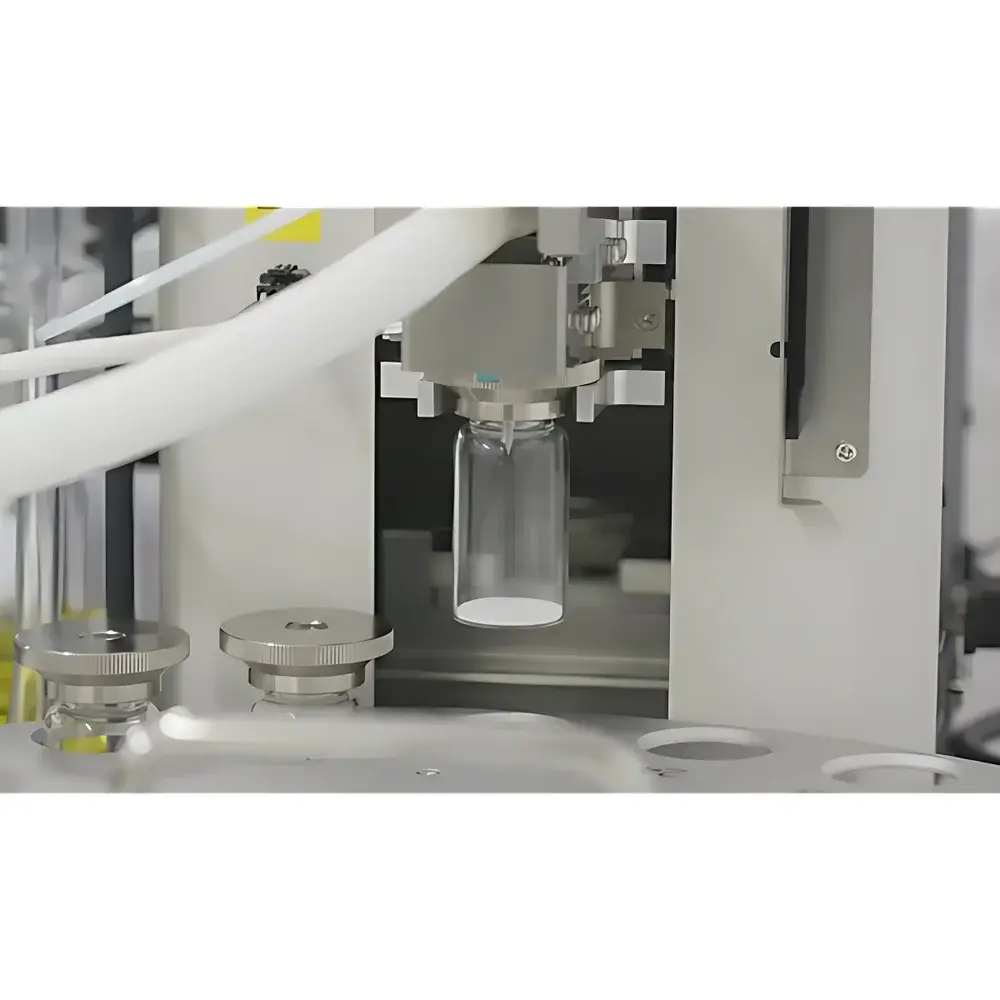
The KEM CHK-501 Coulometric Karl Fischer Moisture Analyzer with Automated Heating Sample Changer is an integrated, high-precision system engineered for trace-level water quantification in thermally labile, low-moisture, or solid-phase samples. It operates on the electrochemical principle of coulometric Karl Fischer titration—where iodine is generated *in situ* via controlled electrolysis of iodide ions in a reagent solution—and measures water content based on Faraday’s law. Unlike volumetric methods, coulometric detection delivers superior sensitivity and reproducibility below 100 µg of water, making it the reference method for pharmaceutical excipients, lithium battery cathode materials, polymers, and hygroscopic APIs. The CHK-501 uniquely combines this coulometric detection module with a dedicated 24-position automated heating oven that thermally extracts bound water prior to transfer into the titration cell via dry carrier gas (typically nitrogen or argon). This dual-module architecture eliminates manual handling errors, minimizes ambient moisture ingress, and ensures full compliance with pharmacopeial requirements for residual solvent and moisture analysis.
Key Features
- Intelligent sample cup recognition sensor ensures unambiguous identification and automatic termination of endpoint detection per vial.
- Comprehensive self-diagnostic routine validates instrument status—including electrode integrity, reagent stability, cell seal integrity, keypad responsiveness, and power supply regulation—prior to each run.
- Auto-power-down functionality activates after completion of the final sample sequence, reducing standby energy consumption and enhancing long-term system reliability.
- Fully synchronized operation with KEM’s coulometric titrators (e.g., MKC-710 series): all parameters—including heating ramp rate, hold time, extraction temperature, carrier gas flow, and titration thresholds—are configured remotely from the host titrator’s touchscreen interface.
- Precise pre-heating desiccation mode allows conditioning of empty sample vials under inert atmosphere before loading, eliminating background contribution from vial adsorbed moisture.
- Independent temperature programming for each of the 24 sample positions supports heterogeneous batch analysis—e.g., simultaneously processing polyamide pellets at 180 °C and silica gel at 120 °C without cross-contamination or thermal carryover.
Sample Compatibility & Compliance
The CHK-501 accommodates standard 10 mL or 20 mL glass vials sealed with PTFE-lined aluminum caps, compatible with both volatile and non-volatile matrices including powders, granules, films, resins, and lyophilized solids. Its heating chamber employs quartz infrared emitters for rapid, uniform thermal transfer and minimal thermal lag—critical for achieving quantitative release of tightly bound water without decomposition. All operational protocols align with ISO 8533:2017 (Karl Fischer titration), ASTM E203–22 (Standard Test Method for Water Using Volumetric or Coulometric Karl Fischer Titration), and USP “Water Determination.” When paired with KEM’s GLP-compliant titrators, the system supports 21 CFR Part 11 audit trails, electronic signatures, and user-access-controlled method libraries—enabling full traceability in regulated QC environments.
Software & Data Management
Control and data acquisition are managed through KEM’s proprietary Multi-Titrator Software (MTS), which provides real-time monitoring of extraction curves (moisture evolution vs. time), titration current profiles, and endpoint stability indicators. Raw data—including raw coulombs consumed, calculated water mass (µg), % w/w, RSD across replicates, and system diagnostic logs—are stored in encrypted SQLite databases with timestamped metadata. Export options include CSV, PDF analytical reports, and XML formats compliant with LIMS integration standards. User-defined report templates support automatic inclusion of instrument ID, analyst name, calibration certificate numbers, and SOP version references—facilitating internal audits and regulatory submissions.
Applications
- Pharmaceutical quality control: Residual moisture in freeze-dried biologics, tablet granules, and inhalation powders per ICH Q5C guidelines.
- Battery materials: Quantification of trace water in LiCoO₂, NMC, and solid-state electrolytes where ppm-level H₂O induces HF formation and cell degradation.
- Polymers & composites: Moisture content in PET, PA6, and epoxy prepolymers prior to extrusion or molding—directly impacting melt viscosity and hydrolytic stability.
- Food & feed: Water activity correlation studies in dehydrated herbs, dairy powders, and pet food ingredients using standardized extraction conditions.
- Chemical intermediates: Verification of drying efficiency for sulfonyl chlorides, acid anhydrides, and organometallic catalysts highly sensitive to hydrolysis.
FAQ
Can the CHK-501 be used with non-KEM coulometric titrators?
No—the CHK-501 requires hardware-level handshake communication and synchronized timing protocols exclusive to KEM’s MKC-series coulometric titrators. Third-party integration is not supported.
Is helium suitable as a carrier gas?
Yes, but nitrogen or argon is preferred due to lower cost, higher safety margin, and equivalent transport efficiency for water vapor under standard flow rates (20–50 mL/min).
How often must the drying tube be regenerated?
Regeneration frequency depends on ambient humidity and daily sample volume; typical service intervals range from 1–3 weeks under continuous use. Visual color change of the indicating silica gel (blue → pink) signals saturation.
Does the system support method validation per ICH Q2(R2)?
Yes—MTS software enables systematic assessment of specificity, linearity (10–300 µg), accuracy (spike recovery), precision (repeatability and intermediate precision), and robustness (±2 °C temperature variation, ±5% flow rate deviation).
What maintenance is required for the quartz heater assembly?
Annual visual inspection for quartz tube discoloration or microfractures is recommended. Cleaning is limited to compressed air purge of external surfaces; no solvents or abrasives may contact the emitter.



