
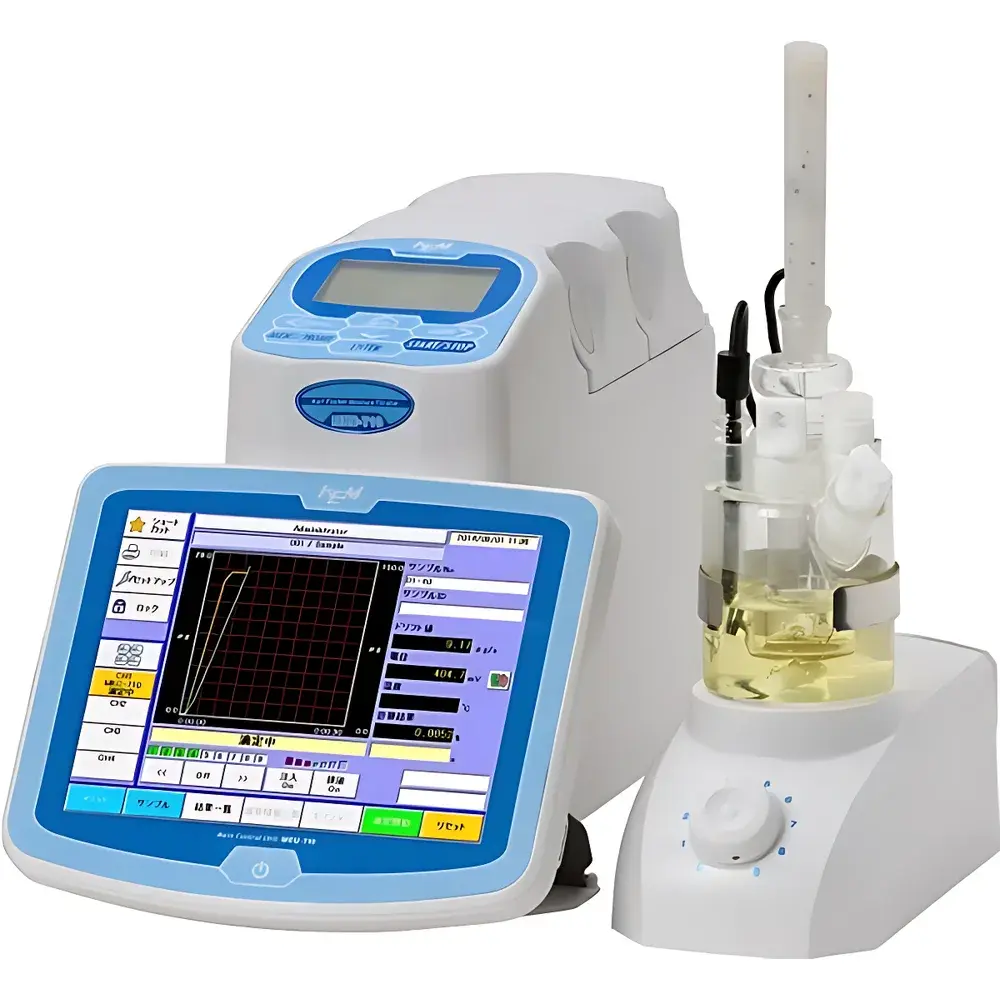
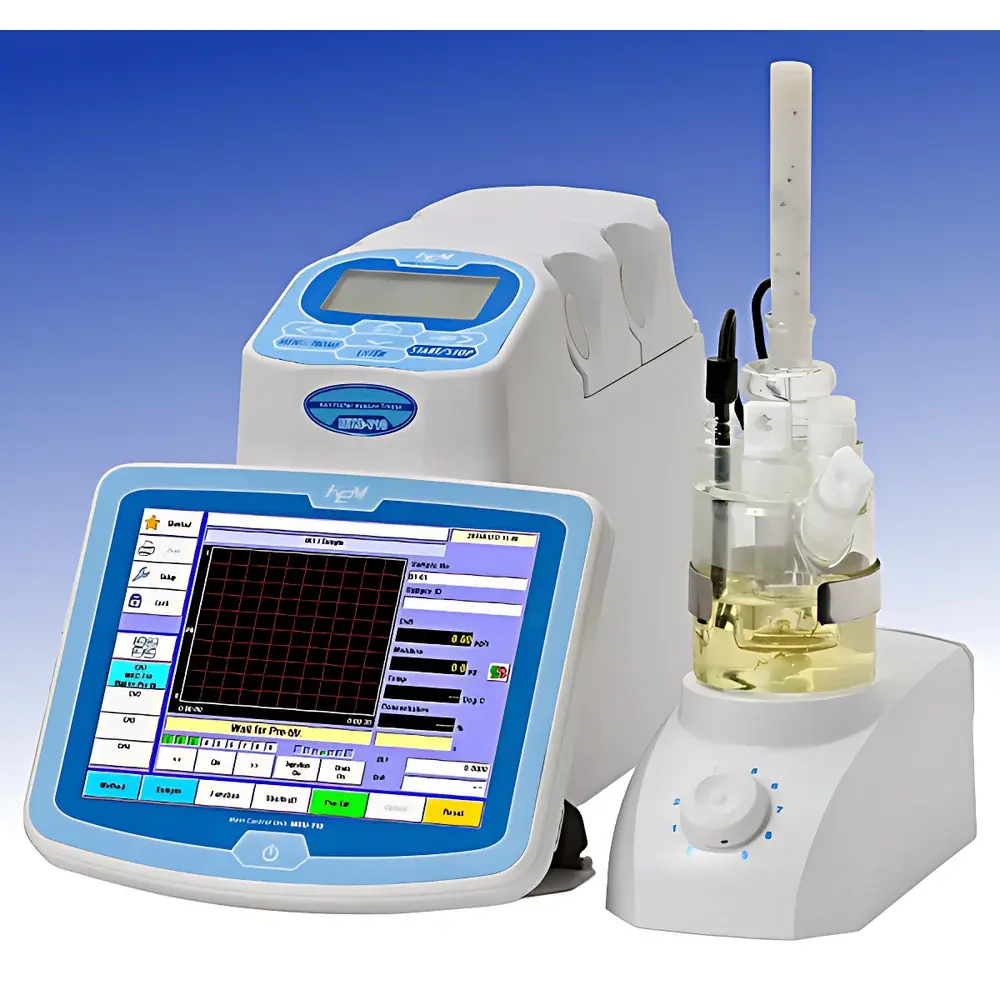
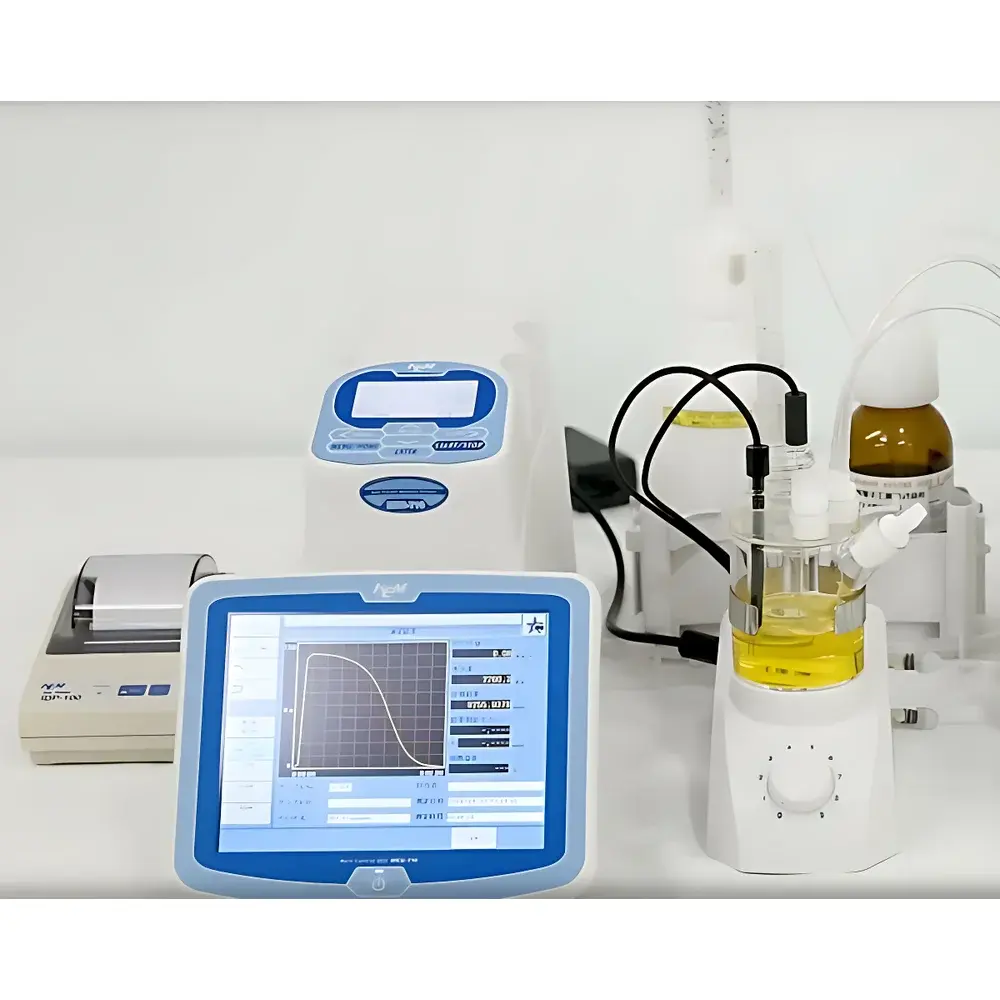
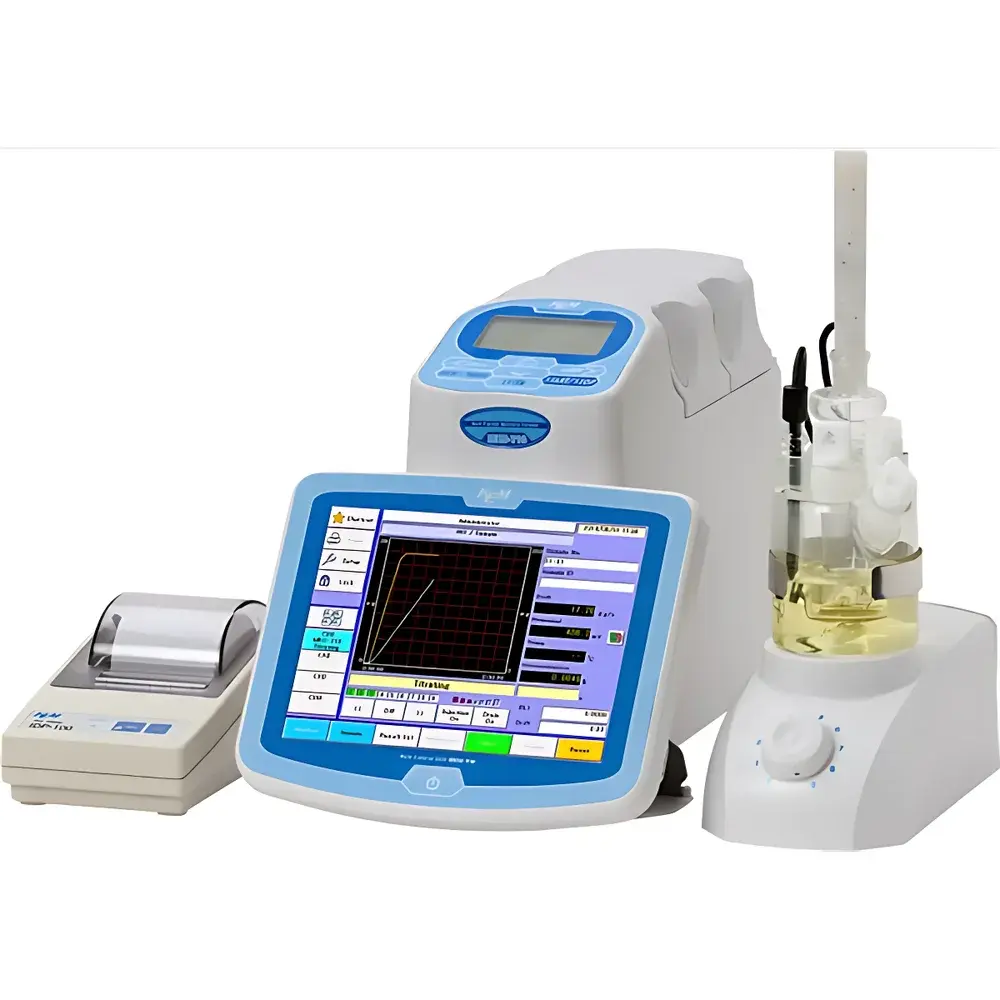
KEM MKC-710S Premium Coulometric Karl Fischer Moisture Analyzer
| Brand | KEM (Kyoto Electronics Manufacturing) |
|---|---|
| Origin | Japan |
| Manufacturer Type | Original Equipment Manufacturer (OEM) |
| Instrument Type | Coulometric Karl Fischer Titrator |
| Measurement Resolution | 0.1 µg |
| Water Content Range | 1 µg – 300 mg H₂O (extendable to 1000 mg) |
| Accuracy | ≤0.3% RSD (n=10) |
| Minimum Electrolytic Generation Rate | 2.6 mg H₂O/min |
| Repeatability | <0.3% RSD |
| Cell Configuration | Membrane-type or Membrane-free Coulometric Titration Cell |
| Titration Control Precision | ±0.3% |
| Power Supply | AC 100–240 V, 50/60 Hz |
| Data Storage Capacity | 500 sample records |
| Compliance | GLP-ready with operator/group logging, reagent tracking, performance verification, and time-stamped audit trail |
Overview
The KEM MKC-710S Premium Coulometric Karl Fischer Moisture Analyzer is a fully automated, high-precision coulometric titration system engineered for trace-level water quantification in demanding industrial and research laboratories. It operates on the fundamental electrochemical principle of the Karl Fischer reaction: water reacts stoichiometrically with iodine generated in situ via controlled electrolysis of iodide at the anode. The instrument continuously monitors the electrochemical endpoint using dual-platinum electrodes configured in an AC polarization mode, detecting minute changes in current response as the solution transitions from iodine-deficient to iodine-excess state. This coulometric approach eliminates volumetric reagent delivery errors and enables absolute quantification—where the total charge passed (Q = I × t) directly correlates to water mass via Faraday’s law (1 mole H₂O ≡ 2 × 96,485 C). Designed for compliance-critical environments, the MKC-710S supports full traceability under GLP and GMP frameworks, including user-authenticated operation, reagent lot tracking, and time-stamped performance verification logs.
Key Features
- 8.4-inch full-color capacitive touchscreen interface with intuitive graphical navigation and real-time titration curve visualization
- Wireless Bluetooth connectivity between MCU-710S controller and titration unit, enabling safe remote operation in fume hoods or hazardous areas
- Detachable MCU-710S controller with optional battery pack for portable, on-site measurement control
- Multi-tier user permission management (administrator/operator/technician) to prevent unauthorized configuration changes
- Dual-cell compatibility: supports both membrane-separated and membrane-free coulometric cells for optimized performance across volatile and non-volatile samples
- High-speed electrolytic generation at 2.6 mg H₂O/min—reducing analysis time without compromising endpoint stability or reproducibility
- Onboard PDF report generation with customizable templates; direct export to USB storage devices (U-disk, thermal/A4 printers, barcode scanners)
- Integrated RS-232C and USB host interfaces for seamless connectivity with analytical balances, KF ovens (e.g., ADP-611), autosamplers (CHK-501), and LIMS systems
Sample Compatibility & Compliance
The MKC-710S accommodates a broad spectrum of sample matrices—including hydrocarbons, solvents, polymers, pharmaceutical actives, agrochemical formulations, battery electrolytes, and food-grade oils—without requiring solvent dilution in most cases. Its coulometric architecture ensures minimal reagent consumption (anolyte: ≤150 mL; catholyte: 5 mL per cell), reducing operational cost and waste disposal burden. The system meets essential regulatory requirements for analytical instrumentation: it supports 21 CFR Part 11-compliant electronic signatures when paired with validated data management software, maintains full audit trails for all critical events (method edits, calibration, sample runs), and facilitates routine performance checks per ASTM E203 and ISO 760 standards. Built-in GLP functionality includes operator ID registration, group-based access control, reagent expiration tracking, and automated calibration verification logs.
Software & Data Management
Data integrity is ensured through a dual-layer storage architecture: 500 sample results are retained internally with timestamp, operator ID, method name, cell type, and raw titration parameters. All data—including real-time current vs. time curves, drift profiles, and endpoint stabilization metrics—can be exported via USB to external drives in CSV or encrypted PDF format. The system supports up to 120 user-defined methods, each configurable for endpoint criteria (drift-based stabilization or fixed-duration titration), electrolysis current settings, and post-measurement calculations (e.g., % w/w, ppm, mg/g). External communication protocols (RS-232C) enable bidirectional data exchange with laboratory balances (auto-weight import) and KF ovens (ADP-611) for fully automated thermogravimetric moisture release profiling.
Applications
This analyzer delivers reliable water quantification in applications where sensitivity below 10 µg is essential. Typical use cases include residual moisture analysis in lyophilized pharmaceuticals (per USP ), water content validation in lithium-ion battery electrolytes (IEC 62620), bromine index determination in petrochemical feedstocks (ASTM D1159), moisture specification testing of polymer resins prior to extrusion (ISO 15512), and quality control of hygroscopic fine chemicals in agrochemical manufacturing. Its ability to interface with the ADP-611 moisture evaporator allows precise thermal desorption optimization—automatically selecting optimal heating temperature and ramp rate based on sample volatility profiles.
FAQ
What distinguishes coulometric from volumetric Karl Fischer titration?
Coulometric KF generates iodine electrochemically within the titration cell, enabling absolute quantification without standardized titrant calibration. It is ideal for samples containing ≤1000 µg water. Volumetric KF uses pre-standardized iodine-containing solutions and is preferred for higher water concentrations.
Can the MKC-710S analyze solid or viscous samples directly?
Yes—when coupled with the ADP-611 KF oven, solids, pastes, and high-boiling-point liquids are heated under inert gas flow; evolved water vapor is swept into the titration cell for coulometric detection.
Is method validation support available for regulated industries?
The instrument includes built-in tools for system suitability testing (SST), blank determination, repeatability assessment (n ≥ 10), and linearity verification across its 1 µg–300 mg range—fully aligned with ICH Q2(R2) and USP general chapters.
How does the dual-platinum AC polarization endpoint detection improve reliability?
Unlike DC-based methods susceptible to electrode polarization drift, AC polarization minimizes surface fouling and provides stable baseline current monitoring—critical for low-drift, high-reproducibility endpoint detection in trace moisture analysis.
What maintenance routines are recommended for long-term accuracy?
Daily: verify anolyte/catholyte levels and cell cleanliness; weekly: perform blank titration and check drift stability (<10 µg/min); quarterly: validate with certified water standards (e.g., 1.00 mg/g sodium tartrate dihydrate) and inspect electrode surfaces for passivation.






