
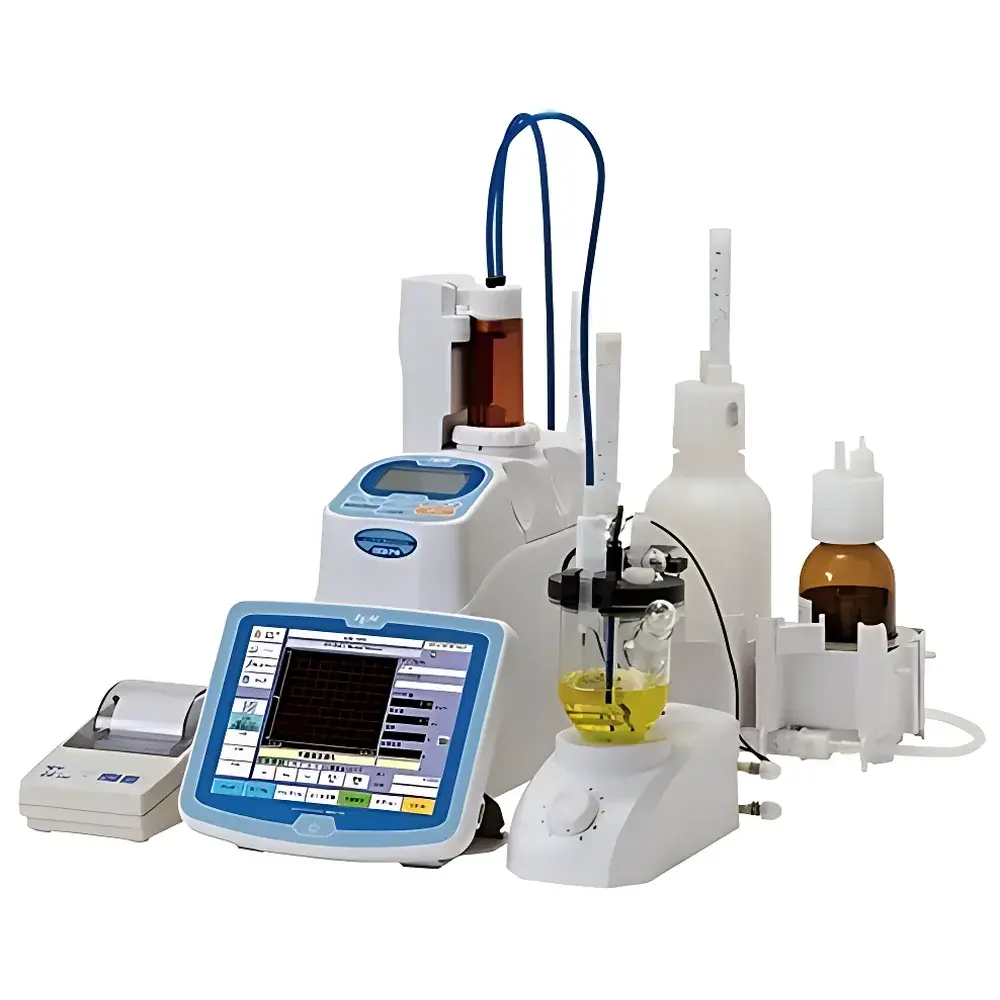
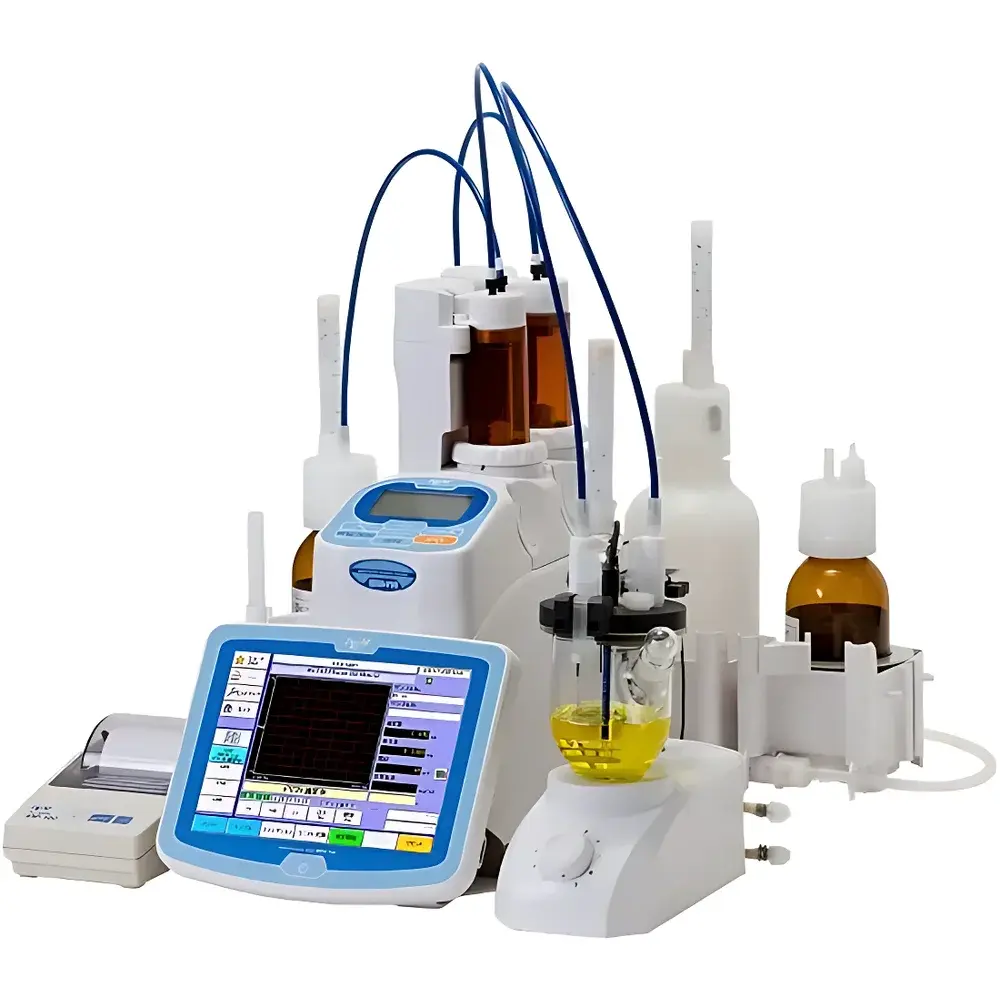
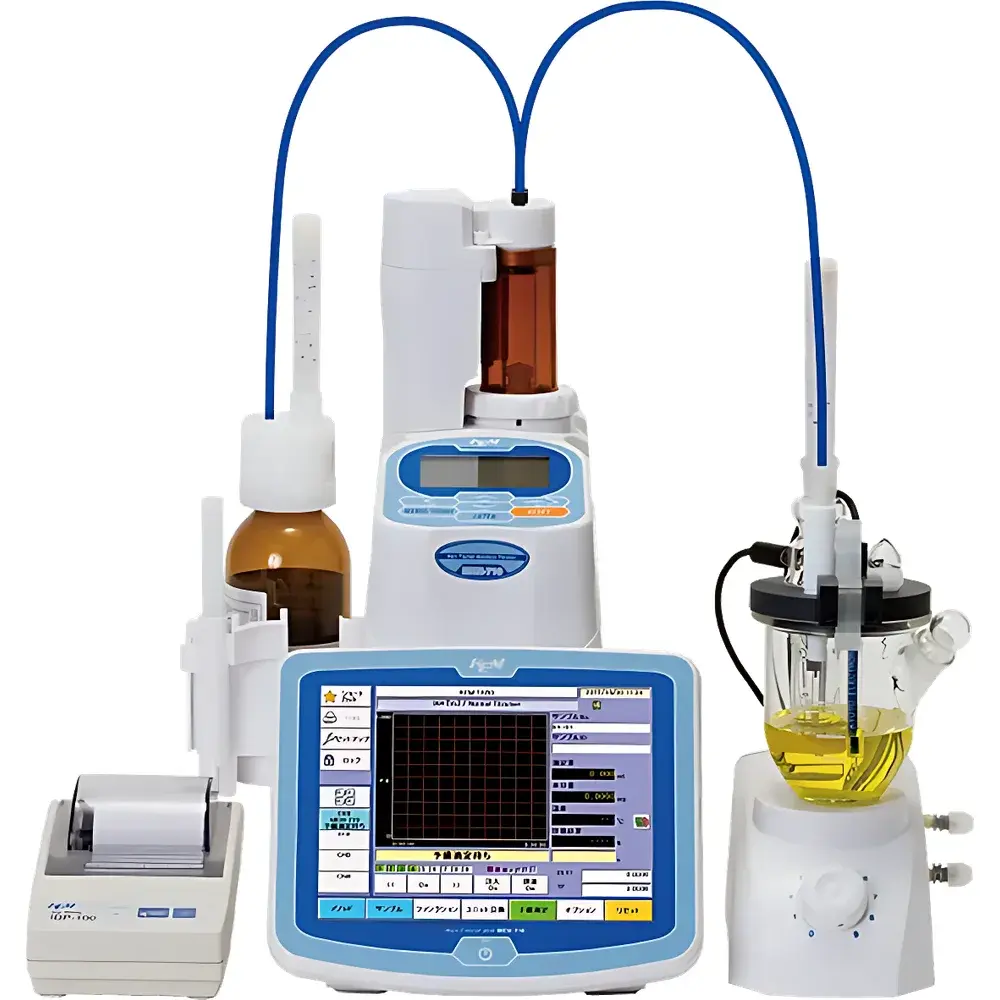
KEM MKH-710M Hybrid Volumetric-Coulometric Karl Fischer Moisture Titrator
| Brand | KEM (Kyoto Electronics Manufacturing) |
|---|---|
| Origin | Japan |
| Manufacturer Type | Original Equipment Manufacturer (OEM) |
| Product Category | Imported Instrument |
| Model | MKH-710M |
| Titration Mode | Fully Automated |
| Instrument Type | Dual-Mode Karl Fischer Moisture Analyzer (Volumetric & Coulometric) |
| Measurement Resolution | 0.1 µg |
| Water Content Range | 1 µg – 500 mg H₂O |
| Accuracy | ±0.3% RSD (n=10) |
| Minimum Dispensing Increment | 0.1 µg |
| Repeatability | ±0.3% RSD |
| Burette Control Accuracy | ±0.3% |
| Power Supply | AC 100–240 V, 50/60 Hz |
| Data Storage Capacity | 500 measurement records |
Overview
The KEM MKH-710M Hybrid Volumetric-Coulometric Karl Fischer Moisture Titrator is an advanced, dual-principle analytical platform engineered for trace-to-bulk water quantification in diverse industrial and research matrices. It integrates two complementary Karl Fischer (KF) methodologies—volumetric titration and coulometric electrolysis—within a single, unified cell architecture, enabling seamless, algorithm-driven mode selection based on real-time water concentration in the sample. The instrument operates on the fundamental electrochemical stoichiometry of the KF reaction (I₂ + SO₂ + H₂O + 3RN + CH₃OH → 2RN·HI + RN·HSO₄CH₃), where volumetric mode delivers precise reagent dosing via high-precision piston burettes, while coulometric mode generates iodine *in situ* via controlled electrolysis of iodide at the anode. This hybrid architecture eliminates the need for manual method switching or separate instruments, supporting continuous, unattended analysis across a dynamic range from 1 ppm to 100% w/w water content without dilution or reconfiguration.
Key Features
- Hybrid Titration Algorithm: Automatically selects and concurrently executes volumetric and coulometric KF modes within one measurement cycle, optimizing speed and accuracy across wide moisture concentration gradients.
- Electrolytic Titer Calibration System: Patented on-board electrolytic calibration eliminates reliance on certified water standards; performs fully automated titer verification using internal electrolysis, ensuring traceable, operator-independent validation per ISO 8539 and ASTM E203 protocols.
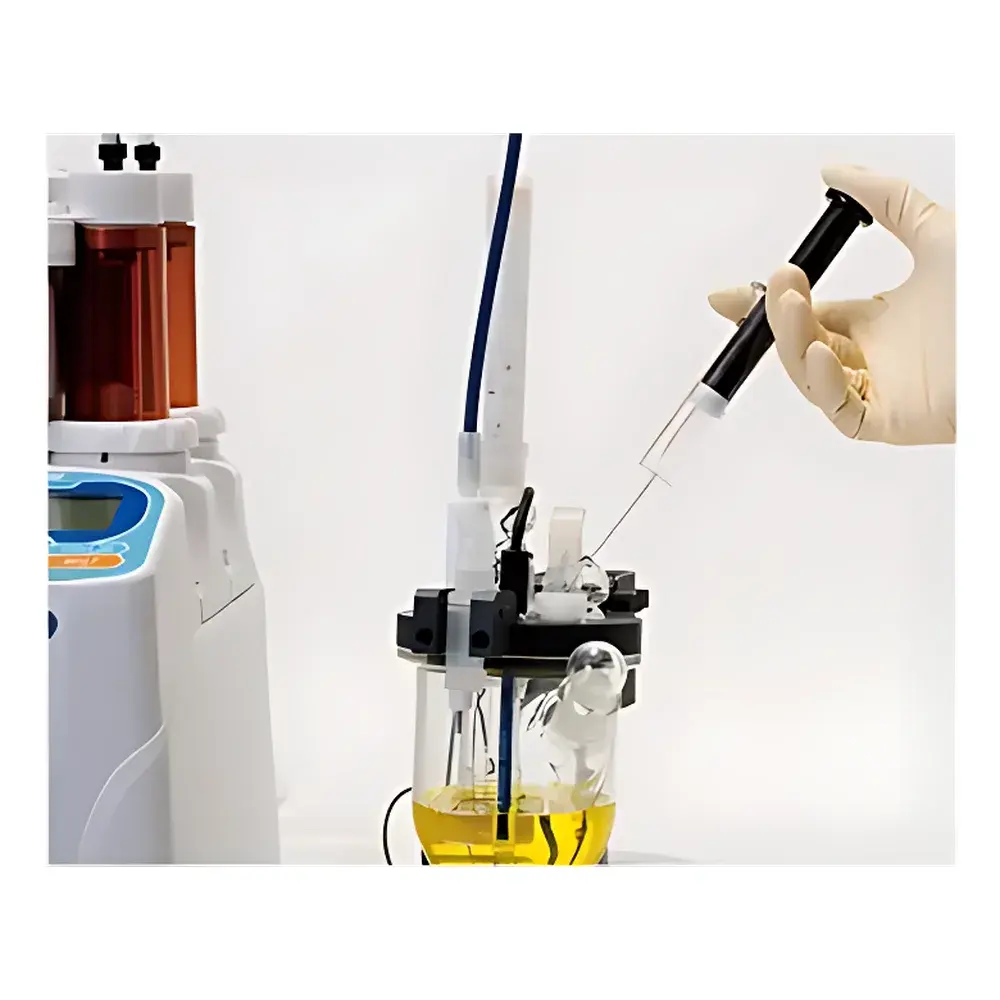
- Integrated Dual-Function Cell: Single sealed titration vessel accommodates both volumetric reagent addition and coulometric iodine generation, with removable membrane-separated generator electrodes for easy maintenance and reduced cross-contamination risk—especially critical for viscous, oily, or particulate-laden samples.
- Smart Burette Modules: Two independently addressable burettes mount simultaneously on the measurement unit; each contains embedded EEPROM storing reagent identity, titer, expiry, and lot information, enabling full audit trail compliance per FDA 21 CFR Part 11.
- Multi-Unit Scalability: One master control unit synchronizes up to four independent measurement units, allowing parallel analysis of heterogeneous sample sets while maintaining centralized method management and data aggregation.
- Wireless Bluetooth Interface: Secure, low-latency communication between master and slave units minimizes cable clutter and enhances operator safety in fume hood or glovebox environments.
- Modular Electrode Design: Generator electrode features replaceable, cleanable diaphragm membranes—facilitating routine decontamination and extending service life when analyzing aggressive or residue-forming matrices.
- Triple-Mode Flexibility: Users select volumetric, coulometric, or hybrid operation dynamically per method, all executed in the same cell without hardware reconfiguration.
- Compliant Data Handling: USB port supports encrypted method and result export to external media; built-in user authentication and role-based access control enforce ALCOA+ principles for electronic records.
Sample Compatibility & Compliance
The MKH-710M is validated for analysis of pharmaceutical actives and excipients (per USP and EP 2.5.12), petrochemicals (ASTM D6304, D4928), polymers, lithium battery electrolytes, food ingredients, and fine chemicals. Its sealed cell design meets GLP/GMP environmental requirements, and its software architecture supports full 21 CFR Part 11 compliance—including electronic signatures, audit trails, and change control logs. All calibration events, titer verifications, reagent replacements, and electrode maintenance are time-stamped, user-logged, and stored with immutable metadata. The system conforms to ISO/IEC 17025 documentation standards for testing laboratories and supports IQ/OQ/PQ documentation packages for regulated site qualification.
Software & Data Management
The 8.4-inch color touchscreen interface runs KEM’s proprietary KF-Expert software, supporting 120 user-defined methods with customizable endpoints, drift thresholds, and titration kinetics. Language options include English, Japanese, Chinese, and Korean. Data storage retains 500 complete analytical records—including raw current/voltage traces, titration curves, titer history, and environmental parameters—with timestamped operator IDs. Export formats include CSV and PDF for LIMS integration. RS-232C (×4), USB, SS-USB, and LAN interfaces enable networked deployment, remote diagnostics, and automated report generation. Software updates are delivered via secure HTTPS channel with cryptographic signature verification.
Applications
Typical use cases include moisture determination in lyophilized biologics (≤100 ppm), residual solvent analysis in API synthesis intermediates, water content verification in anhydrous solvents (e.g., acetonitrile, THF), quality control of hygroscopic excipients (e.g., lactose, mannitol), and specification testing of lithium hexafluorophosphate (LiPF₆) electrolyte solutions. The hybrid method significantly reduces analysis time for samples spanning multiple orders of magnitude in water content—such as polymer pellets transitioning from ambient humidity exposure to post-drying states—without sacrificing precision or requiring method revalidation.
FAQ
How does the hybrid method improve measurement efficiency compared to standalone volumetric or coulometric systems?
It dynamically allocates analytical resources: volumetric titration rapidly consumes bulk water, then coulometric mode takes over for ultra-trace quantification—reducing total cycle time by up to 60% while maintaining ≤0.3% RSD across the full 1 µg–500 mg range.
Is electrolytic titer calibration traceable to national standards?
Yes—the system performs gravimetrically referenced electrolytic calibration using KEM’s certified reference electrolyte solution; results are logged with uncertainty estimates aligned with ISO/IEC 17025 Clause 6.4.
Can the MKH-710M be integrated into a laboratory automation workflow?
Fully compatible with third-party autosamplers via RS-232C or TTL I/O; supports SCPI command set for programmable initiation, status polling, and result retrieval.
What maintenance intervals are recommended for the generator electrode membrane?
KEM recommends inspection after every 500 analyses or monthly—whichever occurs first—and replacement if visual discoloration, swelling, or increased background current (>10 µA) is observed.
Does the system support audit trail review for regulatory inspections?
Yes—audit trail is immutable, searchable by date, user, event type, or method ID, and exports in PDF/A-1b format compliant with EU Annex 11 and FDA expectations.






