
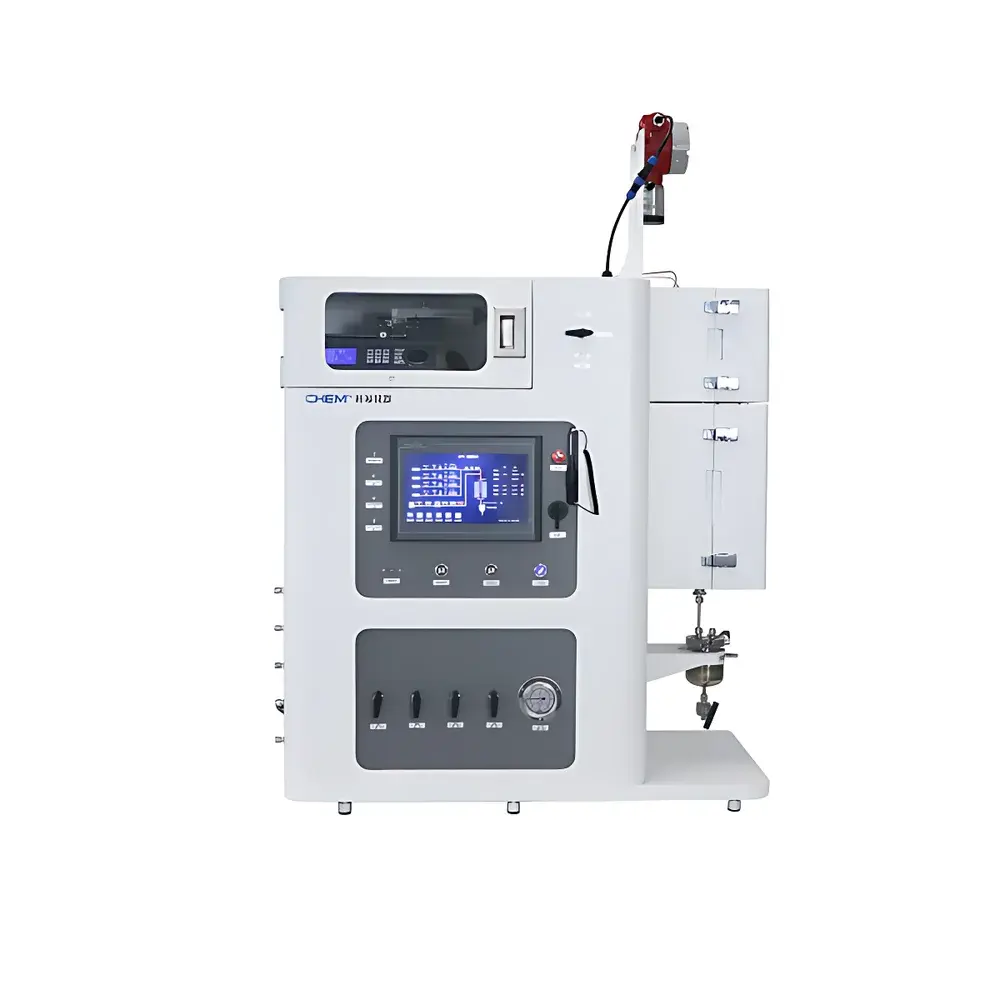
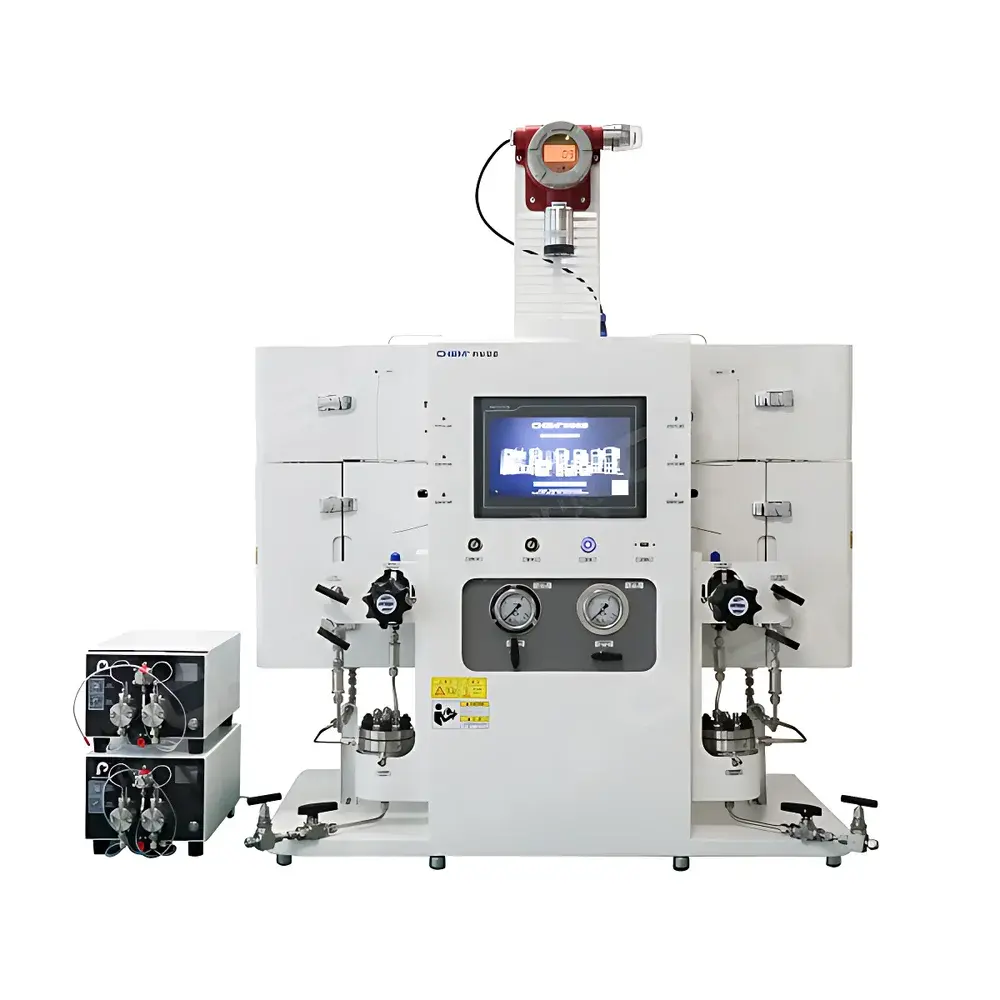
Kemi Instruments CFRD Desktop-Scale Fixed-Bed Reactor System
| Brand | Ahkemi |
|---|---|
| Origin | Anhui, China |
| Manufacturer Type | Authorized Distributor |
| Country of Origin | China |
| Model | CFRD |
| Price Range | USD 1,400 – 14,000 (FOB) |
| Maximum Operating Pressure | 10 MPa (100 bar) |
| Maximum Operating Temperature | 800 °C |
| Catalyst Bed Volume | 0.5–5 mL |
Overview
The Kemi Instruments CFRD Desktop-Scale Fixed-Bed Reactor System is an engineered platform for catalytic reaction evaluation under continuous-flow conditions. Based on the fundamental principles of heterogeneous catalysis and plug-flow reactor (PFR) kinetics, the system enables precise control over temperature, pressure, residence time, and feed composition—critical parameters for kinetic modeling, catalyst screening, deactivation studies, and process intensification. Designed for laboratory-scale R&D in academic, industrial, and contract research settings, the CFRD integrates a compact fixed-bed reactor core with distributed control architecture, minimizing system dead volume (< 2 mL typical) to ensure high mass transfer fidelity and temporal resolution during transient experiments. Its desktop footprint (approx. 65 × 100 × 90 cm) supports integration into fume hoods or controlled-environment labs without requiring floor-mounting infrastructure.
Key Features
- Modular architecture enabling configuration flexibility for gas/liquid feeds (1–4 independent streams), corrosion-resistant reactor materials (316L stainless steel, Hastelloy C-276, Inconel 600), and optional high-pressure accessories (e.g., back-pressure regulators up to 42 MPa)
- Integrated DCS-grade control system built on Siemens S7-1200 PLC and 10.2-inch MCGS HMI touchscreen, supporting both manual operation and automated sequence execution
- Real-time visualization of process variables—including temperature profiles (±1 °C accuracy), pressure trends (0–10 MPa range), and mass flow rates (gas: ±1.5% FS accuracy; liquid: ±1% control precision)—via dynamic P&ID-style interface and historical trend logging
- Multi-layer safety framework: programmable parameter limits, automatic shutdown on thermal/pressure excursion, mechanical relief valves (ASME-certified), and fail-safe solenoid isolation valves
- Thermally optimized reactor zone with customizable isothermal section length (standard: 150 mm; extendable per specification) and uniform axial heating profile (±2 °C over 80% of bed length at 800 °C)
Sample Compatibility & Compliance
The CFRD accommodates solid catalysts in pellet, extrudate, or monolithic form within its 0.5–5 mL fixed-bed cartridge. It supports co-fed gaseous reactants (H₂, CO, CH₄, NH₃, O₂, etc.) and liquid-phase feeds (water, alcohols, hydrocarbons, aqueous solutions) under single- or multi-phase conditions. All wetted components comply with ASTM A269 (stainless tubing) and ASTM B575 (nickel-alloy forgings) standards. The system design adheres to ISO 13849-1 for functional safety and incorporates hardware interlocks aligned with IEC 61511. While not pre-certified for GMP environments, the architecture supports 21 CFR Part 11-compliant data integrity when paired with validated third-party SCADA software and audit-trail-enabled historian modules.
Software & Data Management
The embedded MCGS-based HMI provides local data acquisition at 1 Hz sampling rate, with CSV export capability for offline kinetic analysis (e.g., Arrhenius fitting, Langmuir-Hinshelwood modeling). Optional OPC UA server integration allows bidirectional communication with external LIMS, ELN, or chromatography data systems (e.g., Agilent OpenLab, Thermo Fisher Chromeleon). Raw sensor data—including thermocouple voltages, pressure transducer outputs, and MFC pulse counts—is timestamped and stored with metadata (operator ID, experiment tag, calibration status). Data retention follows GLP-aligned practices: immutable logs, version-controlled configuration files, and user-access-level permissions (admin/operator/viewer).
Applications
- Catalyst activity/selectivity benchmarking across temperature/pressure space (e.g., Fischer-Tropsch synthesis, ammonia decomposition, CO₂ hydrogenation)
- Long-duration stability testing (≥100 h) with periodic online GC/FID analysis for coke formation or sintering assessment
- Membrane-assisted reaction studies (e.g., H₂-selective Pd alloy membranes integrated downstream of reforming beds)
- Reaction engineering validation: comparison of experimental conversion profiles against Aspen Custom Modeler or COMSOL Multiphysics PFR simulations
- Process development support for scale-up to pilot-scale trickle-bed or microchannel reactors
FAQ
What reactor tube materials are available for corrosive service?
Standard configurations use ASTM A269 TP316L tubing; Hastelloy C-276 and Inconel 600 variants are available upon request for halide- or sulfur-containing feeds.
Can the system interface with third-party gas chromatographs?
Yes—via analog 4–20 mA or digital RS-485 Modbus RTU output; trigger signals for auto-injection and peak integration are configurable.
Is remote monitoring supported out-of-the-box?
Local Ethernet connectivity is standard; remote access requires firewall-configured VPN tunneling and optional cloud telemetry gateway (sold separately).
What is the minimum detectable catalyst deactivation rate this system can resolve?
Under optimized GC-coupled operation with 5 mL bed volume and 0.1 mL/min liquid feed, reproducible activity drift ≥0.5% per hour is quantifiable with 95% confidence (n=3 replicates).
Does the system include calibration certificates for flow and temperature sensors?
Factory calibration reports (traceable to NIST standards) are supplied with each unit; on-site recalibration services are available through authorized Kemi technical partners.



