
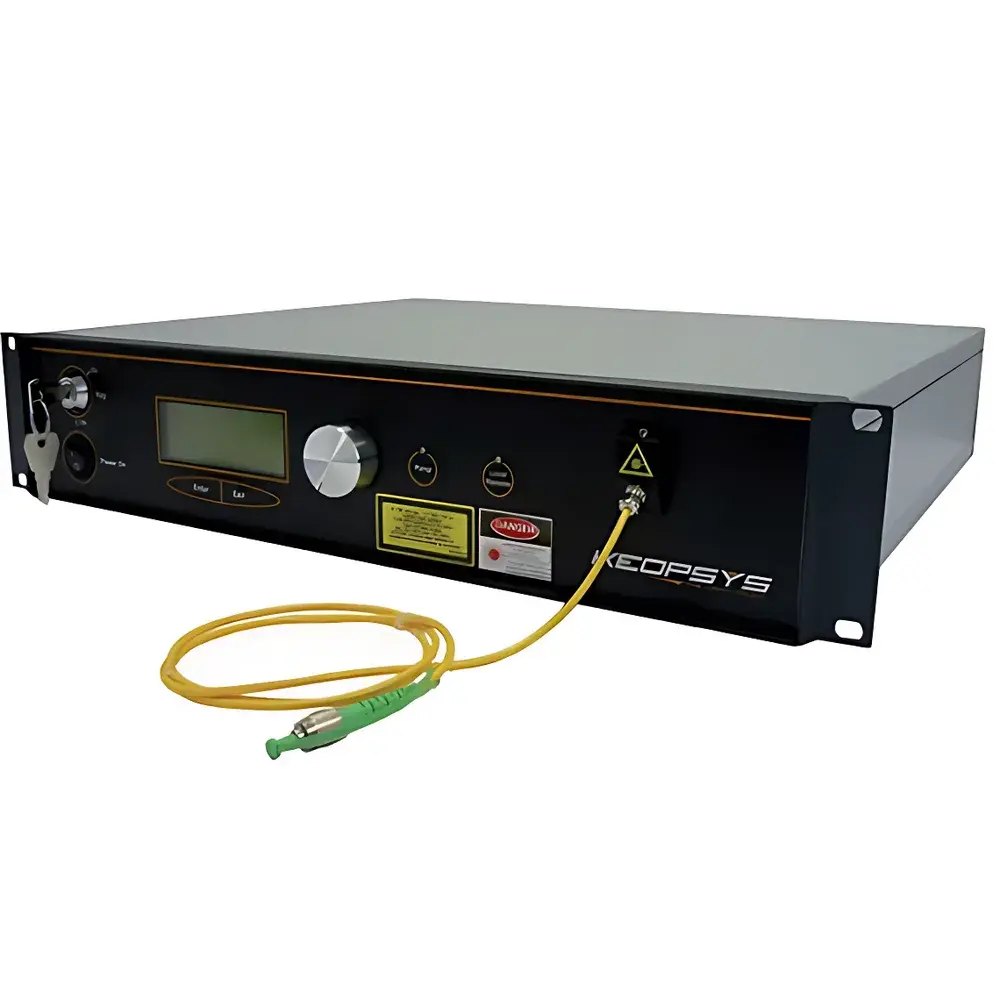
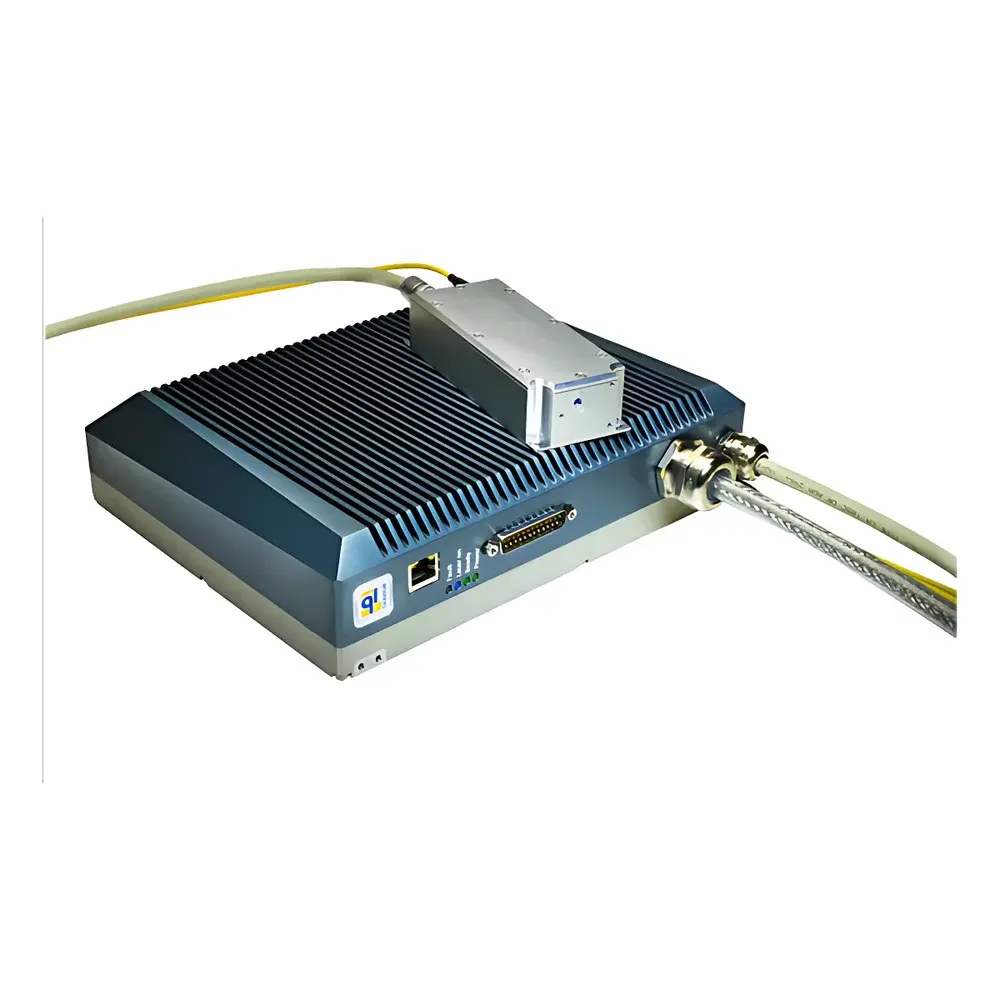
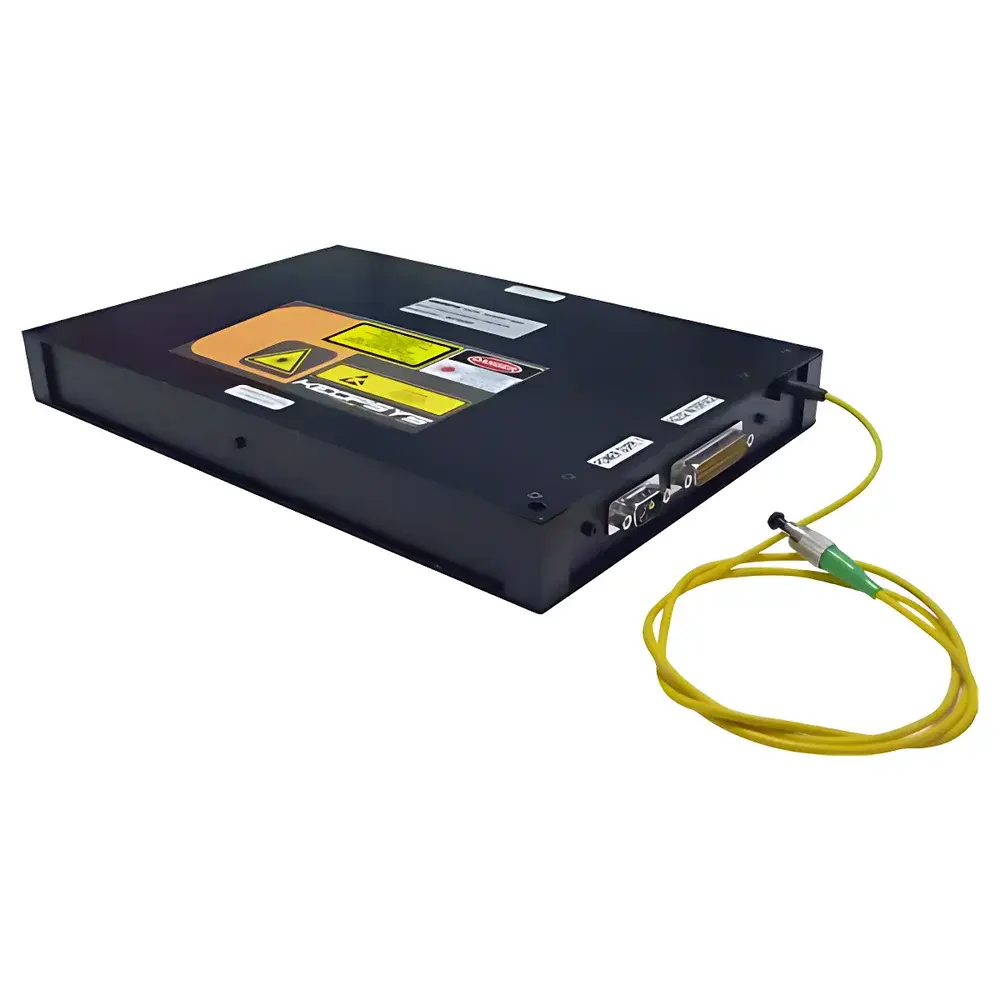
Keopsys GIGA & TERA Series CW Narrow-Linewidth Fiber Lasers
| Brand | Keopsys |
|---|---|
| Origin | France |
| Type | Import |
| Models | CVFL-GIGA, CYFL-GIGA, CRFL-TERA, CEFL-TERA, CTFL-TERA |
| Wavelength Range | 520–590 nm (green), 1060–2050 nm (NIR) |
| Output Power | up to 3 W (520–590 nm), up to 20 W (1083 nm), up to 30 W (1060–2050 nm) |
| Linewidth | ~GHz (GIGA series), ~THz / sub-nm (TERA series) |
| Beam Quality | Diffraction-limited (M² < 1.1) |
| SMSR | >50 dB |
| Stability | <±0.5% RMS power fluctuation over 8 h |
| Operating Temperature | 15–35 °C |
| Cooling | Conductive + optional air/water |
| Compliance | CE, RoHS, IEC 60825-1:2014 Class 4 Laser Product |
Overview
The Keopsys GIGA and TERA Series are industrial-grade continuous-wave (CW) narrow-linewidth fiber lasers engineered for high-stability, low-noise operation in demanding scientific and industrial applications. Designed and manufactured in France, these lasers employ polarization-maintaining (PM) all-fiber architectures with integrated Bragg grating stabilization and active thermal management. The GIGA Series delivers GHz-level optical linewidths—typically 0.5–3 GHz—optimized for applications requiring moderate coherence length (e.g., 10–30 cm) while maintaining robustness against ambient vibration and thermal drift. In contrast, the TERA Series achieves THz-level spectral purity (<100 GHz, corresponding to sub-nanometer linewidths in the 1–2 µm band), enabling long-coherence-length interferometry, high-resolution spectroscopy, and seed-source applications for MOPA amplifiers. Both series operate without external water cooling in standard configurations and feature fully integrated control electronics with analog/digital modulation interfaces.
Key Features
- Diffraction-limited beam quality (M² < 1.1) across all models, ensuring optimal coupling into single-mode fibers and high-numerical-aperture optics.
- Exceptional short- and long-term power stability: <±0.5% RMS over 8 hours at constant ambient temperature; <±1% over 24 hours with ±2 °C ambient variation.
- High side-mode suppression ratio (SMSR) >50 dB, minimizing parasitic lasing and ensuring spectral purity critical for heterodyne detection and coherent imaging.
- Passive and active thermal stabilization architecture eliminates sensitivity to environmental vibration and air currents—validated per ISO 10110-7 mechanical shock and IEC 60068-2-64 vibration standards.
- No consumables or scheduled maintenance required; lifetime >50,000 hours under nominal operating conditions (IEC 62282-3-100 reliability protocol).
- Comprehensive safety compliance: certified to IEC 60825-1:2014 Class 4 laser product requirements, including interlock-ready TTL enable/disable, emission indicator, and key-controlled operation.
Sample Compatibility & Compliance
The GIGA and TERA lasers are compatible with standard PM980, SMF-28, and HI1060 fiber pigtails (FC/APC or FC/PC connectors). All units conform to EU Directive 2014/30/EU (EMC), 2011/65/EU (RoHS), and carry CE marking. Optical output meets EN 60825-1:2014 safety classification requirements, with full documentation provided for lab safety audits and GLP-compliant facility integration. For regulated environments—including medical device R&D labs and pharmaceutical analytical development—the lasers support optional firmware logging of operational parameters (output power, diode current, heatsink temperature) traceable to NIST-traceable calibration sources.
Software & Data Management
Keopsys provides the KeoControl™ GUI (Windows/Linux/macOS) with real-time monitoring of laser status, power setpoint control (0–100% via analog 0–5 V or digital RS-232/USB), and programmable ramping profiles. All devices implement a non-volatile event log storing timestamped warnings, thermal alerts, and power deviation events (>±2% threshold). Optional firmware upgrade enables 21 CFR Part 11–compliant audit trail functionality—including user authentication, electronic signatures, and immutable parameter change history—for use in FDA-regulated QC/QA workflows. Remote operation is supported via TCP/IP (Modbus TCP or custom API) for integration into LabVIEW, Python-based automation suites, or MES systems.
Applications
- Super-resolution microscopy: GIGA-series green lasers (532 nm, 561 nm) serve as stable excitation sources for STED, RESOLFT, and MINFLUX systems where GHz linewidth balances coherence length and pulse compatibility.
- Medical imaging & OCT: TERA-series 1060 nm and 1310 nm lasers provide high-brightness, low-phase-noise seeding for swept-source OCT engines requiring >10 mm coherence length and <0.01 dB/km polarization-dependent loss tolerance.
- Fiber amplifier pumping: TERA 1550 nm and 2050 nm models deliver >25 W CW power with <0.3 nm spectral width—ideal for pumping Er/Yb-doped and Tm-doped amplifiers in LIDAR and free-space communications.
- Optical component testing: GHz and THz linewidth variants enable precise characterization of wavelength-selective devices (AWGs, thin-film filters, FBGs) via tunable laser source (TLS) emulation with <1 pm wavelength repeatability.
- Atomic physics: 1083 nm GIGA lasers meet linewidth and power stability requirements for metastable helium (He*) magneto-optical traps; 780 nm and 852 nm variants available on request per customer-specific cavity design.
FAQ
What is the typical coherence length of the GIGA Series at 1083 nm?
For a 2 GHz linewidth at 1083 nm, the theoretical coherence length is approximately 15 cm in free space (calculated via Lc = c / (π·Δν)). Measured values in controlled environments consistently exceed 12 cm.
Can the TERA Series be frequency-stabilized to an external reference cavity?
Yes—models equipped with the optional “FS” suffix include a low-noise piezo-tuned fiber Bragg grating and analog feedback input (±5 V) compatible with commercial Pound-Drever-Hall lock electronics.
Is water cooling mandatory for 30 W TERA operation?
No—30 W models are designed for conductive cooling with a baseplate interface (thermal resistance <0.15 K/W); water cooling is optional and only recommended for continuous-duty operation above 40 °C ambient.
Do these lasers support analog modulation at frequencies beyond 100 kHz?
All models support analog modulation from DC to 500 kHz (–3 dB bandwidth); higher-frequency RF modulation (up to 2 GHz) requires external electro-optic modulators and is not implemented internally.
Are OEM versions available with customized wavelengths or packaging?
Yes—Keopsys offers tailored variants including hermetically sealed butterfly packages, benchtop OEM modules with integrated drivers, and wavelength options between 520 nm and 2050 nm under NDA-supported development programs.





