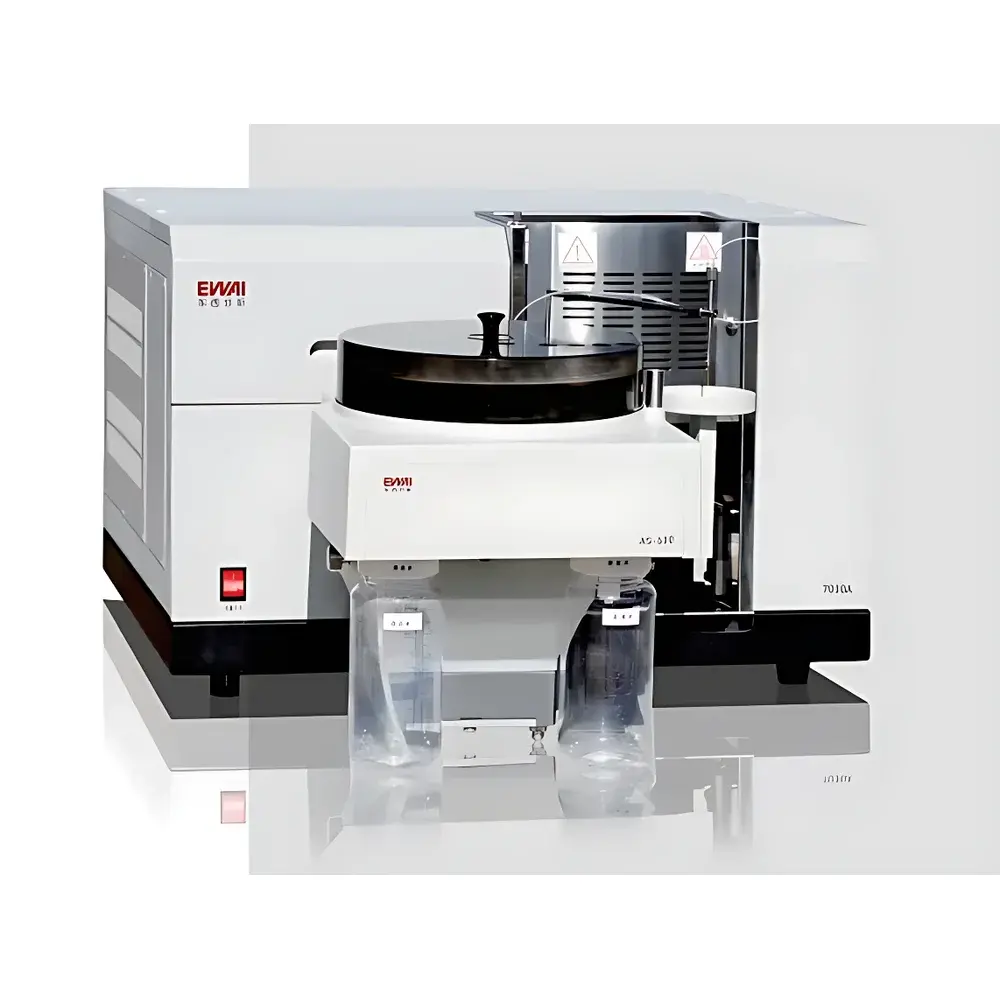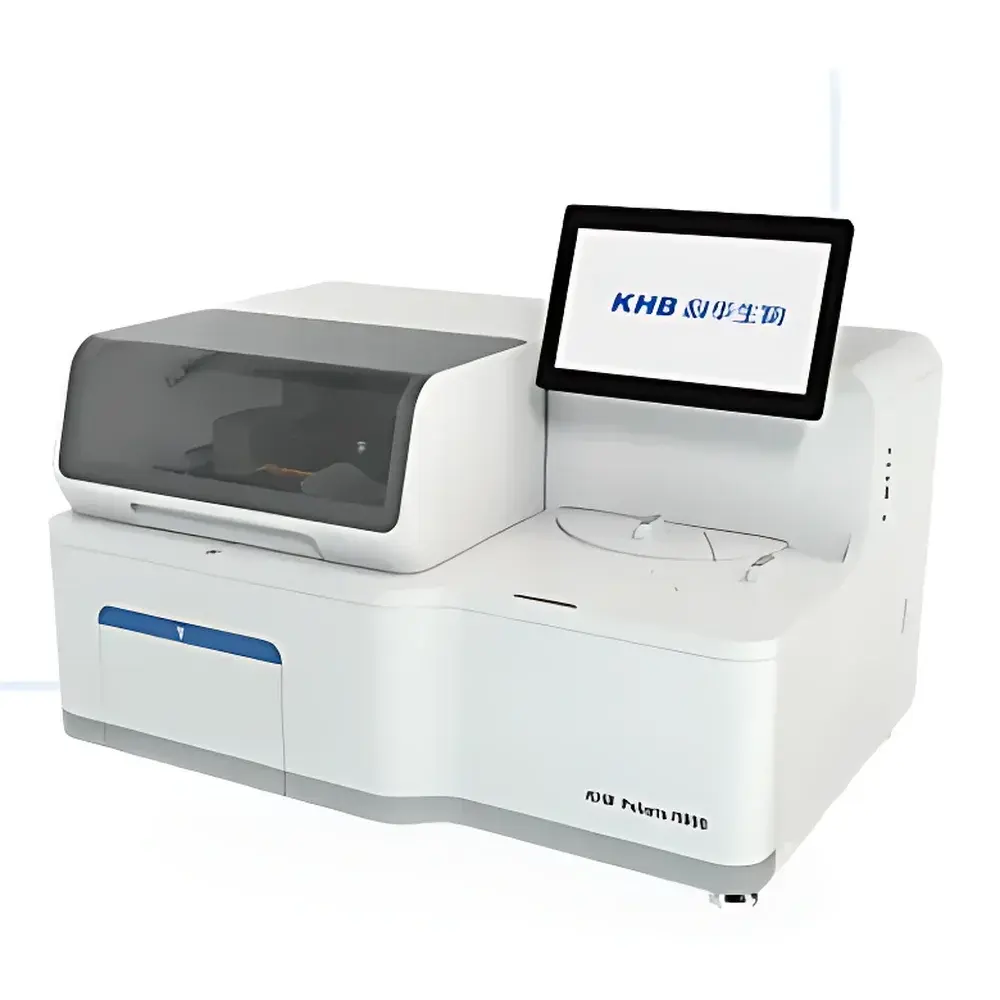
KHB Polaris i1800 Fully Automated Chemiluminescence Immunoassay Analyzer
| Brand | KHB |
|---|---|
| Origin | Shanghai, China |
| Manufacturer Type | Authorized Distributor |
| Origin Category | Domestic (China) |
| Model | Polaris i1800 |
| Automation Level | Fully Automated |
| Throughput | 180 tests/hour |
| Sample Types | Serum, Plasma |
| Reagent Cartridge Compatibility | KHB Polaris® i2400 |
| Detection Principle | ALP-AMPPD Enzyme-Enhanced Chemiluminescence |
| Sample Volume Precision | CV ≤ 2% at 10 µL, CV ≤ 1% at 200 µL |
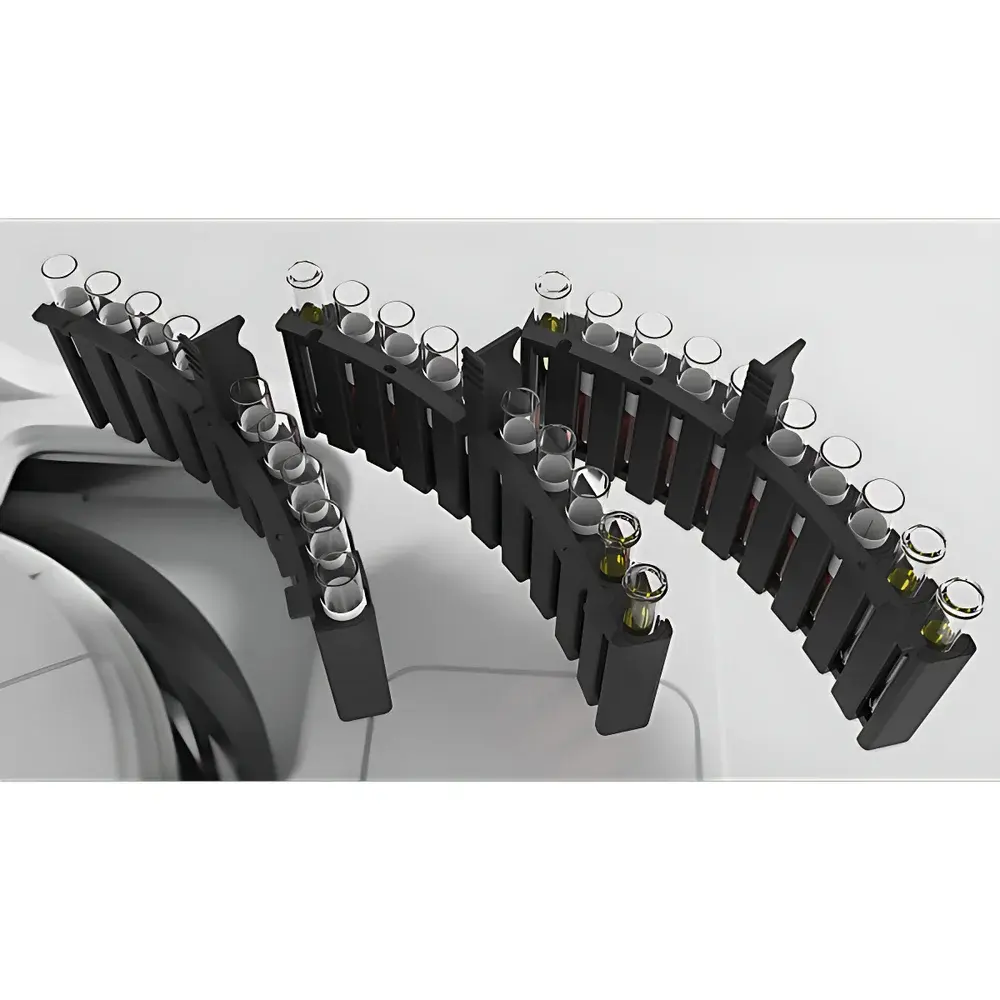
| Sample Capacity | 60 positions (6 racks), barcode-readable |
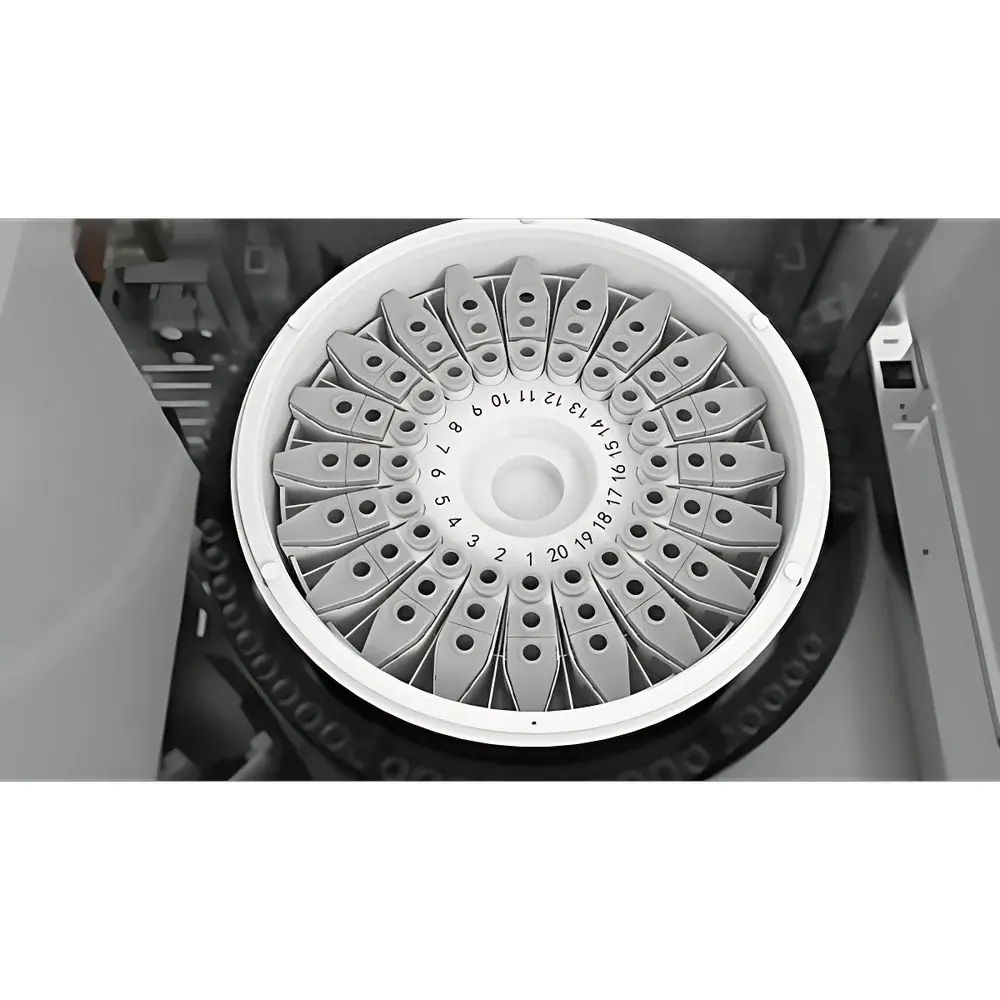
| Reagent Positions | 20, refrigerated (2–8 °C), with magnetic bead reagent agitation |
| Reaction Cup Capacity | 500 disposable cups, auto-replenishable |
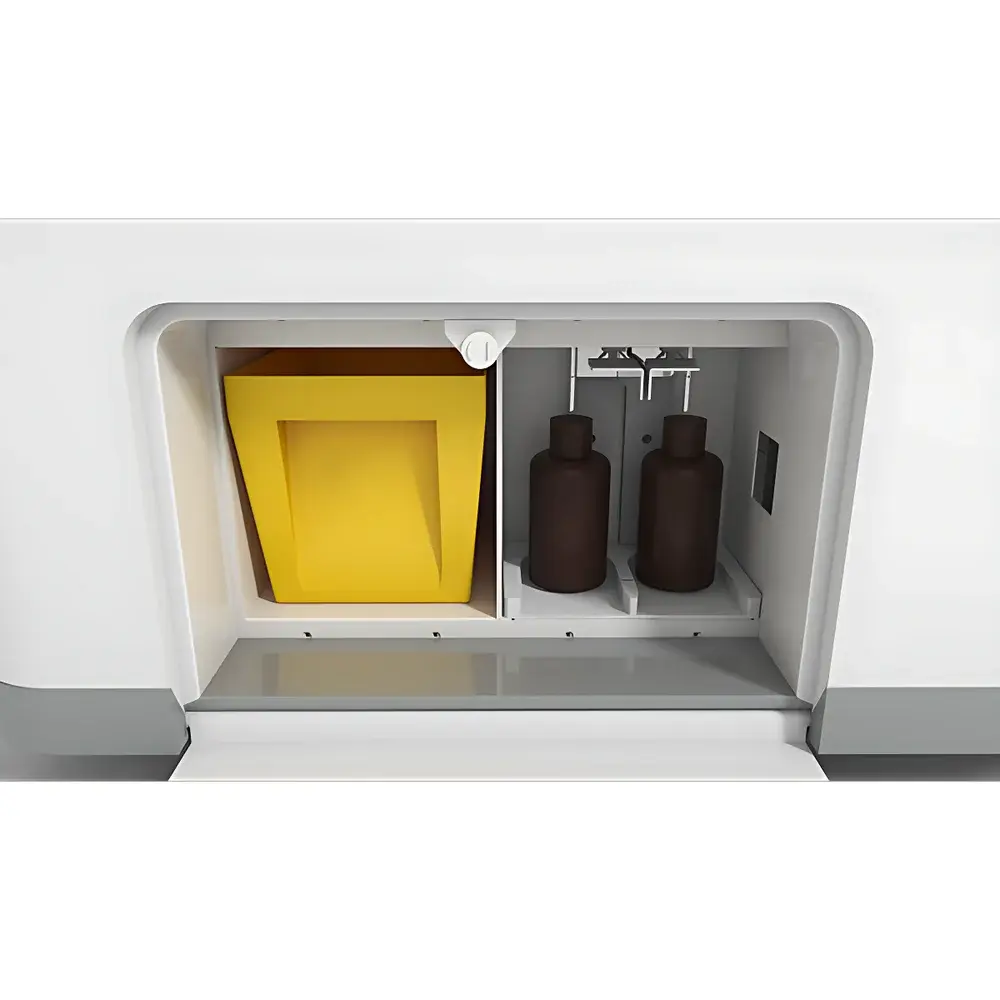
| Substrate Delivery | Dual-channel, hot-swap capable |
| Waste Management | 500-cup waste bin, single integrated waste liquid reservoir |
Overview
The KHB Polaris i1800 is a fully automated chemiluminescence immunoassay (CLIA) analyzer engineered for high-throughput, mid-volume clinical laboratories requiring regulatory-compliant, reproducible serological and hormonal testing. It employs alkaline phosphatase (ALP) conjugated antibodies in conjunction with the highly sensitive AMPPD (3-(2′-spiroadamantane)-4-methoxy-4-(3″-phosphoryloxy)phenyl-1,2-dioxetane) substrate system — a well-established, stable chemiluminescent reaction yielding sustained light emission proportional to analyte concentration. This principle enables detection limits down to 10−21 mol/L under optimized assay conditions, supporting quantitative measurement of low-abundance biomarkers including thyroid hormones (TSH, FT4), infectious disease markers (HBsAg, anti-HCV), tumor antigens (AFP, CEA), and cardiac troponins. The system’s compact footprint (0.71 m²) integrates incubation, magnetic particle washing, substrate injection, and photometric signal acquisition within a single reaction disk architecture — eliminating inter-module transfer delays and reducing carryover risk.
Key Features
- Fully automated workflow from sample loading to result reporting, compliant with ISO 15189 pre-analytical requirements for traceability and error mitigation.
- Integrated 10.1-inch capacitive touchscreen interface with intuitive, icon-driven navigation; supports multilingual UI (English, Spanish, Arabic, Portuguese) and customizable user roles with password-protected access levels.
- High-precision steel sampling probe with real-time liquid level sensing, clot detection, collision avoidance, and clog monitoring — ensuring integrity across heterogeneous sample viscosities and tube geometries.
- Dual-path substrate delivery system enabling uninterrupted operation during reagent replacement; eliminates assay interruption and maintains throughput consistency at 180 tests/hour.
- Refrigerated reagent carousel (2–8 °C) with 20 positions, including dedicated magnetic bead mixing via timed rotational agitation to prevent sedimentation and ensure uniform reagent homogeneity.
- Single-use reaction cup magazine holding up to 500 units with automatic feed mechanism — no manual cup insertion required; validated for >99.98% load success rate per cycle per IVD performance verification protocols.
Sample Compatibility & Compliance
The Polaris i1800 accepts native serum and plasma specimens collected in standard vacuum tubes (e.g., SST, EDTA-K2/K3, lithium heparin), including gel-separator and non-gel formats. Barcode scanning supports GS1-compliant 1D/2D labels (Code 128, DataMatrix), enabling bidirectional LIS integration and full chain-of-custody logging. All consumables — including integrated reagent cartridges with embedded calibration curves and included calibrators — are CE-marked per IVDR (Regulation (EU) 2017/746) and registered with China NMPA (Class II IVD). The system meets CLSI EP23-A validation guidelines for analytical precision and carries built-in QC flagging aligned with Westgard multi-rules. Audit trails comply with FDA 21 CFR Part 11 requirements when deployed with optional secure network authentication and electronic signature modules.
Software & Data Management
The embedded KHB LabLink™ software provides comprehensive data governance: all test logs, calibration records, maintenance events, and reagent lot tracking are time-stamped, immutable, and exportable in CSV or PDF. Optional LIS connectivity supports ASTM E1381 and HL7 v2.5.1 messaging for seamless bidirectional order/result exchange. Software updates are delivered via encrypted USB or authenticated HTTPS push; version history and patch logs are retained for GLP/GMP audit readiness. Raw luminescence counts, kinetic decay profiles, and curve-fitting residuals are stored alongside final results — enabling retrospective reanalysis without instrument re-run.
Applications
The Polaris i1800 delivers clinical decision support across endocrinology (TSH, cortisol, insulin), infectious disease screening (HIV Ag/Ab, syphilis TP, HBV/HCV serology), oncology (PSA, CA125, CA19-9), cardiology (BNP, proBNP, troponin I), and autoimmune diagnostics (ANA, anti-dsDNA). Its ALP-AMPPD chemistry demonstrates superior stability over luminol-based systems in ambient temperature fluctuations, minimizing recalibration frequency in resource-constrained environments. The platform supports method-specific calibration protocols aligned with CLSI EP15-A3 and ISO 17511 traceability frameworks.
FAQ
What sample volumes does the Polaris i1800 support for primary tube aspiration?
It aspirates as little as 10 µL with ≤2% coefficient of variation (CV); routine assays use 20–100 µL depending on assay protocol.
Is the system compatible with third-party reagents or open-channel operation?
No — it operates exclusively with KHB-branded, barcode-scanned integrated reagent cartridges designed for Polaris i1800/i2400 platforms to ensure assay validity and regulatory compliance.
How is calibration managed across reagent lots?
Each cartridge contains an embedded master calibration curve; included calibrators are traceable to WHO International Standards and assigned lot-specific correction factors upon barcode scan.
What maintenance intervals are recommended for routine operation?
Daily cleaning cycle; monthly optical path verification; biannual fluidic system pressure calibration — all guided by onboard maintenance scheduler with service log export.
Does the system support STAT prioritization for emergency samples?
Yes — up to 12 STAT positions can be designated outside the main queue; samples inserted mid-run are processed immediately after current reaction completes, with priority flagging in LIS output.