
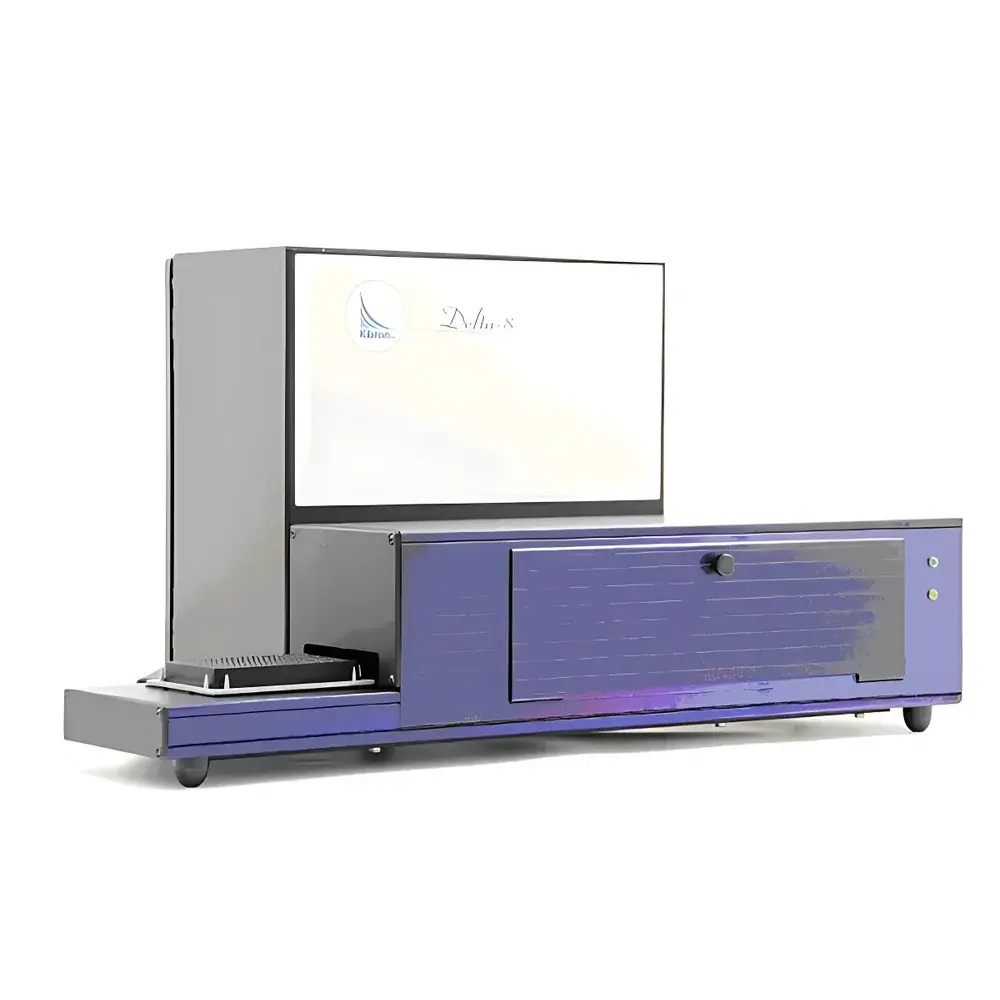
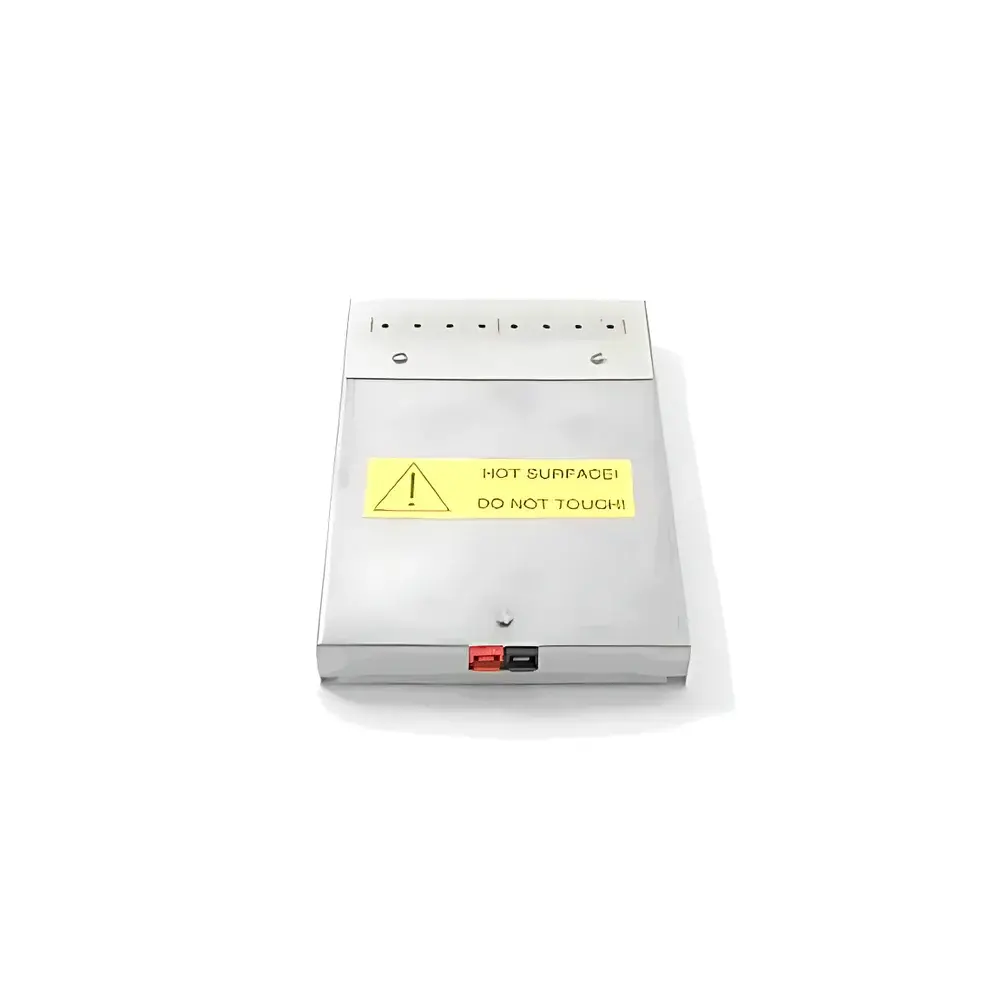
Kibron Delta-8 High-Throughput Surface Tensiometer
| Brand | Kibron |
|---|---|
| Origin | Finland |
| Model | Delta-8 |
| Surface Tension Range | 10–100 mN/m |
| Accuracy | ±0.2 mN/m |
| Resolution | 0.01 mN/m |
| Sample Volume | 50 µL per well |
| Measurement Time | 3 min per 96-well plate |
| Temperature Range | 18–30 °C |
| Balance Resolution | 0.050 µg |
| Probe Lifetime | 100 plates |
| Cleaning Temperature | up to 1000 °C |
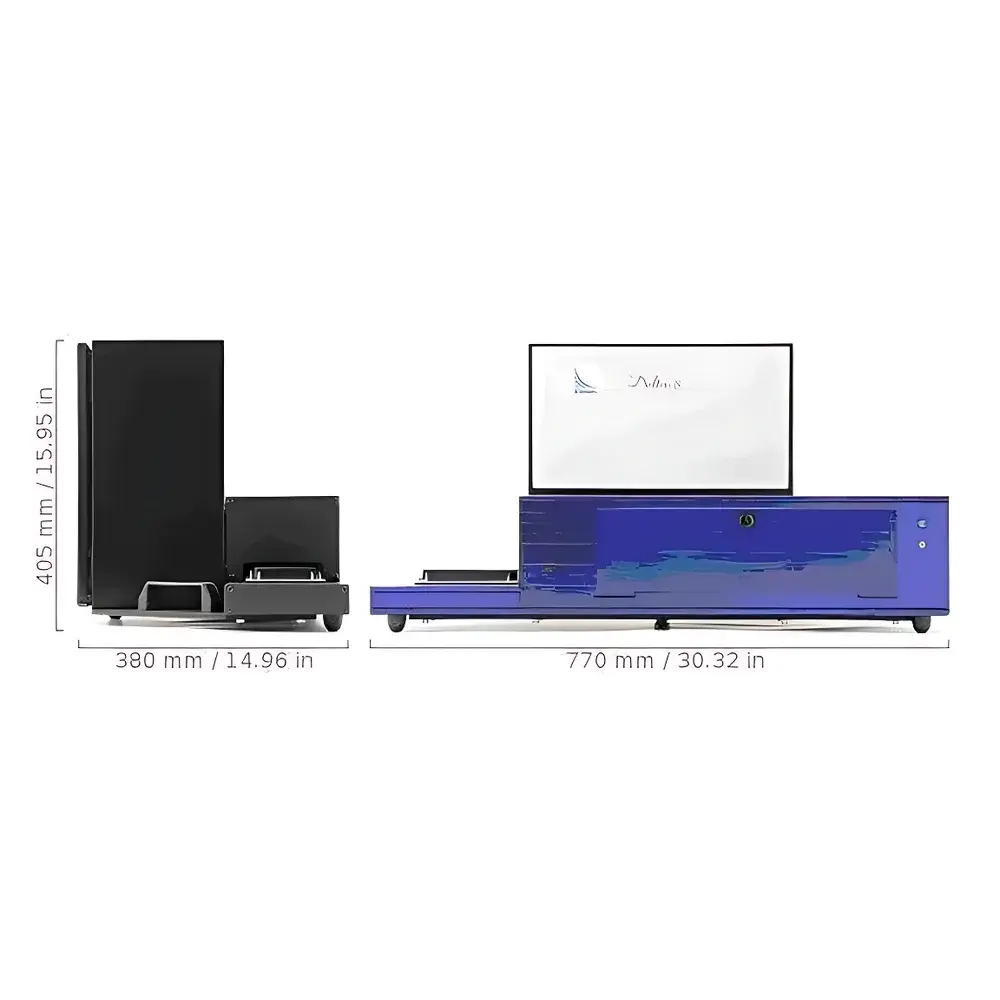
| Dimensions (L×W×H) | 770 × 380 × 405 mm |
| Weight | 24 kg |
| Power Input | 200–240 V AC, 47–63 Hz |
| Power Output | 12 V DC / 10.8 A |
| Max Power Consumption | 120 W |
| Interface | RS-232 |
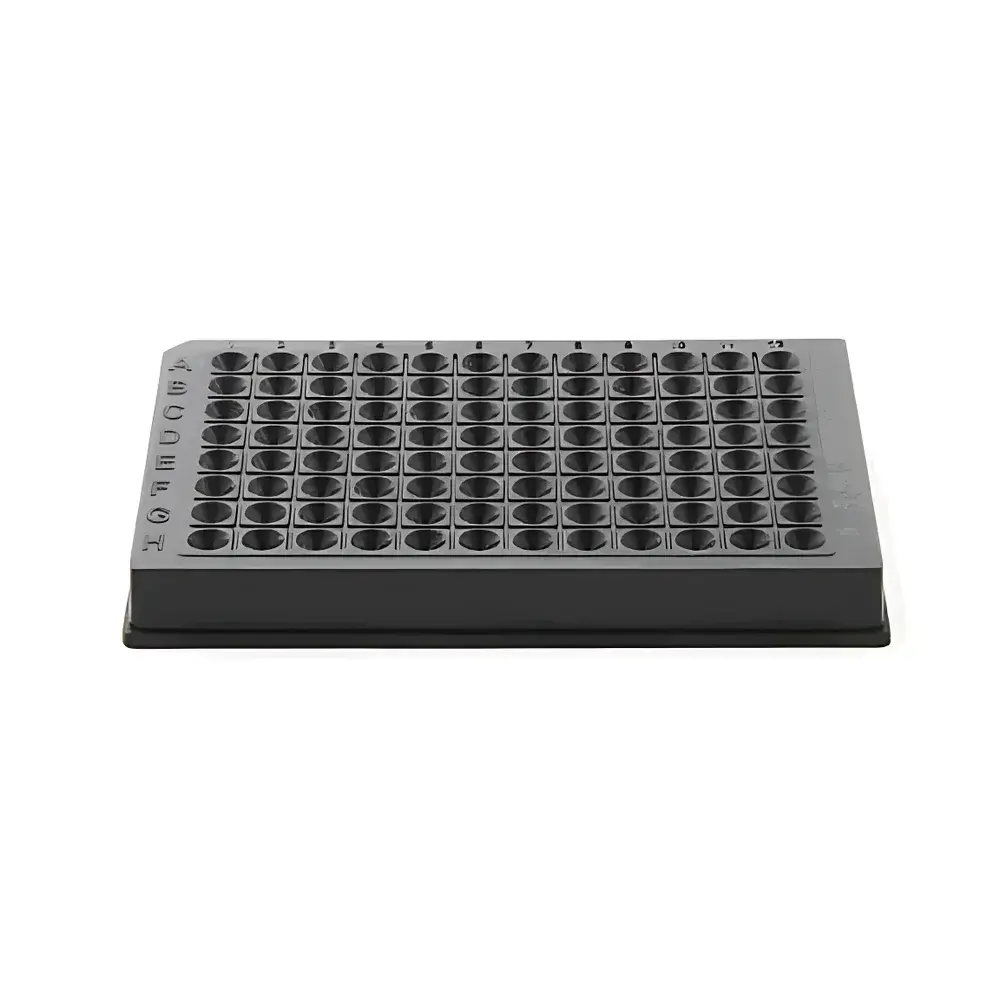
| Plate Format | Standard 96-well, polypropylene, disposable |
Overview
The Kibron Delta-8 High-Throughput Surface Tensiometer is an automated, microgravimetric instrument engineered for rapid, precise, and reproducible surface tension and surface pressure measurements at the air–liquid interface. It employs the Du Noüy–Padday maximum pull-off force method—a rigorously validated technique grounded in interfacial thermodynamics—where a calibrated cylindrical probe is immersed into and withdrawn from the sample, and the peak force exerted by the meniscus is measured via an ultra-sensitive microbalance (resolution: 0.050 µg). Unlike Wilhelmy plate or du Noüy ring methods, the Padday approach eliminates geometric dependency on probe diameter beyond initial calibration, minimizes hydrodynamic artifacts, and delivers exceptional stability for viscous or surfactant-laden systems—including oils, polymer melts, and concentrated detergent formulations. The Delta-8 is purpose-built for high-throughput screening workflows in pharmaceutical development, surfactant R&D, and physical chemistry laboratories where speed, sample economy, and metrological traceability are non-negotiable.
Key Features
- Parallel measurement of up to 96 samples per plate using standard SBS-compliant 96-well microplates (50 µL/well), enabling full-plate CMC or Kaw determination in under 3 minutes.
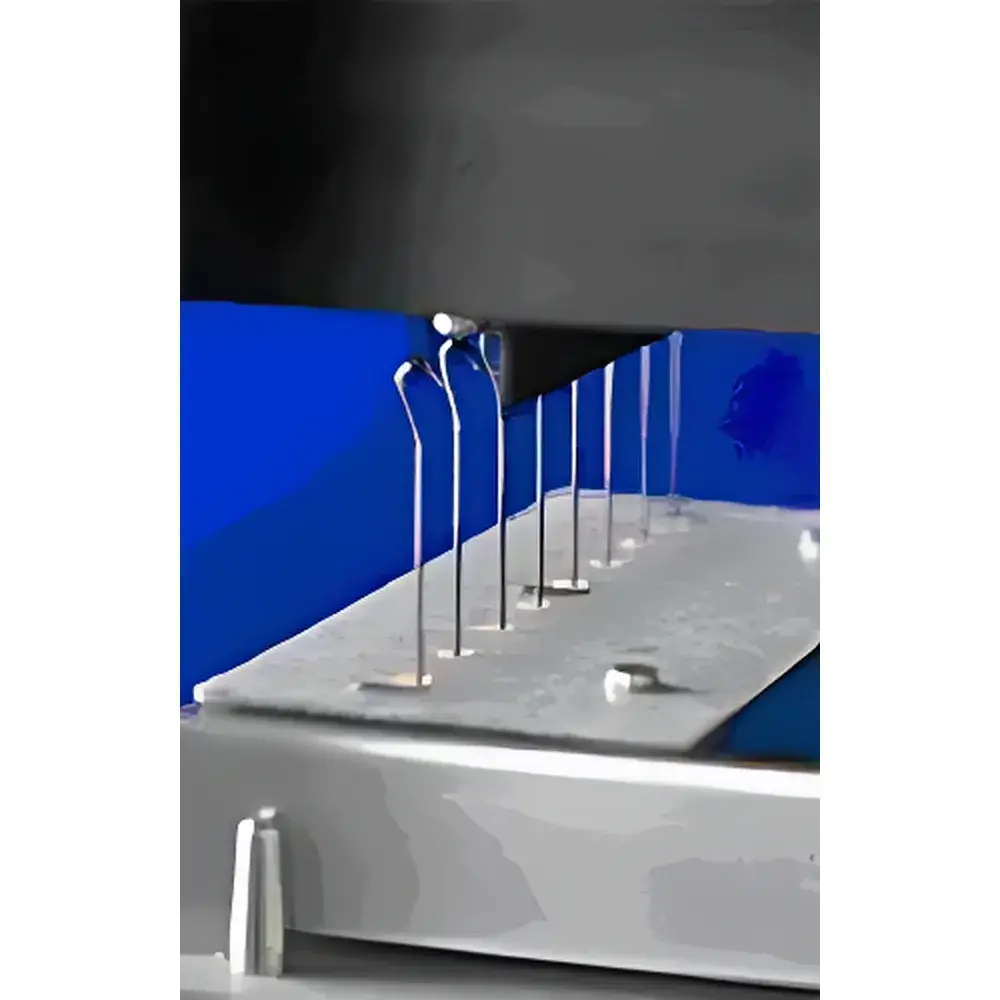
- Eight independent high-precision microbalances coupled with metal probe arrays ensure statistical robustness through simultaneous quadruplicate to octuplicate measurements per condition.
- Fully automated probe immersion, withdrawal, force acquisition, and post-measurement thermal cleaning—probes heated to 1000 °C to eliminate carryover and adsorbed residue—ensuring cross-contamination-free operation across hundreds of assays.
- Integrated real-time data acquisition with sub-second sampling resolution, capturing dynamic surface pressure evolution without signal lag or mechanical damping artifacts.
- Compact benchtop footprint (770 × 380 × 405 mm) and vibration-insensitive architecture eliminate the need for optical tables or active isolation systems—ideal for shared core facilities and QC labs.
- Native compatibility with robotic liquid handlers and auto-dilution platforms via RS-232 and programmable I/O triggers, supporting end-to-end automation under GLP/GMP-aligned SOPs.
Sample Compatibility & Compliance
The Delta-8 accommodates aqueous and organic solutions, micellar dispersions, liposomal suspensions, polymer solutions, and low-volatility melts—provided they exhibit measurable meniscus formation under ambient temperature (18–30 °C) conditions. Its 50 µL/well volume requirement significantly reduces consumption of high-value compounds (e.g., synthetic phospholipids, peptide surfactants, or early-stage drug candidates), aligning with green chemistry principles and cost-sensitive HTS budgets. All measurements adhere to the fundamental thermodynamic framework described in Padday et al. (J. Chem. Soc. Faraday Trans. 71, 1919–1931, 1974), and raw force–distance profiles are directly convertible to surface pressure (π = γ₀ − γ) and Gibbs adsorption isotherms. Instrument compliance includes CE marking per Directive 2014/30/EU (EMC) and 2014/35/EU (LVD); data integrity supports audit readiness for FDA 21 CFR Part 11 when deployed with validated electronic lab notebook (ELN) integration.
Software & Data Management
DeltaSoft™ v5.2 provides a validated, menu-driven environment for assay design, real-time visualization, and parameter extraction—including CMC, Kaw (air–water partition coefficient), apparent pKa, limiting molecular area (As), and Gibbs free energy of adsorption. Algorithms apply iterative nonlinear regression against Langmuir, Frumkin, or Szyszkowski models to derive physicochemical descriptors with uncertainty propagation. All raw force curves, processed isotherms, and metadata (timestamp, operator ID, plate barcode, environmental logs) are stored in encrypted SQLite databases with immutable audit trails. Export options include CSV, PDF reports compliant with ISO/IEC 17025 documentation requirements, and direct ingestion into statistical platforms (e.g., JMP, GraphPad Prism) via structured XML schemas. Remote monitoring and scheduled calibration reminders further enhance operational continuity in multi-user environments.
Applications
- Pharmaceutical Development: Quantitative assessment of lipid–drug interactions, membrane permeability prediction via Kaw, and formulation stability screening of nanoemulsions and liposomal drug carriers.
- Surfactant Science: High-resolution CMC mapping across homologous series, synergistic coefficient analysis in binary/mixed systems, and structure–activity relationship (SAR) modeling for green surfactant design.
- Coatings & Inks: Rheo-surface characterization of pigment dispersants, wetting kinetics evaluation, and jetting stability prediction for inkjet formulations.
- Academic Research: Teaching interfacial thermodynamics; investigating protein–surfactant co-adsorption; probing pH-responsive monolayer collapse mechanisms.
FAQ
What measurement principle does the Delta-8 use, and how does it differ from traditional tensiometers?
It implements the Du Noüy–Padday method—measuring the maximum pull-off force of a cylindrical probe—and avoids the contact-angle dependency and buoyancy corrections inherent in Wilhelmy plate or ring methods.
Can the Delta-8 measure surface tension of viscous or non-aqueous liquids?
Yes—its probe geometry and force-based detection enable reliable measurements for oils, polymer solutions, and molten materials where capillary rise or oscillation methods fail.
Is the system compliant with regulatory data integrity standards?
When configured with DeltaSoft’s audit-trail-enabled mode and integrated into a validated IT infrastructure, it meets ALCOA+ criteria and supports 21 CFR Part 11 compliance.
How is probe contamination prevented between samples?
Each probe undergoes in situ resistive heating to 1000 °C immediately before and after every plate run, thermally decomposing residual surfactants and eliminating cross-well carryover.
What level of training is required to operate the Delta-8?
Minimal—core operations are executed via guided workflows; advanced data modeling requires familiarity with interfacial thermodynamics but no programming expertise.



