
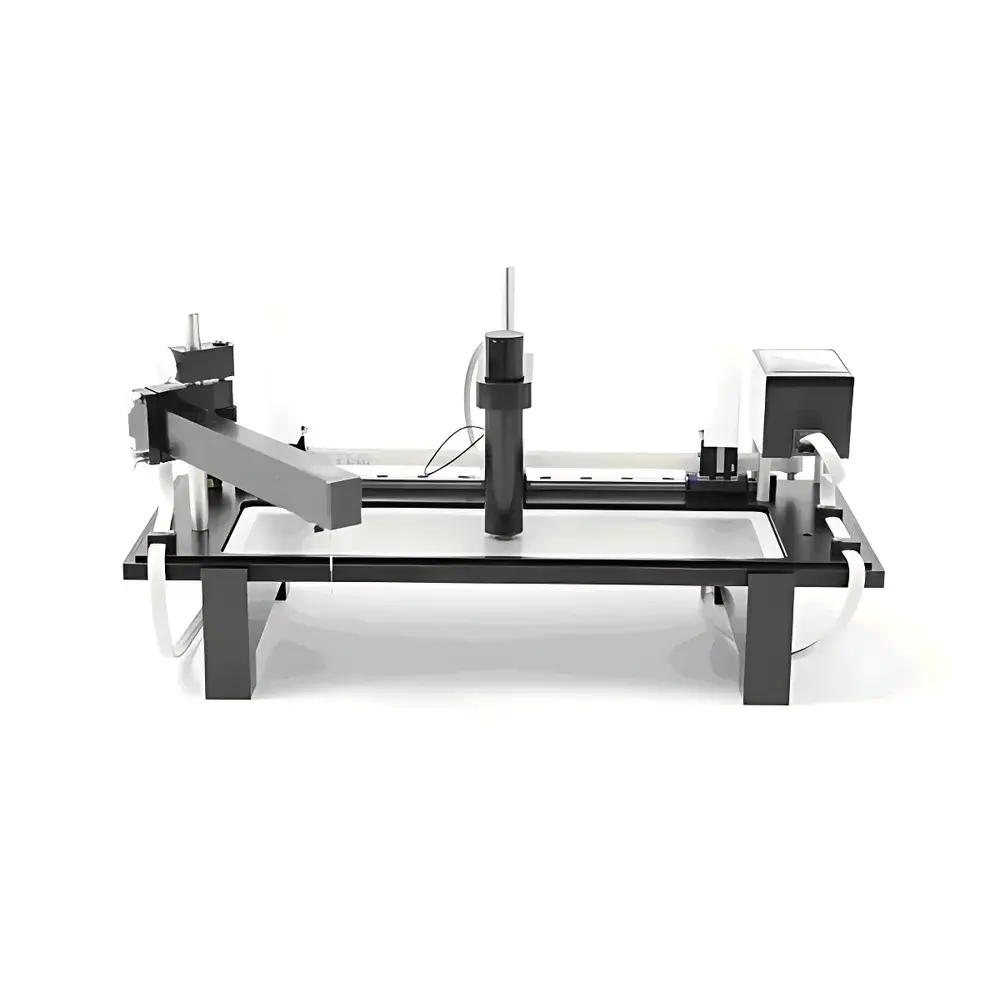
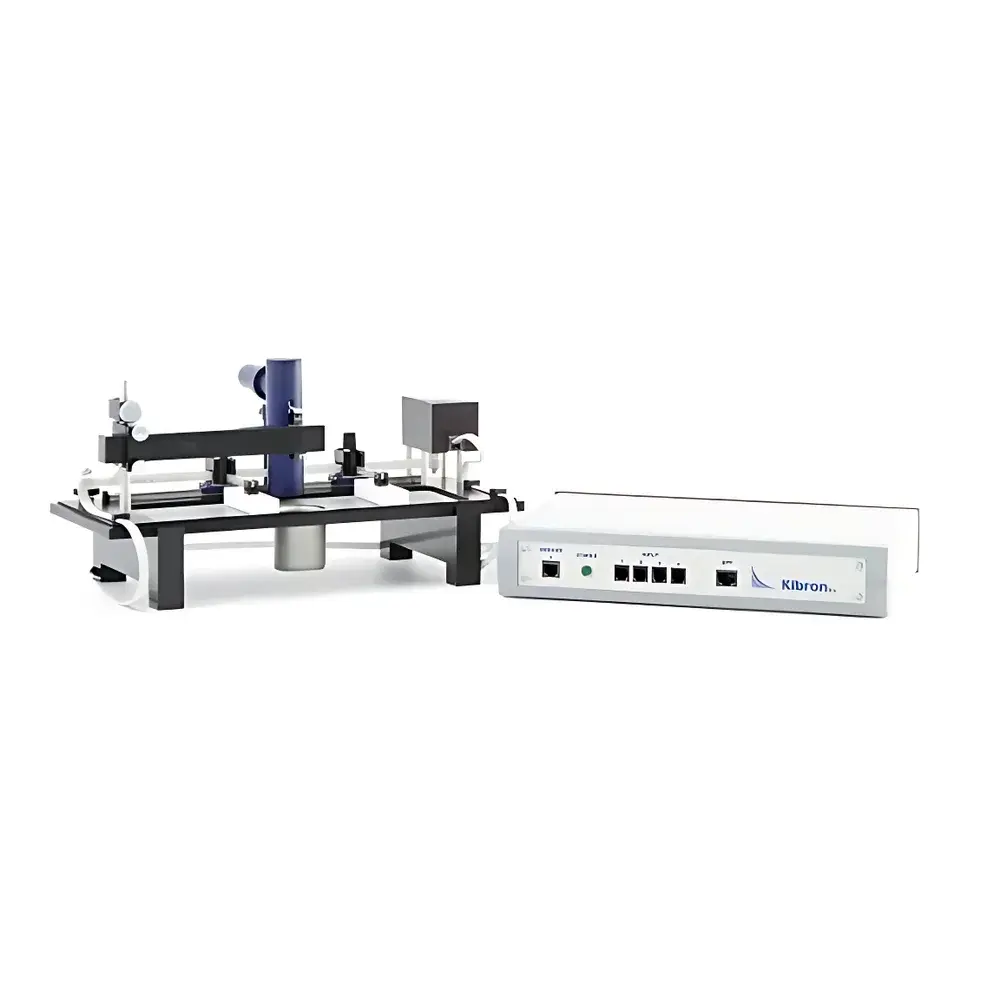
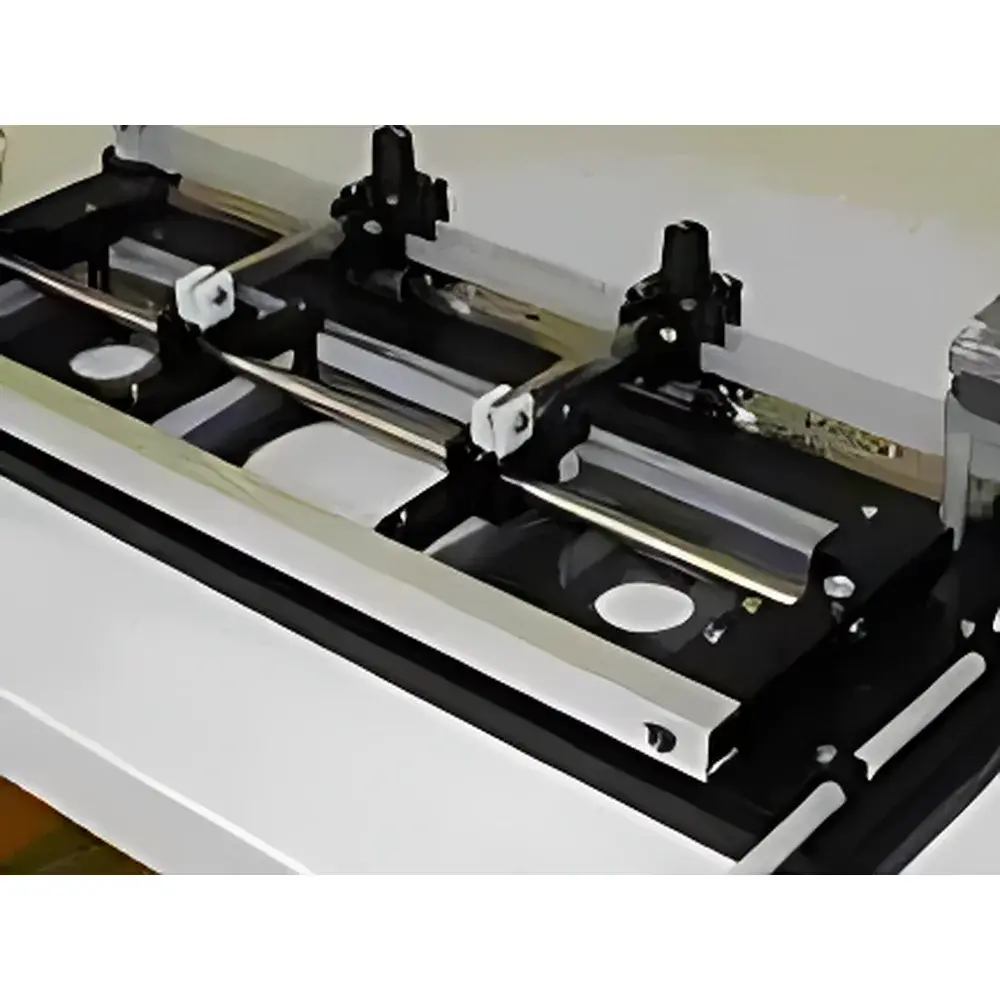
Kibron MicroTroughXS Langmuir-Blodgett Trough Analyzer
| Brand | Kibron |
|---|---|
| Origin | Finland |
| Model | MicroTroughXS |
| Surface Pressure Resolution | < 0.01 mN/m |
| Subphase Volume Range | 300 µL – 100 mL |
| Barrier Control | Stepper Motor, Speed 0.004–280 mm/min |
| Area Measurement Accuracy | ≤ 0.1% |
| Temperature Sensor Resolution | 0.1 °C |
| Surface Potential Resolution | < 1 mV |
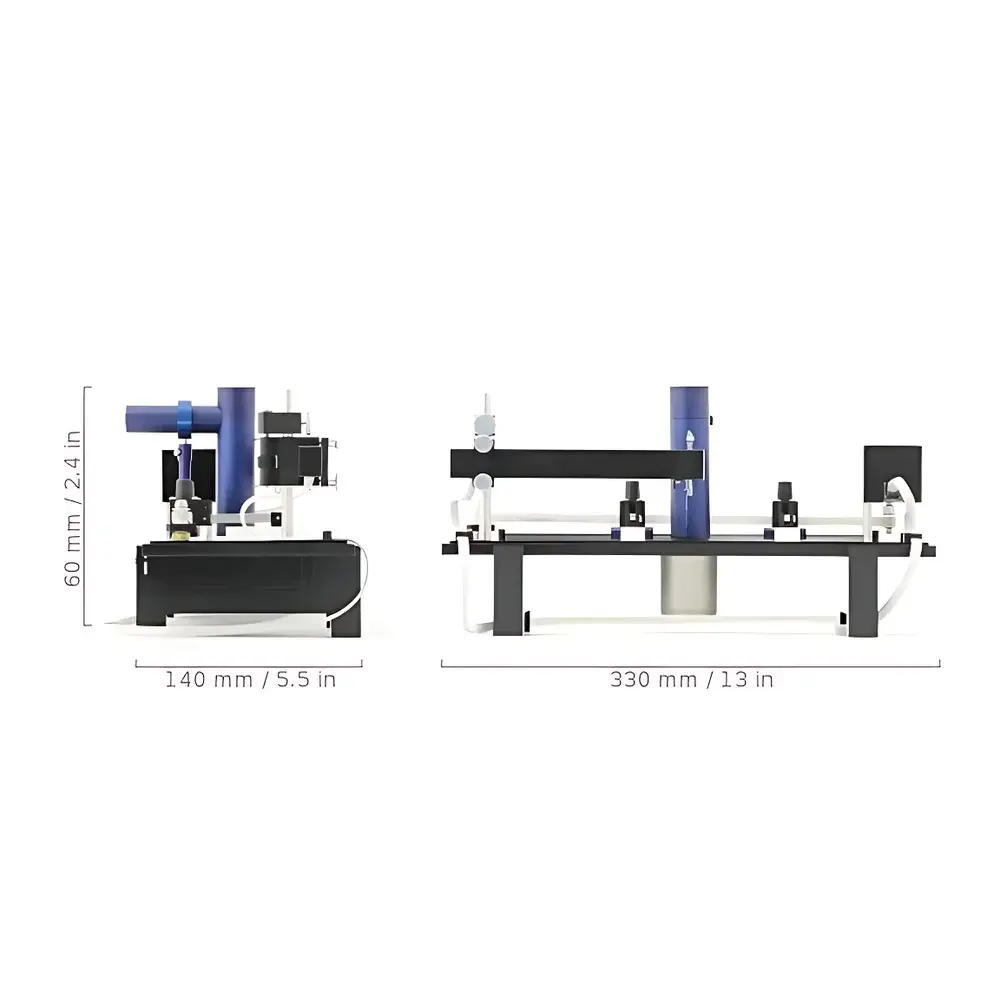
| Dimensions (Main Unit) | 33 × 14 × 6 cm |
| Weight | 3.55 kg |
Overview
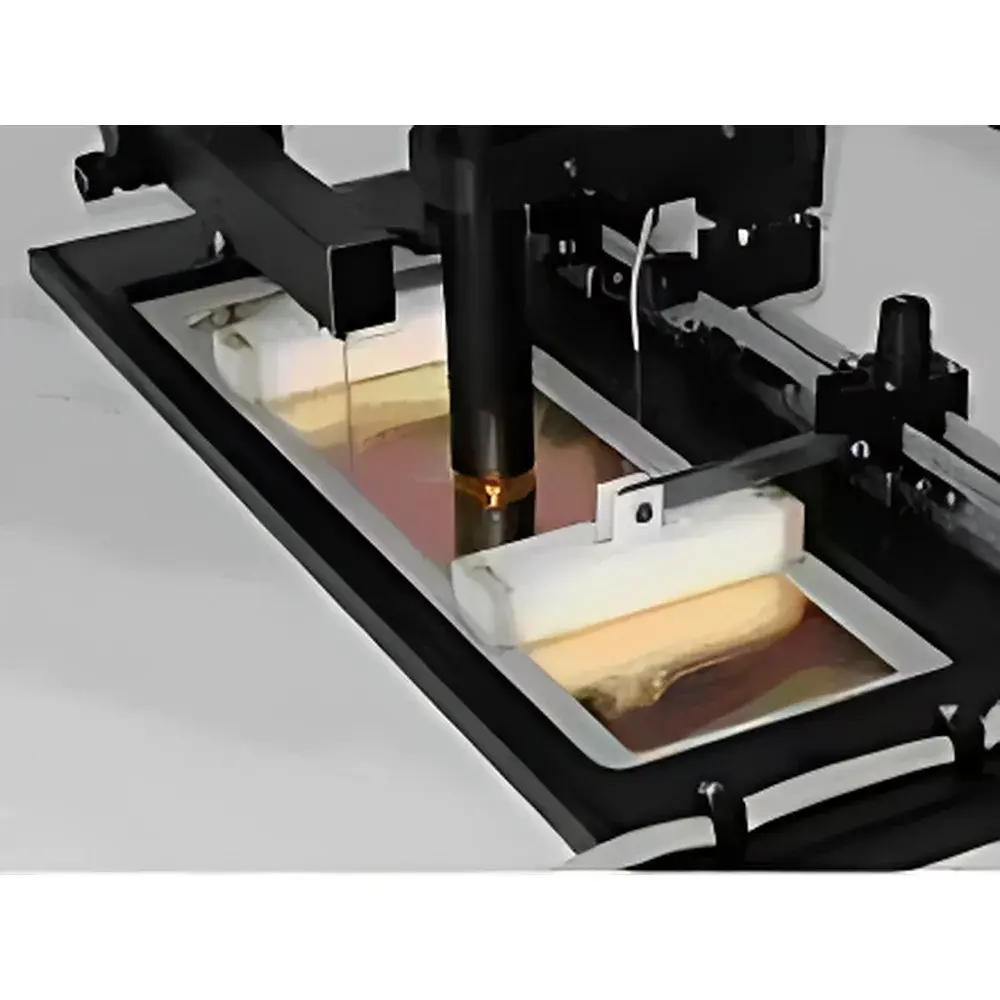
The Kibron MicroTroughXS Langmuir-Blodgett Trough Analyzer is a compact, high-precision instrument engineered for quantitative interfacial science at the air–water interface. Based on the classical Langmuir trough principle—measuring surface pressure (π) as a function of molecular area during controlled monolayer compression—the MicroTroughXS employs Kibron’s proprietary Du Noüy–Padday rod-based tensiometry. Unlike traditional Wilhelmy plate or ring methods, this technique uses a calibrated metal micro-rod (0.51 mm diameter) to measure the maximum force during vertical withdrawal, eliminating capillary hysteresis, filter-paper artifacts, and salt accumulation effects. Its core sensor achieves < 0.01 mN/m resolution and real-time response without signal averaging—enabling accurate isotherm acquisition, phase transition detection, and kinetic monitoring of lipid–protein interactions. Designed by surface scientists for surface scientists, the system integrates seamlessly into advanced biophysical workflows including LB film deposition, fluorescence microscopy coupling, and synchrotron-compatible X-ray reflectivity experiments.
Key Features
- Ultra-high sensitivity surface pressure measurement: < 0.01 mN/m resolution with zero signal lag and no post-processing averaging required.
- Minimal subphase volume operation: Validated performance down to 300 µL for surface tension assays and 20–45 mL for full monolayer isotherms—reducing reagent consumption and enabling studies with scarce biological samples.
- Vibration-insensitive architecture: No anti-vibration table needed; robust acrylic enclosure minimizes airflow disturbance and particulate contamination at the interface.
- Precision barrier control: Micro-stepper motor-driven POM or PTFE barriers with programmable speed (0.004–280 mm/min) and ≤ 0.1% area positioning accuracy—critical for reproducible molecular area calculation and avoidance of metastable film states.
- Modular multi-function capability: Configurable as a Langmuir trough, Langmuir–Blodgett depositor, standard tensiometer, or surface potential recorder via interchangeable accessories.
- Integrated surface potential sensing: Miniaturized Pt/Ir micro-electrode with < 1 mV resolution and high signal-to-noise ratio—simultaneous π–V measurements supported in ≥ 3 mL subphase.
- Thermal control compatibility: TCP temperature control plate interfaces with external recirculating baths for isothermal experiments from 5–60 °C (±0.1 °C resolution).
Sample Compatibility & Compliance
The MicroTroughXS accommodates a broad range of amphiphilic systems: phospholipids (DPPC, POPC), fatty acids, block copolymers, peptides, drug candidates, and nanoparticle–lipid hybrids. Its PTFE- and alloy-fabricated troughs resist chemical degradation and ensure low background interference for FTIR, BAM, and XRR measurements. The system supports GLP-compliant data acquisition through timestamped, audit-trail-enabled software logging—fully traceable per FDA 21 CFR Part 11 requirements when configured with user authentication and electronic signature modules. All accessories—including ribbon troughs, LB lifters, and micro-pore plates—are manufactured to ISO 9001-certified processes and validated for use in ASTM D1331 (surface tension), ISO 4311 (anionic surfactants), and USP (interfacial tension) protocols.
Software & Data Management
Control and analysis are executed via Kibron’s AquaPi™ software—a Windows-based platform supporting real-time isotherm plotting, automated barrier sequencing, multi-parameter synchronization (π, V, T, time), and batch export to CSV, Excel, or Origin-compatible formats. Raw force data are acquired at 100 Hz with hardware-level filtering; all calibration constants (rod diameter, liquid density) are embedded in method files to ensure metrological traceability. The software includes built-in tools for compressibility modulus (Cs⁻¹) derivation, phase boundary identification, collapse pressure annotation, and CMC determination via Gibbs adsorption analysis. Audit trails record operator ID, parameter changes, calibration events, and file modifications—supporting regulatory submissions under ICH M7 and EMA GCP guidelines.
Applications
- Quantitative assessment of peptide–membrane insertion kinetics and thermodynamic partitioning coefficients.
- In situ 2D crystallization of membrane proteins within lipid monolayers for cryo-EM grid preparation.
- Real-time monitoring of enzymatic hydrolysis (e.g., phospholipase A₂) via surface pressure and potential transients.
- LB deposition of functionalized monolayers onto mica, silicon, or ITO substrates for AFM, QCM-D, or SPR characterization.
- Correlative BAM–fluorescence imaging of domain formation in ternary lipid mixtures under controlled hydration and temperature.
- Determination of critical micelle concentration (CMC) and adsorption efficiency of novel surfactants and therapeutic amphiphiles.
- Surface potential–area isotherms for dipole moment estimation in charged lipid systems (e.g., DOTAP/DOPC).
- X-ray and neutron reflectivity sample preparation requiring ultra-uniform, defect-free monolayers at defined surface pressures.
FAQ
Can the MicroTroughXS be used for Langmuir–Blodgett deposition?
Yes—when equipped with the Langmuir–Blodgett Lifter accessory, it enables controlled vertical dipping of hydrophilic substrates (e.g., Si wafers, mica, glass slides) at programmable speeds and immersion depths.
Is the system compatible with fluorescence microscopy?
Absolutely—the optional quartz-window Langmuir trough and low-profile barrier design allow direct integration with inverted epifluorescence or confocal microscopes for real-time domain imaging.
What is the smallest subphase volume for reliable surface pressure measurement?
300 µL using the micro-pore plate configuration; this enables high-sensitivity screening of precious biomolecules without dilution artifacts.
Does the instrument support temperature-controlled experiments?
Yes—via the TCP temperature control plate connected to an external chiller or water bath, with in-situ temperature monitoring at 0.1 °C resolution.
How does the Du Noüy–Padday method differ from Wilhelmy plate tensiometry?
It eliminates capillary hysteresis and edge-wetting errors by measuring the maximum pull-off force of a thin rod—not a plate—making it ideal for viscous, volatile, or low-volume systems where Wilhelmy plates fail.



