
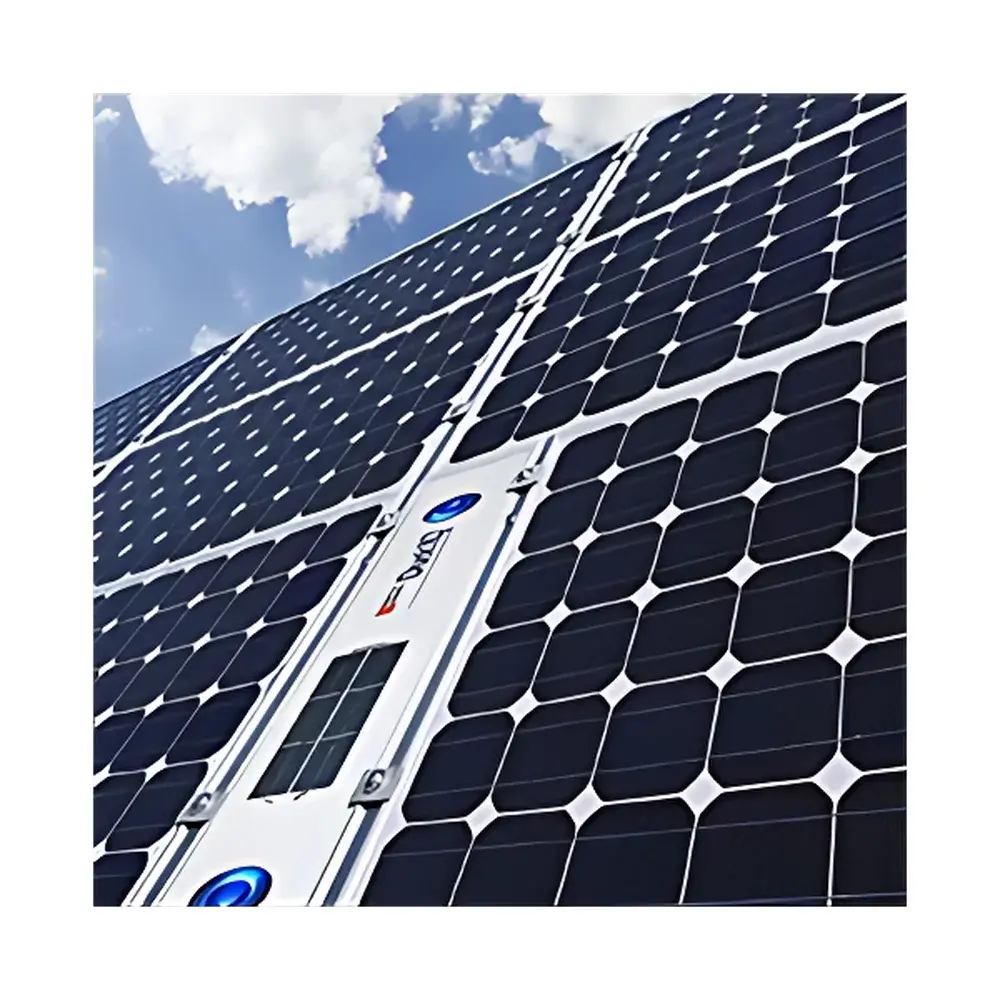
Kipp & Zonen DustIQ Optical Soiling Monitor
| Brand | Kipp & Zonen |
|---|---|
| Origin | Netherlands |
| Model | DustIQ |
| Type | Optical Soiling Monitor |
| Technology | Optical Scattering-Based Transmission Loss Measurement |
| Power Supply | 12–24 V DC |
| Operating Temperature | −40 °C to +70 °C |
| IP Rating | IP65 |
| Output Interface | RS-485 (Modbus RTU) |
| Dimensions | 120 × 120 × 65 mm |
| Weight | 0.85 kg |
Overview
The Kipp & Zonen DustIQ Optical Soiling Monitor is an industrial-grade, solid-state sensor engineered for continuous, quantitative assessment of soiling-induced optical transmission loss on photovoltaic (PV) module surfaces. Unlike traditional soiling measurement methods that rely on reference cells, comparative irradiance ratios, or manual visual inspection, the DustIQ employs Kipp & Zonen’s proprietary Optical Soiling Measurement (OSM) technology — a non-contact, passive optical scattering principle. It measures the reduction in light transmission through a calibrated quartz window mounted at the same tilt and azimuth as adjacent PV modules. The sensor operates independently of ambient solar irradiance, eliminating diurnal and weather-dependent measurement gaps. Its core function is to quantify the soiling ratio (SR), defined as the ratio of transmitted irradiance through a soiled surface to that through a clean reference surface under identical illumination conditions. This enables traceable, repeatable, and physically meaningful soiling data — essential for performance-based O&M decision-making in utility-scale solar plants.
Key Features
- Solid-state design with zero moving parts — ensures long-term operational stability and immunity to mechanical wear or misalignment.
- Irradiance-independent operation — delivers valid soiling measurements during dawn, dusk, overcast conditions, and nighttime via internal LED excitation source.
- Factory-calibrated quartz optical path — provides metrologically traceable transmission loss quantification without field recalibration.
- Integrated temperature and humidity sensing — supports environmental normalization of soiling data and aids in correlating deposition dynamics with local climate variables.
- RS-485 Modbus RTU interface — enables seamless integration into SCADA, EMS, and third-party asset management platforms using standard industrial protocols.
- Low power consumption (<1.5 W) and wide operating temperature range (−40 °C to +70 °C) — suitable for deployment across diverse climatic zones including desert, coastal, and high-altitude sites.
- IP65-rated enclosure — protects against dust ingress and water jets, ensuring reliability in harsh outdoor environments typical of solar farms.
Sample Compatibility & Compliance
The DustIQ is designed for direct mounting on flat or slightly curved PV module frames, matching the orientation and soiling exposure profile of production modules. It does not require co-location with reference cells or pyranometers. Its measurement methodology conforms to the physical principles outlined in IEC TS 61724-1:2021 (Photovoltaic system performance — Monitoring guidelines), particularly Clause 7.3 on soiling monitoring. While not a certified reference device per ISO/IEC 17025, its output is compatible with GLP-aligned data logging workflows and supports audit-ready reporting when deployed with timestamped, Modbus-enabled data acquisition systems compliant with IEEE 1547 and UL 1741 SA requirements.
Software & Data Management
Raw DustIQ output consists of normalized soiling ratio (SR), relative transmission loss (%), internal sensor temperature, and relative humidity — all timestamped and delivered at user-configurable intervals (default: 1-minute resolution). These parameters are ingested by Kipp & Zonen’s optional DustIQ Manager software or integrated into plant-level SCADA via Modbus mapping. The software supports configurable SR threshold alarms (e.g., SR < 0.95 triggers cleaning alert), spatial interpolation across sensor networks, and historical trend analysis aligned with energy yield models (e.g., PVsyst-compatible CSV export). All data records include embedded metadata (sensor ID, firmware version, UTC timestamp), satisfying basic FDA 21 CFR Part 11 data integrity expectations for electronic records in regulated energy infrastructure contexts.
Applications
- Utility-scale photovoltaic power plants seeking ROI-optimized cleaning schedules based on actual soiling impact rather than fixed calendar intervals.
- Independent power producers (IPPs) and operations & maintenance (O&M) contractors requiring auditable soiling performance metrics for contractual performance guarantees (e.g., PPA clauses tied to PR degradation).
- Research institutions studying regional soiling mechanisms (e.g., dust composition, adhesion kinetics, hygroscopic effects) through spatially distributed, long-term monitoring networks.
- Microgrid and off-grid solar installations where water availability is constrained and cleaning must be precisely prioritized.
- Performance validation studies supporting bankability assessments and technical due diligence for solar project financing.
FAQ
Does the DustIQ require sunlight to operate?
No. It uses an internal LED light source and optical detector array, enabling continuous measurement regardless of ambient irradiance levels.
Can DustIQ distinguish between different types of soiling (e.g., dust vs. bird droppings)?
It quantifies total optical transmission loss but does not spectroscopically identify contaminant composition; however, temporal pattern analysis (e.g., sudden vs. gradual SR decline) can support qualitative differentiation in operational practice.
How many DustIQ units are recommended per MW of installed PV capacity?
A minimum of one unit per 2–5 MW is typical for homogeneous terrain; higher density (e.g., 1 per 1 MW) is advised for sites with variable microclimates, vegetation proximity, or complex topography.
Is calibration required after installation?
No field calibration is needed. The sensor ships with NIST-traceable factory calibration; periodic verification against a clean reference window is recommended annually per IEC 61724-1 guidance.
Does DustIQ support wireless communication?
The standard model features RS-485 Modbus only; wireless telemetry (LoRaWAN, LTE-M) requires external gateway integration at the data acquisition layer.
Related Products







