
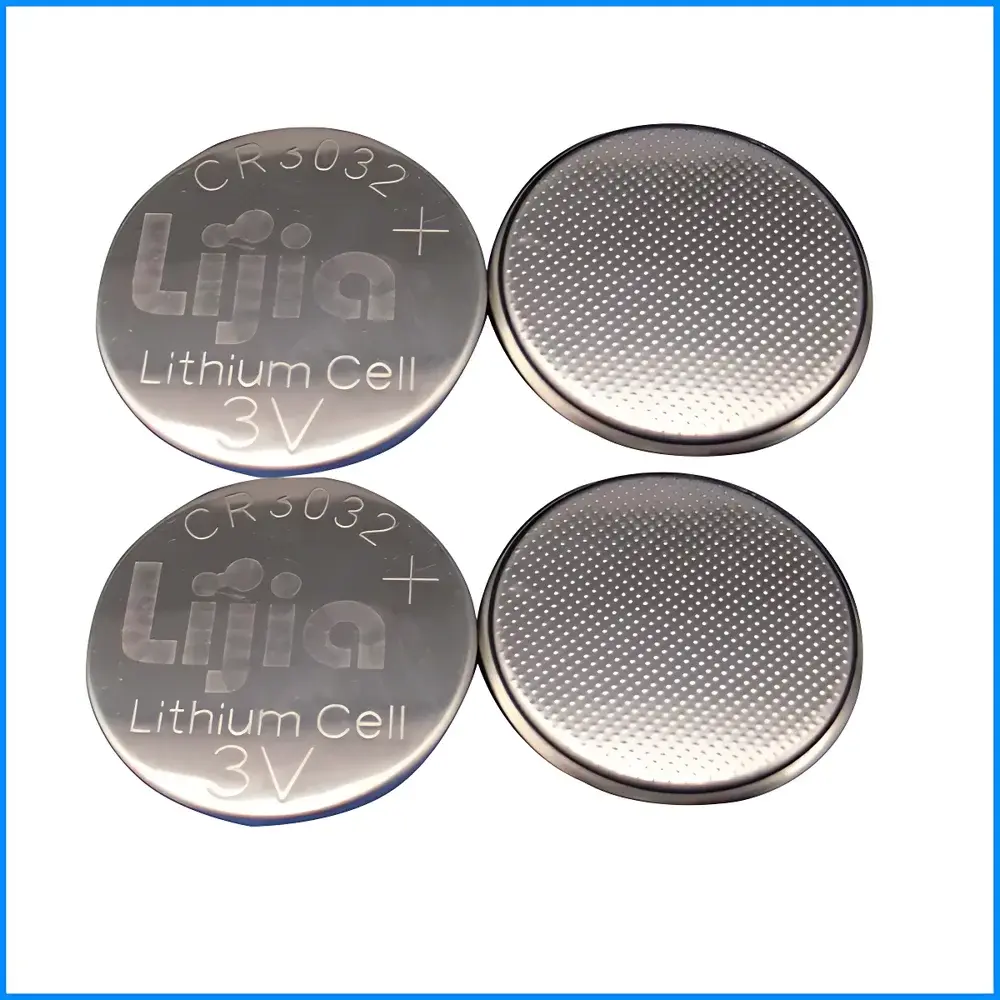
KJ GROUP KJ-ButtonCell Lab-Scale Battery Research System
| Brand | KJ GROUP |
|---|---|
| Origin | Liaoning, China |
| Manufacturer Type | Authorized Distributor |
| Country of Origin | China |
| Model | KJ-ButtonCell Lab-Scale Battery Research System |
| Pricing | Available Upon Request |
Overview
The KJ GROUP KJ-ButtonCell Lab-Scale Battery Research System is an integrated, glovebox-compatible workflow platform engineered for the reproducible fabrication and electrochemical characterization of coin-type (CR2032, CR2025, etc.) lithium-based batteries in academic laboratories and R&D centers. Designed around standardized solid-state and liquid-electrolyte battery assembly protocols, the system implements a sequential, contamination-controlled process grounded in electrochemical cell engineering principles—including electrode slurry rheology control, solvent evaporation kinetics, calendering-induced porosity modulation, and hermetic crimp sealing under inert atmosphere. It supports fundamental studies of cathode/anode material behavior, interfacial SEI formation, electrolyte decomposition pathways, and cycle-life limiting mechanisms—enabling correlation between process parameters (e.g., slurry viscosity, calendering pressure, electrolyte wetting time) and electrochemical performance metrics (specific capacity, Coulombic efficiency, impedance evolution).
Key Features
- Modular, benchtop-integrated architecture supporting end-to-end coin cell fabrication—from active material synthesis to electrochemical testing.
- Glovebox-ready components with ≤1 ppm O₂/H₂O compatibility, including precision die-cutting tools, crimp-sealing fixtures, and electrolyte dispensing syringes calibrated for 10–50 µL accuracy.
- Process-critical instrumentation: programmable tube furnace (up to 1200 °C, ±1 °C stability) for cathode/anode precursor calcination; vacuum planetary mixer with torque monitoring for homogeneous slurry preparation; viscometer (Brookfield-type, 1–10⁶ mPa·s range) for real-time slurry rheology validation.
- Dedicated slurry filtration unit with 124 µm stainless-steel mesh to eliminate agglomerates and mechanical contaminants prior to coating.
- Double-sided electrode coater with adjustable gap (10–300 µm), heated drying stage (RT–150 °C), and optional IR moisture sensor feedback loop.
- Calendering module featuring hydraulic pressure control (0.5–10 MPa), roll gap adjustment (±0.5 µm resolution), and real-time thickness monitoring via laser displacement sensor.
- Integrated battery tester (16-channel, ±5 V / ±5 A) with galvanostatic/potentiostatic cycling, pulse discharge profiling, and dQ/dV analysis capability.
Sample Compatibility & Compliance
The system accommodates standard coin cell formats (CR2032, CR2025, CR1620) and custom diameters (10–25 mm) using interchangeable die sets. Compatible with Li-metal, LiCoO₂, NMC, LFP, Si/C composites, sulfur cathodes, and solid polymer electrolytes. All materials-handling steps comply with ASTM F1877 (Standard Practice for Characterizing Battery Materials) and ISO 12100 (Functional Safety of Machinery). Equipment design meets IEC 61000-6-3 (EMC Emission Standards) and UL 61010-1 (Safety Requirements for Electrical Equipment for Measurement, Control, and Laboratory Use). Data acquisition modules support audit-trail generation per FDA 21 CFR Part 11 when paired with validated software configurations.
Software & Data Management
The system operates with KJ-LabSuite v3.2—a Windows-based, multi-instrument coordination platform supporting synchronized parameter logging (temperature, pressure, torque, voltage, current, thickness) across fabrication and testing stages. Raw data exports to CSV, HDF5, or MDF4 formats for post-processing in MATLAB, Python (Pandas/SciPy), or commercial battery analytics tools (e.g., BT-Lab, EC-Lab). Built-in calibration traceability includes NIST-traceable temperature sensors and shunt-resistor-based current measurement. Optional GLP-compliant mode enables electronic signatures, user access tiers, and change-control logs for regulated environments.
Applications
- Electrode formulation optimization: quantifying binder distribution effects on adhesion strength and ionic conductivity via controlled slurry viscosity and calendering density sweeps.
- Electrolyte–electrode interfacial stability assessment: correlating crimp seal integrity (leak rate <1×10⁻⁸ mbar·L/s) with long-term capacity retention under accelerated aging protocols (45 °C, 100% SOC hold).
- High-throughput screening of novel cathode architectures: evaluating areal capacity (>3.5 mAh/cm²) and rate capability (0.1C–5C) across >20 parallel cells per batch.
- Fundamental transport modeling: extracting effective Li⁺ diffusivity from EIS spectra (10 mHz–1 MHz) coupled with GITT-derived chemical diffusion coefficients.
- Failure mode analysis: identifying dendrite-induced short circuits via in-situ pressure sensing during cycling and post-mortem SEM/EDS of disassembled electrodes.
FAQ
What glovebox specifications are required for safe operation?
A dual-atmosphere (Ar/N₂) glovebox with continuous purification, O₂ <0.1 ppm and H₂O <0.1 ppm (verified by inline hygrometer), and static pressure differential ≥0.5 mbar relative to ambient is recommended.
Can the system be configured for solid-state electrolyte processing?
Yes—optional hot-press module (up to 300 °C, 10 MPa) and dry-room compatible slurry-free electrode lamination tools are available as add-ons.
Is third-party instrument integration supported?
All hardware interfaces use standard TCP/IP, RS-232, and USB-TMC protocols; drivers for Keysight, BioLogic, and Arbin systems are provided.
What maintenance intervals are specified for critical subsystems?
Vacuum mixer seals: every 500 h; furnace thermocouples: annual NIST-traceable recalibration; crimp die sets: replacement after 10,000 cycles or visible wear.
Does the system meet export control requirements for battery research equipment?
The base configuration falls under EAR99; no license is required for academic use in most jurisdictions, though end-user declarations may apply for shipments to embargoed regions.
Related Products



