
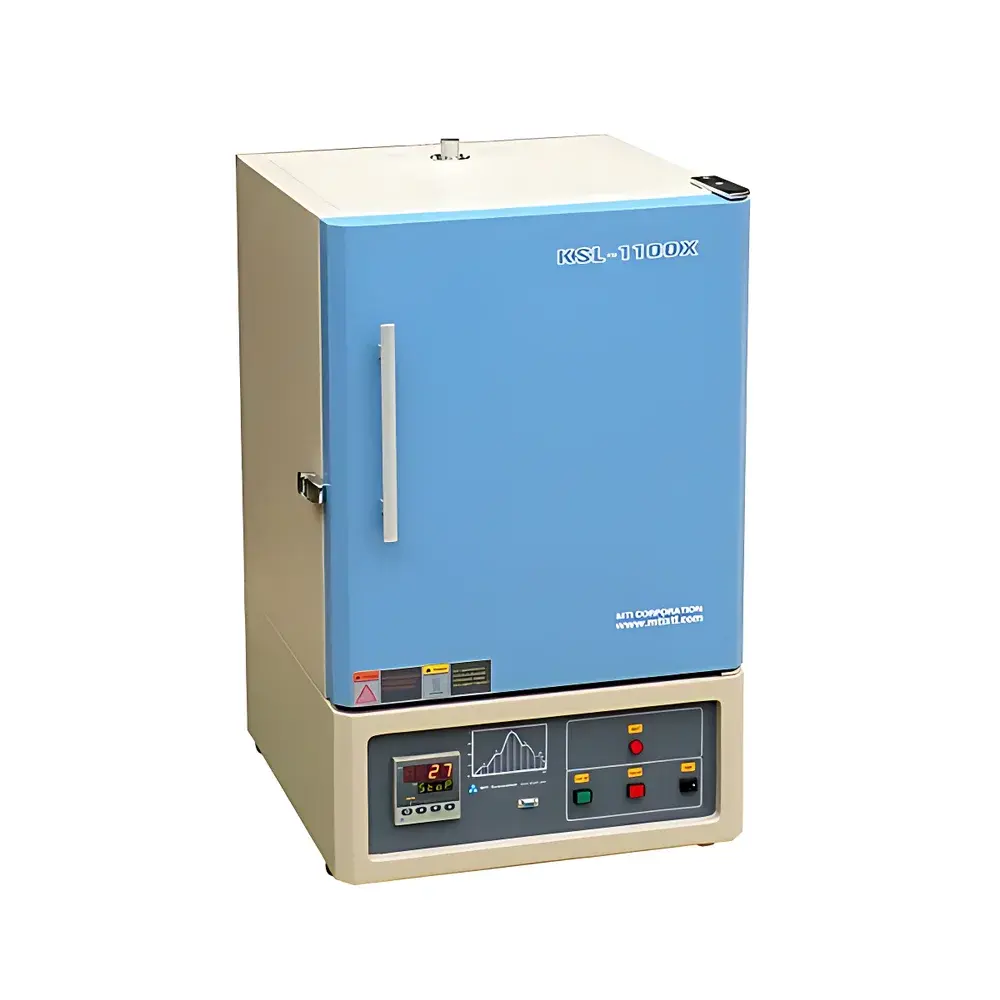
KJ GROUP KSL-1100X-L 1100°C High-Performance Box-Type Muffle Furnace
| Brand | KJ GROUP |
|---|---|
| Origin | Liaoning, China |
| Manufacturer Type | Authorized Distributor |
| Product Category | Domestic |
| Model | KSL-1100X-L |
| Instrument Type | Box-Type Muffle Furnace |
| Maximum Temperature | 1100°C (≤1 h), Continuous Operation Range: 100–1000°C |
| Temperature Control Accuracy | ±1°C |
| Rated Power | AC 208–240 V, 24 A, 5 kW |
| Heating Rate to Max Temp | 20°C/min (with door plug installed) |
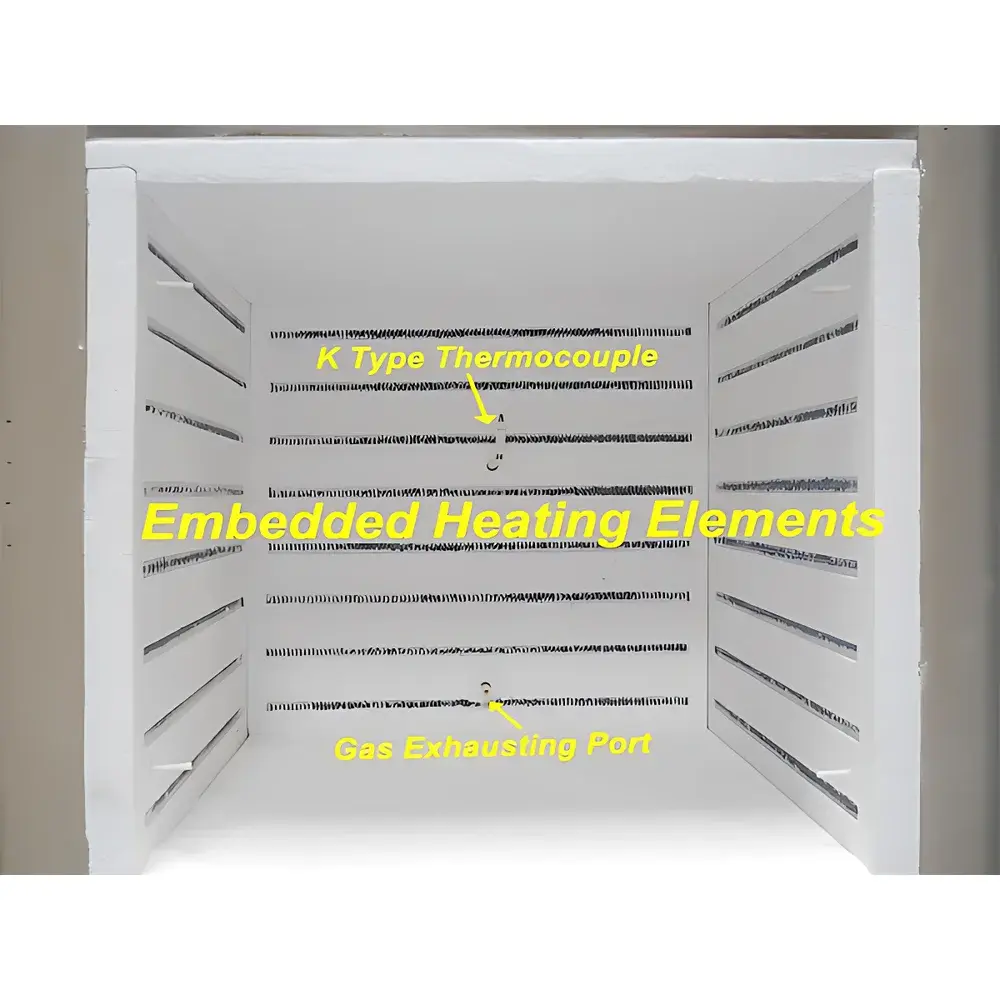
| Heating Method | Imported Resistance Wire (3-Sided Heating Configuration) |
| Internal Chamber Dimensions | 400 mm × 400 mm × 400 mm (64 L) |
| Uniformity of Temperature Field | ±3.45°C |
| Instrument Stability | ±1°C |
| Overall Dimensions | 600 mm × 600 mm × 750 mm |
| Net Weight | 125 kg |
| Certification | CE Compliant |
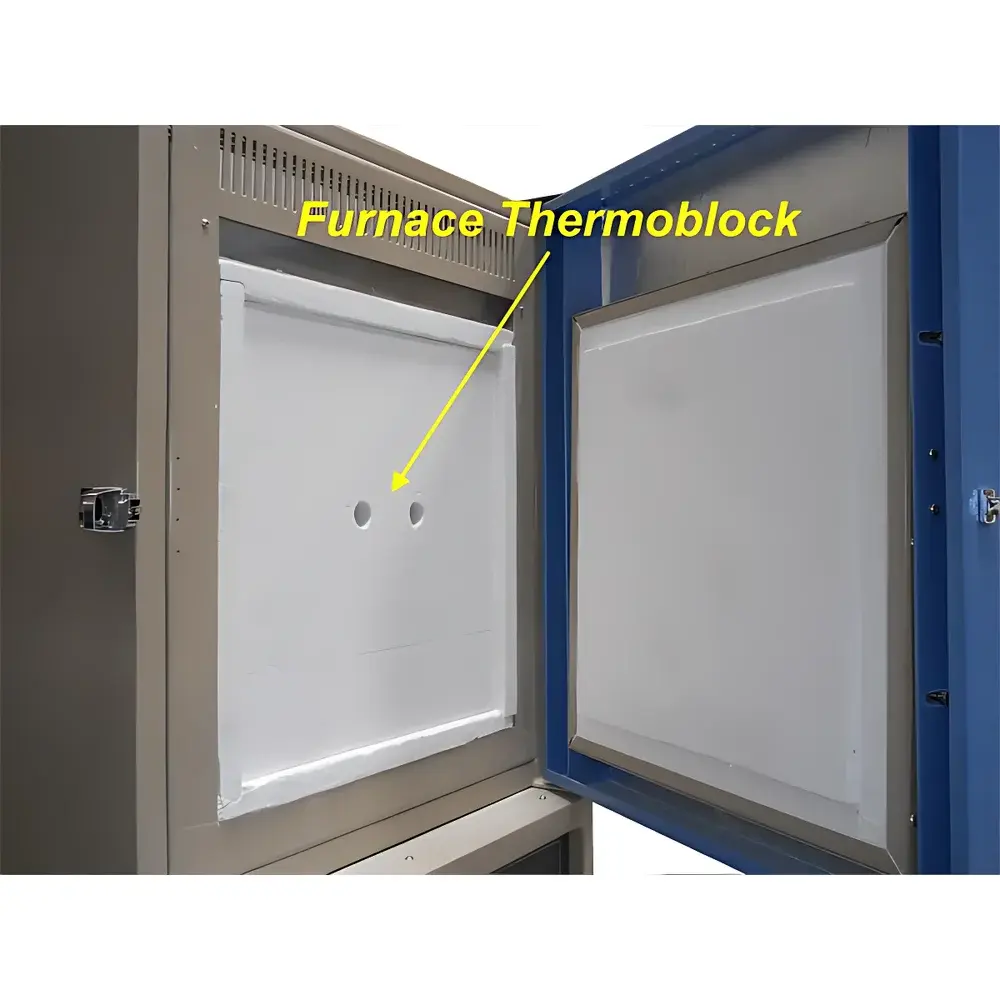
| Insulation Material | High-Purity Polycrystalline Alumina Fiber |
| Refractory Coating | US-Imported Alumina Reflective Coating |
| Control System | PID-Based 30-Stage Programmable Controller with Over-Temperature Protection |
| Cooling System | Dual-Shell Air-Cooled Structure |
| Optional Accessories | High-Temp PC Control Software, 1/4" Gas Inlet Port (rear-mounted), Alumina Crucibles, Quartz Crucibles |
Overview
The KJ GROUP KSL-1100X-L is a precision-engineered box-type muffle furnace designed for demanding thermal processing applications in academic research laboratories, materials science institutes, and industrial quality assurance facilities. Operating on the principle of resistive heating via high-stability imported resistance wire elements—strategically arranged across three internal furnace walls—the unit delivers rapid, reproducible, and spatially uniform thermal profiles within its 64-liter chamber (400 × 400 × 400 mm). Its operational envelope spans from ambient to 1100°C, with certified continuous service capability up to 1000°C and short-duration excursions to peak temperature. The furnace’s dual-shell construction integrates an active air-cooling system to maintain safe external surface temperatures during extended operation, while its high-purity polycrystalline alumina fiber insulation minimizes thermal loss and enhances energy efficiency. A proprietary US-sourced alumina reflective coating applied to the inner chamber wall improves radiative heat transfer efficiency and extends refractory life under cyclic thermal stress.
Key Features
- Dual-shell structural design with integrated forced-air cooling for operator safety and thermal stability
- High-density polycrystalline alumina fiber insulation, engineered for low thermal conductivity and long-term dimensional stability at elevated temperatures
- Internally coated chamber with US-imported high-emissivity alumina reflective layer to enhance radiant heating uniformity and reduce power consumption
- PID-based 30-segment programmable temperature controller with real-time ramp/soak profiling, digital setpoint adjustment, and automatic over-temperature cutoff (hardware-limited)
- Three-sided heating configuration ensures superior temperature field homogeneity (±3.45°C across working zone) and faster thermal response compared to single-wall systems
- CE-certified electrical architecture compliant with EN 61000-6-3 (EMC) and EN 61000-6-2 (immunity) standards for laboratory integration
Sample Compatibility & Compliance
The KSL-1100X-L accommodates standard ceramic, metallic, and composite samples up to 400 mm in any dimension. It supports inert-atmosphere processing when equipped with optional gas inlet ports (1/4″ NPT, rear-mounted), though it is explicitly not rated for vacuum or flammable/explosive gas environments due to its non-hermetic sealing architecture. Corrosive atmospheres containing sulfur, sodium, or halogen species require prior consultation; custom alumina-silica composite lining treatments are available upon request to mitigate chemical degradation. The furnace meets general-purpose laboratory safety requirements per IEC 61010-1 and is routinely deployed in GLP-compliant thermal analysis workflows—including ASTM C20, ISO 5660-1, and USP heavy metal residue testing protocols—where traceable temperature control and documented thermal history are essential.
Software & Data Management
An optional Windows-compatible high-temperature control software package enables remote monitoring, real-time data logging (temperature vs. time), and automated report generation in CSV/PDF formats. The software implements audit-trail functionality compliant with FDA 21 CFR Part 11 requirements—including user authentication, electronic signatures, and immutable event logs—for regulated environments. All firmware updates are delivered via secure USB interface; no network connectivity is required by default, preserving system isolation in sensitive lab networks.
Applications
- High-temperature sintering of advanced ceramics, ferrites, and solid oxide fuel cell (SOFC) components
- Controlled atmosphere annealing of metallic alloys and thin-film substrates
- Thermal gravimetric analysis (TGA) pre-treatment and ash content determination per AOAC 942.05 and ISO 1171
- Calibration of thermocouples and reference materials in metrology labs
- Heat treatment qualification per AMS 2750E pyrometry requirements (when used with Class 1 or 2 instrumentation)
- Pre-burnout of investment casting molds and ceramic shell fabrication
FAQ
What is the maximum continuous operating temperature?
Continuous operation is rated at 1000°C; 1100°C is permissible for durations ≤60 minutes per cycle.
Can this furnace be used under vacuum or with reactive gases?
No—it features a non-vacuum-rated seal and must not be operated with flammable, explosive, or strongly oxidizing gases without third-party pressure/vacuum certification.
Is the temperature uniformity validated across the full chamber volume?
Yes—uniformity of ±3.45°C is measured at nine points (center + eight corners) per ASTM E220 methodology at 1000°C steady state.
How often does the internal coating require maintenance or reapplication?
Under normal usage (≤10 cycles/week at ≤1000°C), the alumina coating remains effective for ≥2 years; minor microcracking is expected and repairable using KJ GROUP’s OEM alumina slurry (Part #ALC-REF-01).
Does the furnace support integration into a centralized lab automation system?
Yes—RS485 Modbus RTU communication port is standard; optional Ethernet-to-Modbus gateway kits enable SCADA-level integration with LabVIEW, Ignition, or DeltaV platforms.



