
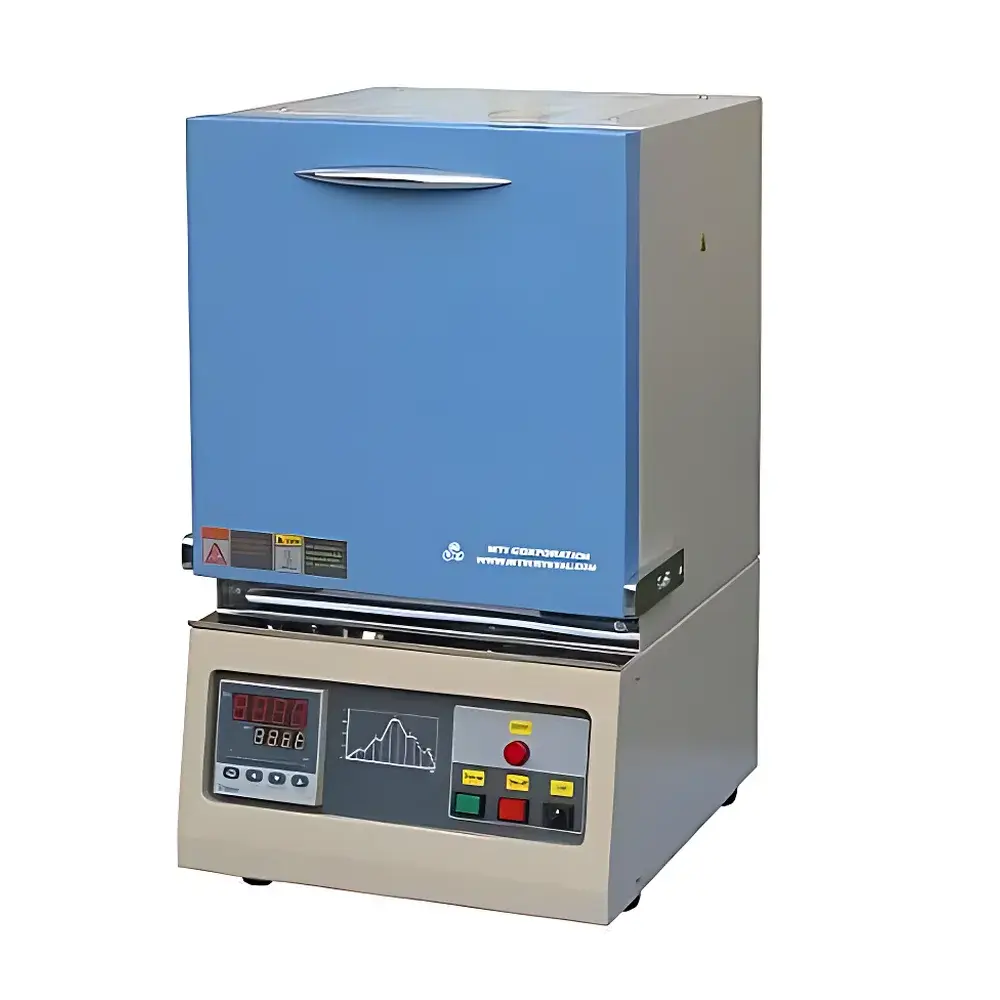
KJ GROUP KSL-1500X-S 1.8L High-Temperature Box Furnace
| Brand | KJ GROUP |
|---|---|
| Origin | Liaoning, China |
| Model | KSL-1500X-S |
| Max Operating Temperature | 1450 °C (continuous ≤1400 °C) |
| Temperature Uniformity | ±1 °C |
| Power Supply | AC 220 V, 50 Hz, 2 kW |
| Heating Rate | 10 °C/min (to max temp) |
| Heating Element | Silicon Carbide (SiC) Rods |
| Chamber Dimensions | 120 mm × 120 mm × 120 mm (1.73 L nominal volume) |
| Thermocouple Type | S-type (Platinum–10% Rhodium / Platinum) |
| Control System | PID-based 30-segment programmable controller |
| Certification | CE compliant |
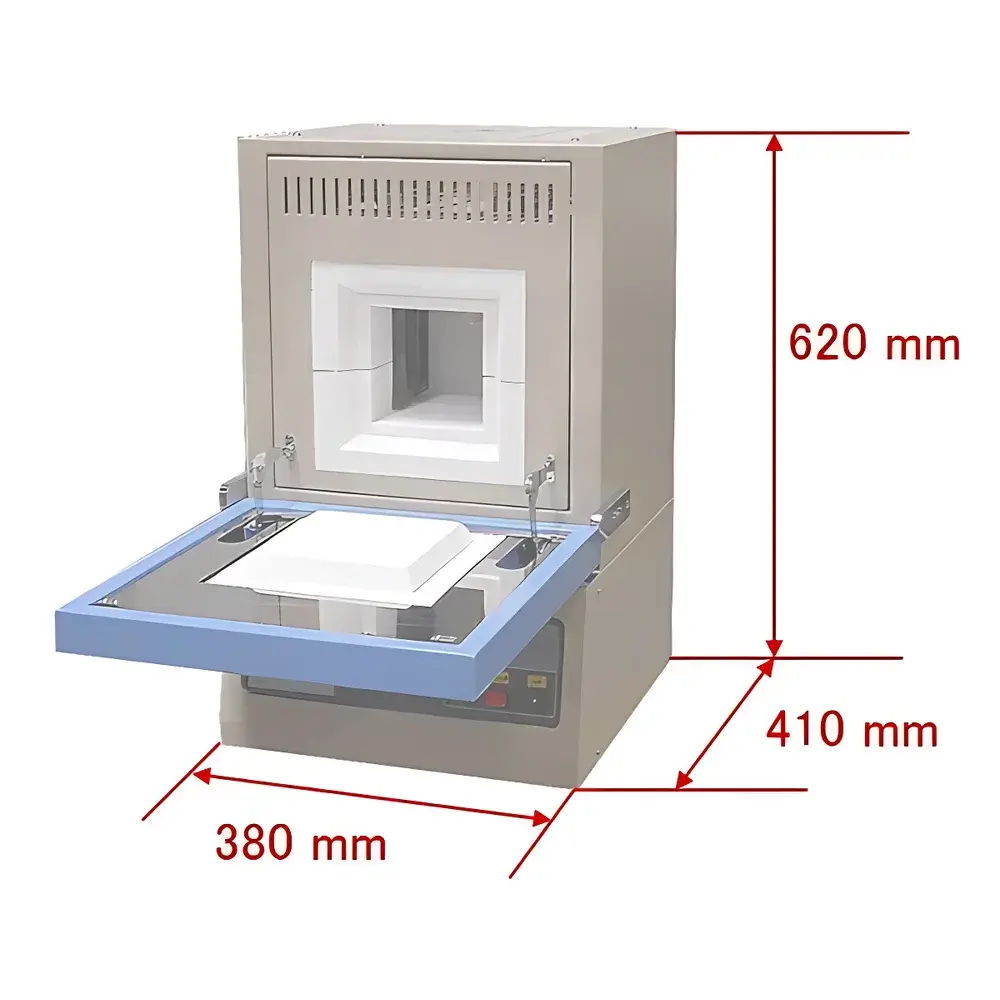
| External Dimensions | 380 mm × 410 mm × 620 mm |
| Net Weight | 40 kg |
Overview
The KJ GROUP KSL-1500X-S is a precision-engineered high-temperature box furnace designed for controlled thermal processing in academic research laboratories, materials science R&D facilities, and quality control environments. It operates on the principle of resistive heating via silicon carbide (SiC) rod elements, delivering stable and repeatable thermal profiles up to 1450 °C—suitable for sintering, annealing, calcination, ashing, and heat treatment of ceramics, metal oxides, battery cathode precursors, and refractory compounds. The furnace chamber employs a dual-layer insulation architecture: an inner lining of high-purity alumina fiber board backed by a secondary ceramic fiber blanket, minimizing thermal loss and enabling rapid ramp rates while maintaining structural integrity under prolonged exposure to extreme temperatures. Its S-type platinum–rhodium thermocouple provides traceable temperature measurement aligned with ITS-90 standards, and the integrated PID controller ensures robust feedback regulation across the full operational range.
Key Features
- High-efficiency internal chamber coated with imported U.S. alumina reflective coating—enhances radiant heat transfer and extends liner service life by reducing thermal stress-induced degradation.
- 30-segment programmable temperature controller supporting complex multi-step thermal cycles (e.g., hold-ramp-cool sequences), with real-time profile monitoring and manual override capability.
- Robust mechanical design featuring downward-opening door with high-temperature ceramic gasket seal, facilitating safe sample loading/unloading and minimizing convective heat loss during operation.
- CE-certified electrical architecture compliant with EN 61000-6-3 (EMC emission) and EN 61000-6-2 (immunity), ensuring safe integration into shared laboratory infrastructure.
- Dual SiC heating elements with redundant mounting configuration—provides balanced thermal distribution and graceful degradation in case of single-element failure.
- Integrated safety interlock system that disables power to heating elements when the door is opened above 100 °C, preventing accidental exposure to radiant heat hazards.
Sample Compatibility & Compliance
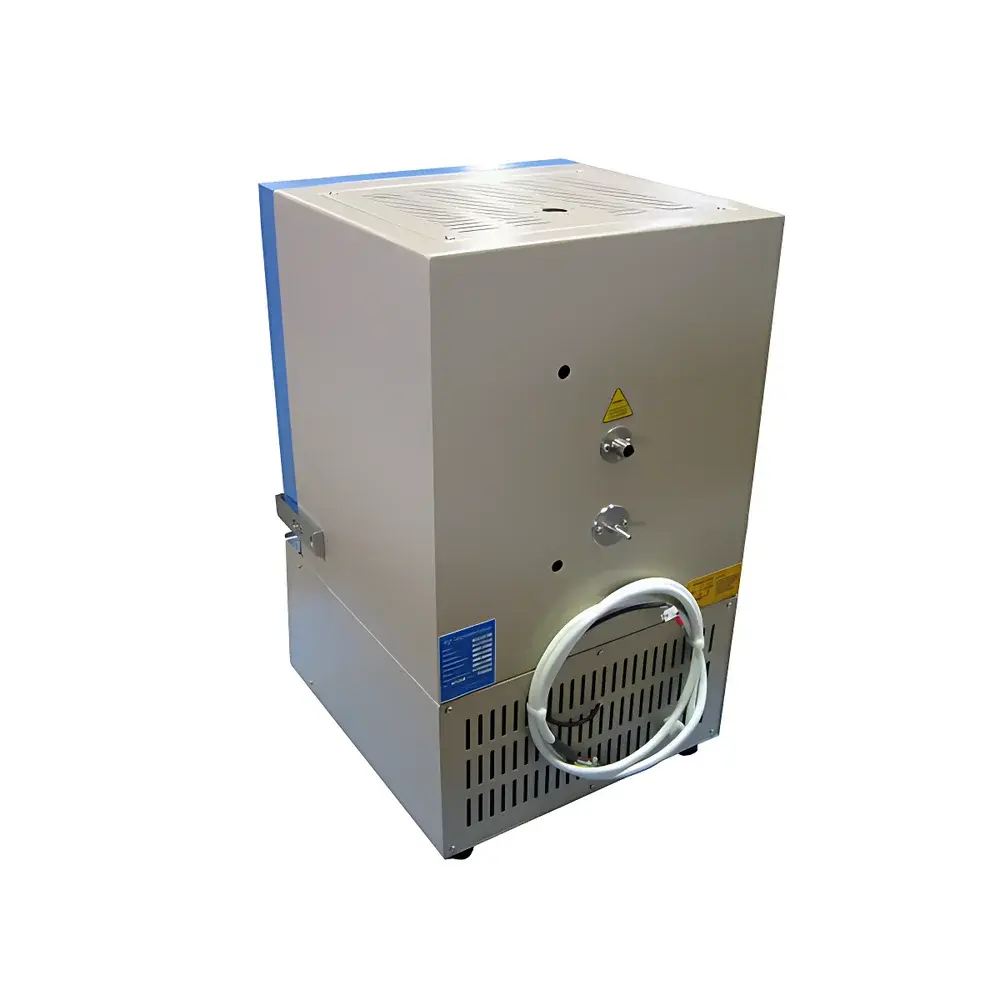
The KSL-1500X-S accommodates standard crucibles (alumina, quartz, or graphite) and sample boats up to 100 mm in height and 100 mm in diameter. It is not rated for vacuum or inert-atmosphere operation out-of-the-box; however, optional flanged ports (M12 or KF16) can be retrofitted for controlled gas purging (N₂, Ar, forming gas) under user-supervised conditions. For applications involving corrosive vapors (e.g., sulfur-containing precursors or sodium-based fluxes), pre-treatment of the alumina lining with proprietary corrosion-resistant slurry is available upon request—this modification must be specified at time of order. The furnace meets general-purpose laboratory safety requirements per IEC 61010-1 and supports GLP-compliant workflows when paired with external data loggers capable of 21 CFR Part 11 audit trail functionality.
Software & Data Management
While the KSL-1500X-S operates via a standalone front-panel interface, its RS485 serial port enables seamless integration with third-party SCADA systems or custom LabVIEW/Python-based acquisition platforms using Modbus RTU protocol. Temperature setpoints, actual readings, ramp rates, and segment completion timestamps can be streamed at configurable intervals (1–60 s). Optional USB-to-RS485 adapters and KJ GROUP’s free PC utility (v3.2+) support CSV export, real-time graphing, and password-protected parameter locking—facilitating documentation for ISO/IEC 17025 accreditation audits. All firmware updates are distributed through KJ GROUP’s secure customer portal and require physical USB key authentication to prevent unauthorized configuration changes.
Applications
- Sintering of advanced ceramics (Al₂O₃, ZrO₂, SiC) and solid-state electrolytes for all-solid-state batteries.
- Thermal decomposition studies of metal-organic frameworks (MOFs) and layered double hydroxides (LDHs).
- Preparation of doped phosphors and luminescent nanomaterials requiring precise redox-controlled atmospheres.
- Heat treatment of thin-film substrates prior to CVD/PVD deposition steps.
- Calibration verification of thermocouples and infrared pyrometers against NIST-traceable reference standards.
- ASTM C1171 (standard test method for linear thermal expansion of rigid plastics) and ISO 11359-2 (thermomechanical analysis) sample conditioning protocols.
FAQ
What is the recommended maximum continuous operating temperature?
The furnace is rated for continuous operation at ≤1400 °C. Operation above this threshold is permissible only for short-duration process steps (≤30 minutes), as extended exposure accelerates SiC element aging and compromises long-term temperature uniformity.
Can this furnace be used under reducing or inert gas environments?
Yes—with optional gas inlet/outlet fittings and flowmeter integration. However, the standard unit lacks pressure-rated seals; users must implement external gas manifold controls and ensure adequate ventilation to prevent accumulation of flammable mixtures.
Is the S-type thermocouple calibrated and certified?
Each unit ships with a factory-calibrated S-type thermocouple traceable to national metrology institutes. A certificate of conformity (CoC) is included; NIST-traceable calibration reports are available as a paid add-on service.
How often should the alumina coating be reapplied?
Under typical usage (≤12 cycles/month at 1350 °C), recoating is required every 18–24 months. Visual inspection for spalling or discoloration is advised after each 50 high-temperature cycles.
Does the furnace support remote monitoring via Ethernet or Wi-Fi?
No native Ethernet/Wi-Fi interface is provided. Remote access requires external industrial gateways (e.g., Moxa EDS-G205A) configured for Modbus TCP bridging to the built-in RS485 port.



